2012 Yukon XL Denali front suspension seems overly stiff

Disclaimer: Links on this page pointing to Amazon, eBay and other sites may include affiliate code. If you click them and make a purchase, we may earn a small commission.

dkad260

Full Access Member
Joined
Jul 21, 2019
Posts
652
Reaction score
665
I picked this up about a month ago, no complaints, however the front seems to ride a bit harsh over small bumps, the rear just floats.

The Yukon has 92K miles and when I purchased it, all four shocks/struts appear to be the original. I have replaced the rear with Arnott 2708 and that cured the extended bounce over bumps, wasn't bad but had an extra rebound or 2.

The fronts are still original, no warning messages, air compressor works as it should, tires are also new Defender LTX.

I did recently purchase a Tech 2 if that helps and I'm slowly getting familiar with it.

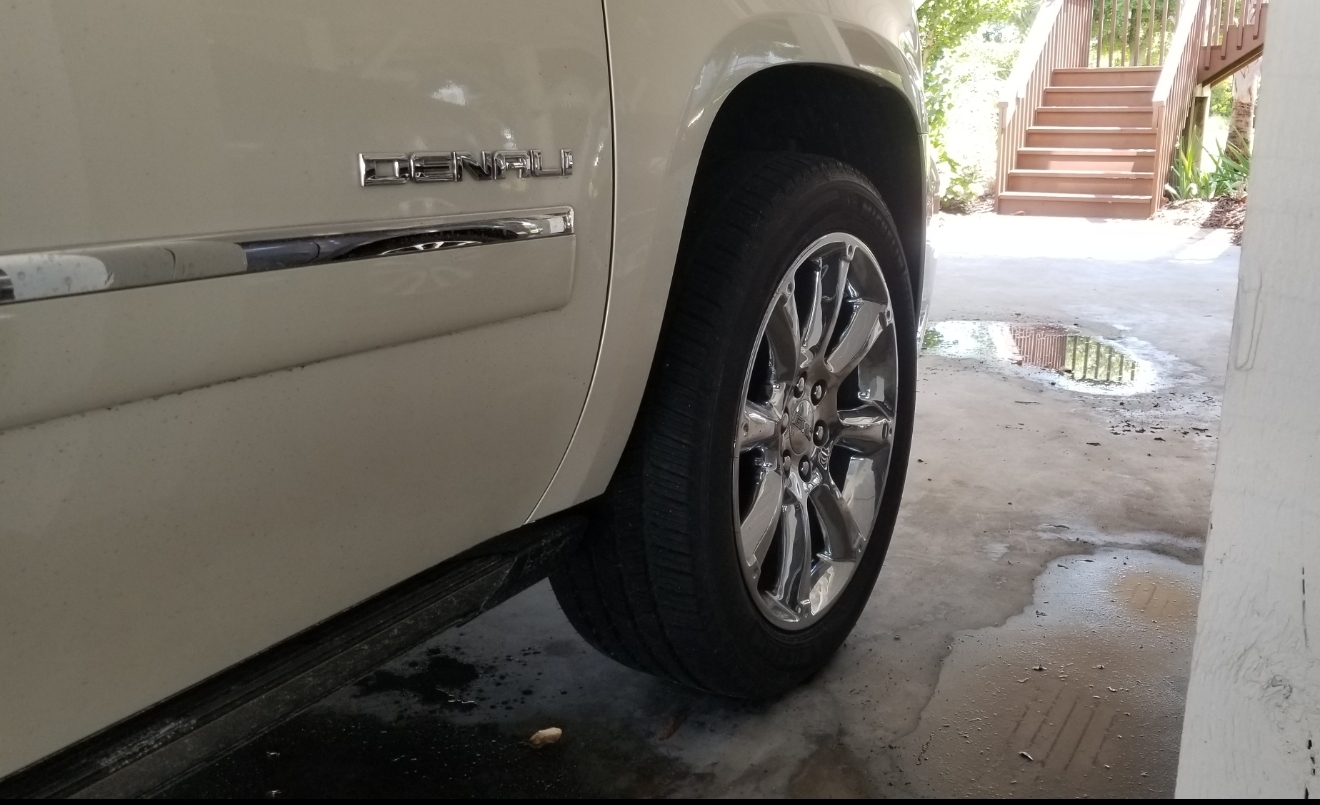
The ride height appears somewhat normal, RF seems a bit high but I'm not sure exactly what it should be with a decent load of fuel. One thing that comes to mind is the original owner had the 22" wheels installed when they took delivery, maybe the dealer programmed or set a higher pressure in the shocks? If that's even possible?

I get the fact a 22" will or can ride stiffer than a 20", but this seems different.

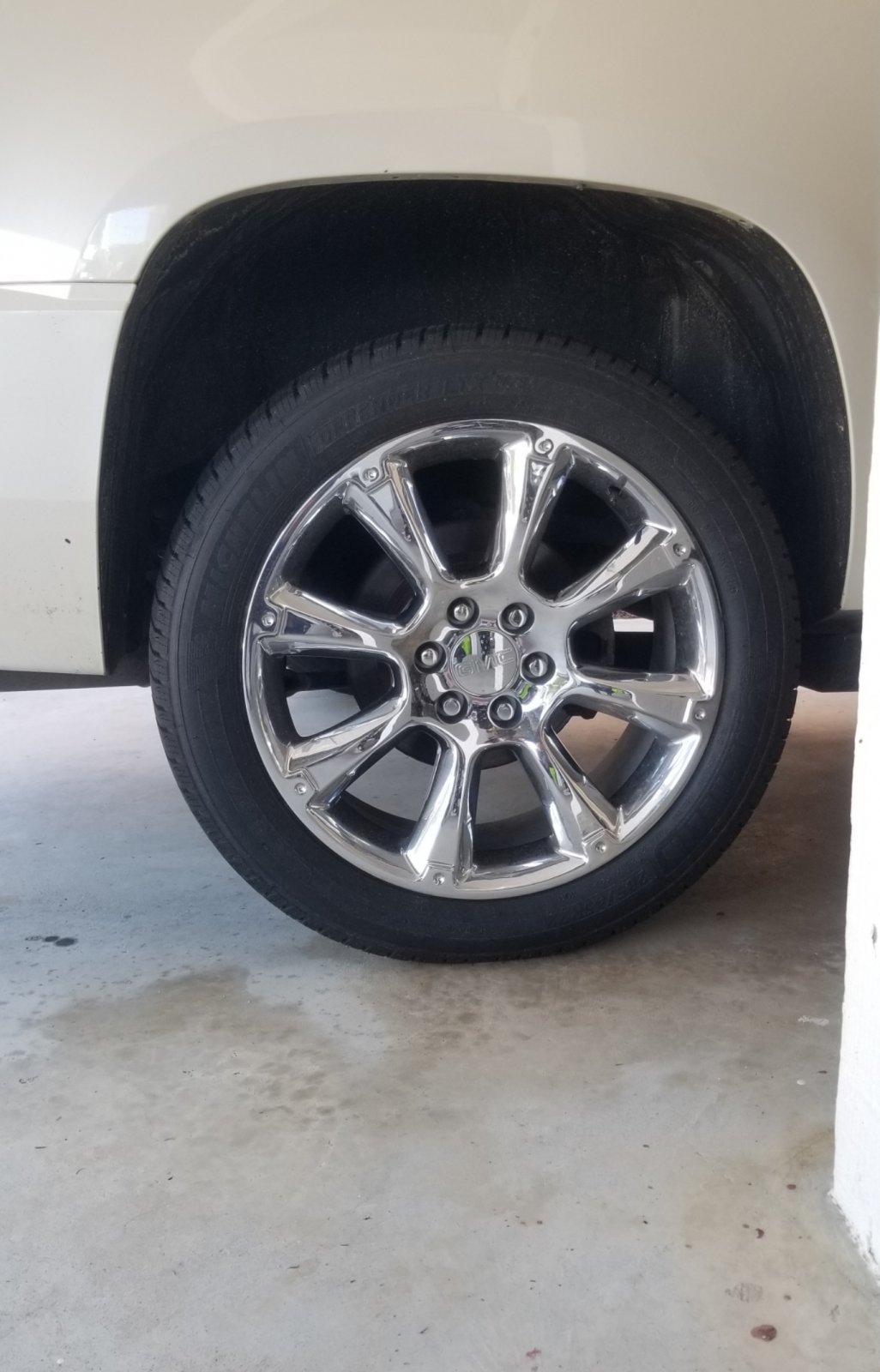
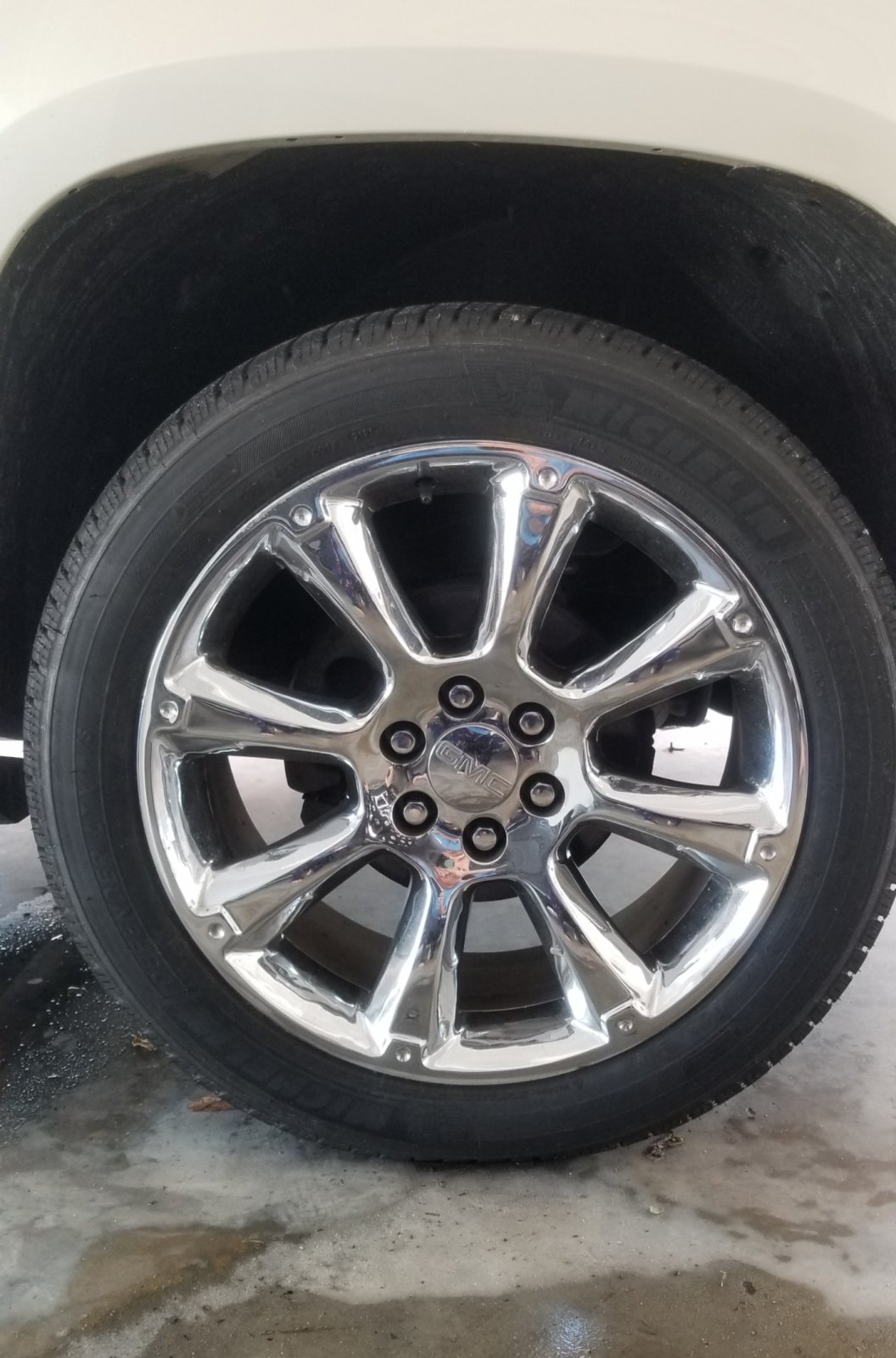
Ride height is as follows, with 3/4 tank of fuel, no passengers or cargo, key on and air compressor did run for about 3-5 seconds. Measurement taken from ground to bottom of wheel opening through axle center.

LF 35 1/4"
RF 36 1/4"
RR 37 3/8"
LR 37 1/8
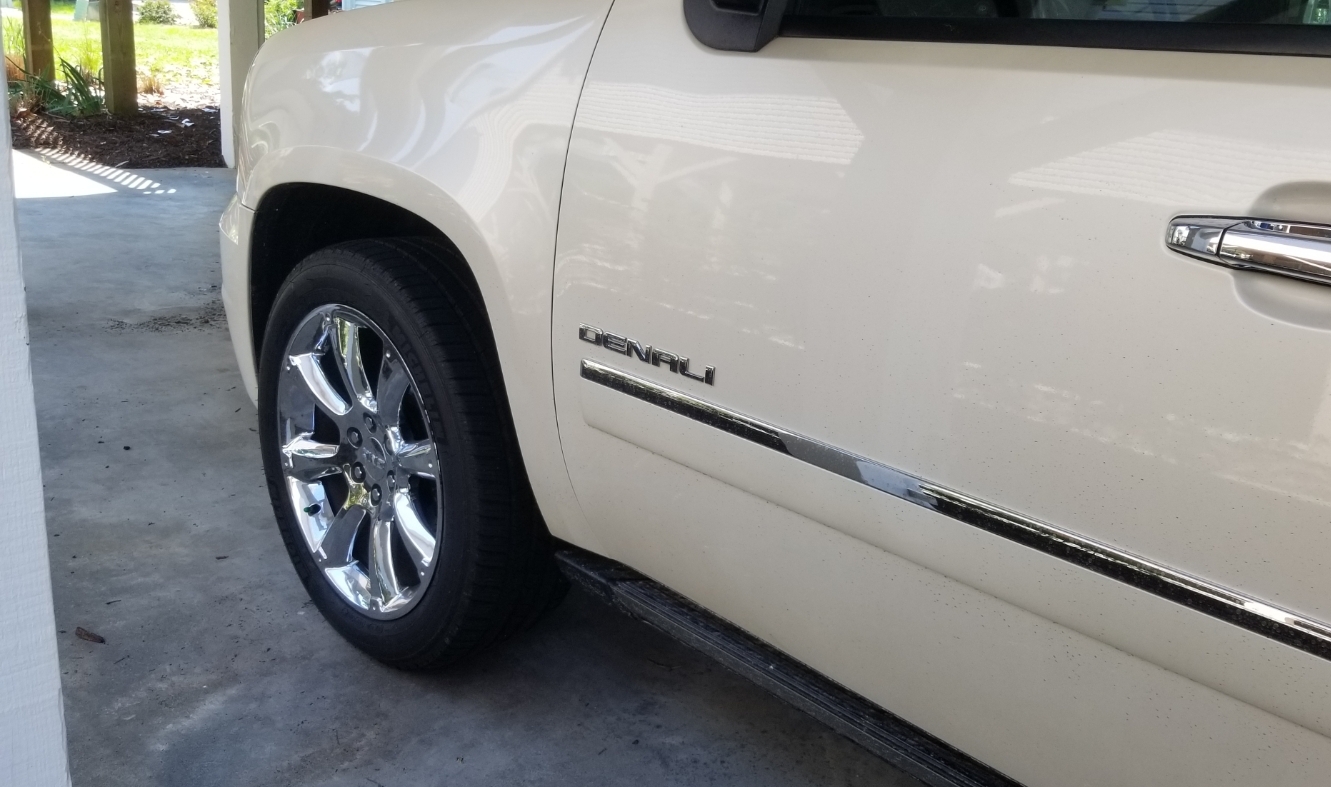
Screenshot_20210621-110144_Gallery.jpg


Screenshot_20210621-110113_Gallery.jpg


Below is RR

Screenshot_20210621-110227_Gallery.jpg


Below is LR

Screenshot_20210621-110305_Gallery.jpg


Overall the ride is very smooth, the new tires made a world of difference over the Alenza's. This seems more than the bump compliance of the tires/tread, like stiff valving.

All input appreciated.
 
Joined
Apr 11, 2018
Posts
7,124
Reaction score
14,375
Location
St. Louis
More than likely the front struts are your problem.

I just recently replaced my rear shocks with the AS-2708 and the pump with a Dorman. My rear air bladders were leaking. I still need to replace the front struts and I can tell/feel that it's gotten a bit rougher lately.
 
OP
OP
D

dkad260

Full Access Member
Joined
Jul 21, 2019
Posts
652
Reaction score
665
More than likely the front struts are your problem.
I'm thinking so as well, but it does go against my line of thought of worn shocks/struts getting softer over time which made me think of the air system possibly being an option.

Can't argue with you on the fact they still have 92K miles so safe bet new would be an improvement.

Debating the OE struts over the Arnott, albeit a hefty price difference.
 
Joined
Apr 11, 2018
Posts
7,124
Reaction score
14,375
Location
St. Louis
I've only seen passive struts from Arnott, which use a plug in resistor and eliminates the automatic ride control.

I'd probably go with OE on the front struts, unless someone else chimes in here with other options.
 

kbuskill

***CAUTION*** I do my own stunts!
Joined
Mar 11, 2017
Posts
5,821
Reaction score
9,831
Location
NE. FL.
Just FYI... the front struts have absolutely nothing to do with the "air ride" portion of the rear suspension.

The AutoRide system (RPO code Z55) controls the valving of the rear shocks and front struts electronically. It stiffens or softens according to the terrain.

The Auto leveling system (RPO code G69) consists of the rear air shocks and the air compressor behind the drivers rear wheel well.

The AutoRide struts are known to get stiff when they age. I think this is perhaps a failsafe built into the design to keep the truck from leaning so badly in curves with worn out struts.

@iamdub unplugged his one time to check them out. Perhaps he will chime in with his results. I just remember him saying that they were scary soft when unplugged and he didn't recommend driving at high speeds or making fast maneuvers with them unplugged.
 
OP
OP
D

dkad260

Full Access Member
Joined
Jul 21, 2019
Posts
652
Reaction score
665
Just FYI... the front struts have absolutely nothing to do with the "air ride" portion of the rear suspension.
I made a quick glance at the front suspension last week, and for some reason I thought there was an air setup on the front shock when I saw what looks like the height sensor and the larger protective boot...so my mistake. :pp:


Interesting about them getting stiff as they age, as the front end has virtually zero body roll on turns.
 

kbuskill

***CAUTION*** I do my own stunts!
Joined
Mar 11, 2017
Posts
5,821
Reaction score
9,831
Location
NE. FL.
I made a quick glance at the front suspension last week, and for some reason I thought there was an air setup on the front shock when I saw what looks like the height sensor and the larger protective boot...so my mistake. :pp:


Interesting about them getting stiff as they age, as the front end has virtually zero body roll on turns.
Don't beat yourself up too much, you aren't the first to make this mistake.

The "height" sensor is for the AutoRide systems dampening control and the protective boot is basically a dust/mud shield for the strut.
 
Joined
Apr 11, 2018
Posts
7,124
Reaction score
14,375
Location
St. Louis
I thought the height sensor in the front was for the autoleveling air rear, so it knew how much air it needed in relation to the front
 

91RS

Full Access Member
Joined
Nov 15, 2009
Posts
2,846
Reaction score
2,293
Location
GA
I thought the height sensor in the front was for the autoleveling air rear, so it knew how much air it needed in relation to the front
It is so the system knows what the suspension is doing so it can adjust the shock to control it. The rear sensors are also used for that but also used for the height adjustment. The same suspension control modules handles both functions.

The shocks on this body style can lock up just like the new ones but it is much less common. The best way to diagnose that is just to know what it is supposed to feel like and drive it but that's easy for me since I've been working on these since they came out in 07 so I've easily driven 100s of them. I will say that I put new front shocks on my Escalade just because I'm basically restoring it but I did not replace the front shocks on my Yukon which now have 188k miles on them and they feel about the same. These shocks are not supposed to "wear out" like traditional shocks do but I think they can still fail it just isn't as obvious when they do. I think the more important thing to replace is the springs, that made a huge difference and raised the front ride height 3/4." Unfortunately, they're discontinued. I always recommend the OEM shocks, I have the unpopular opinion around here of not being a fan of Arnott's shocks (the ones they put new bags on OEM shocks are probably ok).
 
Last edited:
OP
OP
D

dkad260

Full Access Member
Joined
Jul 21, 2019
Posts
652
Reaction score
665
think the more important thing to replace is the springs
I agree, made a noticeable difference on my Envoy after 18 years.

The front springs according to my dealer are still avail, part # 20842473. I searched GM parts online and the spring isn't listed for my 2012 Denali but two different dealers gave me the same part # based off my VIN.....:think:

Being only a 9YO vehicle the springs are likely still good, but makes sense to go with new springs with new OEM struts if possible.
 

91RS

Full Access Member
Joined
Nov 15, 2009
Posts
2,846
Reaction score
2,293
Location
GA
That is indeed a different number than both my 08 and 12 call for and does show to still be available. I’d order them while you can.
 

iamdub

Full Access Member
Joined
Apr 23, 2016
Posts
20,821
Reaction score
45,011
Location
Li'l Weezyana
Just FYI... the front struts have absolutely nothing to do with the "air ride" portion of the rear suspension.

The AutoRide system (RPO code Z55) controls the valving of the rear shocks and front struts electronically. It stiffens or softens according to the terrain.

The Auto leveling system (RPO code G69) consists of the rear air shocks and the air compressor behind the drivers rear wheel well.

The AutoRide struts are known to get stiff when they age. I think this is perhaps a failsafe built into the design to keep the truck from leaning so badly in curves with worn out struts.

@iamdub unplugged his one time to check them out. Perhaps he will chime in with his results. I just remember him saying that they were scary soft when unplugged and he didn't recommend driving at high speeds or making fast maneuvers with them unplugged.


Yes, this is my experience. I know for sure that the suspension controller is what made them overly firm. But, I don't know how it decides that they're too soft for normal driving to make it react accordingly. If it was an age/time thing, it could gradually increase the firmness to compensate for estimated wear. It could easily do so by monitoring the cycling of the suspension via the height sensors and estimate the life of the strut. I don't think this is the case cuz new struts would be even firmer unless the controller can detect that the struts aren't the same. I'm probably over-thinking it.
 

TM355

TYF Newbie
Joined
Jan 16, 2021
Posts
2
Reaction score
0
Yes, this is my experience. I know for sure that the suspension controller is what made them overly firm. But, I don't know how it decides that they're too soft for normal driving to make it react accordingly. If it was an age/time thing, it could gradually increase the firmness to compensate for estimated wear. It could easily do so by monitoring the cycling of the suspension via the height sensors and estimate the life of the strut. I don't think this is the case cuz new struts would be even firmer unless the controller can detect that the struts aren't the same. I'm probably over-thinking it.

So, from what I have seen in testing, if the front suspension is lower than what the ECU thinks is stock, the shock will get stiffer. Not sure if this is linear as the height changes, but it is a good generalization of what is happening. I think this also increases the damping on the rear shocks too to some degree (this makes sense since the programming would be silly if it only heavily damped the front but not the rear at all).

Suspension height reset from a Tech2 could fix this but I do not have access to one, or else adjustment of the sensor rods could also do the same. Do you have the current voltage values of your four sensors at parked, level ride height? It would be interesting to start gathering that data among a good sized sample of vehicles that have not been modified.

***FYI I realized all of this was happening when I just changed my front to lowering springs in a hurry and then drove the car. It was SO stiff and I thought, wtf the spring rate on these springs is complete shit! I don't know what made me realize the shocks could be the culprit, perhaps it was the rear shocks that also went stiff (but I reconnected a heavy rear sway bar at the same time which is not very analytical!) To check it out I unplugged the shocks and they went full soft and revealed the true spring rate which was right about what it should have been.

If you continue to fool the front into being higher and higher but then exceed what would be stock height, you will start to cause the rear to try to compensate with more air in the shocks, and again you will get a stiffass ride in the rear now. I have not been able to test if the damping gets stiffer, softer, in a linear manner, etc. if the ECU thinks the suspension is sitting higher than what it thinks is stock.
 
Last edited:

iamdub

Full Access Member
Joined
Apr 23, 2016
Posts
20,821
Reaction score
45,011
Location
Li'l Weezyana
So, from what I have seen in testing, if the front suspension is lower than what the ECU thinks is stock, the shock will get stiffer. Not sure if this is linear as the height changes, but it is a good generalization of what is happening. I think this also increases the damping on the rear shocks too to some degree (this makes sense since the programming would be silly if it only heavily damped the front but not the rear at all).

Suspension height reset from a Tech2 could fix this but I do not have access to one, or else adjustment of the sensor rods could also do the same. Do you have the current voltage values of your four sensors at parked, level ride height? It would be interesting to start gathering that data among a good sized sample of vehicles that have not been modified.

***FYI I realized all of this was happening when I just changed my front to lowering springs in a hurry and then drove the car. It was SO stiff and I thought, wtf the spring rate on these springs is complete shit! I don't know what made me realize the shocks could be the culprit, perhaps it was the rear shocks that also went stiff (but I reconnected a heavy rear sway bar at the same time which is not very analytical!) To check it out I unplugged the shocks and they went full soft and revealed the true spring rate which was right about what it should have been.

If you continue to fool the front into being higher and higher but then exceed what would be stock height, you will start to cause the rear to try to compensate with more air in the shocks, and again you will get a stiffass ride in the rear now. I have not been able to test if the damping gets stiffer, softer, in a linear manner, etc. if the ECU thinks the suspension is sitting higher than what it thinks is stock.

I do not have any voltage readings. With mine at stock height, I very precisely marked the sensors. After lowering, I made my own links that put the sensors back where they were so the controller would think the system was at its expected height.
 

TM355

TYF Newbie
Joined
Jan 16, 2021
Posts
2
Reaction score
0
I do not have any voltage readings. With mine at stock height, I very precisely marked the sensors. After lowering, I made my own links that put the sensors back where they were so the controller would think the system was at its expected height.
Yeah I wish I was familiar enough a few weeks ago that I took the voltage readings before I messed with anything. They are typical 5v sensors and it seems like the **** stock numbers may be in the 1.9 to 2.8 range. Tenths and hundredths of a volt are critical here, so it's very sensitive and might not be able to be measured externally/mechanically with required accuracy?? Not sure. The fronts might be higher voltage than the rears @ static. Higher voltage = lower actual suspension height or longer sensor rods. I'm currently guessing fronts to be around 2.5-2.7 and rear to be 1.9-2.2 for stock. Again it would be great to start sampling this data at some point. Many of the bypass circuits for conventional shock kits set this at 2.5 volts all around.

On another note, I suspect that in some cases, spring sag over time causes the shocks to be stiffer, contributing to some people's harsher ride complaints. This makes some sense as an old suspension will usually be softer or bouncy or floaty rather than stiffer, unless it is hitting on the bump stops or something like that.

At the end of the day, the only real way to truly satisfy the ECU is to do a reinitialization of the system with a Tech2.
 

iamdub

Full Access Member
Joined
Apr 23, 2016
Posts
20,821
Reaction score
45,011
Location
Li'l Weezyana
Yeah I wish I was familiar enough a few weeks ago that I took the voltage readings before I messed with anything. They are typical 5v sensors and it seems like the **** stock numbers may be in the 1.9 to 2.8 range. Tenths and hundredths of a volt are critical here, so it's very sensitive and might not be able to be measured externally/mechanically with required accuracy?? Not sure. The fronts might be higher voltage than the rears @ static. Higher voltage = lower actual suspension height or longer sensor rods. I'm currently guessing fronts to be around 2.5-2.7 and rear to be 1.9-2.2 for stock. Again it would be great to start sampling this data at some point. Many of the bypass circuits for conventional shock kits set this at 2.5 volts all around.

On another note, I suspect that in some cases, spring sag over time causes the shocks to be stiffer, contributing to some people's harsher ride complaints. This makes some sense as an old suspension will usually be softer or bouncy or floaty rather than stiffer, unless it is hitting on the bump stops or something like that.

At the end of the day, the only real way to truly satisfy the ECU is to do a reinitialization of the system with a Tech2.

This is true that the scale seems to be a narrow range. But, it must not matter a whole lot since Belltech and probably others make sensor ride height links that are a specific length. They're a standard size for a particular drop and used across many lowered vehicles. Pretty much every vehicle sits differently. So, even though the sensor scaling has a hundred-thousandths resolution, the suspension controller probably only monitors incremental blocks of that scaling.
 
OP
OP
D

dkad260

Full Access Member
Joined
Jul 21, 2019
Posts
652
Reaction score
665
Do you have the current voltage values of your four sensors at parked, level ride height? It would be interesting to start gathering that data among a good sized sample of vehicles that have not been modified.
While not directed at me, I'm all in with acquiring some data as well. I can probe the sensor leads and see what I come up with.
 

Forum statistics

Threads
137,685
Posts
1,989,567
Members
102,686
Latest member
koomie98
Back
Top