
You are using an out of date browser. It may not display this or other websites correctly.
You should upgrade or use an alternative browser.
You should upgrade or use an alternative browser.
Is This Camshaft Reusable? Or Too Pitted?
- Thread starter jmo2610
- Start date
Disclaimer: Links on this page pointing to Amazon, eBay and other sites may include affiliate code. If you click them and make a purchase, we may earn a small commission.

BYaggie
TYF Newbie
- Joined
- Oct 19, 2023
- Posts
- 6
- Reaction score
- 16
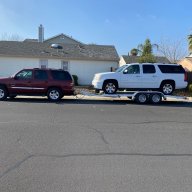
When in doubt, throw it out!This is in relation to my engine knock thread. Before I pull the other head, I'd love y'all's opinion on this cam. This is a pretty expensive decision for me to go any further (especially if not needed). Is this cam too pitted to reuse?
Note: The other thread relating to cams in this forum didn't have a pic that would load, so I didn't have anything to compare to. Sorry for a similar question.
West 1
Full Access Member
- Joined
- Jan 20, 2023
- Posts
- 703
- Reaction score
- 1,510
This is a roller camshaft, not a flat tappet camshaft, if I could feel anything with my fingernail I might give it a slight buff with emory cloth to make sure there are no protrusions. Clean it, oil it and install my new lifters. Yes I have done probably a dozen GM repairs in the last couple years with failed AFM lifters. A roller lifter needs a smooth surface but not a perfect surface. No gauges, scrapes, dents, no appearance of the lobe losing its shape I would and have run them. Roller cams are much more forgiving. If your ramps or nose on the cam lobe have any damage that would keep a lifter wheel from rolling perfectly smooth over it than of course get a new camshaft. If you want an upgrade get a new cam. If you just want it to run and not knock make sure they are smooth and install new lifters. With one head off you are very close to being able to do a valve job. I am more concerned about those heads dropping valve seats than I am about cam lobe wear. A valve Job with new seats would let you sleep better at night. The 6.2L is known to drop valve seats which can break a piston and end your engines life. Just a consideration.
First off, this whole job sucks. Second, do I have to relieve the tension on the timing chain in order to remove the timing chain? I've seen multiple videos, all doing something different. And also, so far, I've had a whale of a time pushing that tensioner far enough to get an little allen wrench in the holes to hold it.
West 1
Full Access Member
- Joined
- Jan 20, 2023
- Posts
- 703
- Reaction score
- 1,510
First align your timing sprockets so they are in the perfect position, marks aligned properly. This sets you up for the future install, crank and cam in proper position.
I have done several, I don't remember fighting any of them.
Remove the bolts holding the cam sprocket to the cam and slip it off. On install you reverse the procedure with the new tensioner in place. removing the tensioner does not allow removing the timing chain without removing the cam sprocket first.
Sounds like you have decided on a new camshaft?
I have done several, I don't remember fighting any of them.
Remove the bolts holding the cam sprocket to the cam and slip it off. On install you reverse the procedure with the new tensioner in place. removing the tensioner does not allow removing the timing chain without removing the cam sprocket first.
Sounds like you have decided on a new camshaft?
I did. Doing the entire delete. Not particularly having a good time, but the truck is in great shape otherwise, and my wife loves it, so I went for it. Even though this is a newer generation, I was referencing this video (timestamped) where he releases the tension before removing the cam sprocket. I saw another guy try that and break the tensioner. I've seen others that didn't really clarify whether they released the tension or not.First align your timing sprockets so they are in the perfect position, marks aligned properly. This sets you up for the future install, crank and cam in proper position.
I have done several, I don't remember fighting any of them.
Remove the bolts holding the cam sprocket to the cam and slip it off. On install you reverse the procedure with the new tensioner in place. removing the tensioner does not allow removing the timing chain without removing the cam sprocket first.
Sounds like you have decided on a new camshaft?
West 1
Full Access Member
- Joined
- Jan 20, 2023
- Posts
- 703
- Reaction score
- 1,510
The tensioner is a wear part so I was assuming you would replace it?
West 1
Full Access Member
- Joined
- Jan 20, 2023
- Posts
- 703
- Reaction score
- 1,510
If this is all new to you there are a few things to be aware of. Torquing the NEW head bolts has several steps. I found the easiest and least chance of messing this up is to torque all bolts to the first step specs. Then take a paint pen, I use white so it is easy to spot as I work. Mark all your bolts straight up so you know where you start with future steps. I don't remember the angles they ask for next but this allows you to see that each bolt has moved to the new position as you torque the bolts. Follow the torque pattern and steps advised exactly. It is 100% necessary to get the heads properly torqued. The paint marks save your bacon when something happens and you have to stop and leave the job in the middle of torquing the heads. The head torque sequence is very unique. And a pattern has to be followed so they get torqued in proper sequence. Torque to yield bolts have a very specific torque spec and must be followed exactly since you are torquing the bolts till they are starting to break. Hence the term, torque to yield. This is done to avoid over torquing the heads. Over torquing is proven to Distort your cylinders which affects ring seal so be smart. Follow the book on these steps and expect it to take you at least 1/2 hour per head. These are not old school engines and need special care to make them work.
Last edited:


To this I will add, make absolutely certain that your head bolt holes in the block are completely clean and dry before you install the bolts. You don't want any coolant or debris in there.If this is all new to you there are a few things to be aware of. Torquing the NEW head bolts has several steps. I found the easiest and least chance of messing this up is to torque all bolts to the first step specs. Then take a paint pen, I use white so it is easy to spot as I work. Mark all your bolts straight up so you know where you start with future steps. I don't remember the angles they ask for next but this allows you to see that each bolt has moved to the new position as you torque the bolts. Follow the torque pattern and steps advised exactly. It is 100% necessary to get the heads properly torqued. The paint marks save your bacon when something happens and you have to stop and leave the job in the middle of torquing the heads. The head torque sequence is very unique. Something like this: And a pattern has to be followed so they get torqued in proper sequence. Torque to yield bolts have a very specific torque spec and must be followed exactly since you are torquing the bolts till they are starting to break. Hence the term, torque to yield. This is done to avoid over torquing the heads. Over torquing is proven to Distort your cylinders which affects ring seal so be smart. Follow the book on these steps and expect it to take you at least 1/2 hour per head. These are not old school engines and need special care to make them work.
Also, I used ARP head bolts because they're reusable and can be torqued to the correct value directly, without having to mess with angles like the factory torque-to-yield bolts require, as described above.
First off, this whole job sucks. Second, do I have to relieve the tension on the timing chain in order to remove the timing chain? I've seen multiple videos, all doing something different. And also, so far, I've had a whale of a time pushing that tensioner far enough to get an little allen wrench in the holes to hold it.
sounds miserable, I don't wish this job on anyone.
I think I'll end up pulling the engine when mine finally goes.
for the timing chain, I thought it was common in the ls world to ditch the tensioner for the ls2 type. it's just a cheap plastic block that bolts on and gives the chain something to bang around on. early ls1s didn't have any tensioner. if getting rid of the vvt, that seems like it would be the most reliable?
West 1
Full Access Member
- Joined
- Jan 20, 2023
- Posts
- 703
- Reaction score
- 1,510
Geotrash Dave nailed it and I forgot to point this out. When you pull the heads coolant will seep into the head bolt holes in the block. These must be blown out before the heads are installed or you will be torquing against the coolant in the threaded holes and not torquing the head. Double check and make sure the bolt holes are blown out and clean before attempting the head install.
strutaeng
Full Access Member
Agreed. You can cut some slots on the old bolt heads with an angle grinder and a cut off disc along the bolts' longitudinal axis. Use that as "free" thread chasers (they are getting thrown away anyways.) Then spray the holes with some lubricant and blow off the excess with compressed air.
Last edited:
Luckily, I did already have a friend warn me about this.Geotrash Dave nailed it and I forgot to point this out. When you pull the heads coolant will seep into the head bolt holes in the block. These must be blown out before the heads are installed or you will be torquing against the coolant in the threaded holes and not torquing the head. Double check and make sure the bolt holes are blown out and clean before attempting the head install.
I bought the torque to yield bolts. Maybe I should've gotten the ARP ones and saved myself some headache. My neighbor let me borrow his degree tool, so that probably shifted my purchase. One less thing to buy.
At this point, I'm still in the removal phase. For those who have done this, did y'all remove the oil pan and replace the pressure relief valve?
West 1
Full Access Member
- Joined
- Jan 20, 2023
- Posts
- 703
- Reaction score
- 1,510
I always remove the oil pan and replace the Oring on the pick up tube. Since you have the timing cover and cam out you can remove the oil pump and shim the pump spring for a little extra oil pressure. With the new cam install and no more AFM lifters the second pressure relief valve in the pan near the oil filter location is not necessary. It is only there to protect the AFM lifters from too much pressure. With the AFM removed this pressure relief can actually be plugged off but that is up to you. Most important is to replace the Oring on the pick up tube and watch out on this install, I think there are 3 Oring types used over the years. Melling and Fel Pro both have install sheets that show which to use based on your pick up tube design.
Well, the cam is out. I'm not sure if it looks all that bad or not. The "pitting" certainly seemed to look worse on my phone when I made those videos earlier. With my bare eyes, it doesn't look all that terrible (and I don't need readers... yet  ). So maybe I created a whole bunch of extra work for myself. Or maybe not. You guys tell me, is this cam toast? I'm replacing it anyway at this point. Just curious on your opinions.
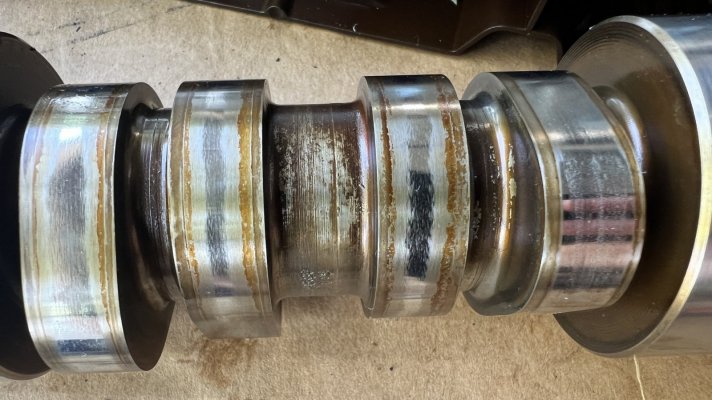
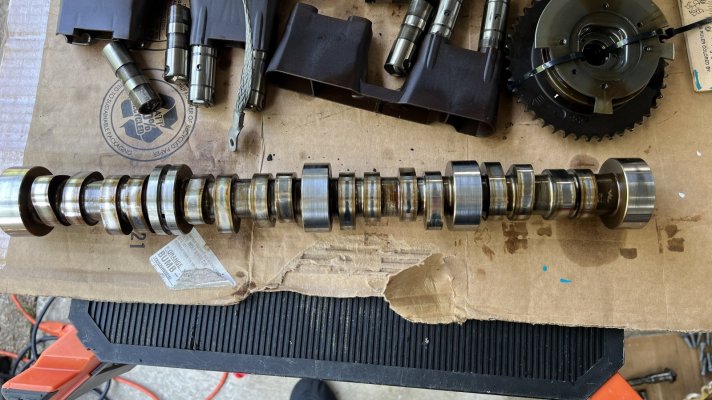
). So maybe I created a whole bunch of extra work for myself. Or maybe not. You guys tell me, is this cam toast? I'm replacing it anyway at this point. Just curious on your opinions.
+1. I replaced the valve in the oil pan with a new one when I did my cam swap, knowing that I could plug it as well. I was installing a high volume oil pump, so it seemed like extra insurance against oil pressure being too high, etc, but I know now that I needn't have worried, and it's a pop-off style valve anyway. In any case, the new valve will last the life of my engine.I always remove the oil pan and replace the Oring on the pick up tube. Since you have the timing cover and cam out you can remove the oil pump and shim the pump spring for a little extra oil pressure. With the new cam install and no more AFM lifters the second pressure relief valve in the pan near the oil filter location is not necessary. It is only there to protect the AFM lifters from too much pressure. With the AFM removed this pressure relief can actually be plugged off but that is up to you. Most important is to replace the Oring on the pick up tube and watch out on this install, I think there are 3 Oring types used over the years. Melling and Fel Pro both have install sheets that show which to use based on your pick up tube design.
Also, Melling ships many of their pumps with additional springs designed to produce different pressures so you don't have to shim them if you don't want to. I kept the standard (yellow?) spring in the M395HV I installed and I have great pressure throughout the range. If you install a Melling pump, the green (thicker) ring that comes with it is the correct one for our truck engines. Note, my engine is an aluminum block, so the high volume pumps are generally recommended for those applications because of greater thermal expansion of the block relative to the hardened steel parts operating within it.
Finally, the OP asked about the tensioner. We've seen the factory ones fail occasionally around here. Speaking for myself, I wouldn't even think of replacing the cam without replacing the tensioner. In my case, I was moving to a 3-bolt (non-VVT) cam, so I used the simpler LS1-style (bowtie) dampener and now won't need to worry about a tensioner failing in the future. It's a PITA to drop the pan to replace the pump, o-ring and tensioner, but the peace of mind that comes with it was worth it to me.
We all have our preferences, and one of mine is to never reuse a cam that looks like that. Could you and get away with it for a while? Probably. Will it last the life of the engine if that's 100K or more? Highly doubtful. We've had members here install brand new cams that didn't have perfectly smooth lobe surfaces due to that brand's finishing practices, and experienced a lot of extra valve train noise - to the point that they were annoyed enough to yank the cam and get one from a different manufacturer.Well, the cam is out. I'm not sure if it looks all that bad or not. The "pitting" certainly seemed to look worse on my phone when I made those videos earlier. With my bare eyes, it doesn't look all that terrible (and I don't need readers... yet
View attachment 435394View attachment 435395
Last edited:
Well, now you have me second guessing some things. I'm replacing mine with a stock 5.3 cam, so I wasn't moving to the 3-bolt. Because I planned on using a stock cam, I didn't buy the different dampener. I also did not buy a new oil pump, but now you got me thinking I should have.+1. I replaced the valve in the oil pan with a new one when I did my cam swap, knowing that I could plug it as well. I was installing a high volume oil pump, so it seemed like extra insurance against oil pressure being too high, etc, but I know now that I needn't have worried, and it's a pop-off style valve anyway. In any case, the new valve will last the life of my engine.
Also, Melling ships many of their pumps with additional springs designed to produce different pressures so you don't have to shim them if you don't want to. I kept the standard (yellow?) spring in the M395HV I installed and I have great pressure throughout the range. If you install a Melling pump, the green (thicker) ring that comes with it is the correct one for our truck engines. Note, my engine is an aluminum block, so the high volume pumps are generally recommended for those applications because of greater thermal expansion of the block relative to the hardened steel parts operating within it.
Finally, the OP asked about the tensioner. We've seen the factory ones fail occasionally around here. Speaking for myself, I wouldn't even think of replacing the cam without replacing the tensioner. In my case, I was moving to a 3-bolt (non-VVT) cam, so I used the simpler LS1-style (bowtie) dampener and now won't need to worry about a tensioner failing in the future. It's a PITA to drop the pan to replace the pump, o-ring and tensioner, but the peace of mind that comes with it was worth it to me.
Not necessarily. If yours has VVT, it's probably worth the extra 15 lb ft around town to keep it. In which case, you'll want to keep the factory-style tensioner, though I do recommend replacing it with new. In my case, I was working on a 6.2 and the dyno tests for the cam I used showed no losses down low but nice gains in the midrange and higher, where I need them for towing. So I didn't care about VVT in my application since it's mostly for fuel economy on these anyway.Well, now you have me second guessing some things. I'm replacing mine with a stock 5.3 cam, so I wasn't moving to the 3-bolt. Because I planned on using a stock cam, I didn't buy the different dampener. I also did not buy a new oil pump, but now you got me thinking I should have.
All of this reminds me - I don't think we ever established which model year and engine you're working with.
Well, the cam is out. I'm not sure if it looks all that bad or not. The "pitting" certainly seemed to look worse on my phone when I made those videos earlier. With my bare eyes, it doesn't look all that terrible (and I don't need readers... yet
View attachment 435394View attachment 435395
looking at it. it's worth replacing. I mean it's a pretty crappy job to change lifters and they have gotten super expensive. if the cam wipes out new lifters I'd be pissed. Last I looked lifters cost more than a cam. so worth it for that alone.
Similar threads
- Replies
- 15
- Views
- 2K
- Replies
- 36
- Views
- 5K


