2013 Escalade ESV DOD full delete becoming rebuild

Disclaimer: Links on this page pointing to Amazon, eBay and other sites may include affiliate code. If you click them and make a purchase, we may earn a small commission.

OP
OP
skpyle

skpyle

Senior Member
Supporting Member
Joined
May 15, 2021
Posts
537
Reaction score
1,325
CATCH UP:


2026-04-10 163.JPG


2026-04-10 165.JPG


2026-04-10 159.JPG


2026-04-10 161.JPG


2026-04-10 162.JPG


More later...
 

Marky Dissod

Full Access Member
Joined
Mar 3, 2023
Posts
4,151
Reaction score
6,028
Location
(718)-

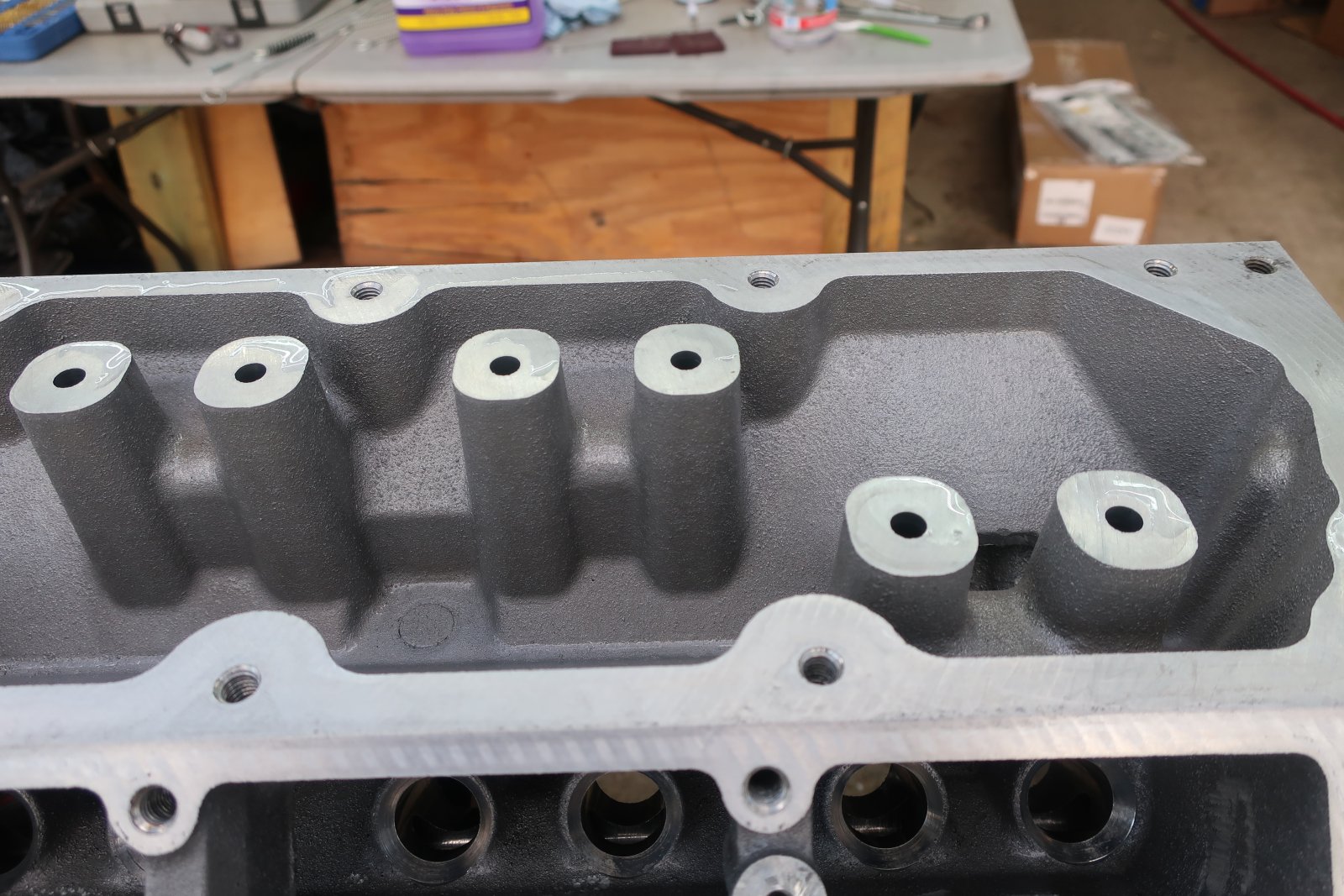
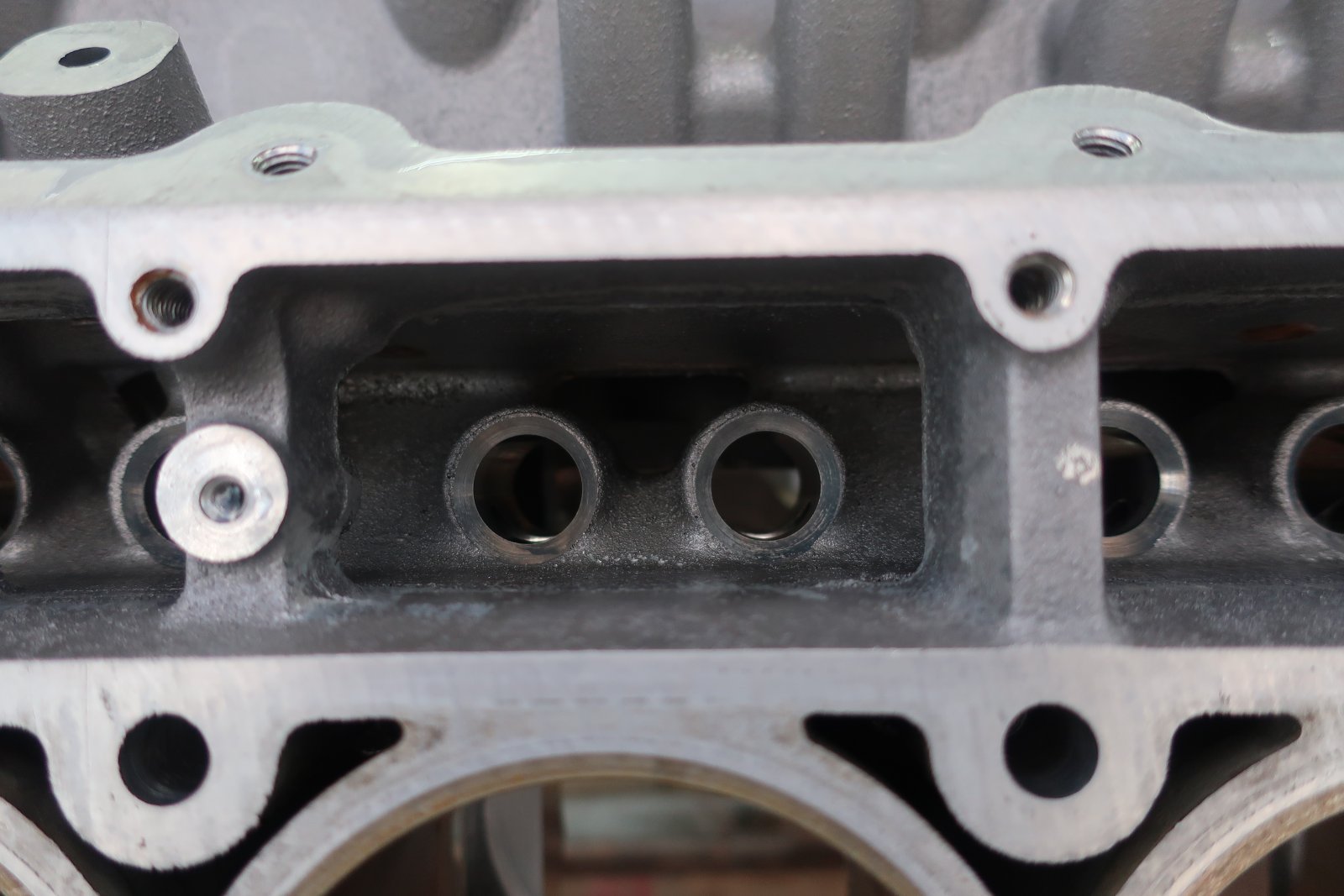
For plugging the V4 mode tower holes in the 3rd pic of your previous post.
 

SpareParts

Elite Member
Supporting Member
Joined
Sep 17, 2023
Posts
2,071
Reaction score
4,694
Location
North Idaho

For plugging the V4 mode tower holes in the 3rd pic of your previous post.
To expensive. Why not use bearings or the threaded plugs for removal from Amazon?

 
OP
OP
skpyle

skpyle

Senior Member
Supporting Member
Joined
May 15, 2021
Posts
537
Reaction score
1,325

For plugging the V4 mode tower holes in the 3rd pic of your previous post.


Good suggestions, gentlemen.
I went with this:


2026-04-10 544.JPG


2026-04-10 549.JPG


Thanks!
 
OP
OP
skpyle

skpyle

Senior Member
Supporting Member
Joined
May 15, 2021
Posts
537
Reaction score
1,325
CATCH UP:


Soooooo...I did make a mistake while cleaning the engine block. I did not address the flash rust in the cylinders soon enough. I had scrubbed the cylinders repeatedly with a bore brush and the Simple Green Pro solution, followed by rinsing with hose water, followed by several cans of brake cleaner. I wanted the cylinders to fully air dry before I coated them with WD-40. I expected some flash rust that would wipe off. It did not. I used a lint free rag soaked in brake cleaner. Rag turned orange, cylinder still had orange tint.

I used red scotchbrite and brake cleaner to gently scrub each of the cylinders until the orange rust was gone. Same with the tops of the cylinder liners. Then wipe with lint free rags soaked in brake cleaner until the rag came back clean. Then wipe again, just because. Finally, thoroughly coat each cylinder in WD-40. Honestly, I sprayed pretty much the entire engine. I wasn't entirely sure if the main bearing saddles or machined gasket surfaces would oxidize.


2026-04-10 170.JPG


2026-04-10 171.JPG


2026-04-10 254.JPG


Rusty orange cylinders. Not what I wanted.


2026-04-10 253.JPG

Much better!


More later...
 
OP
OP
skpyle

skpyle

Senior Member
Supporting Member
Joined
May 15, 2021
Posts
537
Reaction score
1,325
I have run into a wall. I can breach this wall, but it is going to hurt...

On Tuesday, I had my Escalade flatbedded to the shop that overhauled the transmission. Intent was for them to put a program in the TEHCM. Then flatbed it back to my home.
Yesterday, I found out they could not put a program in the TEHCM. Meaning they tried and it didn't work. According to the tech, the TEHCM was 'blank'. He is used to seeing a new GM TEHCM having some kind of information on it. He downloads the program to that information, using HP Tuners. My new GM TEHCM was blank.

He referred me to a local GM dealer he is familiar with. I have an appointment Monday at 11:00AM for them to try to put a program in the TEHCM. This completely wrecks my plans to start the engine for the first time and go for a drive this weekend. Such is life.

I had the Escalade flatbedded back home. I will complete as much other work (install and fill transfer case, install drive shafts, install HID fog lights, install front end, etc...) as I can. Then Monday morning, have it flatbedded to the dealer.

Here is where it think it is going to get ugly. I don't know if the dealer will be able to put a program in my new GM TEHCM. The tech at the transmission shop has put programs in hundreds of TEHCMs. He said mine was the first one he has seen that was blank. This makes me wonder if I got a dud. Which means I could be looking at having to replace the TEHCM again.

Here is where I might make it really ugly, and just go ahead and let the dealer replace and program the TEHCM if it comes to that. I really want to drive my Escalade to a Porsche 928 get together in the mountains of NC on June 6th. I need to have the engine at least well into the 500 mile oil change after the 100 mile oil change. If the dealer tells me the TEHCM is bad, I would have to flatbed it back home. Drop the transmission pan and valve body to remove the TEHCM. Submit a warranty claim through Rock Auto to GM to get the TEHCM replaced. Wait for the new TEHCM to arrive, install it. Flatbed the Escalade to the transmission shop, have them put a program in the TEHCM. I have no idea how long that will take. Weeks.

If the dealer tells me the TECHM is bad, let them order a new one, replace it, and program it. And I cry. Alot. And hopefully be done in a week or so.


So yeah...
 

rdezs

Full Access Member
Joined
Nov 6, 2023
Posts
1,357
Reaction score
2,514
I don't think it's bad, I think it's a brand new unit. Dealer shouldn't have any problem programming it.

HP tuners won't program a completely blank unit....
 
OP
OP
skpyle

skpyle

Senior Member
Supporting Member
Joined
May 15, 2021
Posts
537
Reaction score
1,325
I don't think it's bad, I think it's a brand new unit. Dealer shouldn't have any problem programming it.

HP tuners won't program a completely blank unit....
Thanks. That makes me feel a little better.
 

rdezs

Full Access Member
Joined
Nov 6, 2023
Posts
1,357
Reaction score
2,514
I'm surprised you're transmission guy doesn't have the GM MDI2 so he can program a brand new blank unit through GM’s SPS2 (Service Programming System)

This was so much less of a hassle with a good old small block Chevy and a turbo 400 tranny.....
 
OP
OP
skpyle

skpyle

Senior Member
Supporting Member
Joined
May 15, 2021
Posts
537
Reaction score
1,325
I honestly don’t know, as I had thought he had one as well.

You are not kidding!
Small block and TH400 in my 1966 C-10 is the epitomy of simple.
 

JoeBlobs

Senior Member
Supporting Member
Joined
Sep 19, 2021
Posts
186
Reaction score
437
Location
NJ
I'm surprised you're transmission guy doesn't have the GM MDI2 so he can program a brand new blank unit through GM’s SPS2 (Service Programming System)

This was so much less of a hassle with a good old small block Chevy and a turbo 400 tranny.....
I honestly don’t know, as I had thought he had one as well.

You are not kidding!
Small block and TH400 in my 1966 C-10 is the epitomy of simple.
I was thinking this also. I had just watched a video on this exact thing as I've been going down the rabbit hole. Seems very straight forward, maybe it's something you could try to tackle yourself?

 
OP
OP
skpyle

skpyle

Senior Member
Supporting Member
Joined
May 15, 2021
Posts
537
Reaction score
1,325
Sigh...I'm back. I have not posted recently because this project has gone wrong. I have been sulking and trying to figure out what went wrong.

In a nutshell, the overhauled engine has developed a noise and the overhauled transmission bucks and runs hot.

Right now, I am concentrating on the engine.
I will provide more details, but I want you all to listen to this video, and tell me what you think you hear. Also, do you think it is crank speed or cam speed...


This video was taken after the 100 mile oil change.

Thanks for your time and your ears.
 

rdezs

Full Access Member
Joined
Nov 6, 2023
Posts
1,357
Reaction score
2,514
Diagnosing sound across the internet is a very inexact science.... With that said, check for an exhaust leak between the exhaust manifolds and the cylinder heads. It sounds very similar to that. Does not sound like a lifter to me. If no exhaust leak as mentioned above, pull the valve covers and check for loose rockers.
 

j91z28d1

Full Access Member
Joined
Feb 28, 2022
Posts
4,622
Reaction score
5,871
yeah, very had to say. could he a few things.

beside exhaust, might check for loose torque converter bolts.

did it do it from first crank? maybe cut open the oil filter and check for metal. I can only guess that if it was a rod bearing or something within a 100 miles it would be putting out a decent amount of metal.
 

West 1

Full Access Member
Joined
Jan 20, 2023
Posts
677
Reaction score
1,454
That is a hard knock. Pull the oil filter and cut it open to look for metal particles. If you find no metal I would look at the flexplate and see if something is hitting as it rotates. Sorry to hear the bad news.

Nice oil filter cutters are available on amazon for >$25.00. They cut without adding metal to your diagnosis.
 
Last edited:
OP
OP
skpyle

skpyle

Senior Member
Supporting Member
Joined
May 15, 2021
Posts
537
Reaction score
1,325
Diagnosing sound across the internet is a very inexact science.... With that said, check for an exhaust leak between the exhaust manifolds and the cylinder heads. It sounds very similar to that. Does not sound like a lifter to me. If no exhaust leak as mentioned above, pull the valve covers and check for loose rockers.
Understood. I should have clarified that I was trying to determine if the noise was crankshaft speed or camshaft speed.

I have checked the undersides of both exhaust manifolds, no gaps between the manifolds and cylinder heads. I had the manifold faces surfaced. Gaskets are intact, no signs of soot or exhaust leakage.
I have checked both catalytic converter pipe to exhaust manifold connections. All 6 nuts are tight, both flanges are tight with even gaps to the manifolds. No signs of soot or exhaust leakage.
I have checked the top side of the driver's side exhaust manifold and all the mounting bolts. No gaps, no signs of soot or exhaust leakage. Bolts are tight. I used new ARP bolts with the specified GM threadlocker.

Driver's side valve cover is off, no obvious issues seen with rocker arms or pushrods. I have removed cylinder #1 intake and exhaust rocker arms and pushrods. No damage or issues found. I did find too much lifter preload. Will get into that in a later post.

I have not made it to the passenger's side yet.

Thanks!


yeah, very had to say. could he a few things.

beside exhaust, might check for loose torque converter bolts.

did it do it from first crank? maybe cut open the oil filter and check for metal. I can only guess that if it was a rod bearing or something within a 100 miles it would be putting out a decent amount of metal.
I have checked all three torque converter to flexplate bolts. All were tight. I used new GM bolts with threadlocker.

Noise didn't start until around 60-65 miles into the 100 mile drive. I heard a light tapping sound reflecting from the sidewalk/buildings as I drove through the city.

I have cut open the oil filter after the 100 mile oil change. There were a couple of tiny slivers of metal, and a small amount of glitter. Nothing glaring. However, this is a fresh overhaul that has only been run 45 minutes then a 100 mile drive. I honestly would expect to see a little metal in the oil filter.

Agreed, if a bearing was coming apart that fast, there would be evidence.

Thanks!


sounds like a rod knock to me :(
Yeah. That is what it sounded like to me.

Thanks!


That is a hard knock. Pull the oil filter and cut it open to look for metal particles. If you find no metal I would look at the flexplate and see if something is hitting as it rotates. Sorry to hear the bad news.

Nice oil filter cutters are available on amazon for >$25.00. They cut without adding metal to your diagnosis.
That is what it sounded like to me. See above for the oil filter cutting. I have rotated the engine by hand while observing the flexplate through the starter opening and the hole in the bottom of the bellhousing. I have not seen, heard, or felt any interference or scraping. Torque converter was tight to the flexplate and the flexplate was tight to the crankshaft.

Thanks!

 
OP
OP
skpyle

skpyle

Senior Member
Supporting Member
Joined
May 15, 2021
Posts
537
Reaction score
1,325
Here is what happened:

I was set up to start the engine. Prelubed oil system again, checked all fluids, hot battery, etc...

Tried to download the new L9H tune from Blackbear to the ECM. My Autocal V3 unit died. Had to start the engine on the L94/DOD turned off tune that was already in the ECM. Then the reman GM starter failed. Had to hit the key 10 times to get it to engage.
Not off to a good start.

Once the starter engaged, engine lit right off. Sounded good, no noises, good oil pressure, no leaks. Oil pressure was 55PSI, dropped to 51PSI after a moment. I let it run for 30 seconds, then shut it off. Had to add more Dexron VI to the overhauled 6L80. Repeated this a few times until the transmission fluid level was correct enough. Let the engine run. Came up to temp, no issues. Let it run around 20 minutes. Shut the engine off to cool a bit. Drained the distilled water out of the radiator, refilled with Dexcool and Redline Water Wetter. Restarted the engine, let it run another 25 minutes. Used my Tech 2 to vary the engine RPM periodically between idle, 1500RPM, 1800RPM, and 1950RPM.

Shut off the engine for the first oil change. Drained out the Castrol GTX 10W-30 oil, noted it looked good. Was honey colored, no obvious metallic sheen, no darkening, no chunks. Installed a new WIX 57045 oil filter and added 6qts of Driven BR30 5W-30 break in oil.

Went for a 20 mile drive. Transmission was a problem. Will address that later. Engine did fine. Idle oil pressure was 26PSI when I got home.

Next morning, went for a longer drive to a neighboring city. I took back roads instead of the highway for the chance at varied engine RPM's. Transmission was still a problem, but the engine seemed fine.

Maybe halfway through the drive, in the city, I thought I heard a light tapping reflecting off the sidewalk/buildings as I drove. Noticed oil pressure also was lower than I expected. Hot idle in gear: 21PSI, hot idle in Neutral: 23PSI.
NOTE: new Melling 10296 oil pump, turned/polished crank with new matching rod and main bearings, and new cam bearings. I expected excellent oil pressure.

Got home, had driven exactly 101 miles since the oil change. I could definitely hear a tapping sound from the engine. Performed the 100 mile oil change. Old oil looked good. Was honey colored, no obvious metallic sheen, no darkening, no chunks. Installed a new WIX 57045 oil filter and added 6qts of Driven BR30 break in oil.
Restarted the engine warm, it had been sitting maybe an hour and a half. Oil pressure was 42PSI.
Tapping noise now sounded like light knocking.

I crawled all around and under the engine with a mechanic's stethoscope. No noise from valve covers. No noise from bellhousing area. Sound was coming from the oil pan. It was most prevalent at the front of the oil pan. Though the volume of oil in the rear sump could have been dampening the sound.

Shut the engine off and went inside for a stiff drink.
Later cut open the oil filter removed at the 100 mile oil change. I saw a couple of tiny slivers of metal, and a little glitter. Could be from break in, could be from rod knock.

Next morning, I started the engine to move the Escalade a couple of feet where it was parked for better access to jack it up. Cold start oil pressure was 51PSI, quickly dropping to 47PSI. Knocking sound was more noticeable than last night.

Jacked up the Escalade at all four corners. Removed the front antisway bar, front differential, differential mounts, and front cross member. Then removed the oil pan. Removed oil pump pickup tube then the windage tray. Fun fact: I had installed a double bolt girdle on the oil pump pick up tube at the oil pump. The extra bolt was a serious pan in the rear to remove with the timing cover in place...

I saw no obvious issues in the rotating assembly. No rods were dark. No rods were loose on their journals. All the rod bolts and main cap bolts were tight. Cylinder walls under the pistons were still pristine. There was no debris in the oil pan.

Rotated the crankshaft by hand through two full revolutions. Saw no issues with the rotating assembly. Checked the torque converter to flexplate bolts, they were tight. The flexplate was tight on the crankshaft.

Crankshaft thrust clearance at #3 main bearing was still 0.004", same as I measured during assembly. Thrust bearing flanges showed no obvious damage.

One by one, I removed all 8 rod caps. Bearings and crank journals were undamaged. Cleaned rod bolts and holes in the rods with brake cleaner then dried with an air blower. Reinstalled the caps and bearings with a blop of assembly lube, then torqued the rod bolts in accordance with the service manual.
NOTE: I used new GM rod bolts during assembly. They can be torqued up to 3 times. This was the third time. I will install all new rod bolts once this all goes back together. I reassembled them now for a possible test run later.

I did NOT remove any main caps. Based upon what I saw with the rod bearings, I don't necessarily think there is anything wrong in the bottom end of my 6.2L engine now.

I moved my focus to the valve train, cam, and lifters.
 

Forum statistics

Threads
137,874
Posts
1,994,190
Members
102,847
Latest member
GritsWalabe
Back
Top