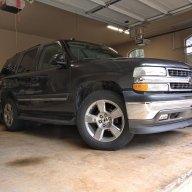

My ultimate 6.0L truck engine build

Disclaimer: Links on this page pointing to Amazon, eBay and other sites may include affiliate code. If you click them and make a purchase, we may earn a small commission.

Matthew Jeschke

Full Access Member
Joined
Dec 28, 2017
Posts
2,344
Reaction score
1,743
Location
Sahuarita, Arizona
I'm getting some questions on my engine build / swap. It's a BEAST love the motor!

Goals: Swap the 5.3L for a 6.0L without sacrificing too much if any efficiency. Optimize for part throttle response, low end torque. I mainly road trip and explore rough forest service roads in South West.

Challenge: everybody and their dog has built a high peak out put motor and thrown it in their truck. That is a motor that makes big numbers up top like a racecar. The issue with that is, you sacrifice low end torque. So on trucks they typically throw in a high stall converter. This is bad for efficiency and life of engine. You have to rev up to get the power and not very conducive of my goals / doing truck things. This is a build to reliably & efficiently build low end power in a truck. Further improving on Gen III LQ9 6.0L.

Build List:​

Bottom End:
- 6.0L Iron Gen III SBC Block
- LQ9 pistons w/ the LQ9 full float Wrist Pins
- My old 5.3L crankshaft (note rebalanced)
- Melling factory spec oil pump
- All new seals
- Factory spec main bolts
- Melling timing chain and gears

Top End:
- Factory intake from my 5.3L (same intake)
- Factory throttle body from 5.3L (mine is cable driven)
- Factory PCM (note the reluctor ring changes after a certain year 2003?)
- Factory 317 Heads
- Factory PCM from 5.3L (will run engine on that tune)
- Factory 24 lb injectors (haven't done WOT tuning / testing)
- EGR cut off plate (PITA to tune w/ EGR)
- Manning 11/32" x 0.120" Series 3, three piece pushrods (still testing)
- Bronze Trunion kit (burnt out at 12,000 miles) switched to Yella Terra Shaft Mount Rockers
- Johnson 2116 LSR link bar slow leak down lifters
- Custom cam from Vinci Hi Performance M/T #562 0.578/0.587/213/220
- Custom dual springs & retainers & seats from Vinci Hi Performance specs below:
VHP SS/SK kit w/ retainers [email protected]" [email protected]" [email protected]" [email protected]"

Injector controversy​

If you can source the injectors from the 8.0L big block engine I'd do that. I have the part number and need to find it to put in notes here. However, so far I've been running and tuning with the 24 LB factory spec injectors and had no issues.

Note: I've yet to go to WOT or even to point where PE kicks on so I cannot speak to that yet.

Component Reuse​

I had been an idiot and blew up the 5.3l tinkering around. Shot a rod through side of block. Then I couldn't find a complete 6.0L near me only a bare block so went this route of sourcing all the components. Honestly, you'd be better off to find a LQ9 possibly change rod bearings, cam bearings, swap the cam, and use it. These engines are built VERY well. Mine had 230,000 miles give or take and was like NEW when I opened it up (aside from hole I made).

Many of parts from 5.3 are same on 6.0
- Intake
- Throttle body
- exhaust manifolds / exhaust
- crankshaft (weight though?)
- PCM
- Injectors & fuel rail
- Valley tray & various sensors

Note make sure your crank shaft has the correct reluctor wheel for your crank sensor / computer. This changes after 2003?? Additionally, newer engines put the cam sensor on the timing cover. Mine was on back of the block.

Note make sure to do your research, when using some of the older castings a crank snout adapter maybe required to get the correct spacing between your pressure plate (flywheel if manual) and transmission. Some of the older blocks (or cranks) were farther away from the transmission. I forget the details. The spacer can be bought at Summit Racing among other places.


Heads​

I used the 317 heads from the factory spec LQ9. They were cheap and easy to source. Ideally I wanted AFR 205cc Mongoose heads. The goal is to get high vacuum at low RPM. The smaller intake flow heads achieve that. Roger Vinci also recommended these heads and helped spec out my build. I called AFR and you can get them w/o their springs on them. You don't want their springs as they are too stiff (unless you're building a high revving racecar). The springs Roger sources are better as they have a bit lower pressure and soak up less power from your low end torque.

I polished the heads. This is VERY easy to do, only takes time. I polished all the combustion chambers to a mirror finish. I then did the same with the exhaust chambers. I don't much believe in polishing intake chambers, only knock down high spots if you really want but I don't feel it helps much. Only thing I wish I had matched the combustion chambers. There's cheap tool to do this / measure their size. Wouldn't have taken much more effort.

I then had a machine shop clean the heads all up for me. Note, I had the heads from my 5.3L and the machine shop HIGHLY recommended putting those on the truck. However, I'd have had to run premium fuel. The shop, Racer's Edge, in Tucson Arizona said they can even port, polish, and add bigger intake valves to them for $1000. He has a 3 axis CNC mill with a routine to do this. Maybe a decent less expensive route to AFR... However, I need to run 87 octane. Some places I go don't sell premium gas so wasn't an option for me.

Valvetrain​

Camshaft: Roger helped me spec this out. I was looking at Xtreme Profile comp cams setup but worried about the high ramp profile. I called Roger and asked if he could build something similar w/ a gentler lobe profile. Then explained what I wanted to do (Goals above). He build me a cam from best materials available and sold me the springs w/ seats & retainers for LESS than I could have bought an off the shelf cam.

Springs: I've seen the beehive springs break and wanted the extra safety margin a dual spring offers in that respect. However, I couldn't find any dual spring setups with lower spring pressure for my build. Roger helped me with that too.

Lifters: this was and IS the hardest part of my build. I didn't know what I was buying. I know I DIDN'T want to use those plastic lifter trays. I wanted something I could count on 100% so that was link bar lifters. Granted, it maybe impossible to do a cam swamp w/o pulling heads now but that was something I was okay with. Another engine builder said use nothing BUT Johnson Lifters. I found a good deal on a set of 2116 LSR lifters.

These are EXTREMELY hard to setup. They have a very tight preload as well as require a longer than factory length pushrod, the 7.400" factory. Mine are around 7.6" give or take. You have to measure all these preloads and I've easily spent 80 hours learning how to, doing it wrong, and doing it again.

Order LS7 spec lifters... If you share my concern find a set of link bar lifters with the LS7 spec. These 2116 LSR lifters are AMAZING but I literally have an extra $1000 easy in JUST them not to mention the 80 hours learning to, and setting them up.

Rocker Arms​

I'm making a whole section on this because I already burned up my rocker arm rebuild. Will make a reply to this with that story. I did what a lot of people are doing. I installed Bronze Trunnion rebuild kit. There's a really popular style kit sold all over the place. It's not that great. I ordered that kit not realizing much more about it or any other kits.

Putting it together I wondered how it lasts. There's a point of friction at bottom of bronze bushing where spring pushes it up against the trunnion. My concern was warranted. After 12,000 miles ALL my preload on my lifters was gone. The bronze bushings had egg shelled out.

At that point I looked at a LOT of rocker arm options. Several people suggested a Che Performance, or Manton Performance trunnion kit. This kit is much better but still a wearable part. I didn't want to mess with them again so I threw those options out.

Here's my thinking... A lot of people go too far in my opinion to get rid of the roller bearings. I think needle roller bearings are superior to the solid bushing setup. They should in theory have far less friction. Only issue with factory is they don't have the best means to capture those needle bearings and sometimes they come out in the engine.

I saw this as I got a bunch of factory rocker arms and took them appart choosing best ones for rebuild / reuse on my build. Many of those needle bearing caps were loose.

Long story short, Roger helped me source, Yella Terra shaft mount roller rockers. These are superior to factory in many ways. They are lighter, shaft mounted, roller tip, larger roller and more needle bearings, etc. etc. etc. So I went that route.

Rotating Assembly​

I had the crankshaft from my 5.3L engine and didn't want to search for one out of a 6.0L. I could never get this one question asked. Are they the same? The casting numbers are the same. However, the piston weights are different. Don't quote me but I believe the 8 LQ9 pistons were 40 grams heavier. The rod length is the same though. However, I had broken a rod in my old engine and they were the semi floating pins so I wanted to update to the LQ9 full float.

I bought new factory spec LQ9 pistons; LQ9 full float rods off eBay; and Molly brand piston rings off Summit Racing. Then I had the whole assembly balanced to within 1 gram.

Upon assembly I used King main bearings... I had ordered the summit house brand to safe a few dollars and they were King Bearings. Everything was to factory spec. Then sealed power rod bearings. They were just factory spec bearings. I checked oil clearance with plasti gauge of course.

I believe the LS1 crankshaft is the same as well but is rifle drilled in areas to make it lighter. If you can find a good deal on an LS1 crankshaft you may like to use it instead. It would have less mass to spin up.

Note: my 5.3L was torn down at 235,000 miles. All bearings looked like NEW including the rod bearings.

Tuning (almost need another thread for this)​

This setup can start and run on the 5.3l tune. However, it can get confused at times and throw and engine code because it cannot figure out the fuel trims. You want to keep a close eye on that.

I'm using an HP Tuners setup to tune the engine. I cannot recall the computer designation but it's a airflow approach. Newer computers are torque management approach. Is pretty easy to tune but STEEP learning curve.

I've been tuning mine baselined off the factory 5.3L. I bought a wide band O2 and got it all hooked up. However, much easier and advisable to do with factory O2 sensors (minus WOT).
 
Last edited:
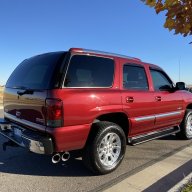
OP
OP
Matthew Jeschke

Matthew Jeschke

Full Access Member
Joined
Dec 28, 2017
Posts
2,344
Reaction score
1,743
Location
Sahuarita, Arizona
I have tens (hundreds?) of hours of video notes for my entire rebuild. I'm rebuilding from painting to rebuilding the transmission. I complied most recent ones with my rocker arm issues below:

Rocker arm swap​


Part 1 checking valve lash in engine bay

Part 2 trunnion rebuilds versus aftermarket rockers / Yella Terra Ultralight

Part 3 Yella Terra Rocker Arm kit

Part 4 Installing Yella Terra Rocker Arms
 

Mudsport96

Full Access Member
Joined
Jun 6, 2020
Posts
1,420
Reaction score
2,330
Location
40.923,-89.488. Illinois
Sounds like a pretty good setup. Would be interested to see a dyno run after it is all tuned.
Been thinking about a future 6.0 swap for my Tahoe. But i think i would be more likely to do an LQ4 with 799 or 706 heads to get the compression up. And like you do a "low end" torque build. Since 706s would be like 10.5 to 1 it may get strictly e85 but 799s would be closer to 10 so that may be "safer".
 
OP
OP
Matthew Jeschke

Matthew Jeschke

Full Access Member
Joined
Dec 28, 2017
Posts
2,344
Reaction score
1,743
Location
Sahuarita, Arizona
Sounds like a pretty good setup. Would be interested to see a dyno run after it is all tuned.
Been thinking about a future 6.0 swap for my Tahoe. But i think i would be more likely to do an LQ4 with 799 or 706 heads to get the compression up. And like you do a "low end" torque build. Since 706s would be like 10.5 to 1 it may get strictly e85 but 799s would be closer to 10 so that may be "safer".
Was a serious consideration. That combination with the 5.3L heads is common, and a inexpensive way to built great torque from what I've heard. I'd have loved to do it but limited to what fuel I can use.

I'm a fan of the full float rods, I don't believe LQ4 has them. If you can get a deal on a complete LQ4 I'd forgo the fancier pistons / wrist pins.

I had some oil squirter rods and in hindsight regret not using them. I had concerns with loosing oil pressure on the valve train (partly why I bought the 2116 LSR lifters) but I believe the crank is oiled last. Correct me if I'm wrong...

These are factory oil squirter rods (maybe a more correct name for that). They have a notch on the top of the journal which sprays oil up at bottom of piston. GM used them in limited runs.
20201231_105450.jpg


These are the traditional LQ9 rods. After I got new rod bolts, had them weight matched and cleaned up.
20210219_200224.jpg


I tried to balance the rods myself. I spent a long time trying to build the fixture but could never quite get it. In the end the cost of the fixture was what I paid machine shop to balance it all including the crank.

In hindsight, I've have also gotten aftermarket pistons. You can buy better aftermarket with the rings for much cheaper.
 

Tonyrodz

Resident Resident
Joined
Feb 16, 2012
Posts
33,182
Reaction score
51,394
Location
Central Jersey
One thing to consider--the earlier LS blocks--I'm not sure of the exact terminology--had shorter(?)cranks then the later blocks, so if you use a 00-02 motor in an 03-06 truck, you'd need to use a spacer on the rear of the crank--before bolting to the trans. I don't remember if the spacer would be used before or after the flex plate. I had gotten a low mileage 6.0 from an 01 to use in my 03, and this is why I sold it once I found out a spacer was needed. Just something to consider.
 

Mudsport96

Full Access Member
Joined
Jun 6, 2020
Posts
1,420
Reaction score
2,330
Location
40.923,-89.488. Illinois
Was a serious consideration. That combination with the 5.3L heads is common, and a inexpensive way to built great torque from what I've heard. I'd have loved to do it but limited to what fuel I can use.

I'm a fan of the full float rods, I don't believe LQ4 has them. If you can get a deal on a complete LQ4 I'd forgo the fancier pistons / wrist pins.

I had some oil squirter rods and in hindsight regret not using them. I had concerns with loosing oil pressure on the valve train (partly why I bought the 2116 LSR lifters) but I believe the crank is oiled last. Correct me if I'm wrong...

These are factory oil squirter rods (maybe a more correct name for that). They have a notch on the top of the journal which sprays oil up at bottom of piston. GM used them in limited runs.
View attachment 378961

These are the traditional LQ9 rods. After I got new rod bolts, had them weight matched and cleaned up.
View attachment 378962

I tried to balance the rods myself. I spent a long time trying to build the fixture but could never quite get it. In the end the cost of the fixture was what I paid machine shop to balance it all including the crank.

In hindsight, I've have also gotten aftermarket pistons. You can buy better aftermarket with the rings for much cheaper.
While they do add a bit of extra leeway for heavy use, im not sure i would personally worry about it. For what it would get used for i dont think i would need that feature. My dads old 2500 with the lq4 drug trailers way over the gvw and hauled in the bed countless skids of roofing materials for over 200k and never hurt anything. Oddly never had the oil pump oring issue either. So for a driver in a Tahoe i think a completely stock bottom end would work in my situation. And yeah the 706s are worth about 12 tq down low and give up the same hp above 5500 but how ofter are we teuck drivers there lkke your original post said.
 
OP
OP
Matthew Jeschke

Matthew Jeschke

Full Access Member
Joined
Dec 28, 2017
Posts
2,344
Reaction score
1,743
Location
Sahuarita, Arizona
@Mudsport96 I hear ya. Yeah not worth the effort if you don't have a LQ9 core, although the LQ9 cores aren't much harder to find than the LQ4. I believe the bottom end is all the same for the 6.0L and the 5.3 only thing is casting on block and heads. The heads are a bit bigger, as well as the bore is larger on the 6.0L block. One of the beauties of the LS / Gen III stuff so much parts interchangeability and various different displacements :) Only issue I had with my LM7 / 5.3 was a bad knock sensor, and oil pan gasket. Was like new when I tore it down. Never had o-ring issue either. The gen III SBC is an absolutely awesome design.

@mattbta that's a great plan! I'm loving my 6.0L

@Tonyrodz great point about the crank snout adapter. I forgot the years for that as well. I believe they sell the adapter on summit racing. Isn't a terrible big deal, BUT I like you didn't want anything to do with adapting things. I forgot the years / casting numbers that required the adapter though. I think it was an early block thing? I'm going to put a note in the original post.
 

Just Fishing

Can't fix stupid
Joined
Aug 30, 2020
Posts
4,499
Reaction score
10,114
Location
Utah
5.3 to 6.0 here.
I love the swap, night and day difference in overall drivability.

my 09 has the 6 speed as well, so it's nice being able to keep the rpm really low and just idle around town.
I get as good or better gas mileage when compared to my old 5.3 that had cylinder deactivation (my new 6.0 does not).

I don't know how the Gen3 will handle it, but I didn't have any issues using the stock 5.3 tune.
I just switched the entry for cylinder volume to reflect the new engine size (and disabled AFM).

That said, much more power to be had with timing and fueling.
Running the timing map from the escalade is amazing, but I'm still too chickenshit/lazy to mess with it much right now.
 

Kreativestreet

TYF Newbie
Joined
Sep 25, 2022
Posts
3
Reaction score
20
Location
Houston Texas
Appreciate the effort put in here but have to call out the elephant in the room .it’s overthought and underbuilt imho.
I’ll try to point out why and to preface this I have been building,tuning and racing gmt800s for over a decade and currently own 3 “05 avalanche 08 Escalade 03 denali xl “
Going 6.0 is a super smart move ,going lq9 pistons and rods with 317 heads is a no no for me here’s why.
When you use the 70cc 317 chamber to keep cr around 10 ish with the flat top pistons “lq9” you limit your cam choices due to ptv “piston to valve clearance “
It’s why Roger won’t recommend a high lift cam or long duration cam for that setup “I have used ALOT of Vinchi cams “
If your concern is octane you can work around it via tuning .

The way I always point any person wanting a high torque 6.0 is lq4 “dished piston “ and 243 heads to get the cr into the low 10s .
Leaves a lot of room for way longer duration and split lift cams to help torque production and won’t require dual valve springs or insane spring pressure “beehives preferred with proper trunion upgrades “

Next while going link bar lifters isn’t a bad thing it’s overkill and adds complexity that isn’t required or beneficial. I have plenty of 200k-300k mile engines in towing applications using nothing but good “real” Delphi ls7 lifters with zero issue .oiling is more your enemy in this regard vs the lifter failure .also pushrod diameter and weight is gonna be your problem hence I try to stay 5/16 .080 wall on most stock low rpm “below 6600rpm “ builds

Also if your 6.0 came with the square lower rod caps you could have just cleaned up used good rod and main bearings with new rings and already have a proven 1k capable rotating assembly since 03/4 up 6.0 used what became the gen 4 rods and the crank is and has never been a weak point on any of the LS/Vortec engine family

Tuning ,tuning and tuning is your biggest gain ,good injectors with known STABLE data is key ,”deatchwerks,injector dynamics “ you should be using a wideband to tune ,changing all that’s been changed and trusting the VE tables to be correct and praying your MAF tuning dials you in is a recipe for disaster .any decent wideband only costs 200 ish these days so why step over dollars to pick Pennie’s and yes you say your not going into PE or WOT ,but that’s only a under load situation ,your part throttle and low load areas may be massively lean or rolling rich that can cause a whole mess of issues .

I can go on and point to
Other things but it’s nitpicking and again while I can appreciate the effort I think more research would have been best and keep to the KISS method when it comes to torque builds .

Keep up the work either way and good luck
 
OP
OP
Matthew Jeschke

Matthew Jeschke

Full Access Member
Joined
Dec 28, 2017
Posts
2,344
Reaction score
1,743
Location
Sahuarita, Arizona
Few notes / updates since last post...

Upgraded following components

Injectors: Switched to L59 flex fuel injectors. I'd not maxed out the stock 24lb / hr ones in the tune but they were leaking so I upgraded to the L59 ones. You can find them used for really cheap. I had to get adapters to switch to the other plug though. Then I had to space the rail as well as the injectors are taller. ICT Billet sold the rail spacers. They are 33 lb / hr with the 58 PSI fuel pump for non flex fuel trucks.

Intake: Installed a Banks Cold Air Intake. I don't know if was a good idea, as I want lots of low end vacuum. However, it should have lower intake temps now. My stock intake was in rough shape too.

Alternator: Installed a 250Amp Alternator from Tucson Alternator. My stock one went out.

Transmission: Entire different thread, I built up a 4L60E and installed it along with rebuilding the tx case.

Tuning: Running HP Tuners RTOS in Speed Density Mode. Fuel and PE are tuned using VE table. Haven't really messed with MAF. I also tuned idle air flow, etc. etc. etc. Copied over the LQ9 spark settings and am tuning spark now. Had been running LM7 baseline spark settings (bad? probably?). Been tuning a LOT too much to list all the details here.

Wish list


AFR 205cc Mongoose Heads: I know everybody says to just use the 243 heads from the LM7. However, I was told I'd have to run premium gas. I didn't confirm that, probably should have measured the combustion chambers on them but didn't. Maybe I could have put a taller head gasket on? I don't know... but I used the 317 heads to be safe. Roger said the ultimate would be the Mongoose heads for my setup. They're not cheap by any means, but I'd order them bare w/o the springs and use the stuff he sold me.

LS1 Corvette Exhaust Manifolds: I'd LOVE to find a way to fit these on a truck. They're like shorty headers but cast. I personally prefer cast exhaust over headers. The LS1 manifolds will bolt up but they are plumbed differently so I don't know how to connect them to the downpipe.

Honestly, I think that would complete my ultimate build. That said I'd be well over 10k into the motor at that point....

Lessons learned

Lifters: I got a screaming deal on the 2116 LSR lifters. I didn't really know what I was getting myself into. That sent me down a rabbit whole buying lots of parts that didn't really benefit my end goal / build. That said those lifters are SUPER quiet which I think is making it easier to tune, less false knock... but I'm only comparing that to other people who say they get lots of false knock tuning. I have desensitized my knock sensors but not by nearly as much as other peoples tunes. Is it worth buying those lifters for that, probably not. They're really for high RPM builds. I'd go with a LS7 style lifter that has a link bar (or you can use the plastic trays if you're not **** like me). JUST make sure if they are plastic trays they're NEW OEM ones not generic.

LS1 Crankshaft: I'll never do this as I'd have to pull the motor again. I wish I'd installed the LS1 crankshaft. It's the same dimensions but a bit lighter. You can find them used for a reasonable price.

Piston Rings: Newer style piston rings aren't as thick. I'd get the thicker piston ring design. They must have switched somewhere during the Gen III production.

Oil Squirter Rods: GM did a limited casting run with oil squirter rods from the factory. I had a set but was nervous to use them so I sold them. I wish I'd installed them instead. They cool the pistons a little bit.

Factory Pistons versus aftermarket: I'd have gotten aftermarket pistons. Ones with a floating wrist pin type. I don't like the factory locking mechanism for the wrist pin either. Am I splitting hairs yeah, they probably never fail but I like something I KNOW is secured, not just a little clip that goes in a land. Additionally, something with a dish maybe could have accommodate perhaps those 248 heads at lower compression? Could I have made up the difference to use 87 octane gas? Maybe? I understand the smaller intake valve on the 248 heads is what helps contribute to the lower end torque (higher vacuum at lower RPM).

Matched combustion chambers: I am mainly doing this for fun, it's probably splitting hairs but I wish I'd measured the combustion chambers and matched them all to the same size. I went to trouble to polish them but didn't take time to match their size.

Tune with a wideband: make sure it's one you can do an open air calibration on. I lost a LOT of tuning due to issues with a pre calibrated sensor setup. Then had to buy an entire second wideband setup after they wouldn't warranty mine. I also chased my tail trying to tune part throttle cruise w/ narrow bands. Best to just use a wideband for the whole thing.

@Kreativestreet Thanks, would have been fun to chat with you prior to my build. Roger helped a LOT. I was amazed. His cost for the parts was peanuts compared to the help he gave me.

I didn't want a high lift cam. I specifically asked for something otherwise from him. I wanted dual valve springs too, not for the extra pressure but for redundancy. I actually wanted dual valve springs with a lower pressure if possible to reduce rotational load if any. I know that's not why most people buy them.

I felt more comfortable with a solid lifter guide versus those plastic trays. I hear lots of people have no issue with the plastic trays, but I sleep better at night knowing I have beefier guide for the lifters. Only trade off is I cannot easily swap a cam w/o removing the heads now. I personally really don't like the idea of the plastic trays functioning as a lifter guide much at all. I've had at least one immediate friend who burnt up his Gen III because of lifter failure. I personally, think those plastic guides don't stabilize the lifter like a metal one would. Maybe it's just me... but plastic? Really GM?

A failure to me, may mean loosing the entire truck with what I do or a VERY expensive recovery so much of my build focused around building in extra safeguards. Had I better spec'ed the parts it wouldn't have been quite as expensive for those little upgrades.
 
Last edited:

strutaeng

Full Access Member
Joined
Aug 10, 2023
Posts
1,939
Reaction score
4,188
Location
Dallas, Texas
About the LS1 crank: I think they had some cross drilling, but other than than that, no issues compared to the truck cranks...as long as you get whatever crank balanced to your rotating assembly. At least up to the 1,000 HP levels


Like, mixing and matching OEM cranks to different OEM pistons or aftermarket. I.e, using a 5.3 or 5.7 crank with 6.0 pistons, or vice versa. That definitely needs balanced to the proper bob weight.
 
Last edited:

Mudsport96

Full Access Member
Joined
Jun 6, 2020
Posts
1,420
Reaction score
2,330
Location
40.923,-89.488. Illinois
@Matthew Jeschke , A few little tidbits. The vette manifolds flow marginally better. But, the truck manifolds don't start becoming a significant restriction until 450 to 500 hp on a NA engine. Dyno comparisons have been done between truck and Camaro manifolds ( I know not the same as Vettes) and there is less than a 5 hp difference. That can be a difference in weather between the pulls.

As for Pistons, Rings, Rods, and Crank.

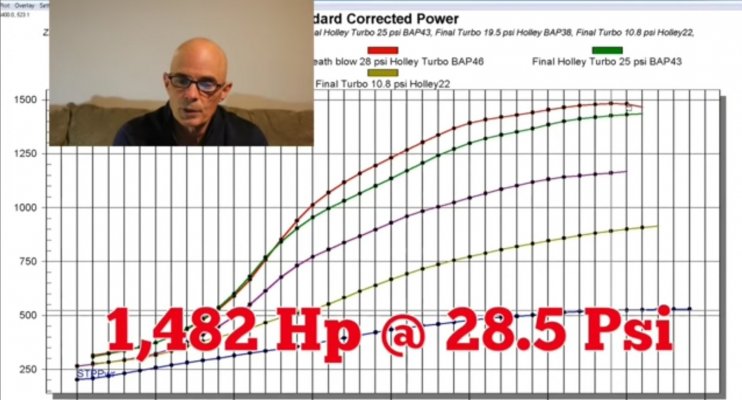
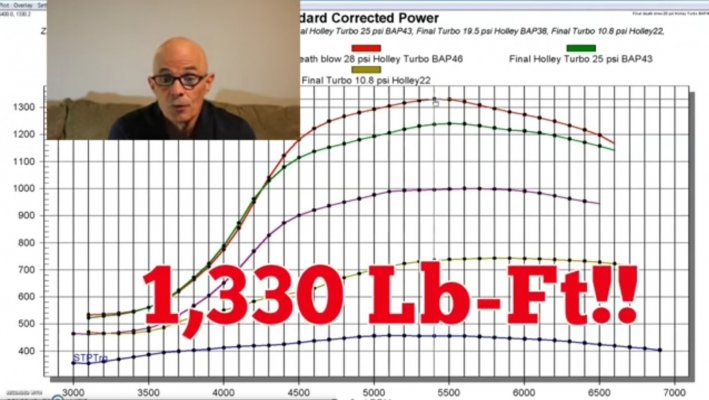
All the factory LQ4 stuff is sturdy enough for anything we would use them for in these trucks/SUVs. The current top limit for a Stock Bottom End LQ4 ( Pistons, rings, rods and bolts, BEARINGS, Balancer and crank), is almost 1500hp and over 1300 lbft of torque at almost 30psi of boost. And even then the guy is fairly sure it was a tune issue that killed it. He think he ramped timing in too soon and spiked the torque too low, thus folding a rod.
I'm not telling ya that you shouldn't build it the way you want. But, think of all the other things you could do with the saved money...
 

Attachments

  • Screenshot_20240225_141333_Chrome.jpg
    Screenshot_20240225_141333_Chrome.jpg
    170.1 KB · Views: 37
  • Screenshot_20240225_141347_Chrome.jpg
    Screenshot_20240225_141347_Chrome.jpg
    185.4 KB · Views: 37
OP
OP
Matthew Jeschke

Matthew Jeschke

Full Access Member
Joined
Dec 28, 2017
Posts
2,344
Reaction score
1,743
Location
Sahuarita, Arizona
This build has been INSANELY fun. Tuning can get a bit frustrating with price of gas right now but still is great fun. I think only thing complaining is my wallet :p

Engine isn't a WOT screamer. However, climbing is insane. I can climb stuff at part throttle that I used to have to use 4wd low in the 5.3L and nearly floor it.

I was also getting better gas mileage in mountains and city than the 5.3L up until a few months ago. I'm not sure what's up. It went from 14 to 15mph down to 12.5 ug.

About the LS1 crank: I think they had some cross drilling, but other than than that, no issues compared to the truck cranks...as long as you get whatever crank balanced to your rotating assembly. At least up to the 1,000 HP levels


Like, mixing and matching OEM cranks to different OEM pistons or aftermarket. I.e, using a 5.3 or 5.7 crank with 6.0 pistons, or vice versa. That definitely needs balanced to the proper bob weight.
It's splitting hairs using the LS1 crank... I had seen some on craigslist for like $40. I should have snagged one.

The interesting thing, I weighted my 5.3L pistons and compared to the 6.0L factory pistons. There was a decent weight difference. However, I couldn't find anywhere where the factory balanced things or used any different casting on the 6.0L than the 5.3L. It really threw me for a loop. I had it balanced just to be safe but some builders told me they just throw them together.

All my efforts to make a VERY quiet valve train and balance the rotating assembly maybe paying off in my knock sensitivity? I did SLIGHTLY desensitize the knock sensors. I get virtually no knock... Although the little I do get I think maybe burst knock which I'm going to disable in a couple runs. My next tuning run is to test smoothing I did to spark map after my adjustments, just to double check. Then I'll disable burst knock (predictive knock).

@Matthew Jeschke , A few little tidbits. The vette manifolds flow marginally better. But, the truck manifolds don't start becoming a significant restriction until 450 to 500 hp on a NA engine. Dyno comparisons have been done between truck and Camaro manifolds ( I know not the same as Vettes) and there is less than a 5 hp difference. That can be a difference in weather between the pulls.

As for Pistons, Rings, Rods, and Crank.

All the factory LQ4 stuff is sturdy enough for anything we would use them for in these trucks/SUVs. The current top limit for a Stock Bottom End LQ4 ( Pistons, rings, rods and bolts, BEARINGS, Balancer and crank), is almost 1500hp and over 1300 lbft of torque at almost 30psi of boost. And even then the guy is fairly sure it was a tune issue that killed it. He think he ramped timing in too soon and spiked the torque too low, thus folding a rod.
I'm not telling ya that you shouldn't build it the way you want. But, think of all the other things you could do with the saved money...

My concern had actually been, when they balanced my pistons they took material off the bottom side of the piston, immediately below the combustion surface. I got a little worried that might make the piston more prone to melting (should I do something stupid / run to lean / ping / etc while tuning). I had wondered if they made an aftermarket piston might have a special area that could be used to remove material for balancing. Also I had bought new OEM pistons. For same money or even less, I could have bought new aftermarket pistons with rings.
 

strutaeng

Full Access Member
Joined
Aug 10, 2023
Posts
1,939
Reaction score
4,188
Location
Dallas, Texas
I'm also building a 6.0 LS. It started as an LQ9 that had severe damage. Project sat for years. Finally took it to a machine shop and block was thrashed. So I picked up an L96 bare block, which had been bored 0.020" over. Crank was also bad, so I picked up a used 5.3 crank and just had it polished.

I had the machine shop balance it but it wouldn't balance due to insufficient weight on the counterweights, so they had to drill and install those heavyweight slugs.

What I was told is unless you are using factory parts that crank/displacement combination you are okay, otherwise mixing and matching will require rebalancing. Obviously, anything aftermarket will also require it.
 
OP
OP
Matthew Jeschke

Matthew Jeschke

Full Access Member
Joined
Dec 28, 2017
Posts
2,344
Reaction score
1,743
Location
Sahuarita, Arizona
I'm also building a 6.0 LS. It started as an LQ9 that had severe damage. Project sat for years. Finally took it to a machine shop and block was thrashed. So I picked up an L96 bare block, which had been bored 0.020" over. Crank was also bad, so I picked up a used 5.3 crank and just had it polished.

I had the machine shop balance it but it wouldn't balance due to insufficient weight on the counterweights, so they had to drill and install those heavyweight slugs.

What I was told is unless you are using factory parts that crank/displacement combination you are okay, otherwise mixing and matching will require rebalancing. Obviously, anything aftermarket will also require it.
Interesting! What's an L96? Is that a newer direct injection setup? That would be SWEEEEEET Direction injection is AWESOME other than injectors cost a bloody fortune.

I'm certain you're right on rod & crank combination. The difference was quite a lot for 5.3 pistons versus 6.0.. something like 10 grams per piston or more. I just for life of me couldn't see where the factory accounts for weight difference. They must shave a little off the crank counterbalances depending on which piston & rod combination they use.

Getting balanced was cheap at any rate. I don't really know why somebody wouldn't do it. My engine runs SOOOOOO smooth!
 

strutaeng

Full Access Member
Joined
Aug 10, 2023
Posts
1,939
Reaction score
4,188
Location
Dallas, Texas
Interesting! What's an L96? Is that a newer direct injection setup? That would be SWEEEEEET Direction injection is AWESOME other than injectors cost a bloody fortune.

I'm certain you're right on rod & crank combination. The difference was quite a lot for 5.3 pistons versus 6.0.. something like 10 grams per piston or more. I just for life of me couldn't see where the factory accounts for weight difference. They must shave a little off the crank counterbalances depending on which piston & rod combination they use.

Getting balanced was cheap at any rate. I don't really know why somebody wouldn't do it. My engine runs SOOOOOO smooth!
No, the L96 was a Gen IV series. Had VVT, but no DoD/AFM. It was the replacement of the LY6, but flex fuel capable. There's also something similar, but was set up for LP, LC8 I think? All of these were installed on the HD trucks and vans (8 lug).

The difference between the Gen III and IV is the knock sensors, camshaft position sensor and reluctor wheel count. The later can be adapted to the earlier. Aside from other differences like intakes and heads.
 

Mudsport96

Full Access Member
Joined
Jun 6, 2020
Posts
1,420
Reaction score
2,330
Location
40.923,-89.488. Illinois
My concern had actually been, when they balanced my pistons they took material off the bottom side of the piston, immediately below the combustion surface. I got a little worried that might make the piston more prone to melting (should I do something stupid / run to lean / ping / etc while tuning). I had wondered if they made an aftermarket piston might have a special area that could be used to remove material for balancing. Also I had bought new OEM pistons. For same money or even less, I could have bought new aftermarket pistons with rings.
Depending on how much they had to remove, it would be negligible to structural integrity. You want to remove weight as close to center as possible. And typically not much has to be removed to get a set balanced well anyway. I did a first gen 350 with a meat scale and a die grinder darn near 25 years ago. Built that engine out of a spare parts bucket. Lasted 10 years in a dump truck that ran around carrying anywhere from 16,000 to 26,000 lbs daily. Only reason it came out, was because the owner finally found a cheap replacement big block to put back in it.
I'm sure you chose a reputable shop, so I wouldn't worry too much.
 

Forum statistics

Threads
137,734
Posts
1,990,777
Members
102,722
Latest member
AdrienR
Back
Top