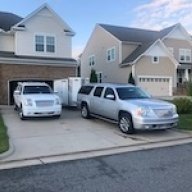
Want to take my 2010 Yukon XL Denali with 180,000 miles for a family trip from Michigan To Florida

Disclaimer: Links on this page pointing to Amazon, eBay and other sites may include affiliate code. If you click them and make a purchase, we may earn a small commission.

Doubeleive

Wes
Supporting Member
Joined
Nov 7, 2017
Posts
30,578
Reaction score
48,070
Location
Stockton, Ca.
Thanks so much for this!

So, for someone who knows nothing, I just want to make sure I understand.

1. Jack up the frame and support it with jack stands.
2. Pull the jack and now raise up the axle to be able to have control over the installation with it in its normal position.
3. Install the shocks
4. Put the tire back on
5. Remove the jack on that side
6. Repeat for the other side

Do I follow this same process for the removal as well?

I will look to see if I can find some good videos on jacking the vehicle up at the rear. This is definitely one of my blind spots.
just put the jack under the pumpkin and do both shocks at the same time, no need to complicate it.
 

mountie

Elite Member
Supporting Member
Joined
May 9, 2018
Posts
7,155
Reaction score
13,945
Location
Wellington, Fl., (formally Kalifornia)
If you have some concerns with your ride..... ( My '05 Yukon would be perfect to drive from Florida to Alaska... today, if I had to )....... BUT I understand your goal.......

If I go on a long round trip,.. I rent. (Plus a AAA membership card ). Any issues, I am an hour away, from a replacement - rental ride at zero cost. Peace of mind.
........ and you can drive the sh*t out of it !! :)
 
OP
OP
B

bobby2175

Full Access Member
Joined
Aug 12, 2023
Posts
203
Reaction score
200
just put the jack under the pumpkin and do both shocks at the same time, no need to complicate it.
Can I put the jack directly on the pumpkin? Assuming then I would put jack stands under the axles to hold it while I uninstall, reinstall the shocks?

Sorry for all of the questions - just want to do it right.
 

Geotrash

Dave
Supporting Member
Joined
Feb 16, 2018
Posts
7,845
Reaction score
20,404
Location
Richmond, VA
Can I put the jack directly on the pumpkin? Assuming then I would put jack stands under the axles to hold it while I uninstall, reinstall the shocks?

Sorry for all of the questions - just want to do it right.
Yes, but I use a block of wood between the jack and the pumpkin to protect it and ensure the weight it evenly distributed.
 

Doubeleive

Wes
Supporting Member
Joined
Nov 7, 2017
Posts
30,578
Reaction score
48,070
Location
Stockton, Ca.
Can I put the jack directly on the pumpkin? Assuming then I would put jack stands under the axles to hold it while I uninstall, reinstall the shocks?

Sorry for all of the questions - just want to do it right.
jack stands under the frame, jack under the pumpkin
you will want to be able to move the axle up/down a smidge, so the frame should be supported separately
you may not have to adjust the axle at all, just depends on if everything falls into place

if you lift just the axle you will be fighting everything and not be able to easily do it
 

petethepug

Michael
Joined
May 4, 2016
Posts
3,788
Reaction score
4,356
Location
SoCal
How would I go about getting XM radio to work with this head unit?

Here’s your user manual for 2010. You may have a HDD hard drive Navi system that can pause live radio & store music internally.

If your truck does have the HDD Navi (2010/11+), the XM receiver is located behind the glove box. This means you can add a $59 AD2P music streaming module that integrates directly into the factory controls.

Open Glove box, release the plastic catch so the door will fold down all the way and look up on the right side for the xm tuner that has XM traffic integrated. If it’s there, you’re stoked. To activate XM regardless, call them for a free trial. The best deal is $99 for the whole enchilada for 3 years. XM traffic is about $129 for 3 yrs.

7B3B707B-13B6-45AA-BF54-B6F48C244136.jpeg
 
Last edited:

iamdub

Full Access Member
Joined
Apr 23, 2016
Posts
20,821
Reaction score
45,012
Location
Li'l Weezyana
The airlift 1000 kit says "will not fit models with factory auto leveling option". Assuming I can't use that one. I'll look at the Firestone.

They'll physically fit the coils. When they say it won't fit, that's because they don't want people using the Air Lift or Firestone bags in conjunction with the ALC system (and you shouldn't). If your ALC system is inoperable, then you can proceed as if you DON'T have ALC, and helper bags are then fair game.

Based on your lack of towing but needing to fix the squatting, I agree with the others' advice to repair the ALC system. Buy once, cry once.


I'm absolutely serious about big 3 and upgrading my audio before I leave on the trip. I have a couple blown speakers including the center one in the dash (which is a bad place to have a blown speaker), tired of the head unit, and want to upgrade my audio. Would love to do this before the trip as we are all into music and the truck will be blasting something the entire drive. I don't know where to start on any of this.

My configuration is like this thread below where the mega fuse is integrated with the positive cable and not at the firewall.


Checking out the link...
 

adventurenali92

Full Access Member
Joined
Feb 16, 2015
Posts
7,722
Reaction score
9,173
Location
Big Bear Lake, ca
@adventurenali92
@Geotrash

So, I'm going to purchase the rear shocks and compressor. I went to the grocery store the other day and loaded up just a few things - a couple of cases of water - and with just that little bit, the truck sags way more than it should.

I've found a couple of videos that walk me through the installation of the shocks/compressor...looks mostly straightforward. Question - are the upper bolts as difficult as they look to remove? Any suggestions there? Seems like I'll need a socket extension to reach it, but is that it?

Also, the air springs like you mentioned above - should I install those as well as the new shocks and compressor to take load off the overall system? I think I'm starting to tinker and doing some of this for just fun now. It's definitely been a lot more enjoyable than I expected starting to work on my cars.
Agreed with @Geotrash that the airlift bags are not a necessity, just a simpler solution to maybe get you by until you make a decision on replacing the shocks or not. If you replace the shocks and compressor with like OEM components, and you don’t tow anything, then the functioning Z55 setup should be more than adequate to handle keeping the truck level with and light cargo in the rear. Only reason I added them was because I Tow more often now than I used to and I figured the bags would be a cheap insurance option to share the load with my Z55 shocks and compressor and hopefully help them last longer since they were expensive to replace. I think that seems to be holding true as I haven’t had any compressor or shock issues since replacing with genuine Arnott shocks. If I didn’t tow anything I probably would just have replaced the shocks and compressor and skipped the airlift bags and been done.
 

iamdub

Full Access Member
Joined
Apr 23, 2016
Posts
20,821
Reaction score
45,012
Location
Li'l Weezyana
@iamdub - can you give me a little guidance on the big 3? Please see in the link above that I have this configuration and don't fully know where all of these new wires will go. Still learning my way around the truck.

Been absent a few days- Work slammed me again.

I remember that thread.

For the Big 3, you're just copying the factory layout but with larger gauge wire. You replace (or supplement, if you want) the three main factory connections- alternator to battery (charge wire), battery to engine (ground) and engine to frame (ground). Referring to the pic below, the charge wire connects the positive stud on the alternator to where it is terminated at the battery, under the nut on the left side of the 175A fuse. It goes to the left from the fuse, drops down deeper into the engine bay and comes back up over the valve cover on its way to the alternator. You can see the red cable where the loom is missing near the oil filler neck. The red (looks pink in the pic) unfused one clamped to the battery positive post is going to the starter. This one doesn't have to be upgraded. The other one under that lefthand nut on the fuse, in the loom, goes to the firewall and across to the fuse & relay center. This one also doesn't have to be upgraded.

20210821_154156-jpg.jpg


While you're at it, and since it'll be replaced with a larger cable, I'd suggest you repurpose the stock 4 gauge ground cable. It runs from the battery negative post to the front of the passenger cylinder head. You can leave it on the cylinder head. Cut off the battery post clamp end and crimp on a lug to bolt it to the sheet metal of the body. I drilled a hole in the pinch weld on the cowl and bolted mine there. This will supplement that braided ground on the driver side that goes from the firewall to the nearly inaccessible stud on the back of the driver side cylinder head (or is it on the bell housing?) This will improve the ground connection from the body to the frame/engine (electrically synonymous at this point), making yours a "Big 4" upgrade.

 
OP
OP
B

bobby2175

Full Access Member
Joined
Aug 12, 2023
Posts
203
Reaction score
200
jack stands under the frame, jack under the pumpkin
you will want to be able to move the axle up/down a smidge, so the frame should be supported separately
you may not have to adjust the axle at all, just depends on if everything falls into place

if you lift just the axle you will be fighting everything and not be able to easily do it
Thanks for clarifying! Do I use another jack to then lift the axle up? Best point to lift the axle?
 
OP
OP
B

bobby2175

Full Access Member
Joined
Aug 12, 2023
Posts
203
Reaction score
200
Very important advice. You don't want the rubber boots on those shocks to roll over themselves by setting the back end down before the bags get some air in them.
Ok, I think this is my last question before I get started on it all when I get back into town. Do I need to do anything to put air in them before lowering the truck?
 

Geotrash

Dave
Supporting Member
Joined
Feb 16, 2018
Posts
7,845
Reaction score
20,404
Location
Richmond, VA
Ok, I think this is my last question before I get started on it all when I get back into town. Do I need to do anything to put air in them before lowering the truck?
No, not if you use the jack to support the rear axle while you work, then lift the rear end from the pumpkin slowly and carefully while watching the boots, and remove the jack stands right before you let the back end down. That way you can keep an eye on the shocks and make sure the boots don’t fold over on themselves as the shocks get compressed. Make sense?

I was working too fast in my 2012 and jacked up the rear axle when I was done to let it down like we’re describing, and didn’t notice that one of the boots had folded over on itself until it was already on the ground. I got lucky though and jacked it back up from the frame and was able to get it to unroll without any damage to the boot.
 
Last edited:
OP
OP
B

bobby2175

Full Access Member
Joined
Aug 12, 2023
Posts
203
Reaction score
200
No, not if you use the jack to support the rear axle while you work, then lift the rear end from the pumpkin slowly and carefully while watching the boots, and remove the jack stands right before you let the back end down. That way you can keep an eye on the shocks and make sure the boots don’t fold over on themselves as the shocks get compressed. Make sense?

I was working too fast in my 2012 and jacked up the rear axle when I was done to let it down like we’re describing, and didn’t notice that one of the boots had folded over on itself until it was already on the ground. I got lucky though and jacked it back up from the frame and was able to get it to unroll without any damage to the boot.
Makes perfect sense. Thanks for clarifying. I'm going to get started on everything when I get back into town in about 1.5 weeks. Thanks to everyone who lent a helping hand. I've got more questions on big 3 and radio, but want to get this more critical stuff done first. I'll be back when I get all of this done. Thanks again!
 
OP
OP
B

bobby2175

Full Access Member
Joined
Aug 12, 2023
Posts
203
Reaction score
200
Been absent a few days- Work slammed me again.

I remember that thread.

For the Big 3, you're just copying the factory layout but with larger gauge wire. You replace (or supplement, if you want) the three main factory connections- alternator to battery (charge wire), battery to engine (ground) and engine to frame (ground). Referring to the pic below, the charge wire connects the positive stud on the alternator to where it is terminated at the battery, under the nut on the left side of the 175A fuse. It goes to the left from the fuse, drops down deeper into the engine bay and comes back up over the valve cover on its way to the alternator. You can see the red cable where the loom is missing near the oil filler neck. The red (looks pink in the pic) unfused one clamped to the battery positive post is going to the starter. This one doesn't have to be upgraded. The other one under that lefthand nut on the fuse, in the loom, goes to the firewall and across to the fuse & relay center. This one also doesn't have to be upgraded.

View attachment 411775


While you're at it, and since it'll be replaced with a larger cable, I'd suggest you repurpose the stock 4 gauge ground cable. It runs from the battery negative post to the front of the passenger cylinder head. You can leave it on the cylinder head. Cut off the battery post clamp end and crimp on a lug to bolt it to the sheet metal of the body. I drilled a hole in the pinch weld on the cowl and bolted mine there. This will supplement that braided ground on the driver side that goes from the firewall to the nearly inaccessible stud on the back of the driver side cylinder head (or is it on the bell housing?) This will improve the ground connection from the body to the frame/engine (electrically synonymous at this point), making yours a "Big 4" upgrade.

@iamdub - want to make sure I understand big 4 properly:

1) 1/0 wire alternator to battery positive - clear
2) Battery negative to frame - completely remove the factory negative battery cable and run a new 1/0 cable from battery to where? Is this replacing the very thin wire from the original negative cable that goes down to the passenger side body mount bolt and that's where I should take it?
3) Engine block to frame - I believe this is the short wire I've seen in your pics from power steering pump to under engine mount bolt, right?
4) Body sheet metal to engine block - pinch weld at the cowl - should I make this 1/0 if I've got some extra wire?

There is no longer a battery negative to engine block cable?

Also, which of these cables goes through the RVC now - #2 above?
 
Last edited:

iamdub

Full Access Member
Joined
Apr 23, 2016
Posts
20,821
Reaction score
45,012
Location
Li'l Weezyana
@iamdub - want to make sure I understand big 4 properly:

1) 1/0 wire alternator to battery positive - clear
2) Battery negative to frame - completely remove the factory negative battery cable and run a new 1/0 cable from battery to where? Is this replacing the very thin wire from the original negative cable that goes down to the passenger side body mount bolt and that's where I should take it?
3) Engine block to frame - I believe this is the short wire I've seen in your pics from power steering pump to under engine mount bolt, right?
4) Body sheet metal to engine block - pinch weld at the cowl - should I make this 1/0 if I've got some extra wire?

1) 1/0 or whatever your wire size of choice is. The same size should be use for all new connections as the circuit is only as strong as its weakest link

2) To frame or engine because you'll be running a wire from the engine to the frame of the same size. Battery to frame is shorter, though. Don't forget to route it through the RVC sensor.

3) Correct. The shorter, the better. That was the most convenient points to connect.

4) No need to make it 1/0 cuz you're not running that many amps through the smaller accessories in the body. If it makes you feel better and you have the material- knock yourself out. I think it'd be more of a nuisance bolting a 1/0 to the cowl, though. And you already have the factory 4 gauge, so why not use it?


There is no longer a battery negative to engine block cable?

No. But they're all still equally connected electrically. Battery to engine to frame, battery to frame to engine... all the same. Just like body to engine or body to frame would be the same. The wire is large enough to support all loads of all systems to their maximum capacities with room to spare.


Also, which of these cables goes through the RVC now - #2 above?

Yes. You don't want any cables bypassing the sensor. The sensor needs to read the total amperage your car is drawing off the battery. Any circuits bypassing the sensor will allow loads to not be detected. Electricity takes the most conductive path. Having a 1/0 bypassing a 4 gauge through the sensor means pretty much all the current will be going through that 1/0 and the sensor will be seeing virtually no load being drawn.
 
OP
OP
B

bobby2175

Full Access Member
Joined
Aug 12, 2023
Posts
203
Reaction score
200
1) 1/0 or whatever your wire size of choice is. The same size should be use for all new connections as the circuit is only as strong as its weakest link

2) To frame or engine because you'll be running a wire from the engine to the frame of the same size. Battery to frame is shorter, though. Don't forget to route it through the RVC sensor.

3) Correct. The shorter, the better. That was the most convenient points to connect.

4) No need to make it 1/0 cuz you're not running that many amps through the smaller accessories in the body. If it makes you feel better and you have the material- knock yourself out. I think it'd be more of a nuisance bolting a 1/0 to the cowl, though. And you already have the factory 4 gauge, so why not use it?


No. But they're all still equally connected electrically. Battery to engine to frame, battery to frame to engine... all the same. Just like body to engine or body to frame would be the same. The wire is large enough to support all loads of all systems to their maximum capacities with room to spare.


Yes. You don't want any cables bypassing the sensor. The sensor needs to read the total amperage your car is drawing off the battery. Any circuits bypassing the sensor will allow loads to not be detected. Electricity takes the most conductive path. Having a 1/0 bypassing a 4 gauge through the sensor means pretty much all the current will be going through that 1/0 and the sensor will be seeing virtually no load being drawn.
Thanks for taking the time once again to clarify everything.

#1 - good, thank you.
#2 - I'm struggling a little bit on where the attachment point of this cable is. Do I run it all the way to where the original very thin ground wire goes - which is to the passenger side mount right behind the bumper?
#3 - I need to spend a few minutes finding this location.
#4 - good, thank you.

So, I have the entire heating/cooling system apart as we've been discussing and have a lot of easy access around. Are there any other parts that I should be proactively replacing? For example, should I replace or upgrade the alternator or any other parts?

Thanks again!
 

mountie

Elite Member
Supporting Member
Joined
May 9, 2018
Posts
7,155
Reaction score
13,945
Location
Wellington, Fl., (formally Kalifornia)
Thanks for taking the time once again to clarify everything.

#1 - good, thank you.
#2 - I'm struggling a little bit on where the attachment point of this cable is. Do I run it all the way to where the original very thin ground wire goes - which is to the passenger side mount right behind the bumper?
#3 - I need to spend a few minutes finding this location.
#4 - good, thank you.

So, I have the entire heating/cooling system apart as we've been discussing and have a lot of easy access around. Are there any other parts that I should be proactively replacing? For example, should I replace or upgrade the alternator or any other parts?

Thanks again!
( upgrade parts )....... You know your truck...... consider the age of your parts.... If they are only a few years old, they 'should' be fine. Just inspect for evidence of a problem, before spending money on things that will last. ( Our SUVs are known to last !

If you are preparing for a long trip, build an organized tool bag, a GOOD 'real' portable battery jumper, and a good selection of fuses, assesory belts, etc,....

Become a member of AAA, and you'll have up to a couple 200 mile tows for free ( $125.00 for a year) and mobile battery / tire service...
 
Last edited:
OP
OP
B

bobby2175

Full Access Member
Joined
Aug 12, 2023
Posts
203
Reaction score
200
( upgrade parts )....... You know your truck...... consider the age of your parts.... If they are only a few years old, they 'should' be fine. Just inspect for evidence of a problem, before spending money on things that will last. ( Our SUVs are known to last !

If you are preparing for a long trip, build an organized tool bag, a GOOD 'real' portable battery jumper, and a good selection of fuses, assesory belts, etc,....

Become a member of AAA, and you'll have up to a couple 200 mile tows for free ( $125.00 for a year) and mobile battery / tire service...
That's just it! The truck has literally had no issues until I ran into the phantom electrical stuff that I believe I've now fixed. Other than very basic routine maintenance (think oil changes, brakes, belt, and one 100K service at the dealer (fluids, plugs, wires), everything else is original believe it or not. As I've been learning more and more, I should have been doing more preventative maintenance until waiting for something to break. That's why I was asking about other parts while I've got some room to work with everything out of it.
 

Forum statistics

Threads
137,809
Posts
1,992,700
Members
102,794
Latest member
Drewphil
Back
Top