PatDTN
Full Access Member
- Joined
- Jul 5, 2016
- Posts
- 632
- Reaction score
- 465
I didn't see any mention yet of the oil pump pickup o-ring. Those dry out and crumble causing loss of oil to the pump. Hard to get to though.

Disclaimer: Links on this page pointing to Amazon, eBay and other sites may include affiliate code. If you click them and make a purchase, we may earn a small commission.
It sounds like really pronounced piston slap in the first video. You also said it becomes less noticeable after it warms up? That too can be piston slap. Some motors can run forever with it, some won't. I'd try some tests mentioned about oil level, maybe running some Marvel mystery oil, or ATF, with the oil to see if that helps remove carbon buildup, etc.that isn't ticking that is clacking..
ticking is fuel injector tick
that is diesel engine lifter clacking

Wow! Didn't know about piston slap! I have one also!Hi. First post here. I’ve been searching and reading multiple threads about the issue, but thought I’d share the symptoms my Yukon is having.
Bought a 2008 GMC Yukon XL with the 6.2 engine with 111.000 miles on it. After a couple of weeks I got the ticking noise at start up and the oil pressure drops after a short drive.
Ticking is worst at cold start, after 10 min it will be less significant. However oil pressure starts at 40 psi (according to gauge) and after a short drive it will drop to 10-15 psi at idle.
Took it to the mechanic and he had it for a couple of days. Oil and filter was changed. He tried the different ‘miracle oils’ and the ticking became less pronounced, but still there. He gave me the bad news and said that I would need a new engine. Apparently the vehicle has been run on a LPG system at some point in time, which was not good for the engine. I trust the guy, so the search for a replacement engine is in progress (need it shipped to Europe so it might take some time though)
I’ve added videos of what the ticking sounds like and what the oil pressure is.
Hopefully when a replacement engine has been found and installed I can update with a success story.
Start
After a short drive
Have the following DTC (the check engine light is on)
P0420 catalyst syst
P1133 HO2S insufficient switching
P2270 O2 sensor signal stuck
Thank you for taking the time to reply! I never knew about that! I think I have that also!It sounds like really pronounced piston slap in the first video. You also said it becomes less noticeable after it warms up? That too can be piston slap. Some motors can run forever with it, some won't. I'd try some tests mentioned about oil level, maybe running some Marvel mystery oil, or ATF, with the oil to see if that helps remove carbon buildup, etc.
My 2009 Denali sounded just like that when cold. I tried the decarbon route, etc. I think it eventually cracked a piston and started drinking a quart of oil in 400-500 miles. Sent that thing to the auction lot.....and never looked back. 1 out-of 5 isn't a bad ratio I guess, the remainder of the 6.2L I've had have been quite good.
Edit: after listening to the video with eyes closed, I'm 99% sure you are listening to piston slap. A lot of LS motors have it when cold. For some reason, the 2007 to 2009 6.2L seem to be more pronounced than later years from what I've seen.
As stated above, piston slap can be run for a long time. You are hearing a very small amount of play between piston skirt and the cylinder wall at either TDC or BDC when the piston is smaller than the cylinder - it basically rocks back and forth ever so slightly. It changes sound/goes away as the piston expands from use.
My current 2008 Denali has more pronounced piston slap in winter than summer just because of the temperature extremes. The only way to actually fix this is to pull the pistons and rods, inspect the bore, and either install new pistons, or bore it out and put in oversized pistons.
Some say piston slap is from carbon buildup on the rings. I would agree, but also think that repeated wear from expansion and contraction makes things slightly out of spec with age. Also, the Teflon coating on the side of the piston could be worn away, therefore allowing more noise to be made from the metal/metal contact.
Thank you. I did read about this issue as well in other threads, might be worth to look into. Probably wouldn’t hurt to get that fixed given the low oil pressure at idle when engine is warm.I didn't see any mention yet of the oil pump pickup o-ring. Those dry out and crumble causing loss of oil to the pump. Hard to get to though.
It sounds like really pronounced piston slap in the first video. You also said it becomes less noticeable after it warms up? That too can be piston slap. Some motors can run forever with it, some won't. I'd try some tests mentioned about oil level, maybe running some Marvel mystery oil, or ATF, with the oil to see if that helps remove carbon buildup, etc.
My 2009 Denali sounded just like that when cold. I tried the decarbon route, etc. I think it eventually cracked a piston and started drinking a quart of oil in 400-500 miles. Sent that thing to the auction lot.....and never looked back. 1 out-of 5 isn't a bad ratio I guess, the remainder of the 6.2L I've had have been quite good.
Edit: after listening to the video with eyes closed, I'm 99% sure you are listening to piston slap. A lot of LS motors have it when cold. For some reason, the 2007 to 2009 6.2L seem to be more pronounced than later years from what I've seen.
As stated above, piston slap can be run for a long time. You are hearing a very small amount of play between piston skirt and the cylinder wall at either TDC or BDC when the piston is smaller than the cylinder - it basically rocks back and forth ever so slightly. It changes sound/goes away as the piston expands from use.
My current 2008 Denali has more pronounced piston slap in winter than summer just because of the temperature extremes. The only way to actually fix this is to pull the pistons and rods, inspect the bore, and either install new pistons, or bore it out and put in oversized pistons.
Some say piston slap is from carbon buildup on the rings. I would agree, but also think that repeated wear from expansion and contraction makes things slightly out of spec with age. Also, the Teflon coating on the side of the piston could be worn away, therefore allowing more noise to be made from the metal/metal contact.
Thank you for your input, I will be looking more into the oil pump and I ring thing, maybe that’s the main reason for the low oil pressure.My 08 YXL Denali had a classic case of piston slap. When it cooled down at night, the cold start ups sounded horrible. It was truly just scary noises, not damage occurring.
Once the broken exhaust mani bolt was replaced and the intake was cleaned, it almost disappeared. As previously mentioned, check the oil pump o ring by TEMPORARILY over filling the motor with oil and NOT driving it to see it the oil pressure stabilizes.
I never would have sold the truck but I needed the e85 capability of the 09> on the 6.2L. You have one of the best years made (07, 08, 09) without the AFM. The slap is scary at first. I took ours from 96K to 140k miles with the slap and the new owner welcomed it because it was a harmless diagnosis.
Definitely piston slap. Good video.Thank you for commenting. It might very well be piston slap, given the knocking sound which after a while becomes a tick like sound.
Yes it is less noticeable when engine warms up. Just made a new video of cold start vs 7 min of idle when outside temperature is approximately 37 degrees farenheit.
The mystery oil was already tried by the mechanic, the first couple of times it would sound really bad, but after the engine warmed up the sound would again be less noticeable. I checked oil level, and it looks fine, doesn’t seem to be drinking oil.
When you have piston slap will that also affect oil pressure? Thanks again.
Welcome to the Forum from NH.
Lots of knowledgeable folks here who freely share their knowledge, experiences, and perspectives. Knowledge is power.
I hope that you will become a participating member in the Forum's discussions.
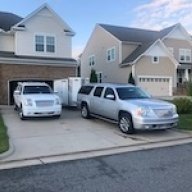
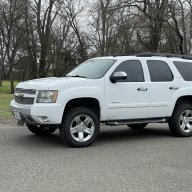
Pics of the truck, please.
You are already receiving sage advice from the knowledgeable folks on this Forum.
I agree with the folks here in that it is hard to believe that you engine is gone, if you hear a ticking sound, and that is the only known issue. My truck idles with 20+ psi when up to temperature, and has 45+ psi at rpm's over 1500.

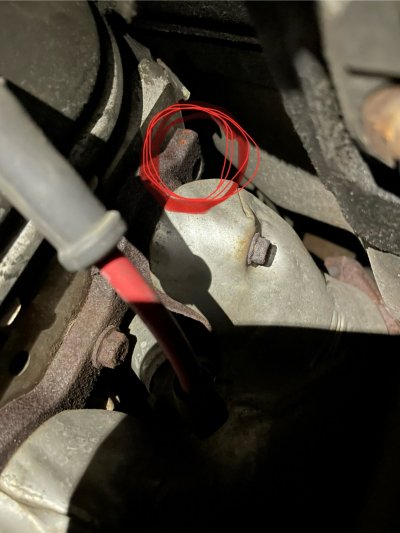
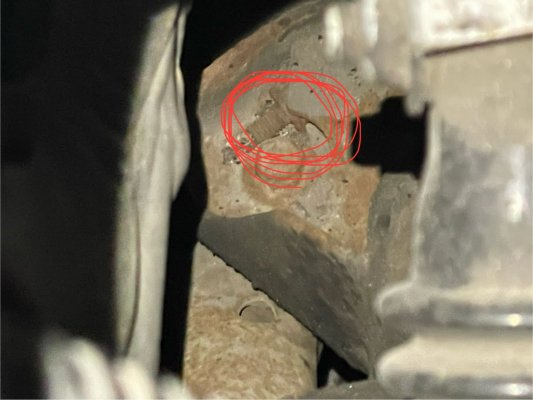
So I was changing the fuse for the front washer fluid, as I quit working today and for some reason I looked at the exhaust manifold on the driver side and it looks like I am missing a bolt?
Also I saw a bolt somewhere lower in the engine bay.
Can anyone tell if I’m missing a manifold bolt from the picture? Thanks.
+1 that you have a broken manifold bolt. If there is no exhaust leak, then you can let it ride. The Dorman clamps are fine, but more will break eventually and they won't help you if any of the bolts in the middle break. The proper repair is to remove the manifolds and be prepared to take the heads off to get any broken bolts out if necessary. Drilling them out in an aluminum head while still in the engine bay is not a good idea. Then, go back in with ARP bolts. They're a superior product that won't snap off.So I was changing the fuse for the front washer fluid, as I quit working today and for some reason I looked at the exhaust manifold on the driver side and it looks like I am missing a bolt?
Also I saw a bolt somewhere lower in the engine bay.
Can anyone tell if I’m missing a manifold bolt from the picture? Thanks.
A shop will probably fix it by welding a nub onto the end of any broken bolts, to make them easier to extract. That will at least save the expense of removing the heads.Thank you both @Charlie207 and @Geotrash, appreciate it!
I’m hoping (fingers crossed) that the missing bolt is what causes my ticking/knocking on cold starts.
I’ll have to figure out if this is something I wanna tackle myself or if I’ll have a shop fix it (clamp I might be able to myself, the other solution definitely not).
Thanks, that seems like a test I can perform for myself. And if it bubbles, there’s a leak right?@YukonDK It's certainly possible that it is the cause of the problem. You could get a spray bottle of soapy water and soak the area and start the motor and see if bubbles start coming out
You’ll have to hurry. That manifold will heat up instantly as soon as that cylinder fires and evaporate the soapy water.Thanks, that seems like a test I can perform for myself. And if it bubbles, there’s a leak right?