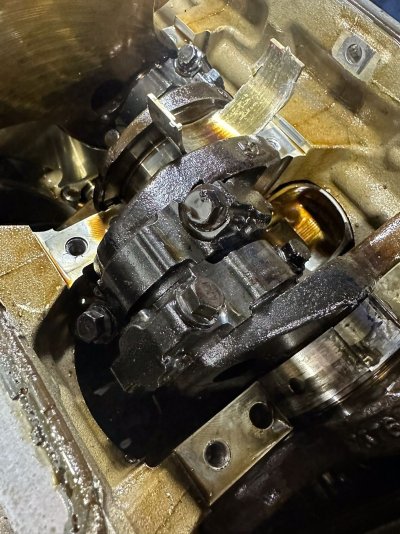
Lost the 6.2 (was: May have Lost the 6.2)

Disclaimer: Links on this page pointing to Amazon, eBay and other sites may include affiliate code. If you click them and make a purchase, we may earn a small commission.

Bigwales

TYF Newbie
Joined
Nov 23, 2025
Posts
4
Reaction score
5
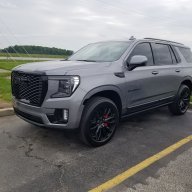
Headed out after work tonight, was going to head to Costco after work. Started up the Denali, drove about 2 miles, started hearing a loud knock/rattle from the engine. Sound reminded me of a playing card in the bicycle spokes. Pulled over, put it in park, could clearly hear the knocking, it varied with engine RPM. My GMC dealer was about 3 miles away, so I gingerly drove it to them, pulled in the service drive. Service manager popped the hood and listened. He said, "Definitely coming from the engine. This is a 6.2, right?"

I answered, 'Yes, of course."

He said, "doesn't sound good. I don't want to send you out of here with it."

My service advisor wrote it up, said they don't have a loaner right now, but offered the shuttle to take me home. He said after diagnosing tomorrow, he will call. If it is the engine, they will get me a looaner or a rental.

Details:
Odometer at 44,780
Recall was performed and passed pico test in June at 38k, been on 0W-40 since then.
Had a paid oil change at 43,200 about 2 weeks ago, along with front and rear diff fluid change, transmission fluid and filter, transfer case fluid, and replaced the battery.

Engine still ran when I left the dealer at 5:30, but is knocking badly. Guessing I'm in for a new engine, but we will see tomorrow; I'll keep you all posted.

May I ask your oil change intervals since you have owned the vehicle? Also do you drive with AFM on? Thank you.
 

Marky Dissod

Full Access Member
Joined
Mar 3, 2023
Posts
4,127
Reaction score
5,989
Location
(718)-
0w20 just made GM even more responsible even sooner for the failures. 0w40 is always safer than 0w20,
but no motor oil was ever going to save GM completely from their blunder.

I keep on saying this: the number of L87s that make it trouble free past 200,000 miles, even if GM does not want to own up to it,
is going to speak volumes about how badly GM messed up.
 

2024 White Tahoe

Full Access Member
Joined
Dec 30, 2024
Posts
353
Reaction score
369
May I ask your oil change intervals since you have owned the vehicle? Also do you drive with AFM on? Thank you.


The OP's vehicle does not have AFM (active fuel management). The vehicle has DFM (dynamic fuel management) - which is different.
 

Stbentoak

Full Access Member
Joined
Jul 20, 2020
Posts
2,257
Reaction score
2,736
I'm just saying IF (and that's a big IF) you did get a correctly built engine (6.2 or 3.0 Dmax) with NON defective components and no FOD in the engine AND you change your oil every 5K and don't pull a plow with it.... is the any PROOF that the engine won't run a normal life because of "thin" oil? (Which to me is 100k+)
 

Antonm

Full Access Member
Joined
Apr 2, 2024
Posts
539
Reaction score
626
I'm just saying IF (and that's a big IF) you did get a correctly built engine (6.2 or 3.0 Dmax) with NON defective components and no FOD in the engine AND you change your oil every 5K and don't pull a plow with it.... is the any PROOF that the engine won't run a normal life because of "thin" oil? (Which to me is 100k+)

This has already been answered (a few times actually) and the answer is no. There is no proof because its just not true. Plenty of people have been using 0W20 with no issues for years, it is adequate in many (probably most) cases if no factory defects or abnormal use/abuse exists.

0W40 is equal or better (in 100% of use cases/ environments), but that doesn't mean 0W20 doesn't work, just means there is better stuff out there if you want it.

0W20 is like the guy that graduated last in his medical school class, you still call him Doctor, and he probably does an adequate job,,,, I'd rather have the 0W40 guy that graduated closer to the top of the class, but both can get the job done if the diagnosis is simple/ normal.
...
 
OP
OP
WalleyeMikeIII

WalleyeMikeIII

Full Access Member
Joined
Feb 22, 2022
Posts
2,753
Reaction score
2,618
Location
Sunny and Snowy Minnesota
May I ask your oil change intervals since you have owned the vehicle? Also do you drive with AFM on? Thank you.
First one was about 2900,
The remainder were between 4k and 5k
My truck was completely stock, so yes DFM and Remote Start/Stop on.

I don’t think it has anything to do w/ Maintenance or AFM, issue is defective cranks and/or bearings.
 

vcode

Full Access Member
Joined
Feb 15, 2015
Posts
783
Reaction score
776
This has already been answered (a few times actually) and the answer is no. There is no proof because its just not true. Plenty of people have been using 0W20 with no issues for years, it is adequate in many (probably most) cases if no factory defects or abnormal use/abuse exists.

0W40 is equal or better (in 100% of use cases/ environments), but that doesn't mean 0W20 doesn't work, just means there is better stuff out there if you want it.

0W20 is like the guy that graduated last in his medical school class, you still call him Doctor, and he probably does an adequate job,,,, I'd rather have the 0W40 guy that graduated closer to the top of the class, but both can get the job done if the diagnosis is simple/ normal.
BMW spec'd 10W60 full synthetic in their 2001-2003 M3's yet they would still spin connecting rod bearings in 80-100K miles. Sometimes good oil can't hide bad design or manufacturing issues.
 

Vladimir2306

Full Access Member
Joined
May 18, 2023
Posts
1,048
Reaction score
1,235
@zbad55
There are no contradictions here. The first thing that suffers is the crankshaft and liners. However, this is not because the crankshaft is not properly processed or because the liners are bad. The crankshaft is the same as the one from the 5.3 and 6.2 fourth-generation engines, and gray inserts were also used on the 6.2 engine. The problem is with the block casting and motor build quality.
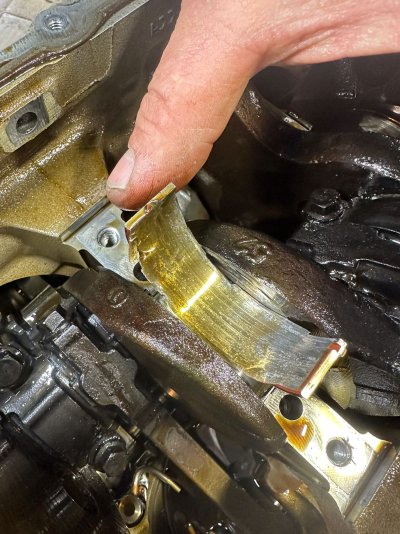
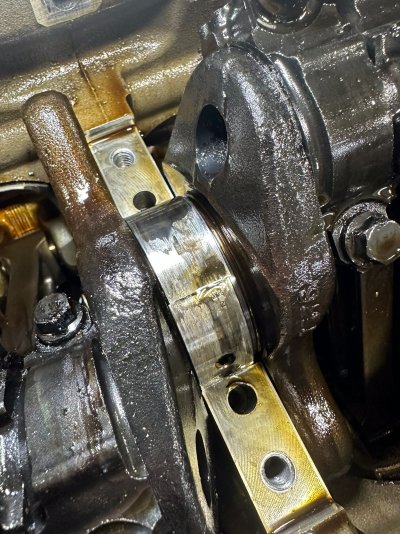
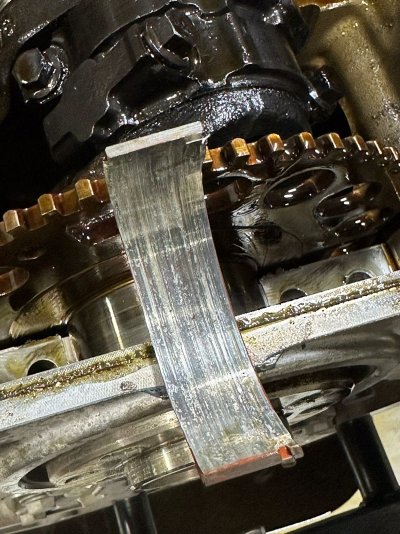
I have already posted a photo of a disassembled L87 engine that I received from the box instead of the original L87. This new engine has scuff marks on the liners and crankshaft, as well as on the Teflon coating of the pistons. A piston on a new engine should fit into the cylinder easily, but this is not the case. All this leads to a large amount of metal shavings during the break-in period.. And this chip cannot be removed in any way, it remains in the radiator. Therefore, to help the engine, you don't need 0-40 oil. You need 0-20 oil and the first change after buying the car should be done every 750-1000 miles at least 1-2 times. The third change can be done after 2000 miles. This will help remove metal shavings from the system and reduce the wear on the liners and crankshaft. Yes, you can try it.
 

West 1

Full Access Member
Joined
Jan 20, 2023
Posts
664
Reaction score
1,429
Vladmir, I held off commenting till I could look at your bearing photos on a large screen. I mentioned earlier in my working career I had to examine literally thousands of failed engine bearings usually to defend a customer and to help solve the cause.

Your rod bearings look 100% fine to my eye. They did not cause your engine failure. Not the ones in your pictures. Yes some particles went through the oiling system, you can tell by the centered circular marks left on these bearings but that was not enough to fail your engine. The orange color is just a super thin coating to help the actual rod bearing material never touch the crankshaft. Allows more forgiveness so the bearings can survive stress, temporary overheats or extreme loading situations. The coatings are great but all engines survived pretty well prior to these coatings, they just add quality. Bearing coatings are usually measured in millionths of an inch not in thousands of an inch. Super thin but effective, again added after the bearing is built to size and known to wear through over the life of an engine. Except for the scratches which look minor your pictured bearings are in good shape.

Your Main bearings certainly show wear but nothing really bad. Trust me, if you think those look bad you should see torn up bearings. Yours are wearing faster than they should but I don't see engine failure in the bearings pictured. I also see zero signs of oil starvation in your photos?

If you had rod bearing failure which I suspect because you only pictured 2 rods worth of bearings I would be looking at the back side of those bearings, not the crank side. Look for any signs the rod bearings are moving in the connecting rod cap. The back side of the bearings should show the cross hatch marks that were in the new connecting rods when assembled. If you can't see any cross hatch marks on the backside and maybe see shiny marks on the back side that indicates the bearings are moving in the rod.
There should be zero movement in a bearing once torqued in place inside the connecting rod. Crush is the term for the bearing being properly located in the rod once torqued. If there is not enough crush, the rod big end bore was too large it leads to the rod bearing spinning in the rod and you have total failure once a rod bearing spins it plugs the crank oil flow to the rod with no oil flow they quickly turn black, melt and you have noisy rod knock. There is no repair other than full overhaul at that point.

Same is basically true for Main Bearings, they also have crush specs needed or they can spin in the bore. Any alignment tabs on the bearings are only there to help assemble the engine. Alignment tabs do zero to avoid a spun bearing all that is controlled by the crush when the bearings are torqued in place. With aluminum blocks there is more growth in the aluminum than in the steel components and for this reason aluminum blocks use more crush and tighter bores to compensate.
IF spun bearings are the issue it points to connecting rod sizing or main bore sizing. Not much else can do that although I have seen some engines with detonation problems that pounded out the rod bearings till they spun but in that case you should hear spark knock long before engine failure and a loss of power due to the detonation. So far no owner has reported loss of power before failure.

Pistons today are sized to fit very tight in the bore. .001 is very common when using hyper eutectic pistons. The pistons are built to fit this tight. After manufacture they are coated with the Moly Coating / anti stick coatings. The coatings used to be silk screened on after the pistons were built. Silk screening is not exact like other things and will vary in thickness. Actual install procedures for he pistons tells the installer it is normal to sometimes have some of the coating scrape off the pistons on install due to the fluctuating thickness of the coatings. This may have improved today but was the case as recent as 2019. I have seen new pistons with runs in the coating. It does not hurt anything so those pistons are shipped as is with the run. The extra material will scrape off on install and still leave some coating between the piston and bore. No damage done. Piston coating does wear over the life of the engine but especially on brand new engines it offers lots of protection from skirt damage. I would not build an engine today without skirt coated pistons.

Finally, I have watched the 6.2 tear down video showing ALL main and rod bearings spun and destroyed. In 40 years in the industry I NEVER once saw an engine that bad. That is a display of ZERO oil flow in a good engine.... that engine was running well and while running at speed lost all oil flow and cooked all bearings at once. If it happend slowly you would see damage on the pistons and cylinders almost equal to the crankshaft failure. No idea why that engine lost all oil flow but it lost ALL oil flow to turn that crankshaft and rods black like that. The pistons looked much better because that engine had coolant flowing right till the end. The crank and rods are cooled only by oil flow. The black on the crank and rods is textbook extreme high heat exposure.

That is my 2 cents. Take it for what it is worth.
 

Vladimir2306

Full Access Member
Joined
May 18, 2023
Posts
1,048
Reaction score
1,235
Vladmir, I held off commenting till I could look at your bearing photos on a large screen. I mentioned earlier in my working career I had to examine literally thousands of failed engine bearings usually to defend a customer and to help solve the cause.

Your rod bearings look 100% fine to my eye. They did not cause your engine failure. Not the ones in your pictures. Yes some particles went through the oiling system, you can tell by the centered circular marks left on these bearings but that was not enough to fail your engine. The orange color is just a super thin coating to help the actual rod bearing material never touch the crankshaft. Allows more forgiveness so the bearings can survive stress, temporary overheats or extreme loading situations. The coatings are great but all engines survived pretty well prior to these coatings, they just add quality. Bearing coatings are usually measured in millionths of an inch not in thousands of an inch. Super thin but effective, again added after the bearing is built to size and known to wear through over the life of an engine. Except for the scratches which look minor your pictured bearings are in good shape.

Your Main bearings certainly show wear but nothing really bad. Trust me, if you think those look bad you should see torn up bearings. Yours are wearing faster than they should but I don't see engine failure in the bearings pictured. I also see zero signs of oil starvation in your photos?

If you had rod bearing failure which I suspect because you only pictured 2 rods worth of bearings I would be looking at the back side of those bearings, not the crank side. Look for any signs the rod bearings are moving in the connecting rod cap. The back side of the bearings should show the cross hatch marks that were in the new connecting rods when assembled. If you can't see any cross hatch marks on the backside and maybe see shiny marks on the back side that indicates the bearings are moving in the rod.
There should be zero movement in a bearing once torqued in place inside the connecting rod. Crush is the term for the bearing being properly located in the rod once torqued. If there is not enough crush, the rod big end bore was too large it leads to the rod bearing spinning in the rod and you have total failure once a rod bearing spins it plugs the crank oil flow to the rod with no oil flow they quickly turn black, melt and you have noisy rod knock. There is no repair other than full overhaul at that point.

Same is basically true for Main Bearings, they also have crush specs needed or they can spin in the bore. Any alignment tabs on the bearings are only there to help assemble the engine. Alignment tabs do zero to avoid a spun bearing all that is controlled by the crush when the bearings are torqued in place. With aluminum blocks there is more growth in the aluminum than in the steel components and for this reason aluminum blocks use more crush and tighter bores to compensate.
IF spun bearings are the issue it points to connecting rod sizing or main bore sizing. Not much else can do that although I have seen some engines with detonation problems that pounded out the rod bearings till they spun but in that case you should hear spark knock long before engine failure and a loss of power due to the detonation. So far no owner has reported loss of power before failure.

Pistons today are sized to fit very tight in the bore. .001 is very common when using hyper eutectic pistons. The pistons are built to fit this tight. After manufacture they are coated with the Moly Coating / anti stick coatings. The coatings used to be silk screened on after the pistons were built. Silk screening is not exact like other things and will vary in thickness. Actual install procedures for he pistons tells the installer it is normal to sometimes have some of the coating scrape off the pistons on install due to the fluctuating thickness of the coatings. This may have improved today but was the case as recent as 2019. I have seen new pistons with runs in the coating. It does not hurt anything so those pistons are shipped as is with the run. The extra material will scrape off on install and still leave some coating between the piston and bore. No damage done. Piston coating does wear over the life of the engine but especially on brand new engines it offers lots of protection from skirt damage. I would not build an engine today without skirt coated pistons.

Finally, I have watched the 6.2 tear down video showing ALL main and rod bearings spun and destroyed. In 40 years in the industry I NEVER once saw an engine that bad. That is a display of ZERO oil flow in a good engine.... that engine was running well and while running at speed lost all oil flow and cooked all bearings at once. If it happend slowly you would see damage on the pistons and cylinders almost equal to the crankshaft failure. No idea why that engine lost all oil flow but it lost ALL oil flow to turn that crankshaft and rods black like that. The pistons looked much better because that engine had coolant flowing right till the end. The crank and rods are cooled only by oil flow. The black on the crank and rods is textbook extreme high heat exposure.

That is my 2 cents. Take it for what it is worth.
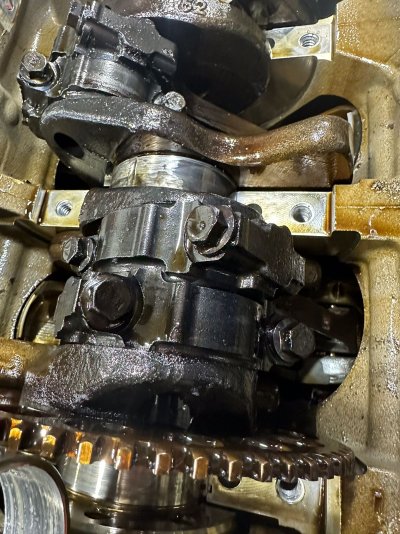
No, no, you misunderstood. This photo is not of bearings from broken engines. These are damaged bearings from engines in which the filter was cut during the oil change and metal shavings were found. That's when they open the engine and take out these inserts. This is a repair before the fatal destruction of the engine.When damaged, it looks like this.That's right about oil starvation, you're right, at some point the oil stops flowing into the engine, and this is most likely due to clogged oil channels with metal shavings. And metal shavings appear just because of the forced running-in of a new engine, without frequent oil changes during the first thousand miles. And by the way, to better wash out the metallic particles from the engine, you just need maximum liquid oil
 

Attachments

  • 2025-05-09 19-16-05_1746815377959.JPG
    2025-05-09 19-16-05_1746815377959.JPG
    353.6 KB · Views: 22
  • 2025-05-09 19-16-04_1746815387286.JPG
    2025-05-09 19-16-04_1746815387286.JPG
    417.8 KB · Views: 16
  • 2025-05-09 19-16-03.JPG
    2025-05-09 19-16-03.JPG
    356.5 KB · Views: 16
  • 2025-05-09 19-15-59_1746815395023.JPG
    2025-05-09 19-15-59_1746815395023.JPG
    372.2 KB · Views: 14
Last edited:

West 1

Full Access Member
Joined
Jan 20, 2023
Posts
664
Reaction score
1,429
Ouch, Mains and Rod Bearings spun. Sorry I based my comments on the photo’s I viewed in your earlier post.

We used to lay out all bearings in order as they were removed and you could usually follow the failure path. Once metal gets in the oil there is secondary damage you can see always following the oil gallery supply route.

Oil related failures always started at the point furthest from the oil supply as they would starve first and damage would get less as you were closer to the oil supply. The galleries in the block need to be studied in each engine design to determine how oil is supplied for that specific design.


It would be good to be able to examine the parts and look for the actual first failure point.
 

Vladimir2306

Full Access Member
Joined
May 18, 2023
Posts
1,048
Reaction score
1,235
Ouch, Mains and Rod Bearings spun. Sorry I based my comments on the photo’s I viewed in your earlier post.

We used to lay out all bearings in order as they were removed and you could usually follow the failure path. Once metal gets in the oil there is secondary damage you can see always following the oil gallery supply route.

Oil related failures always started at the point furthest from the oil supply as they would starve first and damage would get less as you were closer to the oil supply. The galleries in the block need to be studied in each engine design to determine how oil is supplied for that specific design.


It would be good to be able to examine the parts and look for the actual first failure point.
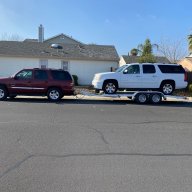
This is my engine after it jammed. There's no point in trying to trace anything there at all. The liners were turned and ground there. The connecting rods are generally all black. The oil was generally above 200 C. Because when I touched the dipstick, I immediately got a deep-fried burn. The engine jammed at 94 miles per hour while driving with a heavy trailer on the Highway. So there's nothing left of the engine.
There is also a nuance, when the engine is suddenly jammed on the track, the torque converter in the automatic transmission is also damaged.
 

Attachments

  • 2025-05-09 19-16-02_1746815388523.JPG
    2025-05-09 19-16-02_1746815388523.JPG
    368.8 KB · Views: 16
  • 2025-05-09 19-16-02.JPG
    2025-05-09 19-16-02.JPG
    340.6 KB · Views: 18

Jetskier77

Member
Joined
Apr 8, 2024
Posts
81
Reaction score
74
Thanks @Joseph Garcia, appreciate the kind words. It’ll all get worked out, my dealer is being as good to me as he can, we’re really at the mercy of GM and whenever they can provide an engine. We’ll get through it. Nobody got hurt. Everybody made it home that’s what really matters
Love your attitude and hope you get through the process without too many hiccups.
 

Jetskier77

Member
Joined
Apr 8, 2024
Posts
81
Reaction score
74
This is my engine after it jammed. There's no point in trying to trace anything there at all. The liners were turned and ground there. The connecting rods are generally all black. The oil was generally above 200 C. Because when I touched the dipstick, I immediately got a deep-fried burn. The engine jammed at 94 miles per hour while driving with a heavy trailer on the Highway. So there's nothing left of the engine.
There is also a nuance, when the engine is suddenly jammed on the track, the torque converter in the automatic transmission is also damaged.
I'm desperately trying to find the logic in towing a heavy trailer at 94mph... oh well.
 

Jetskier77

Member
Joined
Apr 8, 2024
Posts
81
Reaction score
74
Engine bearing quality and crankshaft finish is technology that has been understood for well over 40 years now. We used to supply GM with Main and Rod bearings for many years. I have seen the process from design to testing. At least up till 2019 when I left as the company was bought out. Maybe the new owners let the true engineers go??? Maybe the new owners decided it was cheaper to bring in bearings from China, manufacturing was split between the USA/ Michigan and Mexico when I left.

GM claims the crankshaft finish was less than perfect and that could certainly cause issues, maybe GM relaxed crankshaft finish so they could build new cranks 5% faster? Maybe they went off shore for bearings and the new supplier did not have the technology needed to make functional parts?

Hard to say without getting actual engineers that have the knowledge to look at the bad parts. The parts will tell the story. I have looked at thousands of failed engine bearings in 40 years. Sometimes a microscope was needed and small particles could be retrieved from the used parts. Those particles could be examined and determined exactly where in the engine the particles originated. It is not magic. How to determine the cause is a well documented process. At least it always was up until 2019 when I was last aware of process used.

In the old days once the parts were designed before GM would accept them as a production run actual dynometer tests were done on multiple running engines and they were put under thousands of hours of testing to see when and how they failed. They were exposed to low octane fuel to watch how they held up under detonation, exposed to high RPM tests, put in severe driving tests, tested with perfect oil and less than perfect oil. Everything was known and proven before GM accepted the design.

Ford insisted on a 300 hour wide open throttle test on new piston designs! That was over 12 days wide open throttle with the engine at max HP RPM on the dyno, if max hp was at 5600 RPM it would run there wide open throttle for over 12 days to meet the 300 hour test. There were about 8 dynomometer's in the bearing lab, 26 dynomometers in the piston ring lab, more in the piston lab, many more at the gasket lab These demanding tests were used to test many parts, everything from spark plugs, water pumps, injection systems, gaskets, bearings, rings, pistons. Everything had to work to run the engine under heavy loads for extreme testing.
I remember the engineers even introducing nitros to engines to determine failure points if an engine did not fail in normal testing.

I understand computers have taken over much of the actual testing and when done right all is still well. GM dropped the ball with these 6.2L engines, to continue building engines with these bearing problems over a few years is absolute negligence. They ignored the problem hoping it would only affect a smaller number of engines. All parts we supplied had to have identifiers stamped on them. You could pick up a used part and know what plant built it, what day, month and year it was built and what shift built the part that day. If there were problems you could trace it back and determine what went wrong on that specific day. In manufacturing parts were checked multiple times before shipping, visual inspections and electronic inspections were done. Core samples were taken to verify the metallurgy on schedule during production. The ball was dropped at GM or standards were relaxed causing this issue.

The engineering department at GM knew the cause and made it known to corporate GM management long before the public heard anything. GM gambled most of the engines would get out of warranty and lost. Now they are trying to present a positive spin to keep customers. OK, I feel better after sharing what little I know about engine parts supply and manufacture, keep in mind my information is going obsolete since I have not been involved at all since 2019. I would still trust the replacement engines. No way would they not fix the actual issue before shipping more engines. ( they might use up the existing inventory first but newly produced engines will be good ). We have not read of any supplier being blamed (yet) which says it was not the bearings fault they are failing.
Wow. Great information. Thanks for sharing this.
 

Forum statistics

Threads
137,817
Posts
1,992,856
Members
102,795
Latest member
Drewphil
Back
Top