Transmission Temp - did I make a mistake?

Disclaimer: Links on this page pointing to Amazon, eBay and other sites may include affiliate code. If you click them and make a purchase, we may earn a small commission.

Jhwhite05

Member
Joined
Sep 17, 2021
Posts
42
Reaction score
75
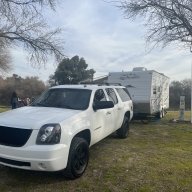
My reman transmission with less than 20k miles with an updated torque converter typically runs below 185 on warm days and 230 when going uphill on mountain pass at 45-55mph in tow mode. I have an external Derele transmission cooler.
Recently while towing in tow-mode on a very steep grade for 25 minutes at 15-40mph, the transmission temp on the dash got to 261. The car seemed to perform normally.
Was it unwise to take the transmission to this temperature and/or it is OK to do so occasionally?
 

Doubeleive

Wes
Supporting Member
Joined
Nov 7, 2017
Posts
30,704
Reaction score
48,348
Location
Stockton, Ca.
if it was a one time thing I am sure it's fine, but I wouldn't make a habit of it
The optimal temperature range for transmission fluid is 175 to 220 degrees. Above that, for every 20 degrees bad things happen, starting with formation of varnish at 240 degrees, followed by seals hardening, plates slipping, seals and clutches burn out, carbon is formed, and, ultimately, failure.
 

NickTransmissions

Sin City
Supporting Member
Joined
Mar 9, 2023
Posts
1,378
Reaction score
3,532
Location
The transmission bench
My reman transmission with less than 20k miles with an updated torque converter typically runs below 185 on warm days and 230 when going uphill on mountain pass at 45-55mph in tow mode. I have an external Derele transmission cooler.
Recently while towing in tow-mode on a very steep grade for 25 minutes at 15-40mph, the transmission temp on the dash got to 261. The car seemed to perform normally.
Was it unwise to take the transmission to this temperature and/or it is OK to do so occasionally?
At 250 degress, fluid starts to break down and lose its lubricative properties and fails to do its job.

Exchange the fluid with fresh dex6 (id try to do a full exchange vs just a partial)

ETC: removed references to the cooler bypass valve - for some dumb reason i thought they were installed onto the 07-14 6Ls...
 
Last edited:

Doubeleive

Wes
Supporting Member
Joined
Nov 7, 2017
Posts
30,704
Reaction score
48,348
Location
Stockton, Ca.
At 250 degress, fluid starts to break down and lose its lubricative properties and fails to do its job.

Do the following immediately:

1) exchange the fluid with fresh dex6
2) install GMs updated thermal bypass valve or flip the pill on yours
3) pray your 4-5-6 clutch pack didnt burn
the gmt900's do not have the thermal valve
 

swathdiver

Full Access Member
Joined
May 18, 2017
Posts
21,320
Reaction score
30,313
Location
Treasure Coast, Florida
My reman transmission with less than 20k miles with an updated torque converter typically runs below 185 on warm days and 230 when going uphill on mountain pass at 45-55mph in tow mode. I have an external Derele transmission cooler.
Recently while towing in tow-mode on a very steep grade for 25 minutes at 15-40mph, the transmission temp on the dash got to 261. The car seemed to perform normally.
Was it unwise to take the transmission to this temperature and/or it is OK to do so occasionally?
See post #290 in this thread:


Is your Derale larger than the OE cooler and did you mount it in the same place as the old or move it down and out of the way?

if your truck were mine and it got that hot, I would change the fluid when I got home. As it is, we change it every 36K miles nowadays unless we tow often then we do it sooner.

Some came with 6L80s. 2007-2014. 6L80 went into production in 2006 and was installed into numerous gmt900 platforms including submodels of the tahoe and yukon.
The OP Nick will have a 6L80 for 2009. The GMT900s did not get the thermal bypass valve. That started with the K2s when they moved the cooler to the condenser.
 

NickTransmissions

Sin City
Supporting Member
Joined
Mar 9, 2023
Posts
1,378
Reaction score
3,532
Location
The transmission bench
See post #290 in this thread:


Is your Derale larger than the OE cooler and did you mount it in the same place as the old or move it down and out of the way?

if your truck were mine and it got that hot, I would change the fluid when I got home. As it is, we change it every 36K miles nowadays unless we tow often then we do it sooner.


The OP Nick will have a 6L80 for 2009. The GMT900s did not get the thermal bypass valve. That started with the K2s when they moved the cooler to the condenser.
Gotcha, thanks @swathdiver , .

@Doubeleive - my bad, disregard.
 
Last edited:

Doubeleive

Wes
Supporting Member
Joined
Nov 7, 2017
Posts
30,704
Reaction score
48,348
Location
Stockton, Ca.
Some came with 6L80s. 2007-2014. 6L80 went into production in 2006 and was installed into numerous gmt900 platforms including submodels of the tahoe and yukon.

ETA: he mentions "updated torque converter" in his first post - no need to specify that as there are/were no "updates" required for TMBX converters as they didnt have the failure patterns like the JMBX converters that came with the 6L80s. That's what lead me to believe his is a 6L and not a 4L.

If he has the 4l60e, swap "4-5-6 clutch" with "3-4 clutch" and change the fluid. No TBV to worry about. Either way, trans overheated; hope there was no damage.
the 07-14 gmt900's did not have a thermal bypass valve, that started in 2015 and changed (mounting) design shortly after and then was recently updated in the last couple years with the lower temp valve
 

Marky Dissod

Full Access Member
Joined
Mar 3, 2023
Posts
4,230
Reaction score
6,169
Location
(718)-
After searching several ATF transmission charts (which were admittedly written before DexRon6), oversimplified rules of thumb appear to be as follows:

176°F ... 100,000 Miles ... Ideal sustained operating temperature
194°F ... 50,000 Miles ... Maximum recommended sustained temp
212°F ... 25,000 Miles ... Pressure drops

230°F ... 12,500 Miles ... Varnishes Form
248°F ... 6,250 Miles ... Seals Harden
275°F ... 3,125 Miles ... Clutches Slip
293°F ... 1,562 Miles ... Oil forms carbon, seals and clutches burn

Over 293°F, measure in minutes instead of miles - or just rebuild the damn thing already ...
 

swathdiver

Full Access Member
Joined
May 18, 2017
Posts
21,320
Reaction score
30,313
Location
Treasure Coast, Florida
After searching several ATF transmission charts (which were admittedly written before DexRon6), oversimplified rules of thumb appear to be as follows:

176°F ... 100,000 Miles ... Ideal sustained operating temperature
194°F ... 50,000 Miles ... Maximum recommended sustained temp
212°F ... 25,000 Miles ... Pressure drops

230°F ... 12,500 Miles ... Varnishes Form
248°F ... 6,250 Miles ... Seals Harden
275°F ... 3,125 Miles ... Clutches Slip
293°F ... 1,562 Miles ... Oil forms carbon, seals and clutches burn

Over 293°F, measure in minutes instead of miles - or just rebuild the damn thing already ...
We've seen that the K2s generally give up the ghost by about 100K miles and they run around 195-200 all the time.
 

NickTransmissions

Sin City
Supporting Member
Joined
Mar 9, 2023
Posts
1,378
Reaction score
3,532
Location
The transmission bench
After searching several ATF transmission charts (which were admittedly written before DexRon6), oversimplified rules of thumb appear to be as follows:

176°F ... 100,000 Miles ... Ideal sustained operating temperature
194°F ... 50,000 Miles ... Maximum recommended sustained temp
212°F ... 25,000 Miles ... Pressure drops

230°F ... 12,500 Miles ... Varnishes Form
248°F ... 6,250 Miles ... Seals Harden
275°F ... 3,125 Miles ... Clutches Slip
293°F ... 1,562 Miles ... Oil forms carbon, seals and clutches burn

Over 293°F, measure in minutes instead of miles - or just rebuild the damn thing already ...
Synthetic helps but I still subscribe to the notion that temps in a transmission are ideal between 160-175, regardless of anything else.

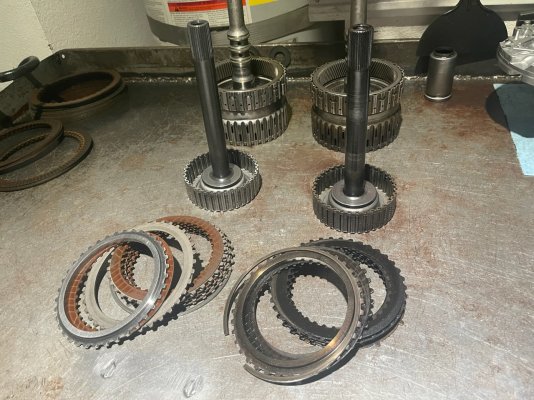
The trans could potentially "survive" one isolated incident like the OP describes assuming fluid is changed immediately and temps kept under 200* going forward but when the 6Ls overheat, the 4-5-6 is the first to burn.

Below is an example of what overheating does to the 6Ls , specifically...The 4-5-6 Drum/clutch. The pack on the left shows normal wear where temps were largely well-managed while the other one suffered several overheating events before being yanked.
IMG_7476.jpeg
 

Geotrash

Dave
Supporting Member
Joined
Feb 16, 2018
Posts
7,849
Reaction score
20,428
Location
Richmond, VA
After searching several ATF transmission charts (which were admittedly written before DexRon6), oversimplified rules of thumb appear to be as follows:

176°F ... 100,000 Miles ... Ideal sustained operating temperature
194°F ... 50,000 Miles ... Maximum recommended sustained temp
212°F ... 25,000 Miles ... Pressure drops

230°F ... 12,500 Miles ... Varnishes Form
248°F ... 6,250 Miles ... Seals Harden
275°F ... 3,125 Miles ... Clutches Slip
293°F ... 1,562 Miles ... Oil forms carbon, seals and clutches burn

Over 293°F, measure in minutes instead of miles - or just rebuild the damn thing already ...
That chart is often misrepresented as transmission life, but it’s actually fluid life in miles at each temp. And as you note, it’s for pre-Dexron VI fluid.

If it helps, in the February 2011 issue of Trailer Life magazine RV Clinic in response to a reader about the maximum transmission temperature allowed in a 2009 Chevy Silverado, the Tech Team had this response.

“General Motors’ in-house towing team expert provided RV Clinic with this statement: The maximum allowable automatic transmission fluid temperature is dictated by the transmission oil itself. The oil begins to degrade significantly above 270 degrees Fahrenheit, so we design vehicles so that in all but the most extreme conditions, the fluid temperature in the transmission sump stays below 270 degrees F.

We allow for up to 285 degrees F in extreme conditions (i.e. towing a trailer with combination loaded at GCWR in Death Valley). But for customer usage anywhere else in the country, even at GCWR, transmission sump temperature should stay well below 270 degrees F. Above this point, certain internal components, such as seals, begin to disintegrate rather quickly. Although newer synthetic fluids can withstand higher temperatures we still recommend this (270F) as a maximum temperature."

Finally, the GM orange manual (for RV chassis) says regarding Dexron VI ATF:

“300F is the maximum temperature. (Workhorse says 350F). This [converter outlet] is the normal place to install a temperature gauge or signal. The temperature in this location will vary significantly with each vehicle start-up or hill. If the temperature reaches 300F (350F), reduce throttle. To lower the transmission temperature with the transmission in NEUTRAL, run the engine at 1,200 RPM for 2-3 minutes to cool the oil. Do not allow the converter outlet temperature to exceed 300F (350F).

Keep a close check to prevent the engine cooling system from overheating.

300F would be typical of rocking the vehicle in mud, snow, or sand, or a transmission in stall (full throttle, no vehicle movement). When the transmission is in stall, the transmission will develop heat at a rate of one degree per second of stall.”

 
Last edited:

j91z28d1

Full Access Member
Joined
Feb 28, 2022
Posts
4,655
Reaction score
5,900
I tend to agree with the tranny guy, I'm much more comfortable at 180deg pan Temps, it will be higher at the pump and in the converter than the pan sensor. if it got that hot I'd change fluid as soon as I got home, personally I'm thinking of changing from acdelco dex6 to Amsoil before my next long tow into the mountains, even thou this is low mile fluid, never got over 167deg last time and fluid sample came back good. it just feels like cheap insurance and amsoil seems to be rated as a better fluid than factory stuff. one more change can hurt anything but my wallet haha

so yeah, I'd change fluid, full flush not just 3qt pan drop and work on mods to keep the Temps down for next time.
 

mikez71

Full Access Member
Joined
Mar 9, 2023
Posts
3,340
Reaction score
4,145
Is there an easy way to do a full flush?

I was thinking about sucking it out the dipstick tube to start, then doing a pan/filter a month or two later..
Or am I better off going to a lube shop?
 

swathdiver

Full Access Member
Joined
May 18, 2017
Posts
21,320
Reaction score
30,313
Location
Treasure Coast, Florida
...thinking of changing from acdelco dex6 to Amsoil before my next long tow into the mountains,

Grumpy Bear over at GM-Trucks forum documented a 1 mpg increase when he switched his pickup's 6L80 over to Amsoil transmission fluid. Last time I checked, Amsoil was twice as expensive as ACDelco's Dexron VI. Just paid $145 for 4 gallons delivered of 10-9244.

Is there an easy way to do a full flush?

I was thinking about sucking it out the dipstick tube to start, then doing a pan/filter a month or two later..
Or am I better off going to a lube shop?
Yes!

This is what you need or some semblance of it:

One Hayden 397:
1687066656082.png


One Lisle 22930:
1687066701548.png


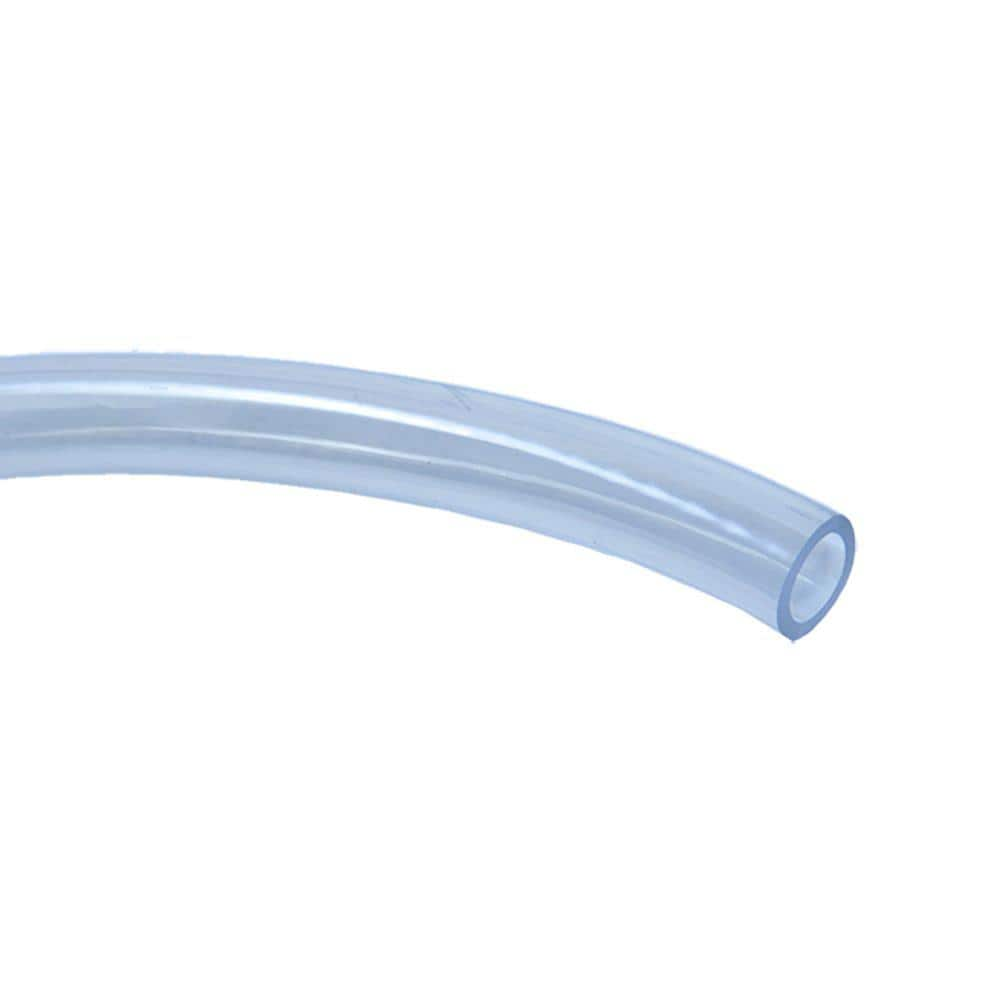
At least 10 feet of 3/8" ID Clear Vinyl Tubing:

1687066794416.png


One Bucket:

1687066819609.png


Set your parking brake and disconnect the upper transmission cooler line from the passenger side of the radiator using the Lisle 22930 tool. One hand to insert and twist and the other to pull ******* the line to release it. The line will not be used to exchange fluid and does not need to be covered.

Next, insert the Hayden 397 into the radiator until it clicks and then attach your tubing to it. It's a tight friction fit so you should not need to clamp it. Put the other end of the tubing into the bucket.

Start the engine and the transmission will begin pumping out the contents of the transmission pan. As soon as we see bubbles, we turn the motor off and add six quarts of new fluid through the dipstick. Then we start the engine again and pump out another 6 quarts or until we start to see the color of the fluid change for the better, bright red. Turn off the engine.

We then disconnect the Hayden 397 using the Lisle 22930 again and push the factory line back into the radiator. We add 4-5 quarts of fluid through the dipstick and start the engine. We move the gear shift lever through the gears, holding in each one for 5 Mississippi's then let it idle until the fluid gets to 90 degrees so we can check the level at the COLD check marks on the dipstick.

Once that's done, we take the truck for a spin around the neighborhood, trying to get the temperature to 160 degrees. This may require driving around in 2nd gear at 25-30 mph and we also make sure we get to 40-45 to make sure she naturally shifts through all the gears into 6th. Once the temp is up to 160 or more, we check the level on the HOT Check section of the stick and top her off as necessary.

It's a good time to take a sample and send off to Blackstone-Labs for analysis and take your Tech-2 and reset the internal Transmission Oil Life Monitor to 0%! ;)

Oh, of course you need 12 quarts or 3 gallons of your favorite Dexron VI Full Synthetic fluid. We use 10-9244 or 88865618.

Oh goodness! The censors didn't like two words next to each other, h-a-r-d and o-n. Dirty mind that computer has.
 
OP
OP
Jhwhite05

Jhwhite05

Member
Joined
Sep 17, 2021
Posts
42
Reaction score
75
Is your Derale larger than the OE cooler and did you mount it in the same place as the old or move it down and out of the way?
My model didn’t come with a cooler, so I mounted one to the passenger side of the radiator.

Do you suspect the heat coming off the cooler/slightly blocking the radiator impacted the performance of the radiator and led to higher trans temps?
 

swathdiver

Full Access Member
Joined
May 18, 2017
Posts
21,320
Reaction score
30,313
Location
Treasure Coast, Florida
My model didn’t come with a cooler, so I mounted one to the passenger side of the radiator.

Do you suspect the heat coming off the cooler/slightly blocking the radiator impacted the performance of the radiator and led to higher trans temps?
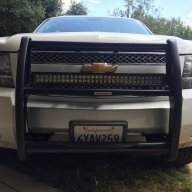
Maybe, do you have a photo of the installation? If it's a big 40K cooler, when they are mounted in the stock location in front of the radiator, they wind up increasing the coolant temperature which in turn heats up the transmission fluid as it first passes through the radiator.

They guys on here have learned to mount them a little lower down, so their shed heat will not heat up the coolant in the radiator.
 

Forum statistics

Threads
138,043
Posts
1,997,755
Members
102,981
Latest member
Towmaster
Back
Top