2001 Tahoe 2wd steering wander

Disclaimer: Links on this page pointing to Amazon, eBay and other sites may include affiliate code. If you click them and make a purchase, we may earn a small commission.

Battledrift69

TYF Newbie
Joined
Feb 7, 2021
Posts
15
Reaction score
7
I’ve searched all forums for an answer that would solve my wandering issue.

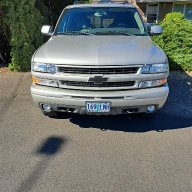
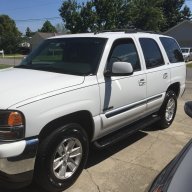
I have a 2001 Tahoe Lt 2wd that seems to steer on its own left to right which I saw is what’s called wandering or walking.

After searching for what seems like months, I’ve replaced damn near the entire suspension front and back.

new in the front;
Tie rod end, inner and outer
Pitman arm
Idler arm and bracket
Tires
Upper control arms
Intermediate steering shaft
Column bearing
Steering gear box
Sway bar end links
Shocks

wheel bearings have no play nor make any noise or signs of being faulty.

rear has new;
Sway bar end links
Pan hard bar
Springs
Shocks (Monroe self adjusting shocks, I’ve replaced with stock to see if that’s the issue and it wasn’t)
Upper and lower trailing arms


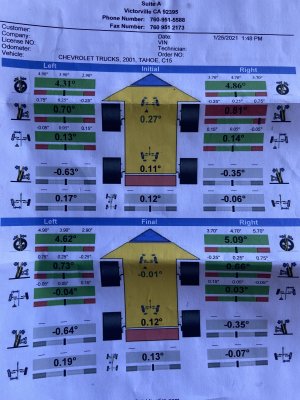
I’ve had 4 alignments done at different shops and they all come back good. They can’t find a single thing wrong.


I had noticed that the rear passenger sticks out a little bit farther than the driver rear. It’s not horrible but is noticeable if you’re looking for it.


I’m at a loss and have no idea where else to check.

no collisions, no rear end damage what so ever.
 

Fless

Staff member
Moderator
Joined
Apr 2, 2017
Posts
16,329
Reaction score
33,758
Location
People's Republic of Colorado
I’ve searched all forums for an answer that would solve my wandering issue.

I have a 2001 Tahoe Lt 2wd that seems to steer on its own left to right which I saw is what’s called wandering or walking.

After searching for what seems like months, I’ve replaced damn near the entire suspension front and back.

new in the front;
Tie rod end, inner and outer
Pitman arm
Idler arm and bracket
Tires
Upper control arms
Intermediate steering shaft
Column bearing
Steering gear box
Sway bar end links
Shocks

wheel bearings have no play nor make any noise or signs of being faulty.

rear has new;
Sway bar end links
Pan hard bar
Springs
Shocks (Monroe self adjusting shocks, I’ve replaced with stock to see if that’s the issue and it wasn’t)
Upper and lower trailing arms


I’ve had 4 alignments done at different shops and they all come back good. They can’t find a single thing wrong.


I had noticed that the rear passenger sticks out a little bit farther than the driver rear. It’s not horrible but is noticeable if you’re looking for it.


I’m at a loss and have no idea where else to check.

no collisions, no rear end damage what so ever.


How long has the wandering been an issue? How many miles on the truck?

Ball joints condition?

Front jounce stops in good condition and contacting the lower control arms?

Look at your RPO codes in the glovebox: see ZW7 and G65 codes?
 

OR VietVet

GMT800 2005 Tahoe Z71
Navy Supporting Member
Joined
Oct 8, 2014
Posts
23,720
Reaction score
44,163
Location
Willamette Valley
Welcome to the forum from Oregon.

I think you answered your own question. You said the right rear sticks out more than the left rear. That is called dog tracking. That is an offset that can cause wandering and can be especially noticeable depending in the road crown and asphalt wear on the road. You said 4 alignments were done. Post the before and after front and rear alignment readings. I am surprised that none of the alignment guys/girls did not say anything about the rear offset.

Hopefully the frame was checked, where the steering gear mounts, for cracks.

Have you owned since new? Ever any accidents. Need to check the diamond in the frame.

This helps explain that:

Getting It Straight
First of all, no less than eight to 10 measuring points should be located and measured before determining any method of repair. Now, suppose you measure the center section of a frame that received a direct impact to the front of the right frame rail. The right rail is driven back, say 18 millimeters, behind the left. Upon measuring the end sections of the frame, you’ll learn the front is swayed to the right and the rear is swayed to the left (see Figure 1).

39946agif_00000006604.gif
At this point, you’d want to properly secure the left frame rail before you begin pulling the frame. Because the end sections are swayed, you’ll only attach your anchoring chains to the center section of the frame, which will allow the end sections to move freely as you make the necessary pulls. Two or more anchoring chains should be used, and care should be taken to ensure the anchoring chains don’t crimp or crush any brake lines, fuel lines, wiring harnesses, etc. You’ll also want to make sure the anchoring chains aren’t wrapped around or attached to anything except the frame itself. The anchoring chains should extend from the frame rail at approximately a 45-degree angle.

Now attach the pulling chains to the right frame rail in a similar manner. Like the anchoring chains, the pulling chains will produce best results if you attach them in two secure positions on the right frame rail. These positions should also be located in the center section of the frame, preferably opposite the anchoring chains. These chains should also extend from the vehicle at the same approximate 45-degree angle in the opposite direction (see Figure 2). Jack stands should be used to support the frame near the anchoring points to avoid twisting the frame or collapsing the suspension springs. At this time, simultaneously apply equal amounts of pressure to each of the pulling chains. As the force is applied, periodically check the center section with a tram gauge or with a measuring system, if possible.

39946gif_00000006605.gif
As with any pulling procedure, you’ll want to apply a specific amount of force, say 1,000 pounds, and then release the pressure and measure the result of the pull. If needed, re-apply the pressure using slightly more pressure each time and re-measure the frame after each pull. Repeat this process until the center section of the frame measures to factory specifications, and then re-measure the full frame. At this point, most or even all of the side sway in the front and rear sections should have returned to its original position. However, you may need to make additional pulls to remove the last of the side sway from the front and rear sections. On particularly stubborn frames, you may want to make side pulls to the front and/or rear sections while the center section is under the pressure of the pulling force.

Now suppose the right frame rail is back as mentioned earlier, but the front end is swayed to the left due to the direction of travel of the colliding force. In this situation, I’d recommend the same procedures. First, remove the diamond condition from the center section, and then proceed to repair the end section(s). No matter which direction the colliding force came from, it’s still the center section of the frame that should be measured and repaired first.

(If you’re fortunate enough to be employed by a facility that’s equipped with a holding system designed specifically for frame vehicles, good for you. Better-quality frame equipment is designed so a vehicle’s frame can be securely mounted to the holding system at the center section’s four control points.) Once the vehicle is securely mounted, the mounts on either frame rail can be moved forward or back on the holding system to remove a diamond condition in the center section. As described earlier, you’d want to push or pull the frame to a known point and then release pressure so you can measure the result of each pull.


Got It Straight?
When this condition occurs in unibody vehicles, it’s commonly referred to as misaligned control points or a misaligned center section. No matter what name you choose to call it, the repair procedure is basically the same:

  1. Use the measuring system. Proper use of the measuring system saves time by telling us exactly where the damage is located.
  2. Start with the inner-most damage and work your way out. I often make some rough pulls on the end section of a vehicle during my initial disassembly, but I always pull the center section (if it’s damaged) to factory specifications before starting any serious repairs to the end sections.
One more thing: Although there are certain guidelines allowing and limiting the use of heat in frame repair, I personally choose not to heat frames any more than is necessary — and usually as a last resort. If heat must be used, consult I-CAR, ASE or the vehicle manufacturer’s guidelines regarding structural-steel heat temperature and time limits for the vehicle being repaired. It’s important to use heat-sensitive crayons at your recommended temperature and one each at a slightly higher/lower temperature to ensure the recommended temperature is reached, but not exceeded. And I don’t use heat on unibody vehicles at all.


The Diamond Dilemma
Repairing diamond frames shouldn’t be tricky — although some technicians make it tricky. Quit it. By following the simple steps outlined in this article, these types of repairs will go much smoother, much faster and be much more profitable.

 
OP
OP
B

Battledrift69

TYF Newbie
Joined
Feb 7, 2021
Posts
15
Reaction score
7
How long has the wandering been an issue? How many miles on the truck?

Ball joints condition?

Front jounce stops in good condition and contacting the lower control arms?

Look at your RPO codes in the glovebox: see ZW7 and G65 codes?


Jounce stops are brand new as of a few days ago. Although they do not make contact with the lowers, they’re about 1/2 - 1 inch above.

it’s been wandering for about a month now. Ball joints are all good and new.
228.000 miles and counting.

i have the G65 and ZW7 on the rpo codes.
 
OP
OP
B

Battledrift69

TYF Newbie
Joined
Feb 7, 2021
Posts
15
Reaction score
7
Welcome to the forum from Oregon.

I think you answered your own question. You said the right rear sticks out more than the left rear. That is called dog tracking. That is an offset that can cause wandering and can be especially noticeable depending in the road crown and asphalt wear on the road. You said 4 alignments were done. Post the before and after front and rear alignment readings. I am surprised that none of the alignment guys/girls did not say anything about the rear offset.

Hopefully the frame was checked, where the steering gear mounts, for cracks.

Have you owned since new? Ever any accidents. Need to check the diamond in the frame.

This helps explain that:

Getting It Straight
First of all, no less than eight to 10 measuring points should be located and measured before determining any method of repair. Now, suppose you measure the center section of a frame that received a direct impact to the front of the right frame rail. The right rail is driven back, say 18 millimeters, behind the left. Upon measuring the end sections of the frame, you’ll learn the front is swayed to the right and the rear is swayed to the left (see Figure 1).

39946agif_00000006604.gif
At this point, you’d want to properly secure the left frame rail before you begin pulling the frame. Because the end sections are swayed, you’ll only attach your anchoring chains to the center section of the frame, which will allow the end sections to move freely as you make the necessary pulls. Two or more anchoring chains should be used, and care should be taken to ensure the anchoring chains don’t crimp or crush any brake lines, fuel lines, wiring harnesses, etc. You’ll also want to make sure the anchoring chains aren’t wrapped around or attached to anything except the frame itself. The anchoring chains should extend from the frame rail at approximately a 45-degree angle.

Now attach the pulling chains to the right frame rail in a similar manner. Like the anchoring chains, the pulling chains will produce best results if you attach them in two secure positions on the right frame rail. These positions should also be located in the center section of the frame, preferably opposite the anchoring chains. These chains should also extend from the vehicle at the same approximate 45-degree angle in the opposite direction (see Figure 2). Jack stands should be used to support the frame near the anchoring points to avoid twisting the frame or collapsing the suspension springs. At this time, simultaneously apply equal amounts of pressure to each of the pulling chains. As the force is applied, periodically check the center section with a tram gauge or with a measuring system, if possible.

39946gif_00000006605.gif
As with any pulling procedure, you’ll want to apply a specific amount of force, say 1,000 pounds, and then release the pressure and measure the result of the pull. If needed, re-apply the pressure using slightly more pressure each time and re-measure the frame after each pull. Repeat this process until the center section of the frame measures to factory specifications, and then re-measure the full frame. At this point, most or even all of the side sway in the front and rear sections should have returned to its original position. However, you may need to make additional pulls to remove the last of the side sway from the front and rear sections. On particularly stubborn frames, you may want to make side pulls to the front and/or rear sections while the center section is under the pressure of the pulling force.

Now suppose the right frame rail is back as mentioned earlier, but the front end is swayed to the left due to the direction of travel of the colliding force. In this situation, I’d recommend the same procedures. First, remove the diamond condition from the center section, and then proceed to repair the end section(s). No matter which direction the colliding force came from, it’s still the center section of the frame that should be measured and repaired first.

(If you’re fortunate enough to be employed by a facility that’s equipped with a holding system designed specifically for frame vehicles, good for you. Better-quality frame equipment is designed so a vehicle’s frame can be securely mounted to the holding system at the center section’s four control points.) Once the vehicle is securely mounted, the mounts on either frame rail can be moved forward or back on the holding system to remove a diamond condition in the center section. As described earlier, you’d want to push or pull the frame to a known point and then release pressure so you can measure the result of each pull.


Got It Straight?
When this condition occurs in unibody vehicles, it’s commonly referred to as misaligned control points or a misaligned center section. No matter what name you choose to call it, the repair procedure is basically the same:

  1. Use the measuring system. Proper use of the measuring system saves time by telling us exactly where the damage is located.
  2. Start with the inner-most damage and work your way out. I often make some rough pulls on the end section of a vehicle during my initial disassembly, but I always pull the center section (if it’s damaged) to factory specifications before starting any serious repairs to the end sections.
One more thing: Although there are certain guidelines allowing and limiting the use of heat in frame repair, I personally choose not to heat frames any more than is necessary — and usually as a last resort. If heat must be used, consult I-CAR, ASE or the vehicle manufacturer’s guidelines regarding structural-steel heat temperature and time limits for the vehicle being repaired. It’s important to use heat-sensitive crayons at your recommended temperature and one each at a slightly higher/lower temperature to ensure the recommended temperature is reached, but not exceeded. And I don’t use heat on unibody vehicles at all.


The Diamond Dilemma
Repairing diamond frames shouldn’t be tricky — although some technicians make it tricky. Quit it. By following the simple steps outlined in this article, these types of repairs will go much smoother, much faster and be much more profitable.

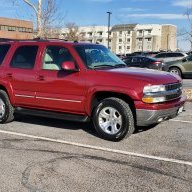
I bought it 2 years ago now, previous owner was the original owner. No accidents were on the record.

I’ve had the frame checked for any tweaks or damages and they said it had neither.

This is the most recent alignment I’ve received

6E5CEDDB-AA90-43B9-8189-7607AF3C19B9.jpeg
 
OP
OP
B

Battledrift69

TYF Newbie
Joined
Feb 7, 2021
Posts
15
Reaction score
7
Your new steering box could be junk out of the box. Not uncommon

I thought about this as well when I finally got to test drive it after installation. The new box did solve the sloppy steering I had beforehand though. It has no play at all l.
 

Rocket Man

Mark
Supporting Member
Joined
Dec 25, 2014
Posts
26,679
Reaction score
52,949
Location
Oregon
You didn’t mention the lower ball joints, just upper control arms so we know the uppers are new.
 
OP
OP
B

Battledrift69

TYF Newbie
Joined
Feb 7, 2021
Posts
15
Reaction score
7
You didn’t mention the lower ball joints, just upper control arms so we know the uppers are new.
When I replaced everything I checked for play or wear in both lowers. The previous owner said she got them done at 175k miles because they were bad. It now has 228k and they still look good and have no signs of being faulty yet.


Sent from my iPhone using Tapatalk
 

Byoung1330

Full Access Member
Joined
Aug 26, 2018
Posts
446
Reaction score
296
Location
Cookeville tn
I’ve searched all forums for an answer that would solve my wandering issue.

I have a 2001 Tahoe Lt 2wd that seems to steer on its own left to right which I saw is what’s called wandering or walking.

After searching for what seems like months, I’ve replaced damn near the entire suspension front and back.

new in the front;
Tie rod end, inner and outer
Pitman arm
Idler arm and bracket
Tires
Upper control arms
Intermediate steering shaft
Column bearing
Steering gear box
Sway bar end links
Shocks

wheel bearings have no play nor make any noise or signs of being faulty.

rear has new;
Sway bar end links
Pan hard bar
Springs
Shocks (Monroe self adjusting shocks, I’ve replaced with stock to see if that’s the issue and it wasn’t)
Upper and lower trailing arms


I’ve had 4 alignments done at different shops and they all come back good. They can’t find a single thing wrong.


I had noticed that the rear passenger sticks out a little bit farther than the driver rear. It’s not horrible but is noticeable if you’re looking for it.


I’m at a loss and have no idea where else to check.

no collisions, no rear end damage what so ever.
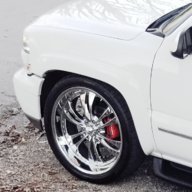
Mine does the same thing. But I have 24s. What size wheels u got? Also I installed a kyb stabilizer and it helped a lot. Also my entire front end is new. Except gear box.
 
OP
OP
B

Battledrift69

TYF Newbie
Joined
Feb 7, 2021
Posts
15
Reaction score
7
Mine does the same thing. But I have 24s. What size wheels u got? Also I installed a kyb stabilizer and it helped a lot. Also my entire front end is new. Except gear box.
I have stock ‘14 Silverado stocks with 265 70/17. It did the same thing with my Tahoe stocks though. I’ve been looking into a stabilizer but I’ve read that it only masks the issue and makes it worse. Could be wrong


Sent from my iPhone using Tapatalk
 

Byoung1330

Full Access Member
Joined
Aug 26, 2018
Posts
446
Reaction score
296
Location
Cookeville tn
I have stock ‘14 Silverado stocks with 265 70/17. It did the same thing with my Tahoe stocks though. I’ve been looking into a stabilizer but I’ve read that it only masks the issue and makes it worse. Could be wrong


Sent from my iPhone using Tapatalk
I like it so far. The only thing I worry bout is it putting stress on gear box
 

Floep

Full Access Member
Joined
Sep 11, 2011
Posts
105
Reaction score
38
In the bottom of the steering wheel shaft is a sensor that goes bad, makes the vehicle have its own mind which way to go.
 

Fless

Staff member
Moderator
Joined
Apr 2, 2017
Posts
16,329
Reaction score
33,758
Location
People's Republic of Colorado
A few things come to mind. I have heard that if the center link is not installed in the correct orientation that can cause weird steering issues.

Also, since you have ZW7 (Premium Smooth Ride) and G65 (Manually self-adjusting rear shocks), the rear springs are weaker than a stock or Z71 spring, and the rear Nivomat shocks are self adjusting (not electronic). So if the shocks were changed to standard type, the springs should also have been changed to firmer ones. What rear shocks are on it now?

Also, the bump stops must contact the lower control arms to work properly; that's a fulcrum point in the front suspension and stabilizes things. I don't know if that would affect the steering stability but I would think that it could.
 
OP
OP
B

Battledrift69

TYF Newbie
Joined
Feb 7, 2021
Posts
15
Reaction score
7
In the bottom of the steering wheel shaft is a sensor that goes bad, makes the vehicle have its own mind which way to go.
I’ve checked several times for this sensor and I don’t have it on the column anywhere. I’ve searched and searched for another place it may be and haven’t found one.


Sent from my iPhone using Tapatalk
 
Back
Top