
You are using an out of date browser. It may not display this or other websites correctly.
You should upgrade or use an alternative browser.
You should upgrade or use an alternative browser.
Why the switch to big rims?
- Thread starter bryan8252
- Start date
Disclaimer: Links on this page pointing to Amazon, eBay and other sites may include affiliate code. If you click them and make a purchase, we may earn a small commission.



Sparksalot
Elite Member
Hobert
Full Access Member
My 2 cents… 285/70R17
View attachment 421475
ProfeZZor X
Full Access Member
If I had to guess, the reason would be one thing... Performance. Actually I didn't have to guess, it was more of a common sense conclusion, and physics. It would seem that gone are the days of large squishy sidewalls that provide additional sway and wobble to the vehicle when in turns. Larger wheels and lower sidewall tires provide less body roll, and more driver control, which are ideal when navigating such a large vehicle like the Yukon/Suburban.
I could be wrong, but with SUV performance models within the likes of Range Rover, BMW, Mercedes, and even the Tesla Model X, GM is playing catch up to "get with the times".
I can say from my own personal experience of having 24's on my vehicle with low profile tires, it certainly does perform much better. Granted it is lifted 3 inches, I still get much better performance out of this setup (24x14 on 33.12.50r24) than I ever would from my factory wheels. And truthfully, you could NEVER convince me to go back to the stock setup.
I could be wrong, but with SUV performance models within the likes of Range Rover, BMW, Mercedes, and even the Tesla Model X, GM is playing catch up to "get with the times".
I can say from my own personal experience of having 24's on my vehicle with low profile tires, it certainly does perform much better. Granted it is lifted 3 inches, I still get much better performance out of this setup (24x14 on 33.12.50r24) than I ever would from my factory wheels. And truthfully, you could NEVER convince me to go back to the stock setup.
Last edited:
Switching to larger wheels beyond 20" is really a matter of appearance, not function. "Performance" usually depends on tread design and tire compound more than tire/wheel size. It may be the case that there are more performance oriented tires in a particular size than the other. But the performance gains of larger wheels, alone, in terms of body roll, etc. are not a significant factor. The increased weight of a larger wheel absolutely hinders performance.
If this were not the case, you wouldn't have people at the track usually looking for wheel options that are light, strong, and just clear the brakes (as small of a diameter as allowable) while still having appropriate tire options in the max performance summer, extreme performance summer, and streetable track/competition tires.
If this were not the case, you wouldn't have people at the track usually looking for wheel options that are light, strong, and just clear the brakes (as small of a diameter as allowable) while still having appropriate tire options in the max performance summer, extreme performance summer, and streetable track/competition tires.
Marky Dissod
Full Access Member
Once inboard brakes stopped being a thing (if ever), wheels were going to grow with brakes.The increased weight of a larger wheel absolutely hinders performance.
If this were not the case, you wouldn't have people at the track usually looking for wheel options that are light, strong, and just clear the brakes (as small of a diameter as allowable) while still having appropriate tire options in the max performance summer, extreme performance summer, and streetable track/competition tires.
Iron rotors convert kinetic energy to heat better than any other metal (titanium rotors have been tried, what a farce), but iron is heavy (be grateful tungsten rotors are not a thing).
Ceramic rotors have outstanding heat capacity, but need to be slightly larger than an iron rotor to dissipate heat at the same rate.
Either we're stuck with heavy rotors, or stuck with bigger heavier wheels, or both.
Those would be stiffer swaybars, and to a lesser extent, stiffer springs.Larger wheels and lower sidewall tires provide less body roll
For me personally its about how it looks on the vehicle, these 21+ GM's look best with 20-22" wheels as the vehicles are so large and the wheel openings look empty with smaller rims.
Ours had 20" and looked ok but I went with a 22" as it seems to fit the style of the Yukon the best. Again just personal preference.
As for the ride quality, did not notice any difference from 20" to 22"
For my 2020 Ram, I don't like anything over 20" on that style, I see some of them with 22" and don't really like the look.
I have a very picky taste when it comes to wheels for my cars, I will spend months trying to find the right look. My Valiant has custom-made Boyds rims in 15" and most of the time I dont go with custom rims on my old cars, but these just complements the car so well and I get so many comments on the rims. At the last car show, a gent offered to purchase the rims! I am still amazed at how many times I get complements on these wheels.
Ours had 20" and looked ok but I went with a 22" as it seems to fit the style of the Yukon the best. Again just personal preference.
As for the ride quality, did not notice any difference from 20" to 22"
For my 2020 Ram, I don't like anything over 20" on that style, I see some of them with 22" and don't really like the look.
I have a very picky taste when it comes to wheels for my cars, I will spend months trying to find the right look. My Valiant has custom-made Boyds rims in 15" and most of the time I dont go with custom rims on my old cars, but these just complements the car so well and I get so many comments on the rims. At the last car show, a gent offered to purchase the rims! I am still amazed at how many times I get complements on these wheels.
jforb
Full Access Member
I think you'll find the marketing guys did marketing surveys and discovered they could make more money by offering larger wheels, which are "trendy".
Apparently they were right. Look how much extra they get for 22s on a new vehicle.
We can argue that they improve performance...well, they probably do in some ways, but they they probably hurt it in other ways.
In the end, it's neat that those who like big wheels can get them, while those of us who don't want them, don't have to pay the extra expense.
Apparently they were right. Look how much extra they get for 22s on a new vehicle.
We can argue that they improve performance...well, they probably do in some ways, but they they probably hurt it in other ways.
In the end, it's neat that those who like big wheels can get them, while those of us who don't want them, don't have to pay the extra expense.
ProfeZZor X
Full Access Member
You're absolutely right... I forgot to mention that in my post.Those would be stiffer swaybars, and to a lesser extent, stiffer springs.
I personally prefer the 22s. My wifes 21 yukon xl and my 23 sierra both have the black 22" gmc wheels. The ride is smooth. On our 2 previous suvs which were an 18' Armada and a 15' Yukon, we had 20s and i dont see any drop in ride quality. I agree that these trucks have gotten so big that for me smaller wheels dont look aestically pleasing as the larger wheels. I am not sure I would ever go any larger than 22s as I dont trust my wife driving with a thinner tire but glad to see there are options for both sides of the crowds when it comes to wheels.

K2 Kaiju
Full Access Member
The only issue with the "performance" argument is that the inch in side wall reduction - while significant in a sports car - doesn't mean squat with a 3 ton body-on-frame SUV pushing down heavy on any tire. I feel a slight difference with the 18s in quick turns, but I can still go through them just as fast - just with less feel. The teeth shaking heaviness of the 22s were more unnerving IMO; I honestly doubt the slalom times would differ at all. Ill take the plush vs the slush...
Marky Dissod
Full Access Member
Proof that this thread is more about subjective aesthetic taste than objective performance enhancements:
Not a single post mentions a wheel that is larger and yet also lighter than a smaller wheel.
Do any posts even mention the measured weight of any wheel?
When anyone shops for an aftermarket wheel, do they advertise that it's lightweight?
Do they bother to mention the weight of that wheel before (or even after) buying?
After almost 30 years, still no one cares about the weight of their wheels, except maybe K2 Kaiju.
I'd love to see a survey / poll that compares who gets more action in their TYaukhoen / xl bubba / sklayd against the size of their wheels.
Not a single post mentions a wheel that is larger and yet also lighter than a smaller wheel.
Do any posts even mention the measured weight of any wheel?
When anyone shops for an aftermarket wheel, do they advertise that it's lightweight?
Do they bother to mention the weight of that wheel before (or even after) buying?
After almost 30 years, still no one cares about the weight of their wheels, except maybe K2 Kaiju.
Do tires for 22" wheels perform well in the rain / snow? What about off-road? Genuinely asking.The only issue with the "performance" argument is that the inch in side wall reduction - while significant in a sports car - doesn't mean squat with a 3 ton body-on-frame SUV pushing down heavy on any tire.
I feel a slight difference with the 18s in quick turns, but I can still go through them just as fast - just with less feel.
The teeth shaking heaviness of the 22s were more unnerving IMO; I honestly doubt the slalom times would differ at all. I'll take the plush vs the slush...
I'd love to see a survey / poll that compares who gets more action in their TYaukhoen / xl bubba / sklayd against the size of their wheels.
Switching to larger wheels beyond 20" is really a matter of appearance, not function. "Performance" usually depends on tread design and tire compound more than tire/wheel size. It may be the case that there are more performance oriented tires in a particular size than the other. But the performance gains of larger wheels, alone, in terms of body roll, etc. are not a significant factor. The increased weight of a larger wheel absolutely hinders performance.
If this were not the case, you wouldn't have people at the track usually looking for wheel options that are light, strong, and just clear the brakes (as small of a diameter as allowable) while still having appropriate tire options in the max performance summer, extreme performance summer, and streetable track/competition tires.
Proof that this thread is more about subjective aesthetic taste than objective performance enhancements:
Not a single post mentions a wheel that is larger and yet also lighter than a smaller wheel.
Do any posts even mention the measured weight of any wheel?
When anyone shops for an aftermarket wheel, do they advertise that it's lightweight?
Do they bother to mention the weight of that wheel before (or even after) buying?
After almost 30 years, still no one cares about the weight of their wheels, except maybe K2 Kaiju.
Do tires for 22" wheels perform well in the rain / snow? What about off-road? Genuinely asking.
I'd love to see a survey / poll that compares who gets more action in their TYaukhoen / xl bubba / sklayd against the size of their wheels.
I think we're on the same page. 22" wheels are usually pretty heavy and the increased weight hinders performance more than very minor sidewall performance characteristics.
I haven't seen any factory braking system that requires a wheel larger than 20" to clear. In fact, there are a lot of aftermarket braking systems like AP Racing, Wildwood, etc. that design braking systems that will allow users to fit a smaller wheel while still improving braking performance.
Anything beyond 20" is really for aesthetics, not performance.
Marky Dissod
Full Access Member
In addition to the braking considerations, I also have to wonder about the quality of the rubber compounds and construction used to make tires for 22" or larger wheels.22" wheels are usually pretty heavy and the increased weight hinders performance more than very minor sidewall performance characteristics.
How well do they perform in rain / snow? How well do they brake?
I wonder how much 'better' superfluously sized tires perform compared to tires for 20" wheels and smaller wheels?Anything beyond 20" is really for aesthetics, not performance.
fozzi58
Full Access Member
See my post at #28Proof that this thread is more about subjective aesthetic taste than objective performance enhancements:
Not a single post mentions a wheel that is larger and yet also lighter than a smaller wheel.
Do any posts even mention the measured weight of any wheel?
When anyone shops for an aftermarket wheel, do they advertise that it's lightweight?
Do they bother to mention the weight of that wheel before (or even after) buying?
After almost 30 years, still no one cares about the weight of their wheels, except maybe K2 Kaiju.
Do tires for 22" wheels perform well in the rain / snow? What about off-road? Genuinely asking.
I'd love to see a survey / poll that compares who gets more action in their TYaukhoen / xl bubba / sklayd against the size of their wheels.
Larger wheels are heavier. That's a fact. If you want large. lightweight wheels (Think 2 or 3 piece wheels), you are going to pay top dollar. As I stated in my post, I'm not about to spend $12,000 for a 20" or 22" lightweight wheel (sans tire). $4k was about my justifiable limit for an aftermarket tire and wheel combo.
I also went with a slightly larger tire profile to protect myself from the potholes. 295/35 24's would have given me 1"~1.5" sidewall and even better performance in the turns. However, I opted for 305/35s to give me some pothole protection. The annoyance of the slight rub on steering lock is a small price to pay for not having to dent the wheels, when dealing with some of these "craters" we have in our roads.
I posted the weight of the factory 18" with tire (about 18K miles on the tire) vs my 24's with new tires. There's a big disadvantage in unsprung weight between the two. That being said, I would think my slalom times are probably going to be better with my big wheel/small sidewall profile than a set of chunky 18" wheels. Not that 18's will fit anymore because of the Wilwood brakes, but I digress.
So I got my subjective aesthetic taste satisfied with the 24" wheel, cause to me the truck looks awesome, especially with that big honking caliper up front. I also got the performance cause I'm pretty sure I'm the only nutcase on this forum that autocrosses the car that supposed to TOW your autocross vehicle.
And yes I have summer tires, and they are good enough for the occasional snow here in North Jersey. My Burb is RWD so the closest I am going to get to off-roading is a gravel parking lot. Can't speak to that.
So yes, some of us actually do our homework!
Marky Dissod
Full Access Member
So your aesthetic and performance considerations were rebalanced to suit your taste?... got my subjective aesthetic taste satisfied with the 24" wheel, cause to me the truck looks awesome, especially with that big honking caliper up front.
I also got the performance cause I'm pretty sure I'm the only nutcase on this forum that autocrosses the car that supposed to TOW your autocross vehicle.
And yes I have summer tires, and they are good enough for the occasional snow here in North Jersey ...
... yes, some of us actually do our homework!
As opposed to ... lacking any performance considerations?
I don't autocross, but I'm not 'happy' with my Z71 yet.
I won't be until I figure out how to improve its on-road handling and agility (I do NOT need a Cadillac Fleetwood ride) without sacrificing as little of its Z71ness as reasonably possible.
K2 Kaiju
Full Access Member
So your aesthetic and performance considerations were rebalanced to suit your taste?
As opposed to ... lacking any performance considerations?
I don't autocross, but I'm not 'happy' with my Z71 yet.
I won't be until I figure out how to improve its on-road handling and agility (I do NOT need a Cadillac Fleetwood ride) without sacrificing as little of its Z71ness as reasonably possible.
Try new sway bars - they will make a difference. Put them all the way forward on the back too - I had my hotchkis on back hole at first then went forward - much more snap in rear. Did the same on my burb from mid to front on hellwigs - noticable improvement...
CMoore711
Full Access Member
- Joined
- Jul 18, 2017
- Posts
- 1,575
- Reaction score
- 1,500
Proof that this thread is more about subjective aesthetic taste than objective performance enhancements:
Not a single post mentions a wheel that is larger and yet also lighter than a smaller wheel.
Do any posts even mention the measured weight of any wheel?
When anyone shops for an aftermarket wheel, do they advertise that it's lightweight?
Do they bother to mention the weight of that wheel before (or even after) buying?
After almost 30 years, still no one cares about the weight of their wheels, except maybe K2 Kaiju.
Do tires for 22" wheels perform well in the rain / snow? What about off-road? Genuinely asking.
I'd love to see a survey / poll that compares who gets more action in their TYaukhoen / xl bubba / sklayd against the size of their wheels.
As @fozzi58 stated above it's no secret that larger diameter wheels are heavier than smaller diameter wheels; If you want large light weight wheels there are options, but it costs a lot of money. You're really talking about the differences between wheels that are forged aluminum versus cast aluminum.
You can search the differences between forged aluminum wheels versus cast wheels. Not only are forged wheels lighter in weight, but just like engine components forged metal is stronger than cast metal. They are usually about 3-5+ times the cost of cast wheels. Which is why forged wheels are not common on this vehicle platform.
GM OEM wheels are all cast aluminum
Any and all brand GM Replica wheels are cast aluminum
The typical brands of 20"-24" wheels you see on this forum such as DUB, Niche, Status, CODA, Giovanna, etc. are all cast aluminum wheels. Sure some of those brands offer forged wheels, but the selection is limited let alone have offerings in the GM 6 bolt pattern.
From my experience most GM OEM and GM replica wheels in the 22" x 9" size (cast aluminum) will weigh in the range of 45-49lbs. per rim depending on how much chrome it has and/or how much of the plastic chrome cladding is on the rim. This weight is rim only no tire.
For comparison sake; I have a set of Rennen M-6 Monoblock (Single Piece) Forged aluminum wheels that are 24" x 10" and each rim by themselves weighs 36lbs. by itself, no tire. Based on my experience that is about 10 lbs. lighter per rim compared to the average GM OEM 22" x 9" wheels and they're both larger in diameter and width.
There are some 22" x 9.5"-10" wide forged aluminum wheel options that are <30lbs. per rim, no tire. At that point you're talking almost 15-20 lbs. lighter than a stock 22" x 9" rim; And stronger since their forged versus cast.
To your point though there are a lot of owners who install larger diameter wheels and tires on their vehicle without considering the additional wear and tear the added weight will have on stock braking systems and stock suspension parts.
gooffeyguy
Tom
I have some 2 piece forged wheels for the mustangs. I'm surprised how much lighter the wheel/tire combo is when compared to the OE cast wheel/tire
As @fozzi58 stated above it's no secret that larger diameter wheels are heavier than smaller diameter wheels; If you want large light weight wheels there are options, but it costs a lot of money. You're really talking about the differences between wheels that are forged aluminum versus cast aluminum.
You can search the differences between forged aluminum wheels versus cast wheels. Not only are forged wheels lighter in weight, but just like engine components forged metal is stronger than cast metal. They are usually about 3-5+ times the cost of cast wheels. Which is why forged wheels are not common on this vehicle platform.
GM OEM wheels are all cast aluminum
Any and all brand GM Replica wheels are cast aluminum
The typical brands of 20"-24" wheels you see on this forum such as DUB, Niche, Status, CODA, Giovanna, etc. are all cast aluminum wheels. Sure some of those brands offer forged wheels, but the selection is limited let alone have offerings in the GM 6 bolt pattern.
From my experience most GM OEM and GM replica wheels in the 22" x 9" size (cast aluminum) will weigh in the range of 45-49lbs. per rim depending on how much chrome it has and/or how much of the plastic chrome cladding is on the rim. This weight is rim only no tire.
For comparison sake; I have a set of Rennen M-6 Monoblock (Single Piece) Forged aluminum wheels that are 24" x 10" and each rim by themselves weighs 36lbs. by itself, no tire. Based on my experience that is about 10 lbs. lighter per rim compared to the average GM OEM 22" x 9" wheels and they're both larger in diameter and width.
There are some 22" x 9.5"-10" wide forged aluminum wheel options that are <30lbs. per rim, no tire. At that point you're talking almost 15-20 lbs. lighter than a stock 22" x 9" rim; And stronger since their forged versus cast.
To your point though there are a lot of owners who install larger diameter wheels and tires on their vehicle without considering the additional wear and tear the added weight will have on stock braking systems and stock suspension parts.
None of those are going to be lighter than a 20x9 flow formed wheel at 27.6lbs:
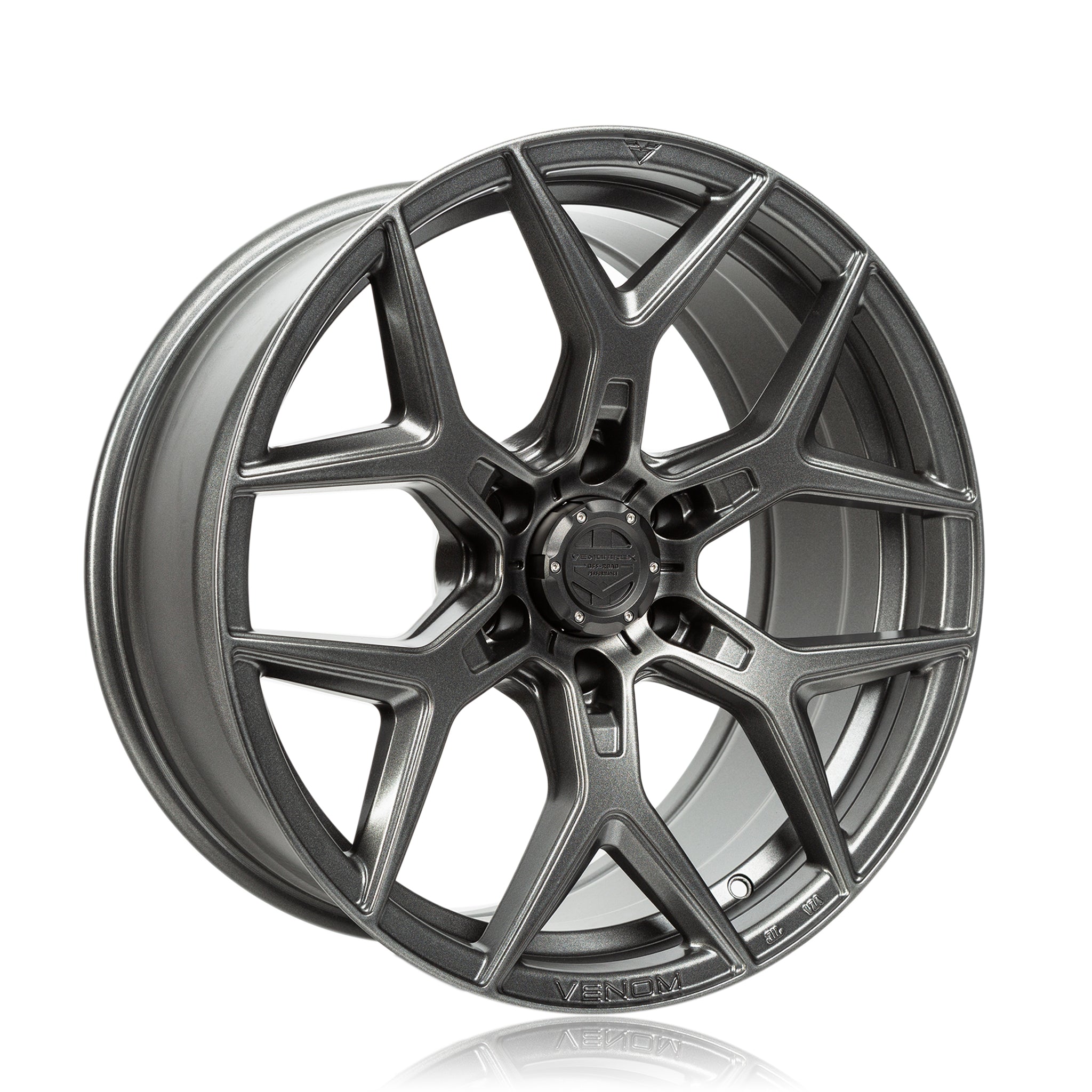
20" VR-601 Carbon Graphite
Details The VR-601 combines our distinct and innovative design methods with the busy and rugged styling of traditional truck wheels. Our engineers have utilized the design elements to create one of the lightest 20" flow forged wheels available for on and off road use. DESIGN - Distinct and...
vorsteineroffroad.com
Similar threads


- Replies
- 9
- Views
- 698

- Replies
- 17
- Views
- 1K

- Replies
- 23
- Views
- 2K


