
You are using an out of date browser. It may not display this or other websites correctly.
You should upgrade or use an alternative browser.
You should upgrade or use an alternative browser.
What is this awful creaking sound?
- Thread starter mattjones
- Start date
Disclaimer: Links on this page pointing to Amazon, eBay and other sites may include affiliate code. If you click them and make a purchase, we may earn a small commission.



could be a few different things, ball joint, tie rod ends, sway bar end links or bushings
could be a few different things, ball joint, tie rod ends, sway bar end links or bushings
i replaced the tie sway bar end links and sway bar bushings a few months back so maybe I messed that up somehow. Is there any way to diagnose it? Anything in particular I should look for?
HiHoeSilver
Away!
i replaced the tie sway bar end links and sway bar bushings a few months back so maybe I messed that up somehow. Is there any way to diagnose it? Anything in particular I should look for?
What kind did you use? Did you lube them?

Get a mechanic's stethoscope and get two big friends. Lay down with that scope and under the front and have them jounce the front end as hard as they can while you listen for where the noise is coming from. You can also have one of them jounce it while another rocks the steering wheel, engine running, back and forth to see if could be from any steering component like a dry ball joint or anything....etc. That does sound like a dry socket. for lack of a better term.
Moog and yesWhat kind did you use? Did you lube them?
Get a mechanic's stethoscope and get two big friends. Lay down with that scope and under the front and have them jounce the front end as hard as they can while you listen for where the noise is coming from. You can also have one of them jounce it while another rocks the steering wheel, engine running, back and forth to see if could be from any steering component like a dry ball joint or anything....etc. That does sound like a dry socket. for lack of a better term.
I’ve actually noticed it from just turning the wheel sometimes. Does that mean it’s the ball joint?
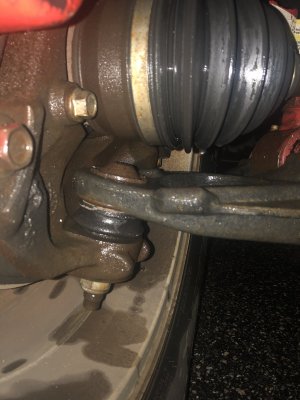
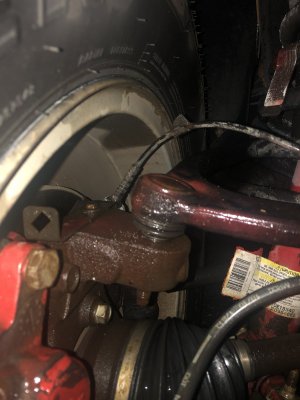
Here are some pics I took of the upper and lower driver side ball joints:
Last edited:
It means it could be the ball joint. That is why I preach, others here also, get the mechanic's stethoscope and pin point the noise area. It is a very inexpensive tool but is a money saver for sure.

iamdub
Full Access Member
I couldn't tell from the video, but does it do it when sitting still and turning the wheels left and right? Does it creak the whole time or just at certain points in the turning? Is it much worse when rolling?
It sounds very much like when my bro's truck had a wheel bearing go bad. Sounded like the backing plate scraping the rotor- high pitched sheet metal screechy/creaky sound.
It sounds very much like when my bro's truck had a wheel bearing go bad. Sounded like the backing plate scraping the rotor- high pitched sheet metal screechy/creaky sound.
I couldn't tell from the video, but does it do it when sitting still and turning the wheels left and right? Does it creak the whole time or just at certain points in the turning? Is it much worse when rolling?
It sounds very much like when my bro's truck had a wheel bearing go bad. Sounded like the backing plate scraping the rotor- high pitched sheet metal screechy/creaky sound.
I’ll try to get another video today but it does it when I turn the wheel, though it’s more pronounced when I hit a bump while driving
I’ll try to get another video today but it does it when I turn the wheel, though it’s more pronounced when I hit a bump while driving
This new info is more detailed. I still suspect a ball joint or bearing like Chris said. Does it make a difference which way you turn? Is it more pronounced when over a bump going straight or over a bump and turning at the same time? If so, does it make a difference on which way you are turning and how much you are turning?
Looks like it was a ball joint. I ended up ordering a grease gun on amazon and following this guide to grease a sealed ball joint: https://www.suspension.com/blog/how-to-grease-ball-joints/.
They didn't look to be torn or anything but after greasing them up it seems like the squeaking is gone. Here are some pics of the upper and lower ball joints:
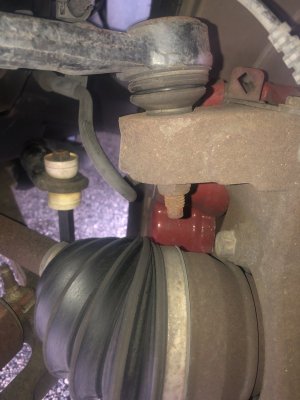
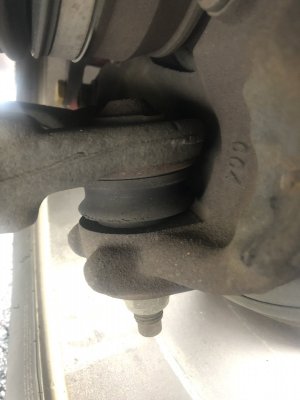
I also noticed the tie rod end seemed to be covered in grease like it had been leaking or something so I cleaned off the zerk and greased it up as well. Didn't notice it until just now but it looks like the dust shield might be broken right next to the tie rod end.
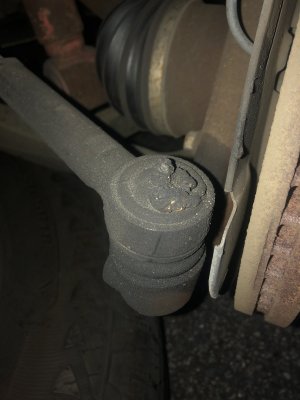
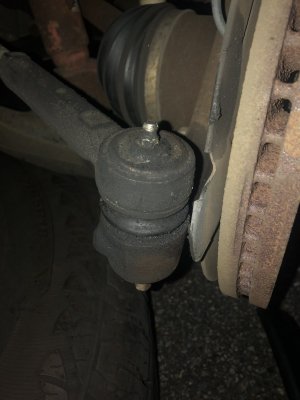
I'm assuming the ball joints will have to be replaced eventually but hopefully the grease will buy them some more life. Truck is at about 86k miles right now. I noticed the ball joints on the passenger side have zerk fittings so I'm guessing the previous owner had them replaced at some point.
They didn't look to be torn or anything but after greasing them up it seems like the squeaking is gone. Here are some pics of the upper and lower ball joints:
I also noticed the tie rod end seemed to be covered in grease like it had been leaking or something so I cleaned off the zerk and greased it up as well. Didn't notice it until just now but it looks like the dust shield might be broken right next to the tie rod end.
I'm assuming the ball joints will have to be replaced eventually but hopefully the grease will buy them some more life. Truck is at about 86k miles right now. I noticed the ball joints on the passenger side have zerk fittings so I'm guessing the previous owner had them replaced at some point.
iamdub
Full Access Member
Dust shield doesn't look broken at all.
Make it a point to at least check all the joints with zerks at each oil change. You don't need to pump the boots so full that they leak and you may not need to add any grease except to the TREs if they're leaking. AFAIK, the only other possible zerks would be the U-joints if they've been replaced with aftermarket greasable joints.
Make it a point to at least check all the joints with zerks at each oil change. You don't need to pump the boots so full that they leak and you may not need to add any grease except to the TREs if they're leaking. AFAIK, the only other possible zerks would be the U-joints if they've been replaced with aftermarket greasable joints.
Alot of times when you see grease build up around the grease zerk it is when they are clogged with dirt and the grease takes the least path of resistance. The zerk should ALWAYS be thoroughly cleaned before shoving grease in them. You can see how that lower ball joint boot is collapsed and cracking. Yea, when you do grease a zerk just fill the boot but not to excess where grease comes out of it. That can create a path for moisture to get in there when the grease falls off.
That dust shield looks fine. I bet the other side looks the same. That notch is for when the steering could be at full crank/turn and the suspension is jounced heavily and it gives clearance for the should of the tie rod to move.
That dust shield looks fine. I bet the other side looks the same. That notch is for when the steering could be at full crank/turn and the suspension is jounced heavily and it gives clearance for the should of the tie rod to move.
Dust shield doesn't look broken at all.
Make it a point to at least check all the joints with zerks at each oil change. You don't need to pump the boots so full that they leak and you may not need to add any grease except to the TREs if they're leaking. AFAIK, the only other possible zerks would be the U-joints if they've been replaced with aftermarket greasable joints.
No zerks on the u joints. I actually looked into replacing them when I first started hearing the squeak and thought it might have been a U joint causing the sound. It wasn't until the squeak got a lot louder that it was clear it was coming from the front driver wheel. But I actually dropped the drive shaft to look at the u joints and they seemed to be in good shape.
Alot of times when you see grease build up around the grease zerk it is when they are clogged with dirt and the grease takes the least path of resistance. The zerk should ALWAYS be thoroughly cleaned before shoving grease in them. You can see how that lower ball joint boot is collapsed and cracking. Yea, when you do grease a zerk just fill the boot but not to excess where grease comes out of it. That can create a path for moisture to get in there when the grease falls off.
That dust shield looks fine. I bet the other side looks the same. That notch is for when the steering could be at full crank/turn and the suspension is jounced heavily and it gives clearance for the should of the tie rod to move.
Ah okay, makes sense. I didn't even notice the little cutout until I was looking at the picture. All of those pics were taken before I greased them. I pumped until I could see the boot filling out.
The boot is full when bulging round. I have even filled the boots and then started the engine and cranked the steering left and right 5-6 times each way and then could see the boot bulge was flatter and then I put more grease in. Really no need to grease till pushes out. Can create a moisture path, as I stated earlier. I have even seen old/cracked rubber ball joint and tie rod boots split open when have too much grease in them.
The boot is full when bulging round. I have even filled the boots and then started the engine and cranked the steering left and right 5-6 times each way and then could see the boot bulge was flatter and then I put more grease in. Really no need to grease till pushes out. Can create a moisture path, as I stated earlier. I have even seen old/cracked rubber ball joint and tie rod boots split open when have too much grease in them.
No, I meant "filling out" like the boot was expanding. Not like grease was spilling out of it.
I was going off the pic that showed all that red grease spilled out or is that a snap on cover for the brakes? If so, BELAY MY LAST!"
iamdub
Full Access Member
The boot is full when bulging round. I have even filled the boots and then started the engine and cranked the steering left and right 5-6 times each way and then could see the boot bulge was flatter and then I put more grease in. Really no need to grease till pushes out. Can create a moisture path, as I stated earlier. I have even seen old/cracked rubber ball joint and tie rod boots split open when have too much grease in them.
Isn't it great how they ALWAYS leak out of the side you can't see? You'll be pumping along and wondering why the boot isn't swelling any and think your grease gun isn't pumping. Then you see a giant glob of mixed old and new grease fall and splat on the floor.
Isn't it great how they ALWAYS leak out of the side you can't see? You'll be pumping along and wondering why the boot isn't swelling any and think your grease gun isn't pumping. Then you see a giant glob of mixed old and new grease fall and splat on the floor.
Yea, fun times. Especially if it gets on brakes and other close items and you have to clean up. Those shop air powered grease guns can create problems if you are scratching your nuts when you should be watching that area/boot.
Similar threads
- Replies
- 5
- Views
- 567

- Replies
- 5
- Views
- 204

- Replies
- 20
- Views
- 2K


