
Get a catch can before any mods.

Disclaimer: Links on this page pointing to Amazon, eBay and other sites may include affiliate code. If you click them and make a purchase, we may earn a small commission.

D_R_C

Full Access Member
Joined
Mar 4, 2013
Posts
97
Reaction score
3
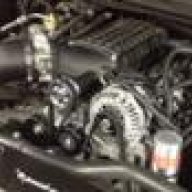
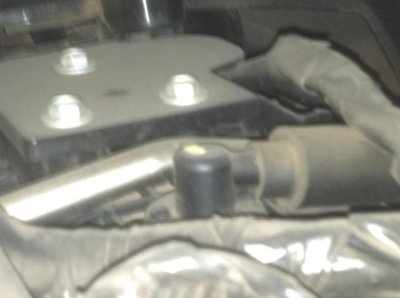
The problem I had when I was interested was how to actually remove the top cover.
I was NOT going to just grab it and jerk the top cover until I know what/where it attaches.
I'm not one to jump into something unless I know where I'm going.

Also when us diesel heads do a PCV reroute or catch can we come off both sides not one.
 
Last edited:

ezdaar

Chat Troll
Joined
Jul 28, 2010
Posts
3,715
Reaction score
127
Location
Redneck central, Aka Houston
Best Catch Can available.
http://saikoumichi.com/

REV_C_SECTION_publish.jpg


I actually build my own based off this design for a FAR cheaper price.

I Add in a check valve from US plastics, as the PCV valve SUCKS! and is out dated tech.
US plastics check Valve
I use these on both NA and Boosted setups.
Never had a single failure with these valves.
64046p.jpg
 
Last edited:

Matt06Yukon

Full Access Member
Joined
Aug 1, 2012
Posts
229
Reaction score
20
it goes thru up top on the truck manifolds. This is why you set em up like this

Pic of another truck app
2rz9vsw.jpg


So this would be the correct routing for both my 5.3 Yukon and my 6.0 HD?
Are we just keeping the engine from having to reburn this dirty oil, is that the design behind this? Still trying to understand why exactly its needed and why the factory system doesn't work. Thanks.
 

ezdaar

Chat Troll
Joined
Jul 28, 2010
Posts
3,715
Reaction score
127
Location
Redneck central, Aka Houston
Exactly,
Theres a few things that cause oil in the intake.
Improperly designed PCV system<~~~~~~~~
poor ring seal, which creates high crank case pressure.
oil vapors in the air in the crank case.
Gasoline vapors in the crankcase.

So what happens is the manufactures introduce a Positive crank case ventilation system, aka PCV system to remove the potentially explosive, corrosive gasses from the crank case.
This has 2 effects, removing those gasses and helping ring seal by introducing a vacume into the crankcase instead of positive pressure.

What the catch can does is intercept and trap the Heavy particles of oil, in attempt to stop them from being introduced into the intake, thus oiling the walls of the intake, ruining sensors, gunking up valves and valve seats aswell as sparkplugs.
Aswell as being burnt in the combustion chamber and being turned into rock hard Carbon buildup on top of pistons, the combustion chamber itself, the bottoms of your valves and on top of the rings.

Some times in extreme cases carbon will flake off and get lodged inbetween a piston and the cylinder wall, Scratching the wall, piston and ring. Causeing loss of compression in that cylinder.
The carbon can also lock up or freeze rings from movement causeing a bad seal and loss of compression.
If a carbon flake gets lodges between a valve face and seat it can bend (catastrophic failure here, as in piston and valve contact) or severely scratch a valve and valve seat, causing loss of compression.

Carbon build up due to burning of oil from your PCV system in early stages builds up on the piston tops and valve bottoms, which creates "hotspots" which cause detonation as well as that puff of smoke you see alot of vehicals have from the exhaust when first started up from a cold condition.
The oil from the intake seeps into the combustion chamber and is burnt off immediately upon ignition.


This not only can destroy a engine, The ECU will sense the detonation, spark knock, and thus pull timing to stop the knock.
Resulting in loss of performance, from pure HP/TQ to MPG.
Not to mention the environmental issues of burning oil.


So. back on point, the Catch can acts as a expansion chamber that allows the hot gasses to cool off a slight amount aswell as slow down. allowing the heavy oil to drop from suspension and be collected in the body of the can.
As a by product of this it also collects moisture.
Alot of guys freak out when they drain the can and see milky oilly stuff come from it.
This is normal under most conditions.
But under extreme conditions it can also show a leaky head gasket or on old school engines a faulty intake to block seal. which its allowing hot water vapors to enter the crank case.


So. the bigger the can and the more baffles the can has the better.

You must! stay with a SEALED catch can, none of this vented stuff.
There is alot to explain why, but just trust me. it will really jack with your engine performance, UNLESS the engine is designed and TUNED for a open breather system.
 
Last edited:

babamerino

Full Access Member
Joined
Oct 26, 2012
Posts
327
Reaction score
4
Location
Honolulu, Hawaii
So what I am getting from all the posts is that... A catch can is for tuned and more modded (engine) vehicles? So I am going to get a BB tune... does this mean I need a catch can? Thanks in advance!!!
 

ezdaar

Chat Troll
Joined
Jul 28, 2010
Posts
3,715
Reaction score
127
Location
Redneck central, Aka Houston
A Catch can is good for ANY engine, regardless of its tune, power or mods.

Stopping oil from entering the combustion chamber is what they do. ALL engines will have Some oil entering the intake.
So to prolong your engine install a catch can.
 

Matt06Yukon

Full Access Member
Joined
Aug 1, 2012
Posts
229
Reaction score
20
Ok thank you. So really this is an after effect of the pcv. Back in the day when we just had breathers we wouldn't have this problem, correct? I mean environment be damned and all.
 

08grey

Full Access Member
Joined
Jun 17, 2012
Posts
4,596
Reaction score
725
Smoke. What is that cool looking aluminum box?
 

tights24

Full Access Member
Joined
Feb 13, 2013
Posts
105
Reaction score
10
Ok, so all of the explanations make sense. the results are obvious when looking at some of the posts with what the catch cans are "catching".

So, using the diagram provided that shows the cross section of the catch can, what get's plugged into what and from where on our 5.3l engines?

What I'm looking for is something along the lines of "Take the line that is going to the PCV and plug that into the "vacuum" side of the catch can. Out of the engine side of the CC, run a line to "X".

Does that make sense? Also, are we just finding an empty hole somewhere and doing some tapping for a mounting bracket?

Thanks all and sorry for the repeated questions....
 

D_R_C

Full Access Member
Joined
Mar 4, 2013
Posts
97
Reaction score
3
You install the CC in between the PCV line to the intake.
That way what comes out filters the oil vapors then goes into the intake.
What I don't understand if there is PCV lines is coming up from bothsides, which they should, then why only filter from one side???
Its pretty much a waist of time only filtering one side, if your going to do this then do it right. Catch the oil vapors from both sides.
 
OP
OP
NORCAL SS

NORCAL SS

SUV SUSPENSION GURU
Joined
Jun 9, 2009
Posts
8,744
Reaction score
610
95 percent of oil comes ftom that side. Thats why you do it like that. Yes you can do both if you want
 

BigBlueLB756

Full Access Member
Joined
Sep 20, 2010
Posts
200
Reaction score
126
Location
By Marion, MS
Anybody for something cheap that works pretty good?

100_0155.jpg


The filter element substituted for the one inside is made of:

100_0224.jpg


Cut round pieces as needed.
Unscrew the bowl to empty.

Lowe's or Home Depot can fix you up with the separator, 90 degree barbs, and hose clamps. 3/8" hose as needed from parts store. Cost about $35.

Just thought I'd add some pix of the set-up on my '13 Sierra with the hoses re-routed for more access to the drain and the windows to see the level of gunk collected. How many of those high-dollar cans have that?

100_0278.jpg


Hose route to the engine:

100_0284.jpg
 

D_R_C

Full Access Member
Joined
Mar 4, 2013
Posts
97
Reaction score
3
Ok my bad BigBlueLB756 was right just pull up the engine cover and work it out, but I would not go as far as to just yanking it up.
My next question is I don't see any clamps of any sort just a larger hose over the smaller hose, how does the hose attach ?? Just slips on ??
It connects the same on top of the intake and at the back of the valve cover on the drivers side.

As you can see I'm back to being interested just doing my homework before ordering.
I learned how to change my mind on a whim being married 39 years.:slap:
Sorry the picture comes out a little blurry when it blows up.
 

Attachments

  • PCV 4-15-13.jpg
    PCV 4-15-13.jpg
    78.4 KB · Views: 223

JennaBear

Resident Ninja
Joined
May 3, 2009
Posts
6,086
Reaction score
241
Location
San Diego, CA
I would recommend clamps if possible. We have seen many a vacuum leak due to poorly installed catch cans. Three this weekend alone.
 

D_R_C

Full Access Member
Joined
Mar 4, 2013
Posts
97
Reaction score
3
I would recommend clamps if possible. We have seen many a vacuum leak due to poorly installed catch cans. Three this weekend alone.

Yes that part I get, it's how does the factory dirty air/PCV hose disconnect it does not have any clamps. I just don't want to snap anything off trying to remove it.
Dirty air hose is what the dealer calls it.
 

Forum statistics

Threads
137,723
Posts
1,990,413
Members
102,713
Latest member
briannorris
Back
Top