
You are using an out of date browser. It may not display this or other websites correctly.
You should upgrade or use an alternative browser.
You should upgrade or use an alternative browser.
NHTSA opens preliminary probe into more than 870,000 GM vehicles
- Thread starter cjlewis
- Start date
Disclaimer: Links on this page pointing to Amazon, eBay and other sites may include affiliate code. If you click them and make a purchase, we may earn a small commission.
Vladimir2306
Full Access Member
- Joined
- May 18, 2023
- Posts
- 1,064
- Reaction score
- 1,251
Reading all this.. if clearances are a problem on pistons… it seems to me that a 207 deg was what 2018 l83 had… is that still what it is on the 2024s? I know you get down south.. the gm cooling is weak..
Cooling is good; on the 5th generation the engine runs at a lower temperature. If K2 worked at 100C, then T1 already at 90C
Vladimir2306
Full Access Member
- Joined
- May 18, 2023
- Posts
- 1,064
- Reaction score
- 1,251
It seems to me that the video perfectly confirms my version about small gaps. 4 miles, Oil pump ok, crankshaft ok. The piston seat fell apart because it was difficult for it to move in the cylinder
The failure mechanism was not oil related or clearance related on this specific engine. It appears that the wrist pin C clip was either missing or installed incorrectly, or the piston C clip groove was not machined in the wrist pin hole, so this would likely be considered manufacturing or an assembly problem. This piston was in the rear of the engine, so likely cylinder #7 or #8. The missing clip allowed the piston wrist pin to walk sideways and then the piston became bound or cocked in the cylinder and caused the piston to become bound in the cylinder. Then the weak link in the chain was the connecting rod which broke. I believe these connecting rods are not forged steel but compressed sintered iron.
This is the style of the piston wrist pin retaining clip, seems to be the same design GM has used for years but IMHO not an ideal style based upon what I have dealt with over the years in high performance applications:
What is a bit surprising is that GM did not want this 4 mile engine returned for failure analysis. As the shop that received the engine noted the oil pan was already off so it was unclear if the piston wrist pin C clip fell out or was actually missing. Based on the style of wrist pin C clips, they are not what I would call severe duty or high performance. They just appear to be round wire curved clips.
This may have been a small percentage assembly failure or it may have been a more common failure.
Here is another good video that allows you to see what a higher mileage failure looks like. In this engine it appears the #1 rod bearing failed or spun that likely led to the catastrophic failure. But in any event it allows forum members to see what is inside these engines.
This is the style of the piston wrist pin retaining clip, seems to be the same design GM has used for years but IMHO not an ideal style based upon what I have dealt with over the years in high performance applications:
What is a bit surprising is that GM did not want this 4 mile engine returned for failure analysis. As the shop that received the engine noted the oil pan was already off so it was unclear if the piston wrist pin C clip fell out or was actually missing. Based on the style of wrist pin C clips, they are not what I would call severe duty or high performance. They just appear to be round wire curved clips.
This may have been a small percentage assembly failure or it may have been a more common failure.
Here is another good video that allows you to see what a higher mileage failure looks like. In this engine it appears the #1 rod bearing failed or spun that likely led to the catastrophic failure. But in any event it allows forum members to see what is inside these engines.
Last edited:
Vladimir2306
Full Access Member
- Joined
- May 18, 2023
- Posts
- 1,064
- Reaction score
- 1,251
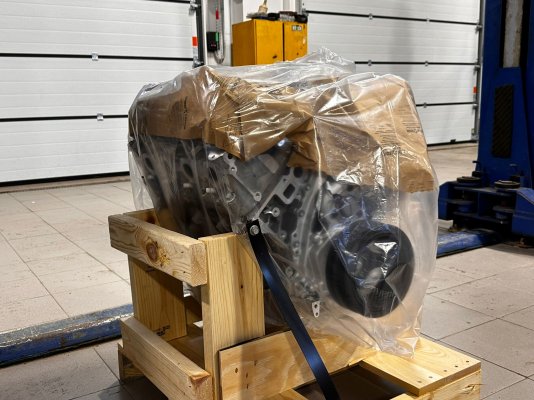
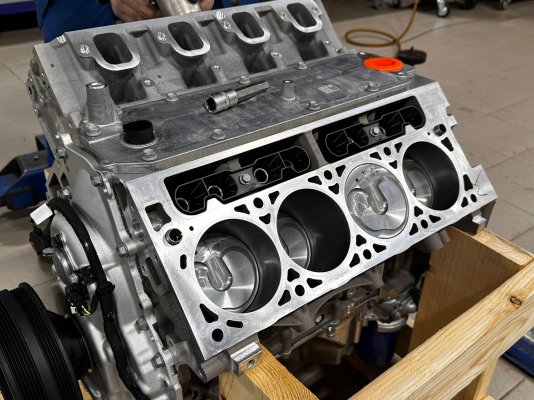
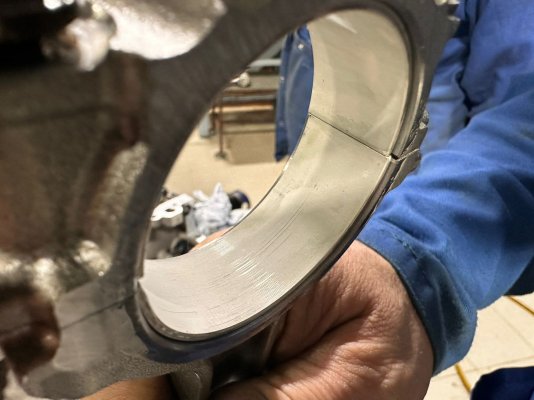
Look, this is a photo of a new engine that just arrived for service the other day. Engine out of the box, mileage 0 km. There are already scratches on the cylinder mirror and marks on the liners.The failure mechanism was not oil related or clearance related on this specific engine. It appears that the wrist pin C clip was either missing or installed incorrectly, or the piston C clip groove was not machined in the wrist pin hole, so this would likely be considered manufacturing or an assembly problem. This piston was in the rear of the engine, so likely cylinder #7 or #8. The missing clip allowed the piston wrist pin to walk sideways and then the piston became bound or cocked in the cylinder and caused the piston to become bound in the cylinder. Then the weak link in the chain was the connecting rod which broke. I believe these connecting rods are not forged steel but compressed sintered iron.
This is the style of the piston wrist pin retaining clip, not an ideal style based upon what I have dealt with over the years:
What is a bit surprising is that GM did not want this 4 mile engine returned for failure analysis. As the shop that received the engine noted the oil pan was already off so it was unclear if the piston wrist pin C clip fell out or was actually missing. Based on the style of wrist pin C clips, they are not what I would call severe duty or high performance. They just appear to be round wire curved clips.
This may have been a small percentage assembly failure or it may have been a more common failure.
Here is another good video that allows you to see what a higher mileage failure looks like. In this engine it appears the #1 rod bearing failed or spun that likely led to the catastrophic failure. But in any event it allows forum members to see what is inside these engines.
Attachments
-
 84fca3c8-f0cd-4e5e-8c7d-3bff112cc91c (1).jpg269.7 KB · Views: 32
 -
 25be7715-7f22-487c-ab16-5d4f1c6e9cfc (1).jpg296.7 KB · Views: 34
 -
 b58b6025-8605-47fa-9b49-0a3a45c0f061 (1).jpg202.2 KB · Views: 33
 -
 c0153bc6-ebe7-47a5-8cbb-365ba24183e1.jpg177.6 KB · Views: 34
 -
 c018c64d-340c-4866-898c-2f1a77ad1f5d.jpg266.4 KB · Views: 38
You clearly have pictures of a new engine. While I am not there to personally inspect and "feel" the finish, what I am seeing is not significantly concerning. Could things look better, sure they could.
So understand at the engine assembly plant they "Cold Test" newly build engines by spinning them with a large electric motor and they measure intake and exhaust airflow as well as the torque required to turn the engine with the electric motor to determine if the build is within the spec range they expect.
I assume this "Cold Test" is performed with oil in the crankcase, but it is unclear if the oil system is pre-primed or if the "Cold Test" starts at a slower RMP to build oil pressure then to increase RPM after a specific number of engine revolutions. No idea if the oil is pre-warmed before the engine is filled with oil, I hope is would be.
Seems that there is something either with the initial build on these engines or something with parts that may be causing problems. I would be interested to know if your shop actually checks the original build bearing clearances with Plastigauge to figure out if the engines bearings are too tight or too loose.
So understand at the engine assembly plant they "Cold Test" newly build engines by spinning them with a large electric motor and they measure intake and exhaust airflow as well as the torque required to turn the engine with the electric motor to determine if the build is within the spec range they expect.
I assume this "Cold Test" is performed with oil in the crankcase, but it is unclear if the oil system is pre-primed or if the "Cold Test" starts at a slower RMP to build oil pressure then to increase RPM after a specific number of engine revolutions. No idea if the oil is pre-warmed before the engine is filled with oil, I hope is would be.
Seems that there is something either with the initial build on these engines or something with parts that may be causing problems. I would be interested to know if your shop actually checks the original build bearing clearances with Plastigauge to figure out if the engines bearings are too tight or too loose.
Vladimir2306
Full Access Member
- Joined
- May 18, 2023
- Posts
- 1,064
- Reaction score
- 1,251
The fact of the matter is that our service disassembles a completely new engine from the box, grinds out the gaps, checks all the tightness and reassembles the engine)))You clearly have pictures of a new engine. While I am not there to personally inspect and "feel" the finish, what I am seeing is not significantly concerning. Could things look better, sure they could.
So understand at the engine assembly plant they "Cold Test" newly build engines by spinning them with a large electric motor and they measure intake and exhaust airflow as well as the torque required to turn the engine with the electric motor to determine if the build is within the spec range they expect.
I assume this "Cold Test" is performed with oil in the crankcase, but it is unclear if the oil system is pre-primed or if the "Cold Test" starts at a slower RMP to build oil pressure then to increase RPM after a specific number of engine revolutions. No idea if the oil is pre-warmed before the engine is filled with oil, I hope is would be.
Seems that there is something either with the initial build on these engines or something with parts that may be causing problems. I would be interested to know if your shop actually checks the original build bearing clearances with Plastigauge to figure out if the engines bearings are too tight or too loose.
Much quicker and easier to go thru the motor when fresh and out of the vehicle.
It would be interesting if this problem is really a production issue or an oil starvation issue due to the oil viscostity, level and pressure?
I think at this point the root cause of the problem is not 100% apparent as we may not have seen many of the early engine failures opened up and displayed. I assume and hope GM knows what is going on and has identified and resolved the problems.
You should have your guys track the build dates on the engines to see if they find changes and improvements.
The build date is a Julian date on a paper tag on the rear of the drivers side cylinder head as least for engines installed in vehicles. Not 100% the replacement engines have these same or similar tags?
See this attached picture, the build date is after the N1 on the bottom row. The tag on this motor indicates is as build in on the 56th day of 2021. 21=2021, 056=56th day of the year.
It would be interesting if this problem is really a production issue or an oil starvation issue due to the oil viscostity, level and pressure?
I think at this point the root cause of the problem is not 100% apparent as we may not have seen many of the early engine failures opened up and displayed. I assume and hope GM knows what is going on and has identified and resolved the problems.
You should have your guys track the build dates on the engines to see if they find changes and improvements.
The build date is a Julian date on a paper tag on the rear of the drivers side cylinder head as least for engines installed in vehicles. Not 100% the replacement engines have these same or similar tags?
See this attached picture, the build date is after the N1 on the bottom row. The tag on this motor indicates is as build in on the 56th day of 2021. 21=2021, 056=56th day of the year.
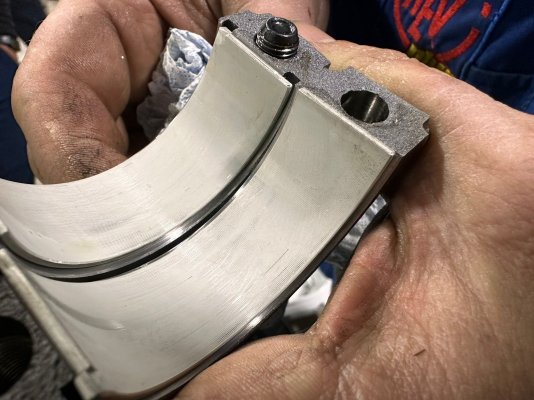
Interesting YouTube video, while this is a 2017 6.2l with over 100k miles, the engine is VERY clean and it appears only 1 bearing had any issues. The main bearing cap was not removed in the video and it is unclear if any of the cam bearings started to flake or fail. From the metal in the oil pan, it looks like more than just from the one rod bearing.
If I was rebuilding or reworking new engines, I would likely go with King Engine Bearings. Even if buying a new motor, I would likely at least replace the main and rod bearings.
I wonder if the same style of bearings were used in the 1999-2006 6.0l engines. I have one that is over 275k miles and still going without lifter or bearing issues.
If I was rebuilding or reworking new engines, I would likely go with King Engine Bearings. Even if buying a new motor, I would likely at least replace the main and rod bearings.
I wonder if the same style of bearings were used in the 1999-2006 6.0l engines. I have one that is over 275k miles and still going without lifter or bearing issues.

- Joined
- Dec 23, 2024
- Posts
- 447
- Reaction score
- 382
That is a gnarly looking bearing. Doesn’t look like debris or oil starvation. That actually looks like a defect bearing delaminatingInteresting YouTube video, while this is a 2017 6.2l with over 100k miles, the engine is VERY clean and it appears only 1 bearing had any issues. The main bearing cap was not removed in the video and it is unclear if any of the cam bearings started to flake or fail. From the metal in the oil pan, it looks like more than just from the one rod bearing.
If I was rebuilding or reworking new engines, I would likely go with King Engine Bearings. Even if buying a new motor, I would likely at least replace the main and rod bearings.
I wonder if the same style of bearings were used in the 1999-2006 6.0l engines. I have one that is over 275k miles and still going without lifter or bearing issues.
Kind of thinking the 2017 engine with over 100k suffering from a failed rod bearing could be due to Low Speed Pre Ignition (LSPI)?? LSPI in conjunction with 0W20 oil probably is not an ideal situation. Adding a catch can to also capture and remove additional oil vapors that end up being added back to the combustion airflow that could also help reduce LSPI.
Things to consider
Things to consider
I got a brand new Tahoe in January, 2024, and in November I had a catastrophic engine event with the 5.3L. I got stalled with a child in the middle of a busy intersection and it took a month for them to get my engine replaced. The service tech believes the fuel management system broke down starving the engine of fuel and causing a piston to break off.
I have owned vehicles for nearly 30 years and never had anything close to this happening. Is this recall for the 5.3 and 6.2?
I have owned vehicles for nearly 30 years and never had anything close to this happening. Is this recall for the 5.3 and 6.2?

I got a brand new Tahoe in January, 2024, and in November I had a catastrophic engine event with the 5.3L. I got stalled with a child in the middle of a busy intersection and it took a month for them to get my engine replaced. The service tech believes the fuel management system broke down starving the engine of fuel and causing a piston to break off.
I have owned vehicles for nearly 30 years and never had anything close to this happening. Is this recall for the 5.3 and 6.2?
FWIW it's not a recall. Might never be.
Interesting info from King Bearing linked below. If you somewhat read between the lines, there are a few things that appear to stand out.
1. Hot Short - Might be a bit far fetched on these engine under daily driving conditions, but think about it of you understand a Hot Short condition. This has been found associated with NASCAR and other racing series where the engine has been shut down when very hot due to a red light/flag condition to stop the cars mid race for some reason and the bearings heat soak and the material becomes soft. Then restarting the engine with the bearings hot and possibly soft can cause either immediate damage or partial damage that can be seen when the engine is torn down after the race.
While this comparison is not as severe, think about all the Auto Stop/Start conditions and the possibility of Hot Short conditions or partial Hot Short condition that could possibly occur. Or continually having the Stop/Start function active how this could impact bearings with partially dry starting conditions. Add the 0W20 oil that may not hold a film on the bearing surfaces so well when hot. The fact that the vane style oil pumps loose their prime quickly, This may cause bearing degradation over time and not cause an immediate failure. Turning off or disabling the Auto Stop/Start feature may help this condition? Is the Stop/Start feature a contributor, who knows for sure? Maybe it is a problem if the bearings start to fatigue as outlined below?
2. Bearing Fatigue - Could be due to Detonation/Low Speed Pre Ignition, High Torque/Low RPM operation which is pretty typical with these engine designs these days along with the 0W20 engine oil. Also keep in mind that there could be one or more fuel injectors that may not operate properly that could cause a LSPI condition in one or just a few cylinders. I do not think the LSPI really manifests itself into a misfire condition or knock condition that the ECU can pick up on. Wonder if the DFM could also put more stress and fatigue on bearings when dropping cylinders out and making the operational cylinder(s) work a bit harder for short periods of time.
Adding in fuel dilution of the oil, water contamination, extended oil changes all do not help the oil situation. Installation of of catch can can help reduce some of this problem as well.
Curious if the Trailer Towing packages help with extra cooling of the engine and/or engine oil may help prolong the engine life and/or reduce some of these premature failures?
At the end if the day, the majority of these engine failures can be classified as oil related failures in some form or another. The 6.2l has a 2 stage oil pump that may or may not be contributing to its early demise. If I had my way and I may look into it, forcing the oil pump into the higher pressure stage might be a good thing. Either damage due to improper lubrication, not enough oil in the right place at the right time, contaminated oil, or some form of bearing overloading.
While GM claimed at one point that oversized lifter bores were the cause of some failures, not sure if this was more a cause of lifter failures, bearing failures or both. I wonder how oversized the lifter bores actually were? Enough to starve the main and rod bearings of oil? The oiling path on these engines is not ideal, but it seems back as far as the 6.0l non AFM/DFM engines had a similar oil path without the level of problems. Even the current 5.3l does not seem to have the level of problems the 6.2l is having, only obvious this between these engines is the 2 stage oil pump that I have found.
Just a few thoughts.
1. Hot Short - Might be a bit far fetched on these engine under daily driving conditions, but think about it of you understand a Hot Short condition. This has been found associated with NASCAR and other racing series where the engine has been shut down when very hot due to a red light/flag condition to stop the cars mid race for some reason and the bearings heat soak and the material becomes soft. Then restarting the engine with the bearings hot and possibly soft can cause either immediate damage or partial damage that can be seen when the engine is torn down after the race.
While this comparison is not as severe, think about all the Auto Stop/Start conditions and the possibility of Hot Short conditions or partial Hot Short condition that could possibly occur. Or continually having the Stop/Start function active how this could impact bearings with partially dry starting conditions. Add the 0W20 oil that may not hold a film on the bearing surfaces so well when hot. The fact that the vane style oil pumps loose their prime quickly, This may cause bearing degradation over time and not cause an immediate failure. Turning off or disabling the Auto Stop/Start feature may help this condition? Is the Stop/Start feature a contributor, who knows for sure? Maybe it is a problem if the bearings start to fatigue as outlined below?
2. Bearing Fatigue - Could be due to Detonation/Low Speed Pre Ignition, High Torque/Low RPM operation which is pretty typical with these engine designs these days along with the 0W20 engine oil. Also keep in mind that there could be one or more fuel injectors that may not operate properly that could cause a LSPI condition in one or just a few cylinders. I do not think the LSPI really manifests itself into a misfire condition or knock condition that the ECU can pick up on. Wonder if the DFM could also put more stress and fatigue on bearings when dropping cylinders out and making the operational cylinder(s) work a bit harder for short periods of time.
Adding in fuel dilution of the oil, water contamination, extended oil changes all do not help the oil situation. Installation of of catch can can help reduce some of this problem as well.
Curious if the Trailer Towing packages help with extra cooling of the engine and/or engine oil may help prolong the engine life and/or reduce some of these premature failures?
At the end if the day, the majority of these engine failures can be classified as oil related failures in some form or another. The 6.2l has a 2 stage oil pump that may or may not be contributing to its early demise. If I had my way and I may look into it, forcing the oil pump into the higher pressure stage might be a good thing. Either damage due to improper lubrication, not enough oil in the right place at the right time, contaminated oil, or some form of bearing overloading.
While GM claimed at one point that oversized lifter bores were the cause of some failures, not sure if this was more a cause of lifter failures, bearing failures or both. I wonder how oversized the lifter bores actually were? Enough to starve the main and rod bearings of oil? The oiling path on these engines is not ideal, but it seems back as far as the 6.0l non AFM/DFM engines had a similar oil path without the level of problems. Even the current 5.3l does not seem to have the level of problems the 6.2l is having, only obvious this between these engines is the 2 stage oil pump that I have found.
Just a few thoughts.
Silverado4x4
Full Access Member
- Joined
- Jan 15, 2023
- Posts
- 237
- Reaction score
- 280
The 5.3 has the 2 stage oil pump also.
Well I am not seeing this as the case. Maybe I have wrong, outdated information, but what I have been able to find does not confirm this.The 5.3 has the 2 stage oil pump also.
Both engines have a variable displacement vane style oil pump, but the 6.2l appears to have a 2 stage oil flow control solenoid.
Site Maintenance
poweredsolutions.gm.com
I am having hard time finding the actual solenoid as a part number, but there are different part numbers for the oil pumps, not sure if this is due to the flow control solenoid or not?
The wiring pigtail for the oil flow control solenoid only shows up for the 6.2l, not the L84 5.3l, but does appear to fit the L83 5.3l engine
And for the L84 5.3l engine the oil pump part number is listed as GM Part # 12733671 and any real pictures I have found do not include the oil pump flow solenoid like the 6.2l.
For the L87 6.2l engine, the oil pump part number is listed as GM Part# 12733670
The earlier 5.3l L83 engines may have had a 2 stage oil pump, but I am not finding this on the current generation L84 engines.
I may be in fact wrong, but I have put a lot of time in researching this and maybe I missed something?
I am sure the crowd will correct me if I am wrong.
I have my 20 years tied up in the 6.0l, not spent much time with the newer 5.3l and 6.2l, just starting to get a grasp on these.
Last edited:
Ended up placing an order today for a 2025 F150 Lariat with the 5.0 with Granger Ford because it seems GM has been unable to resolve the problems with its NA V8s after 5+ years.
Maybe they will work it out on their next gen V8s.
Maybe they will work it out on their next gen V8s.
LSPI really isn't an issue with atmospheric engines. Forced induction different story.Kind of thinking the 2017 engine with over 100k suffering from a failed rod bearing could be due to Low Speed Pre Ignition (LSPI)?? LSPI in conjunction with 0W20 oil probably is not an ideal situation. Adding a catch can to also capture and remove additional oil vapors that end up being added back to the combustion airflow that could also help reduce LSPI.
Things to consider
Pumps are not interchangeable but you'd think they were looking at them. Both are "2 stage" as in they're both variable geometry pumps. GM does reference the L84 as "single stage" but it's more marketing than anything else. In theory they're infinitely variable but GM only uses a binary high output and "low" output via the solenoid.Well I am not seeing this as the case. Maybe I have wrong, outdated information, but what I have been able to find does not confirm this.
Both engines have a variable displacement vane style oil pump, but the 6.2l appears to have a 2 stage oil flow control solenoid.
Site Maintenance
poweredsolutions.gm.com
I am having hard time finding the actual solenoid as a part number, but there are different part numbers for the oil pumps, not sure if this is due to the flow control solenoid or not?
The wiring pigtail for the oil flow control solenoid only shows up for the 6.2l, not the L84 5.3l, but does appear to fit the L83 5.3l engine
And for the L84 5.3l engine the oil pump part number is listed as GM Part # 12733671 and any real pictures I have found do not include the oil pump flow solenoid like the 6.2l.
For the L87 6.2l engine, the oil pump part number is listed as GM Part# 12733670
The earlier 5.3l L83 engines may have had a 2 stage oil pump, but I am not finding this on the current generation L84 engines.
I may be in fact wrong, but I have put a lot of time in researching this and maybe I missed something?
I am sure the crowd will correct me if I am wrong.
I have my 20 years tied up in the 6.0l, not spent much time with the newer 5.3l and 6.2l, just starting to get a grasp on these.
Not sure where you are getting information that LSPI isn't an issue with non forced induction engines. While there is a lot of info and discussion about LSPI on forced induction engines, mainly because the proliferation of smaller displacement 4 and 6 cylinder turbo applications, LSPI is also an issue on NA engines as well, especially depending on how the NA engine is used. Towing and/or hauling heavy loads being a primary example of situations where LSPI can be more severe and more damaging on a NA engine.LSPI really isn't an issue with atmospheric engines. Forced induction different story.
LSPI is clearly a problem with NA engines that have higher torque at lower RPM due to the current designs with higher compression ratios and variable cam timing. Many of the current NA engines, under most conditions, do not operate much above 2000 RPM when cruising. This along with the 8 and 10 speed transmissions tend to keep the engine RPM in a much more narrower power band that typically requires higher torque and put more stress on engine components
LSPI has a lot to do with oil in the cylinders and oil mixing with the fuel. This is one of the reasons GM developed the DEXOS oil spec and has continued to expand and improve on the DEXOS formulation. The formulas are adjusting detergent ingredients that seem to aggravate LSPI. As the engines and components age and wear you may higher instances of LSPI events and even have LSPI events in just a few cylinders due to fuel injector wear and spray pattern and/or increased oil consumption in specific cylinders.
Interesting how on the 6.2l L87 engine has an advertised compression ration of 11.5 to 1 recommends use of Premium fuel, but the 5.3l L84 engine has an advertised compression ration of 11.0 to 1 recommends Regular fuel. While the owners manual indicates the 6.2L L87 can operate on Regular fuel, they clearly recommend using Premium fuel. I would say with the possibility of LSPI, especially while towing or hauling heavy loads I would HIGHLY recommend Premium fuel for both the 5.3l and 6.2l.
Sure while searching around the interwebs, a lot of the LSPI references talk about turbo or forced induction engines, this is a bit misleading as some of the information clearly leaves out NA engines all together. LSPI is a problem in all modern DI engines, this is one of the reasons many of the oil formulations and specs are rapidly changing. With the removal or substitution of detergents and higher rate of fuel dilution with DI engines, I am not sure I would be extending out oil changes as well. While DI engines are not new, like anything, the industry is still adapting and changing on what oils and fuels to use along with maintenance intervals. Unfortunately, it will be too late when the maintenance intervals catch up with protecting engines.
While a lot of the discussion of LSPI damage has to do with pistons, there is also potential damage to rod bearings that is often overlooked because in many instances the pistons take the brunt of the damage and the rod bearing condition is overlooked. Interesting how some of the researchers watching pressure transducers during testing have referred to LSPI as "Mega Knock". Just think about the level of damage that LSPI could cause an engine.
A few interesting videos that you may want to watch, I am sure there are plenty out there that are biased toward turbo applications as well, they may just be covering what they are seeing in their shops.
Similar threads
- Locked
- Replies
- 61
- Views
- 19K


- Replies
- 4
- Views
- 1K

- Replies
- 16
- Views
- 3K

- Replies
- 34
- Views
- 14K

- Replies
- 14
- Views
- 4K

