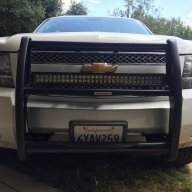
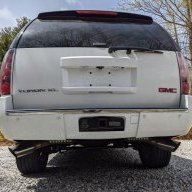
upgraded alternator, dual parallel batteries. Fuse ?

Disclaimer: Links on this page pointing to Amazon, eBay and other sites may include affiliate code. If you click them and make a purchase, we may earn a small commission.

mikez71

Full Access Member
Joined
Mar 9, 2023
Posts
3,220
Reaction score
3,986
I have installed second battery (parallel dual) with the factory cables.
Also installed a 220A alternator. Stock setup is a 145/160 amp alternator, with a 175A fuse.
Sounds like I'm supposed to add a larger fuse (250A?) but am worried the battery and alternator cables maybe too small?

What if I wire a SECOND CABLE from the alternator to AUX battery with ANOTHER 175A fuse?
The batteries (+) would then be connected through both the starter and alternator cables.
Alternator could output full power if needed going through two 175A fuses.

I know many upgrade the battery cables, but with two batteries/cables, I'd prefer to leave it stock if one or two extra cables can achieve the same thing. (I like the stock battery terminals)

Or will this create radio noise or other problems, or just not work like I am thinking?
 
Last edited:

Doubeleive

Wes
Supporting Member
Joined
Nov 7, 2017
Posts
30,548
Reaction score
47,998
Location
Stockton, Ca.
I wouldn't change the fuse the amperage is based on a safe amperage to keep other attached equipment from getting fried, so the fuse will blow before wires melt and/or over amping a module, etc
i have dual battery's also parallel for years now and run a amp and sub's and HID lights and etc. no issue's
 
OP
OP
mikez71

mikez71

Full Access Member
Joined
Mar 9, 2023
Posts
3,220
Reaction score
3,986
I wasn't planning to uprate fuse on stock wiring (unless people tell me stock is large enough, but all the Big3 upgrades make me think stock wiring is borderline)

I just don't think you can get the full 220A potential on a 175A fuse.?
Therefore I am thinking about adding a second alternator cable to the aux battery.
Worried there will be some negative side-effects I don't know or understand..
I would like the ability to power a 2000W or larger inverter if possible. Sounds like they can draw around 170A, and a 3000W around 250A..
 
Last edited:

Joseph Garcia

Elite Member
Supporting Member
Joined
Aug 2, 2018
Posts
10,314
Reaction score
14,931
I'm assuming that the larger capacity alternator is for a sound system or some other large energy user. If that is the case, the power amp main power wire for this accessory should be directly wired to the main battery with its own separate fuse. Therefore, there is no reason to change the existing in fuse on the firewall.
 
OP
OP
mikez71

mikez71

Full Access Member
Joined
Mar 9, 2023
Posts
3,220
Reaction score
3,986
I'm assuming that the larger capacity alternator is for a sound system or some other large energy user.
A power inverter, but I am worried about the fuse limiting the alternator power. I want to hookup accessories to aux battery because it's more convenient to access, and if I ever install an isolator, I want the accessories on the aux battery. Not sure if adding a secondary alternator cable to aux battery would work or cause issues. Trying to read up on battery hookups, ground loops etc. now my head hurts!
 
Last edited:

Doubeleive

Wes
Supporting Member
Joined
Nov 7, 2017
Posts
30,548
Reaction score
47,998
Location
Stockton, Ca.
A power inverter, but I am worried about the fuse limiting the alternator power. I want to hookup accessories to aux battery because it's more convenient to access, and if I ever install an isolator, I want the accessories on the aux battery. Not sure if adding a secondary alternator cable to aux battery would work or cause issues. Trying to read up on battery hookups, ground loops etc. now my head hurts!
it's for protection only, it can pass a lot more watts, like 2000 or something around there
 
Last edited:

iamdub

Full Access Member
Joined
Apr 23, 2016
Posts
20,821
Reaction score
45,012
Location
Li'l Weezyana
I have installed second battery (parallel dual) with the factory cables.
Also installed a 220A alternator. Stock setup is a 145/160 amp alternator, with a 175A fuse.
Sounds like I'm supposed to add a larger fuse (250A?) but am worried the battery and alternator cables maybe too small?

What if I wire a SECOND CABLE from the alternator to AUX battery with ANOTHER 175A fuse?
The batteries (+) would then be connected through both the starter and alternator cables.
Alternator could output full power if needed going through two 175A fuses.

I know many upgrade the battery cables, but with two batteries/cables, I'd prefer to leave it stock if one or two extra cables can achieve the same thing. (I like the stock battery terminals)

Or will this create radio noise or other problems, or just not work like I am thinking?

I wasn't planning to uprate fuse on stock wiring (unless people tell me stock is large enough, but all the Big3 upgrades make me think stock wiring is borderline)

I just don't think you can get the full 220A potential on a 175A fuse.?
Therefore I am thinking about adding a second alternator cable to the aux battery.
Worried there will be some negative side-effects I don't know or understand..
I would like the ability to power a 2000W or larger inverter if possible. Sounds like they can draw around 170A, and a 3000W around 250A..

A power inverter, but I am worried about the fuse limiting the alternator power. I want to hookup accessories to aux battery because it's more convenient to access, and if I ever install an isolator, I want the accessories on the aux battery. Not sure if adding a secondary alternator cable to aux battery would work or cause issues. Trying to read up on battery hookups, ground loops etc. now my head hurts!

The fuse is to protect the load. It is to fail to cut power should the load exceed a set amperage. A higher amperage fuse won't blow as "easily", meaning the load (everything downstream of it) will be subject to the higher amperage and it, in turn, will act as the fuse.

Just like a higher amperage battery, a higher amperage alternator doesn't "push" amps into a system. It's just the amount that's available should the system (load) need it. So, the 175A fuse isn't choking down 45A of your 220A alternator. Your system is still drawing the same amperage it was before. With the 220A alt, you now have 60A more headroom for loads if you previously had the DR44 160A.

The stock wiring is barely adequate at best in a stock setup. You'll have twice (or more) the power requirements so upgraded wiring is absolutely necessary or you'll be having even worse voltage fluctuations and deficiencies than you have now (and might not even realize). Rather than adding a bunch of extra wires, I think upgrading what's there would be simpler and cleaner. But, yes, "doubling up" on power and ground wires would technically double the conductivity. A circuit is only as strong as its weakest link. You can have all the 1-, 2- or even 4/0 power cables you can cram under the hood but they won't do any better than stock if the ground isn't as good.

Honestly, a 2000W inverter needs its own battery bank. I think you'll be okay since you have that second battery. But, the batteries will be doing most of the work. It'll come down to the factor of time. If you're not using all 2,000 watts for more than a few minutes, then that 220A alt might keep up just fine if you're not running a lot of other high-amperage devices.

The inverter, or any other high-amp load should be connected directly to the battery(ies) with their own fused power cable, just like how an aftermarket audio amplifier is done. They do not go on the factory circuit downstream of that 175A main fuse. That is strictly for protecting the factory original equipment. Any other high-amp device you add should get its own power cable with its own appropriately-sized fuse.
 
OP
OP
mikez71

mikez71

Full Access Member
Joined
Mar 9, 2023
Posts
3,220
Reaction score
3,986
Thanks Iamdub. Yep, not planning to run 2000W for long, mostly thinking it'd be nice to be able to run power tools/cooktops if needed. Will have to upgrade grounds. Other thought was, since inverter would be connected to aux battery, it might be more efficient with the alternator charging it directly rather than pulling through the 175 amp fuse and 2 starter wires.

Also wondering if running two cables to the back would be easier/acceptable compared to 1 larger cable.. And if a separate ground cable needs to be run. Looking at PPV/SSV wiring diagrams, they seem to run a big "blunt cut" ground to the inside passenger, but not to the back cargo area. 4 guage wires in back with 50A circuit breakers and 8 gauge fusible links.

Here's some info about wiring up dual batteries so they charge more evenly, not sure how it applies to my setup. https://caravanchronicles.com/guides/how-to-connect-two-batteries-in-parallel/
 
Last edited:
OP
OP
mikez71

mikez71

Full Access Member
Joined
Mar 9, 2023
Posts
3,220
Reaction score
3,986
Just like a higher amperage battery, a higher amperage alternator doesn't "push" amps into a system. It's just the amount that's available should the system (load) need it.
Right, so when running an inverter that can pull 175A, all that juice has to go through the 175A fuse? I keep reading that it's good to have a larger fuse than your alternator can provide (assuming you have adequate wiring I guess)

In reality, I doubt I will need it, but just like planning for 'what if'. Also the car uses some juice while running, but that is hooked up to the same side of the fuse as the alternator.
 

iamdub

Full Access Member
Joined
Apr 23, 2016
Posts
20,821
Reaction score
45,012
Location
Li'l Weezyana
Thanks Iamdub. Yep, not planning to run 2000W for long, mostly thinking it'd be nice to be able to run power tools/cooktops if needed. Will have to upgrade grounds. Other thought was, since inverter would be connected to aux battery, it might be more efficient with the alternator charging it directly rather than pulling through the 175 amp fuse and 2 starter wires.

You mean that 175A main fuse on the firewall? DO NOT connect the inverter "downstream" of this fuse. Don't even connect the inverter to the fuse holder block. Connect the power wire that feeds the inverter directly to the positive post of either battery, whichever is more convenient for routing. Have an inline fuse or breaker with a fuse rating of whatever the inverter's manufacturer specifies. The inverter will be fed by both batteries simultaneously since they're paralleled together. In fact, just look at it as having one big battery that's split into two locations with the convenience of two positive terminals and two negative terminals. As such, the alternator is charging both batteries simultaneously. The charge wire from the alt doesn't need to be on the same terminal that the inverter power wire is on.


Also wondering if running two cables to the back would be easier/acceptable compared to 1 larger cable..

Physically, it's easier, simpler, cleaner and almost always cheaper to run one wire- less attachments/straps, terminals, fuses, etc. It's often a few bucks cheaper, depending on the single- versus dual wire sizes. It also depends on what you're gonna do with it. If you have the inverter in the back and that's all, you'd run one power wire that meets or exceeds the ampacity (factor amperage and circuit length plus a little headroom) required by the inverter. If you have the inverter plus some other high-amp device, you'd need a separate power wire for each device ran from the battery. Or, one large power wire that'll support the amperage of both devices ran to a fused distribution block, then a power wire of proper gauge, connected downstream of each fuse and routed to its respective device. The one large wire ran from the battery will have a large fuse that supports and protects the load of both devices as well as that circuit as it's routed along the frame.


And if a separate ground cable needs to be run. Looking at PPV/SSV wiring diagrams, they seem to run a big "blunt cut" ground to the inside passenger, but not to the back cargo area. 4 guage wires in back with circuit breakers and 6 guage fusible links (50A per wire)

However big your power wire is, the ground needs to be the same. This is why the Big 3 Upgrade should be the first step. Your grounds should be as short as possible. If you have a large ground from the battery(ies) to the frame, then you'd only need to run a ground from the inverter/device to the frame. The frame is the most convenient large-gauge conductor on the vehicle and, also conveniently, it runs from front to back and side to side of the vehicle.
 
OP
OP
mikez71

mikez71

Full Access Member
Joined
Mar 9, 2023
Posts
3,220
Reaction score
3,986
Right on. Yep I wasn't going to power the inverter from the fuse (in my truck it's on the battery terminal) Instead I have a little midi fuse box I was going to mount up near the aux battery.

I just thought it might limit alternator output. Instead of upgrading those battery + cables, I was hoping to just add the second alt cable with fuse and upgrade ground cables..

Regarding the wires to the back, I was hoping to run two 4 gauge vs one 1/0. Mainly because it might be easier to run it inside, but I haven't looked closely if you know where the best/safest/easiest routing would be. Maybe it's better underneath along the frame rail..
 
Last edited:

iamdub

Full Access Member
Joined
Apr 23, 2016
Posts
20,821
Reaction score
45,012
Location
Li'l Weezyana
Right, so when running an inverter that can pull 175A, all that juice has to go through the 175A fuse?

By saying "the 175A fuse", are you still referencing the factory 175A fuse? Just pretend that doesn't exist. That's for the factory stuff. Leave it alone.

If your inverter requires a 175A fuse, then that's the size fuse and corresponding fuse holder you place inline of the power wire connecting the battery to the inverter, wherever it's mounted. You want the fuse to be as close as reasonably possible to the battery terminal.

Here's a 175A fuse and holder as an example: https://a.co/d/6rRdt9z


I keep reading that it's good to have a larger fuse than your alternator can provide (assuming you have adequate wiring I guess)

This makes no sense. The alternator is a source of amperage. So are the batteries. If you have two batteries with a combined capacity of 2,000 amps, does that mean you have a 2,000+ amp fuse somewhere? No. Fuses are to protect the circuits and loads connected to the battery(ies). If you have a 1,000 watt bass amp in the back, you're gonna have about a 100A fuse on that amp's power wire connected at the battery. If you have some underhood LEDs connected to that same battery, you're gonna have something like a 2.5A - 5A fuse on that power wire.


In reality, I doubt I will need it, but just like planning for 'what if'. Also the car uses some juice while running, but that is hooked up to the same side of the fuse as the alternator.

Right. Among many other systems, that fuse also protects the alt and the circuit (wire) in between.
 

iamdub

Full Access Member
Joined
Apr 23, 2016
Posts
20,821
Reaction score
45,012
Location
Li'l Weezyana
Right on. Yep I wasn't going to power the inverter from the fuse (in my truck it's on the battery terminal) Figured it might limit alternator output. Instead of upgrading those battery + cables, I was hoping to just add the second alt cable with fuse and upgrade ground cables..

Ah. Yours is a newer year. '07 to '08 and maybe '09 has the main fuse on the firewall. Same setup and termination, just alternate location. when modding, the older setup is much more ideal.

Here's mine:


OP
OP
mikez71

mikez71

Full Access Member
Joined
Mar 9, 2023
Posts
3,220
Reaction score
3,986
Yep the factory fuse. Right the batteries will end up providing juice, but say your demand is high enough to run them down? (400A lets say like a 5000W inverter) Now say for the sake of exaggeration that you had a 400A alternator, wouldn't the 175A fuse restrict the charge rate? I'm sorry if I'm missing the obvious, like I said, reading basic electrical guides online makes my head hurt! (But the few articles I've seen all seem to recommend a larger fuse than the alternator output)
 

iamdub

Full Access Member
Joined
Apr 23, 2016
Posts
20,821
Reaction score
45,012
Location
Li'l Weezyana
Yep the factory fuse. Right the batteries will end up providing juice, but say your demand is high enough to run them down? (400A lets say like a 5000W inverter) Now say for the sake of exaggeration that you had a 400A alternator, wouldn't the 175A fuse restrict the charge rate?

No. The inverter will be pulling the power (amperage) off the batteries. They'll be dead and inverter shut off long before the batteries are depleted to the point that their amperage supply is lower than what the alternator is supplying. Basically, the charging amps (the load that the batteries present to the alternator) are still much less than the alternator's output.


I'm sorry if I'm missing the obvious, like I said, reading basic electrical guides online makes my head hurt! (But the few articles I've seen all seem to recommend a larger fuse than the alternator output)

I think I see where the confusion is coming from. The fact that the alternator is connected to the "downstream" side of the fuse and the inverter is on the other side ("upstream", towards/on the battery). I see the point of a larger fuse to exceed the new alt's output. I just don't see how, with two batteries (that do nearly all of the work), the 60A difference warrants this. It doesn't outweigh the "risk" as you should always have the minimum, or a small percentage above the minimum fuse rating to cover the loads. Most of the loads are very short-term, as with starting up of a motor. That 2,000 watt inverter powering up a circular saw or something will present an extremely short spike (surge) in amps when you first pull the trigger but will quickly drop to just a few amps once its running. This is known as inrush current or FLA (full load amps). Most fuses have a bit of a cushion to not blow so easily near their rated capacity. Of course, there are slow-blow and fast-blow fuses to accommodate various needs.

Play it safe and play it by ear. If the sustained loads pop a fuse, first, determine if it popped due to too small of a fuse and not due to a short. Increase the fuse size and carry on.
 
OP
OP
mikez71

mikez71

Full Access Member
Joined
Mar 9, 2023
Posts
3,220
Reaction score
3,986
I thought i got it, but..

Batteries are not charging with that many amps anyhow and the rest of the FACTORY electrical draw is connected to alt side of fuse. ok

Batteries are parallel on starter, also bypassing fuse. ok

BUT if there was a draw of 200A direct from either battery, wouldn't the factory fuse/wiring still be a bottleneck for the alternator? conceivably a big enough alternator could supply the juice, thus not running the batteries down? (probably moot point on the 220A alt as the truck requires however many amps to run) I know I shouldn't up-rate the fuse with stock cables, but how about on your upgraded cables? That's what led me to think about adding ONE additional alt charge wire to the aux battery, paralleled in the same way the batteries already are on the starter and block.

Why do all upgraded alternator manufacturers suggest a larger fuse? Where do the extra amps we should have available go?


Regarding power wires, planning to use this little box, 1/0 cable might just fit.. (.5" opening)
22284F4C-DB05-4AF0-8388-FAAA45574062.jpeg
 
Last edited:

iamdub

Full Access Member
Joined
Apr 23, 2016
Posts
20,821
Reaction score
45,012
Location
Li'l Weezyana
I thought i got it, but..

Batteries are not charging with that many amps anyhow and the rest of the FACTORY electrical draw is connected to alt side of fuse. ok

The batteries would have to be dead and shorted beyond bringing back to put 200A of load on the alternator. You'd be aware of problems LONG before that point!


Batteries are parallel on starter, also bypassing fuse. ok

Yup- the starter wire isn't fused. The starter wire goes to the solenoid and is only a closed circuit for very short times. The solenoid would be more of the fuse than anything. Some cars have a fusible link in the starter wire, though.


BUT if there was a draw of 200A direct from either battery, wouldn't the factory fuse/wiring still be a bottleneck for the alternator?

The 200A draw isn't being supported by the alternator. It's being supported by the battery that can support an 800+ amp load. And you have two batteries so you're good for 1,600 amps. The alternator is just recharging the batteries. It having a higher amp output means it'll support the batteries discharging as they feed that 200A load faster and for a longer time period.


conceivably a big enough alternator could supply the juice, thus not running the batteries down?

Yes. This is the idea and is why audio system competitors run multiple alts on their multiple batteries.


I know I shouldn't up-rate the fuse with stock cables, but how about on your upgraded cables? That's what led me to think about adding ONE additional alt charge wire to the aux battery, paralleled in the same way the batteries already are on the starter and block.

Fuses protect the circuits. If the wiring feeding an electric motor, like a cooling fan, can only withstand 20A before it burns up, it'd have something like a 30A fuse. If that fan motor shorts out or the insulation on the wiring rubs through and shorts on the body- whatever would make it pull more than 20A, the fuse would pop so the circuit immediately goes dead instead of letting it heat up and burn. Larger cables don't "push" more amperage to the circuits. The point of upsizing the wiring, as with a Big 3, is because all the electrical circuits on the car are somewhat starved for power because the wiring is too small. Actually, providing the proper voltage to the loads makes them draw fewer amps. All my fuses are the stock specs.

I see what you're saying about the extra charge wire to that extra battery. To directly answer that- yes, if that battery has its own ground, then that charge wire would help. It's still all stock wiring that's barely adequate in a stock setup. You're far from stock electrical loads with a 2,000 watt inverter.


Why do all upgraded alternator manufacturers suggest a larger fuse? Where do the extra amps we should have available go?


Because if you're maxing out the alternator, too small a fuse can blow. Typically, larger alternators are to support the batteries powering heavy equipment, large amplifiers, etc. You shouldn't be within a dangerous range with your proposed plans and with having two batteries. You might be close, but if the stock fuse rating reliably supports your loads, leave it. It's safest and that's the point of fuses. If you have a DC amp clamp, then you can put some factual numbers to all of this.


Regarding power wires, planning to use this little box, 1/0 cable might just fit.. (.5" opening) View attachment 399689


Well, that's cool. There's that fused distribution block we were talking about earlier. lol

 
OP
OP
mikez71

mikez71

Full Access Member
Joined
Mar 9, 2023
Posts
3,220
Reaction score
3,986
I see what you're saying about the extra charge wire to that extra battery. To directly answer that- yes, if that battery has its own ground, then that charge wire would help. It's still all stock wiring that's barely adequate in a stock setup. You're far from stock electrical loads with a 2,000 watt inverter.
.....
Because if you're maxing out the alternator, too small a fuse can blow. Typically, larger alternators are to support the batteries powering heavy equipment, large amplifiers, etc. You shouldn't be within a dangerous range with your proposed plans and with having two batteries. You might be close, but if the stock fuse rating reliably supports your loads, leave it. It's safest and that's the point of fuses. If you have a DC amp clamp, then you can put some factual numbers to all of this.
Yep, aux battery grounds to left head next to the alt bracket..

I think I will run that second alt wire. I have read about a few people doing this.. (@doubelieve?)

I think with two batteries and two sets of wires, I will only need to upgrade grounds and add that aux charge wire.. Sounds like the alt fuse is to protect the wiring between battery and alt. I will add another 175A to the new aux battery charge cable (of adequate size). If the fuse somehow provides protection for the alternator itself, then maybe I will go with a 100A fuse (100+175=275A for 220A alt) Though I have not yet read any evidence for this..

You say the factory circuits have borderline power, then I should upgrade the cable from main battery fuse (downstream alt side) to fusebox as well..

Regarding a DC amp clamp, I'm assuming I need to load it up to get meaningful numbers?

The distribution block is a daimler/chrysler product.. smallest/simplest multi fuse holder I could find.
That's the plan.. for now. Thanks for you patience!
 

iamdub

Full Access Member
Joined
Apr 23, 2016
Posts
20,821
Reaction score
45,012
Location
Li'l Weezyana
You say the factory circuits have borderline power,

The factory wiring is borderline big enough to carry the amperage. Copper is expensive so using the bare minimum or even undersized for the millions of vehicles you produce adds up to big savings. Case in point: On my '02 S10, I replaced the wiring to the headlights from the fuse/relay center with 10 AWG. Just replaced the factory stuff, in the factory loom with the 10 gauge, nothing else. That was the largest wire that would fit in the 9006 bulb plugs. Against a wall, the low beams were then just as bright as the high beams. Different pattern, of course. But the brightness was much improved just from getting that extra ~2 volts to the bulbs. I never got around to giving the high beam circuits the same treatment. Surely, they would've been even brighter.


then I should upgrade the cable from main battery fuse (downstream alt side) to fusebox as well..

The one that runs along the firewall? It's tempting to do so, but probably not so necessary. If I estimated mine correctly, it's 4 gauge. That's good for at least 100A and I don't see any devices drawing anywhere near that, singularly or collectively.


Regarding a DC amp clamp, I'm assuming I need to load it up to get meaningful numbers?

Right. To see what that inverter, the factory stuff... anything is pulling to have a solid idea of what fuse rating to get.


The distribution block is a daimler/chrysler product.. smallest/simplest multi fuse holder I could find.
That's the plan.. for now. Thanks for you patience!

It's nifty, for sure. With the fuses in it and wire size capacity, I'd say it's for loads that aren't all pulling at the same time. This is a rare occurrence, anyway.
 
OP
OP
mikez71

mikez71

Full Access Member
Joined
Mar 9, 2023
Posts
3,220
Reaction score
3,986
It's nifty, for sure. With the fuses in it and wire size capacity, I'd say it's for loads that aren't all pulling at the same time. This is a rare occurrence, anyway.
yeah, the buss bar does look small, but if it can handle a 200A fuse, I should be ok.

good info on the headlight wiring.. guess the thing to do is look for voltage drops anywhere. new headlights are next on my list. (all front lights while bumper is removed)
 

Forum statistics

Threads
137,759
Posts
1,991,359
Members
102,745
Latest member
Buford bubba
Back
Top