Transmission Fluid Change Denali XL

Disclaimer: Links on this page pointing to Amazon, eBay and other sites may include affiliate code. If you click them and make a purchase, we may earn a small commission.

intheburbs

Full Access Member
Joined
Aug 10, 2017
Posts
935
Reaction score
1,861
Location
SE MI
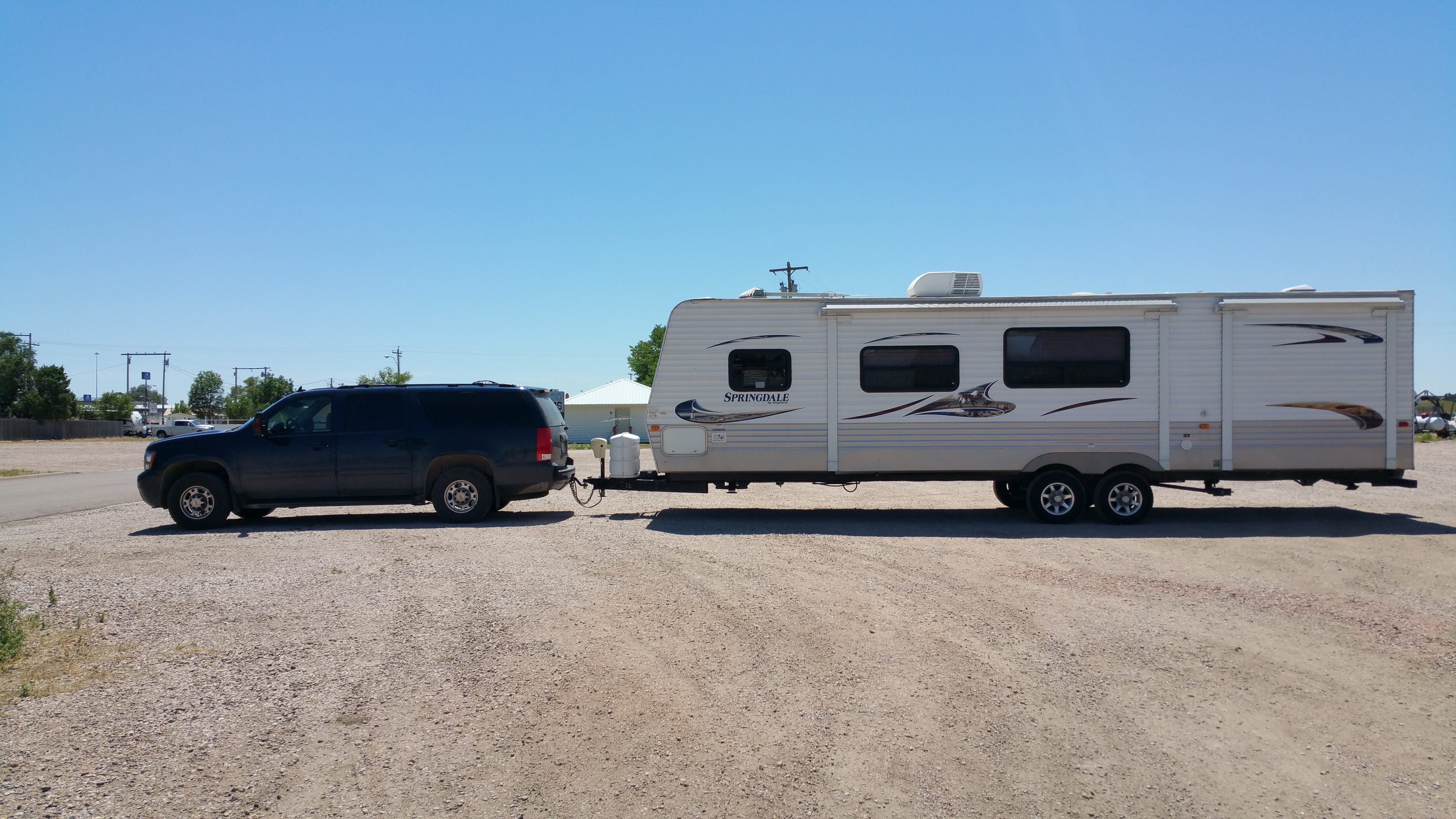
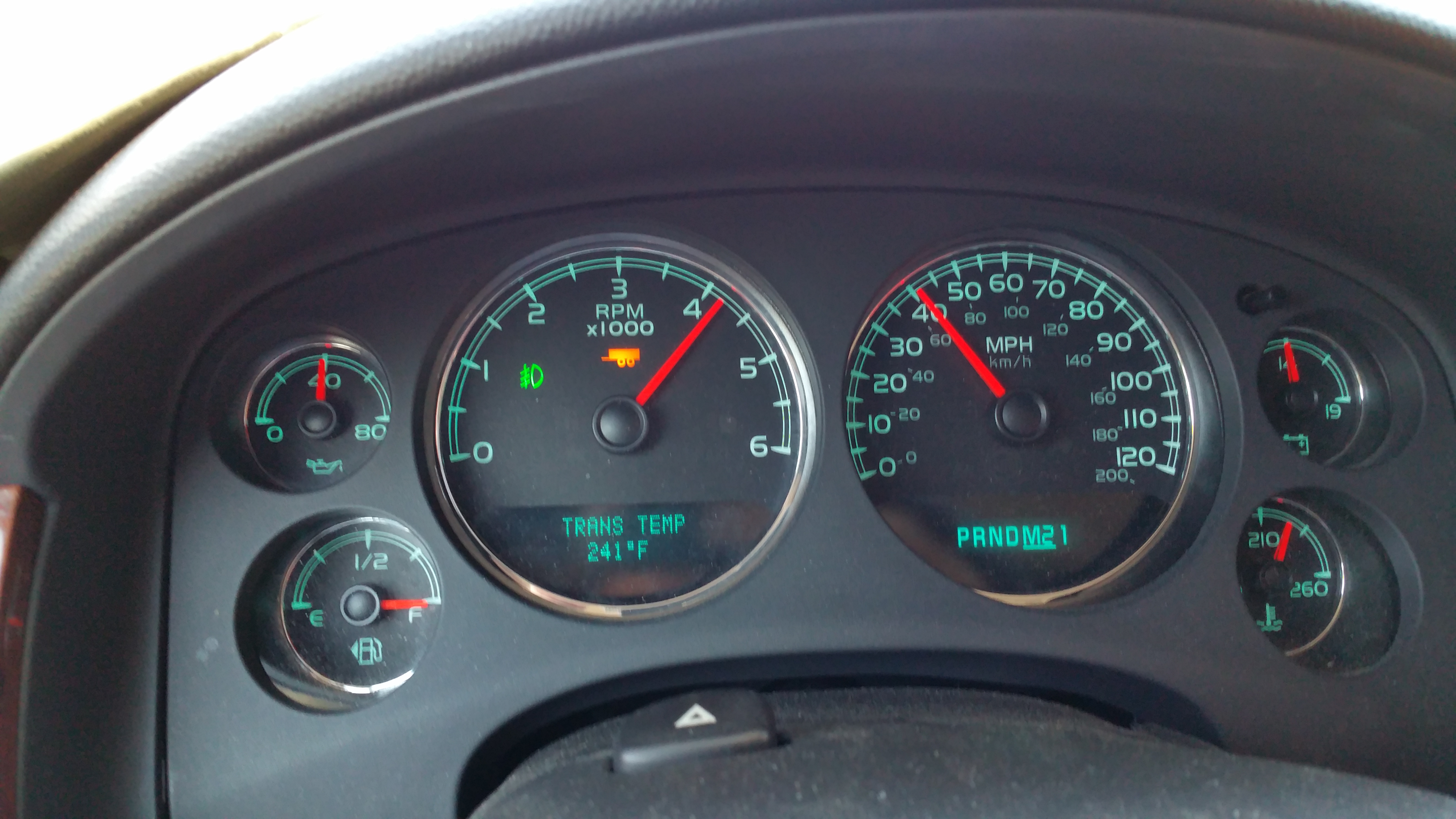
Geeze, I didnt mean to get you on the defensive! My opinion to anyone is if they tow heavy and frequently the trans is wearing at an accellerated rate and be prepared for a trans replacement and purchase one designed to tow. Temps increase in auto's from slippage/friction not from "lockup", he noted temps "out of the norm" for his vehicle, I didnt mean to imply imminent failure. Now based upon your pic's, temps, RPM i think you should be carrying a broom and wheelbarrow/kittylitter to assist the towtruck with cleaning up your mess. I dont think you should be proud of having to run that thing like that, more lucky that it hasnt grenaded yet? Oh and i allmost forgot, If you ever decide to sell your vehicle dont forget to to word the for sale sign as "generally abused the hell out of it"

:popcorn:

Not defensive at all. I'm simply commenting on people overreacting to slightly elevated transmission temperatures.

Oh, and another helpful hint - the 6L90 is already "designed to tow."
And regards to "RPMs," notice in the pic of my instrument cluster - no redline on the tach. The 6.0 motor loves to rev. Do a little Googling and see where the torque and hp peaks are. Hint: at 4k RPM, I'm still below the torque peak.

And yes, I do work my trucks hard. They're tools, and I use them like tools. I'm neither proud nor embarrassed about running my trucks the way I do. I run them within their designed operating parameters.

My 2008 truck has 190k miles, not counting fluid changes and tires, I've spent about $150 in repairs over the last five years. The entire power train is all original.
My 2001 truck has 250k miles. My best friend now owns it. Also has the original engine and transmission. I might have grenaded a few rear ends by towing a little heavy....

And no, it's not luck. I'm very meticulous about maintenance and fluid changes. I also know the capabilities of my truck. It also helps that a friend of mine is a transmission validation engineer at GM, and he actually worked on validation of the 6L80/90 transmissions.

Funny thing - I've been towing for almost 15 years. Haven't had a transmission fail in that entire time. I wonder why that is...:confused:

M3b1R3W.jpg


KMx20D9.jpg


U9RZTre.jpg


Ndkbnrb.jpg


a0XXg09.jpg
 
Last edited:

swathdiver

Full Access Member
Joined
May 18, 2017
Posts
21,296
Reaction score
30,248
Location
Treasure Coast, Florida
From the Useless Information thread, post #290: https://www.tahoeyukonforum.com/threads/useless-information.97483/page-29

With the weather warming up there's been talk of transmission temperatures and some fellas have been adding and or upgrading external coolers to keep the temperatures in line.

The 6L80s normal operating temperature is between 160 and 200 degrees. This corresponds with the HOT check on the dipstick when checking the fluid level. Cold check temperatures are between 80 and 90 degrees and also have a corresponding mark on the dipstick; mine anyway.

The temperature range for the Service Fast Learn Adapts procedure is 158-212 degrees.

If the transmission's temperature reaches 266 degrees for 5 seconds the "Transmission Hot Idle Engine" warning will display on the DIC.

Code P0218 (Transmission Fluid Overtemperature) will set if the fluid is greater than 270 degrees for one minute. On a side note, the shop manual says trailer towing should occur in D4 to ensure the cooling system functions normally.

The Flash Point for AC Delco's Dexron VI fluid is 401 degrees.

There is a transmission oil life monitor within the Transmission Control Module and is visible and able to be reset with the Tech2. I reckon that it is also based on engine revolutions and transmission temperature, similar to the Engine Oil Life System.

These trucks were literally designed to tow across Death Valley...
 

Fless

Staff member
Moderator
Joined
Apr 2, 2017
Posts
16,330
Reaction score
33,767
Location
People's Republic of Colorado
There is a transmission oil life monitor within the Transmission Control Module and is visible and able to be reset with the Tech2. I reckon that it is also based on engine revolutions and transmission temperature, similar to the Engine Oil Life System.


Does the 4L60 have a transmission oil life monitor, too? Too cold to go outside and connect the Tech 2 to check...
 

Fless

Staff member
Moderator
Joined
Apr 2, 2017
Posts
16,330
Reaction score
33,767
Location
People's Republic of Colorado
I will do that once things warm up a bit. The official low this morning at DIA was -6° F.

So much fun to cruise through all the info the Tech 2 shows, and use its tools.
 

thompsoj22

Full Access Member
Joined
Jul 21, 2018
Posts
689
Reaction score
718
Location
california native "REPUBLICAN" high desert
Not defensive at all. I'm simply commenting on people overreacting to slightly elevated transmission temperatures.

Oh, and another helpful hint - the 6L90 is already "designed to tow."
And regards to "RPMs," notice in the pic of my instrument cluster - no redline on the tach. The 6.0 motor loves to rev. Do a little Googling and see where the torque and hp peaks are. Hint: at 4k RPM, I'm still below the torque peak.

And yes, I do work my trucks hard. They're tools, and I use them like tools. I'm neither proud nor embarrassed about running my trucks the way I do. I run them within their designed operating parameters.

My 2008 truck has 190k miles, not counting fluid changes and tires, I've spent about $150 in repairs over the last five years. The entire power train is all original.
My 2001 truck has 250k miles. My best friend now owns it. Also has the original engine and transmission. I might have grenaded a few rear ends by towing a little heavy....

And no, it's not luck. I'm very meticulous about maintenance and fluid changes. I also know the capabilities of my truck. It also helps that a friend of mine is a transmission validation engineer at GM, and he actually worked on validation of the 6L80/90 transmissions.

Funny thing - I've been towing for almost 15 years. Haven't had a transmission fail in that entire time. I wonder why that is...:confused:

M3b1R3W.jpg


KMx20D9.jpg


U9RZTre.jpg


Ndkbnrb.jpg


a0XXg09.jpg
Cant argue with your real world results! It is a remarkable vehicle history and i hope to reap some of those memories also! That is a beautiful travel trailer setup!
 

Thankful ForGrace

TYF Newbie
Joined
Mar 4, 2019
Posts
1
Reaction score
0
I appreciate the info and lack of negativity on this thread. Well done! I would ask for the same in response to my question :angels2:. I plan to do a drain and fill with new filter and pan with drain plug. ('07 xl with 6.2) Would it be better to open the trans line (or extract from fill tube) for the drain and replace the filter after some fresh fulid has been added or first do the pan drop and filter with the additional two drain and fills using the plug? TIA

 

PG01

Elite Member
Supporting Member
Joined
Nov 6, 2016
Posts
15,686
Reaction score
21,099
Location
Up here to the right
I appreciate the info and lack of negativity on this thread. Well done! I would ask for the same in response to my question :angels2:. I plan to do a drain and fill with new filter and pan with drain plug. ('07 xl with 6.2) Would it be better to open the trans line (or extract from fill tube) for the drain and replace the filter after some fresh fulid has been added or first do the pan drop and filter with the additional two drain and fills using the plug? TIA
I would dump via trans line until red color then filter, then top off. Depending on your truck tho, how do all those lines look? Rusty? Corrosion? Has the fluid ever been changed? Filter? Many variables with diff trucks/drivers etc. My 2 cents
 

Meccanoble

Full Access Member
Joined
Oct 3, 2016
Posts
1,166
Reaction score
355
Location
Georgia
So to those of you that say we should get a transmission built for towing, I would assume that applies to the boosted crew and anyone else that likes to drive hard. If our trans goes bad, would it be better to rebuild or is there a version we can add to the NNBS that is better built for towing? If we want one rebuilt that would be better for towing or more abuse, what should we be upgrading? Torque converter?
 

thompsoj22

Full Access Member
Joined
Jul 21, 2018
Posts
689
Reaction score
718
Location
california native "REPUBLICAN" high desert
Just do a search 4L80E towing transmission, Summit racing has a well defined build inventory to inform you of what is replaced/improved. I am not part of the HP driveshaft twister club, But when i pull the grade from bishop to mammoth the first 23 miles are tough, our travel trailer weighs approx 5k loaded and everything in the driveline is put to the test. It is a paradox to replace the trans as preventive maint or wait for the big bang and potentially ruin a vacation. o8 yukon denali xl1500.
 

bottomline2000

Full Access Member
Joined
Oct 21, 2009
Posts
1,722
Reaction score
991
Location
Dallas, TX
What am I missing here? The trans hit 210-215 a few times and we're already talking about impending failure?

Everybody does know that the "trans hot, idle engine" warning comes on at 265°, right?
And everyone knows Dex6 can go even higher than that for short periods with minimal degradation, right?

I've had my transmission much higher than 215°, it has 190k miles on it, and it still functions/shifts perfectly. I drive it hard, tow really heavy stuff, and generally abuse the hell out of it. Moving 16,000 lbs up towards the Eisenhower Tunnel:
H2EL8bV.jpg


To the OP - your transmission is not on the verge of failure. Do a full flush and keep on trucking. I do a full flush every 50k. YMMV.
Your engine temps are warmer than normal and it seems you just stopped due to the full tank. Have you replaced the water pump in the truck or cooling system flush with 190k miles on the truck? You say you only spent $150 on maintenance so I'm assuming it's still all original.

With that kind of mileage I would have at least replaced the water pump, flushed the cooling system and put a Tru cool 40k trans cooler on it. Even if the truck can survive that kind of abuse why run at those temps if you don't have to?

Sent from my SAMSUNG-SM-T377A using Tapatalk
 

intheburbs

Full Access Member
Joined
Aug 10, 2017
Posts
935
Reaction score
1,861
Location
SE MI
Your engine temps are warmer than normal and it seems you just stopped due to the full tank. Have you replaced the water pump in the truck or cooling system flush with 190k miles on the truck? You say you only spent $150 on maintenance so I'm assuming it's still all original.

With that kind of mileage I would have at least replaced the water pump, flushed the cooling system and put a Tru cool 40k trans cooler on it. Even if the truck can survive that kind of abuse why run at those temps if you don't have to?

Sent from my SAMSUNG-SM-T377A using Tapatalk

Edit: Read what I typed. I didn't say I've spent $150 on maintenance. I said I've spent $150 on repairs - as in something broke and I had to fix it. I've probably spent at least $1000 alone on fluid changes. At 200k, I'll do all fluids again - trans, transfer, and both axles.

Coolant was done when I bought the truck with 100k miles. I'll probably be doing it again after I roll 200k.

That picture was the absolute extreme case. I took the picture just to capture what I knew was the worst case the truck would ever see. Plus, I just like to freak people out on the internet. :p

You are correct - we had just stopped for gas in Silverthorne, and were making the final push up to the Eisenhower tunnel. Elevation over 11,000 feet, grades as steep as 7%, and I seem to recall I had the accelerator on the floor a lot of the time. At that altitude, the engine is making about 30% less power, so my beastly 6.0 with 350 hp is now wheezing out about 250 horsepower. Add to that my GVW was right at 16,000 lbs, and the truck seemed to be reasonably happy at 4000 RPM in 2nd gear doing 40. I had lots of company, as many semis were going about the same speed, or even slower.

I don't see the point in adding a bigger trans cooler, when I've done that to the truck exactly 3 times climbing the various passes in the Rockies - Eisenhower once, Powder River (9666') twice. 99.9% of the time, the transmission is below 210°. And I flush the transmission religiously every 50k miles. Ditto for the engine - it's actually creepy how the needle never moves off 210° except in the absolute worst cases.

The first time we went to the Rockies, I talked to my friend who is the transmission validation engineer at GM. I expressed my concern about the 230°-240° temperature I saw on the ascent. He actually worked on validating the 6L80/90 transmissions back in 2006. He said "Don't worry about it. We did much worse in validation."

This is the reason I upgraded to a 2500 truck. People wrongly assume that since the 1500 and 2500 Suburbans share the same body, that the 2500 is simply a 1500 that's been "beefed up" a bit. Couldn't be further from the truth. Beneath the body, the two trucks are completely different. Almost zero shared components - completely different frame, engine, transmission, suspension, steering, brakes, springs (torsion front, leaf rear, like GMT800), axles, and wheels. The rear axle in my Suburban is the 10.5" freefloater from American Axle. AA rates the axle to 8600 lbs. My Suburban has an 8600-lb GVWR. Think that's a bit of overkill? The 2500 Suburbans were built for one purpose - towing. And GM did a good job.
 
Last edited:

bottomline2000

Full Access Member
Joined
Oct 21, 2009
Posts
1,722
Reaction score
991
Location
Dallas, TX
Edit: Read what I typed. I didn't say I've spent $150 on maintenance. I said I've spent $150 on repairs - as in something broke and I had to fix it. I've probably spent at least $1000 alone on fluid changes. At 200k, I'll do all fluids again - trans, transfer, and both axles.

Coolant was done when I bought the truck with 100k miles. I'll probably be doing it again after I roll 200k.

That picture was the absolute extreme case. I took the picture just to capture what I knew was the worst case the truck would ever see. Plus, I just like to freak people out on the internet. [emoji14]

You are correct - we had just stopped for gas in Silverthorne, and were making the final push up to the Eisenhower tunnel. Elevation over 11,000 feet, grades as steep as 7%, and I seem to recall I had the accelerator on the floor a lot of the time. At that altitude, the engine is making about 30% less power, so my beastly 6.0 with 350 hp is now wheezing out about 250 horsepower. Add to that my GVW was right at 16,000 lbs, and the truck seemed to be reasonably happy at 4000 RPM in 2nd gear doing 40. I had lots of company, as many semis were going about the same speed, or even slower.

I don't see the point in adding a bigger trans cooler, when I've done that to the truck exactly 3 times climbing the various passes in the Rockies - Eisenhower once, Powder River (9666') twice. 99.9% of the time, the transmission is below 210°. And I flush the transmission religiously every 50k miles. Ditto for the engine - it's actually creepy how the needle never moves off 210° except in the absolute worst cases.

The first time we went to the Rockies, I talked to my friend who is the transmission validation engineer at GM. I expressed my concern about the 230°-240° temperature I saw on the ascent. He actually worked on validating the 6L80/90 transmissions back in 2006. He said "Don't worry about it. We did much worse in validation."

This is the reason I upgraded to a 2500 truck. People wrongly assume that since the 1500 and 2500 Suburbans share the same body, that the 2500 is simply a 1500 that's been "beefed up" a bit. Couldn't be further from the truth. Beneath the body, the two trucks are completely different. Almost zero shared components - completely different frame, engine, transmission, suspension, steering, brakes, springs (torsion front, leaf rear, like GMT800), axles, and wheels. The rear axle in my Suburban is the 10.5" freefloater from American Axle. AA rates the axle to 8600 lbs. My Suburban has an 8600-lb GVWR. Think that's a bit of overkill? The 2500 Suburbans were built for one purpose - towing. And GM did a good job.
I understand the 2500 series as I have the engine and trans in my Tahoe and i know they have differnet DNA undrneath. I dont tow so i dont need the length or weight of the 2500 series..just the strong drivetrain parts[emoji6] Hey if it works for ya keep on trucking. I was just pointing out what I felt would make things easier because a hot engine is going to make even less power and a cooler trans will better preserve the internal seals and clutches which is what counts no matter how resilient the fluid is to temps. The pic shows trans temps at 241 degrees and engine temos well over 210. Towing at altitude on a grade is about as bad as it gets so thats a good example of extreme duty.

I think the moral of the story is keep the fluids fresh and do religious maintenance...but if you start pushing fluids something is not happy so dig deeper..

Sent from my SAMSUNG-SM-T377A using Tapatalk
 
Last edited:

intheburbs

Full Access Member
Joined
Aug 10, 2017
Posts
935
Reaction score
1,861
Location
SE MI
I understand the 2500 series as I have the engine and trans in my Tahoe and i know they have differnet DNA undrneath. I dont tow so i dont need the length or weight of the 2500 series..just the strong drivetrain parts[emoji6] Hey if it works for ya keep on trucking. I was just pointing out what I felt would make things easier because a hot engine is going to make even less power and a cooler trans will better preserve the internal seals and clutches which is what counts no matter how resilient the fluid is to temps. Towing at altitude on a grade is about as bad as it gets so thats a good example of extreme duty.

I think the moral of the story is keep the fluids fresh and do religious maintenance...but if you start pushing fluids something is not happy so dig deeper..

Sent from my SAMSUNG-SM-T377A using Tapatalk

Not quite. I have the LY6 6.0 - iron block and VVT, and I have the 6L90, not the 4L85. Those extra two gears make a big difference.

And I'm a seal guy. That's what I do for a living - I sell seals - orings, gaskets, u-cups, etc. So I'm very much aware of proper care and maintenance of these systems, as I've worked with automotive Tier 1s to design the seals for their subcomponents.
 

bottomline2000

Full Access Member
Joined
Oct 21, 2009
Posts
1,722
Reaction score
991
Location
Dallas, TX
Not quite. I have the LY6 6.0 - iron block and VVT, and I have the 6L90, not the 4L85. Those extra two gears make a big difference.

And I'm a seal guy. That's what I do for a living - I sell seals - orings, gaskets, u-cups, etc. So I'm very much aware of proper care and maintenance of these systems, as I've worked with automotive Tier 1s to design the seals for their subcomponents.
Understood..I have a gmt800 so I thought it was given my engine trans combo not your same platform. I understand the mechanical advantage also of 6 vs 4 gears and splitting ratios..

Sounds like you got it all under control so enjoy the ride.

Sent from my SAMSUNG-SM-G900A using Tapatalk
 

kbuskill

***CAUTION*** I do my own stunts!
Joined
Mar 11, 2017
Posts
5,822
Reaction score
9,833
Location
NE. FL.
Also... just as a side note... the factory coolant temperature gauge is not accurate.

I believe GM designed it to sit in the middle (210°) because that makes "normal" people comfortable to see it in the middle... like the oil pressure and volt meter.

If you look at the temperature of the coolant via a scan tool like the Tech2 or even an OBD2 scanner with Torque Pro you will see that when the temperature gauge is at the normal operating temperature of 210° the ACTUAL temperature is about 190°-192°. So almost 20° cooler than what it shows on the gauge.

I do not know if this is linear or if it changes with temperature but my guess is it probably is linear across the board as I have watched the actual temps while watching the gauge rise and it is pretty consistent.
 

bottomline2000

Full Access Member
Joined
Oct 21, 2009
Posts
1,722
Reaction score
991
Location
Dallas, TX
Found a list on wiki. Its on older cars? What about 4l85, will that fit without custom work?

https://en.wikipedia.org/wiki/GM_4L80-E_transmission
It depends on what you consider custom and what you consider older. My 4l85 is from a latter 08-09 cargo van but it was one of the last vehicles to have this transmission. What vehicle do you have and what transmission is currently in your truck? The 80e is slightly longer than a 60 and roughly the same size as a 6l80/90. It's obviously the predecessor to the 6l80 so I'm not sure you would want to do that swap, but they can and mine is modified to double it's holding power with a 1200hp rated custom converter, but I could have used a stock converter. Only my Cross member is custom , but I could have used a modified factory one and of course my computer has a trans segment swap to make it work so what are you running?

Sent from my SAMSUNG-SM-T377A using Tapatalk
 

Meccanoble

Full Access Member
Joined
Oct 3, 2016
Posts
1,166
Reaction score
355
Location
Georgia
I have the 6 speed version that comes in the 2011 Tahoe (6l80e). I was thinking I should be trying to find a 6l90 if it will fit or try to swap certain parts? Or would I be better just beefing up mine? Those were the 2 options I think if/when mine goes. Get a used 6l90 if it will fit and throw it on or rebuild the 6l80. Here are some details I found about the 6l90. It comes in the Camaro ZL1 so it has to be something special. I think we have same tranny in older corvettes. But 6l90 only takes 452 hp max? Must be worthless to the supercharged guys....

http://gmauthority.com/blog/gm/gm-transmissions/myd/

The 6L90 is a heavy-duty version of the 6L80 six-speed automatic, with a strengthened input gearset that has two additional pinion gears (six in total) and a strengthened output gearset that uses wider gears than the 6L80. Its flexibility extends to the clutches, where the 6L90 has one more clutch plate in each clutch than the 6L80 for heavy-duty applications. There is also a 6L90 version without the additional clutch plate to more closely match application requirements, where appropriate.


The 6L90 shares about 75 percent of the parts as the 6L80, although the case of the 6L90 is 35 mm longer than the 6L80 case. The 6L90’s case also accommodates additional fasteners between the transmission and the transfer case for improved driveline noise/vibration performance.
 

Forum statistics

Threads
137,759
Posts
1,991,309
Members
102,742
Latest member
CKendrick
Back
Top