Tire pressure for bigger wheels

Disclaimer: Links on this page pointing to Amazon, eBay and other sites may include affiliate code. If you click them and make a purchase, we may earn a small commission.

dmurph112

TYF Newbie
Joined
Jan 26, 2021
Posts
3
Reaction score
1
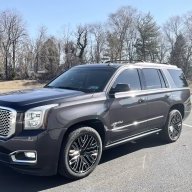
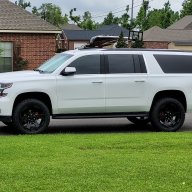
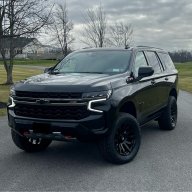
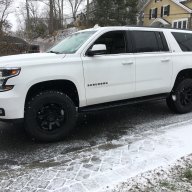
First post, been reading these forums for a few months now. Have a 17’ suburban with a 4” ready lift, just installed 20x9 +01 offset Ultra Nemesis wheels with LT285/60r20 Continental TerrainContact A/T tires with max tire press of 80 psi. (Slight rubbing, will do NorCal mod later). Stock tire pressure is 35 Psi. I emailed Continental with the new wheels specs and they said 41 psi. The new tires are basically 33.5”x11.50”. The shop that mounted the tires said they runs LT tires around 50-55 psi. Just looking to see what some of you guys run your tires at. Thanks, it’s great to read all the informative posts in these forum's
 

Matt_

Full Access Member
Joined
Jul 10, 2016
Posts
445
Reaction score
485
I always go by the TRA load vs inflation tables. Can use the GAWR or the stock size/pressure to convert to required pressure for different sizes. An LT285/60/20 at 41 PSI has a minimum load rating of 2,220 lb, which would allow for 4,440 lb on each axle.
 

Joseph Garcia

Elite Member
Supporting Member
Joined
Aug 2, 2018
Posts
10,267
Reaction score
14,870
When I upgraded my tires to Michelin Defenders (305/50x20 versus 275/55x20), I contacted Michelin to find out what their pressure recommendation was. They told me that since I had not changed the load class of the tire, but simply went to a larger tire, that I should still use the recommended tire pressure for the stock tire.
 

Tonyv__

Full Access Member
Joined
Apr 18, 2018
Posts
4,468
Reaction score
10,396
Location
Bucks county PA
If you guys are increasing tire pressure. How does your tpms recognize if a tire has low pressure? Is there a preset in the system or does it compare to the other 3 tires then alert you.
 

Matt_

Full Access Member
Joined
Jul 10, 2016
Posts
445
Reaction score
485
If you guys are increasing tire pressure. How does your tpms recognize if a tire has low pressure? Is there a preset in the system or does it compare to the other 3 tires then alert you.

It's a pre-set. Going from a P-metric to an LT tire usually only requires a slight increase in tire pressure and is normally a non-issue. No reason someone should run 60+ PSI in an LT tire on a vehicle designed around 35 PSI in a P rated tire.

It's actually the other direction where most run into TPMS issues, my 2500 runninig 35s is an example. Going to a larger/wider tire in the same load rating generally requires less pressure to match the load rating. For slight tire size increases its not a big deal and you just keep the pressure the same, but my 35s run at the recommended pressure of the small/thin stock size turns them into harsh bricks. The "proper" pressure for my oversized tires is close to the TPMS low pressure alert... i'll get that alert on cold mornings, but luckily i have a display with actual pressures and can see if a tire is indeed "low".
 

Rocket Man

Mark
Supporting Member
Joined
Dec 25, 2014
Posts
26,678
Reaction score
52,941
Location
Oregon
You said bigger wheels but I guess you meant bigger tires? 24-26” wheels also need a bit more pressure in my experience since there’s not nearly the tire cushion but you need to experiment- it’s a trade off in ride quality which I imagine goes with the bigger wheels as well.
 

STORMIN08

Full Access Member
Joined
Nov 21, 2011
Posts
974
Reaction score
464
personally, i have always adjusted to the PSI that offers the best ride without inducing odd wear patterns.

my heavy 3/4T trucks on 37's run 40 F/32 R, my suburban on 22's with a 33" runs 37 all around.
 
OP
OP
dmurph112

dmurph112

TYF Newbie
Joined
Jan 26, 2021
Posts
3
Reaction score
1
I originally had stock p265/65R18. So I went up in wheels and tires.

Here is the response I received from Continental
upload_2021-1-26_17-53-43.png


With the stock tires I would also air down to 18psi to drive on the beach. Any recommendations for a new psi to air down to now.
 

Matt_

Full Access Member
Joined
Jul 10, 2016
Posts
445
Reaction score
485
I originally had stock p265/65R18. So I went up in wheels and tires.

Here is the response I received from Continental
View attachment 268944

With the stock tires I would also air down to 18psi to drive on the beach. Any recommendations for a new psi to air down to now.

Thats the same process i've used for going from P to LT. I dont know why more shops don't train their techs to use the load vs inflation tables... its really not that hard.

You have about the same sidewall height and an inch more tread width to start, so ~20 psi should still be good for the beach. Can try 25 and see if you still need to go lower.
 

retiredsparky

Full Access Member
Joined
Jul 9, 2016
Posts
379
Reaction score
121
Another option is to find a flat, open parking lot area. Draw chalk lines across the tread and drive straight ahead far enough to get a few tire rotations and observe the pattern of wear shown by the location of chalk removal.
 

GoToGuyRon

TYF Newbie
Joined
Jan 24, 2021
Posts
9
Reaction score
0
Run what is printed on tire. "PXXX" is a passenger vehicle designed tire. What is listed is the everyday specification. In my K2500 with LT 275/16; " maximum inflation 55psi at 2700 lbs per tire" . I normally run 35 in all tires. If I'm going to run a heavy load, fill to higher psi. The higher pressure allows the tire to have correct "footprint" the part in contact with road surface. And maintain correct sidewall profile. Hitting a pothole or rough surface with underinflated tire could result in rim bead cuttibg into tire casing or striking road surface. I tried to explain to my pilot uncle that running 50 psi all the time in his surburban had no advantage, to make the ride so flipping harsh, being a rattletrap. Oh well....
 

nick14226

Full Access Member
Joined
Nov 22, 2019
Posts
258
Reaction score
249
Yeah, all about load ranges.

Not sure if it’s ok to post a link like this, but this website is awesome.
https://tiresize.com/pressure-calculator/

Saves you looking up specs on load charts.

I used the 18” passenger tire size at 35 psi from my door placard. Went to 285 55 20 BFG ko2 LT’s and it shows 46 psi equivalent. Contacted BFG, they suggested 48 psi.

Also know p tires in 285 45 22 from gm are also recommended at 35 psi. This works out to 43 psi using the calculator for my LT’s.

Chalk test for best wear, but I’d suggest above if you’re looking to handle same as original weight.
 

swathdiver

Full Access Member
Joined
May 18, 2017
Posts
21,274
Reaction score
30,204
Location
Treasure Coast, Florida
First post, been reading these forums for a few months now. Have a 17’ suburban with a 4” ready lift, just installed 20x9 +01 offset Ultra Nemesis wheels with LT285/60r20 Continental TerrainContact A/T tires with max tire press of 80 psi. (Slight rubbing, will do NorCal mod later). Stock tire pressure is 35 Psi. I emailed Continental with the new wheels specs and they said 41 psi. The new tires are basically 33.5”x11.50”. The shop that mounted the tires said they runs LT tires around 50-55 psi. Just looking to see what some of you guys run your tires at. Thanks, it’s great to read all the informative posts in these forum's

Continental gave good advice, you want enough air to exceed the axle weight ratings.

My truck came with P-metrics set at 30 psi. Run LT tires at 46 psi (42 psi exceeds axle weight ratings), LT tires use more air to support the weight than P-Metrics. My tires leak like crazy at 50 psi and above, not necessary anyway.
 

Rdr854

Full Access Member
Joined
May 18, 2017
Posts
785
Reaction score
368
Location
Northern VA
I always go by the TRA load vs inflation tables. Can use the GAWR or the stock size/pressure to convert to required pressure for different sizes. An LT285/60/20 at 41 PSI has a minimum load rating of 2,220 lb, which would allow for 4,440 lb on each axle.

I’m not so sure about that. When specing fire apparatus, we have always had to take the weakest point to calculate GVWR. This means you have to look at the axle and suspension ratings as well as tire and brake ratings.
 

Matt_

Full Access Member
Joined
Jul 10, 2016
Posts
445
Reaction score
485
I’m not so sure about that. When specing fire apparatus, we have always had to take the weakest point to calculate GVWR. This means you have to look at the axle and suspension ratings as well as tire and brake ratings.

Yes, and that's accomplished by matching the load capacity of the stock tires which take all that into account. If the tires aren't stock or you don't want to convert it, go by GAWR.
 

Forum statistics

Threads
137,674
Posts
1,989,124
Members
102,675
Latest member
j_jerry79
Back
Top