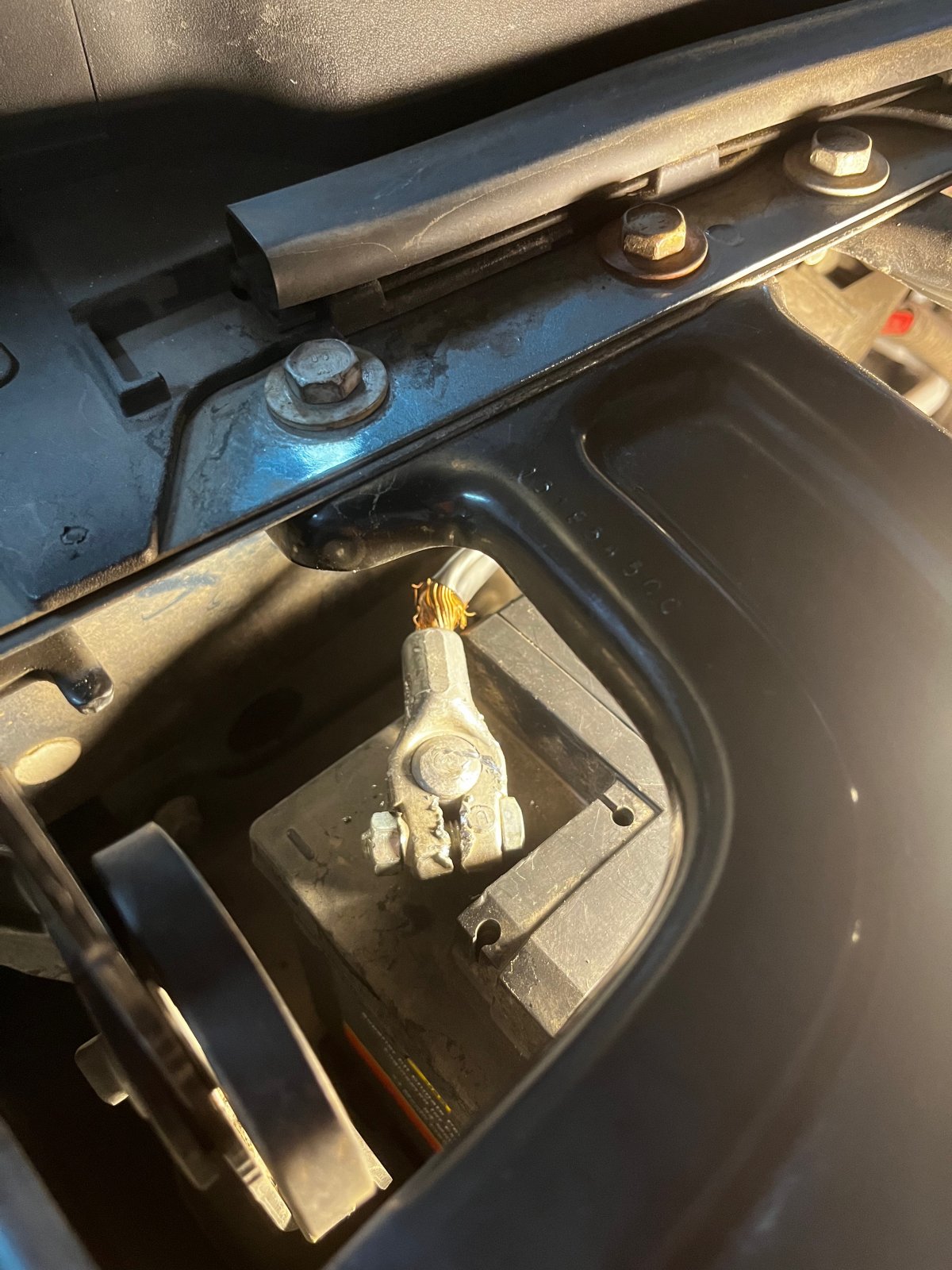
I have a couple of reactions to this that I hope are helpful. There is of course nothing wrong with delaying replacement or replacing the factory big 3 wiring with new factory parts if you're not in need of better performance because the problems people are seeing are mainly the product of age and exposure - especially wet weather and road salt. But to Wes's point, the factory parts are minimal because they don't maintain the performance level that the sensitive electronic systems on these cars require for the life of the vehicle, in many cases. So the argument for upgrading to bigger/more weather-resistant components is to ensure that you're unlikely to experience the problem again. For those who keep their cars a loooong time, as I do, that's beneficial.
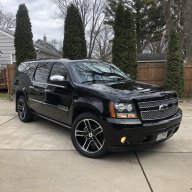
As for the starter, my rationale for replacing it before it fails with a new OEM part is based on not wanting to be stranded somewhere far away from home (we take trips often). And thanks to this forum, I've learned that on the GMT900 platform at least, the average life of a starter is somewhere between 120K and 160K, depending on driving habits of course. So I have a new starter on the shelf that I plan to install in our 2012 XL Denali with 132K on it in the next couple of months. I've already replaced the one in our '07 XL Denali this fall.
I have a spreadsheet in which I track all maintenance and parts replacement. In it I also have dates and mileages for when I should plan to replace common failure items proactively, based on what I've learned here. I learned this habit from owning an aircraft. While it's legal for private aircraft owners to replace parts 'on condition', commercial aircraft must have certain parts replaced after a specified time in service (hours or calendar months). What those limits are is evidence-based from past service experience. This is also true for ALL helicopters, regardless of whether it's privately or commercially owned. They do this to ensure absolute reliability and to limit the risk of failure.
It's slightly more expensive to maintain my vehicles this way, but far less expensive than a new vehicle, and cheaper than hotels, tow trucks, and a ruined vacation. And my wife and kids are usually in it with me, so I feel I owe it to them to do the best I can afford to keep them safe. So far, knock-on-wood, I have only had one vehicle strand me in 34 years of vehicle ownership. It was a Land Rover that developed a bad fuel gauge that unbeknownst to me read 1/4 tank when it was actually empty. I sold it shortly thereafter.