2007 Tahoe Sporadic Parasitic Battery Drain

Disclaimer: Links on this page pointing to Amazon, eBay and other sites may include affiliate code. If you click them and make a purchase, we may earn a small commission.

Dlewis59

TYF Newbie
Joined
Oct 1, 2025
Posts
7
Reaction score
12
Help! I am at wits end on this issue. I have very well maintained 2007 Tahoe that started having a dead battery issue. I originally thought it was just the battery, but after several replacements have discovered it’s a parasitic draw. It happens sporadically however, not every night. The last interval was 30 days between dead batteries. In the past it has gone multiple months between dead batteries.

I have had multiple mechanics in on this as well as my local dealer where I purchased it new. They all have run an Amp draw monitor, as I have too, the last being my local dealer who monitored it for 3 days on an amp meter. The electric system appears to function normally, going to sleep and pulling about 14mA while sleeping. Nothing woke up.

I needed the Tahoe for the weekend, so I picked it up from the dealer after they monitored it for 3 days and finding nothing. That was a Friday. On Saturday we drove it about 75 -100 miles, then parked it in the garage. On Sunday I backed it out of the garage to empty the equipment and pulled it back into the garage. It sat the rest of the day Sunday and Sunday night. On Monday morning, it was dead again. The battery voltage read 7.3V.

I don’t want to just start spending $ to replace components that are the usual suspects (Nav Display and system, Bose Radio/Amp, instrument display, a/c controller, etc.).

Any thoughts or experiences or help is much appreciated!
 

Joseph Garcia

Supporting Member
Joined
Aug 2, 2018
Posts
9,218
Reaction score
12,875
Welcome to the Forum from NH.

Lots of knowledgeable folks here who freely share their knowledge, experiences, and perspectives. Knowledge is power.

I hope that you will become a participating member in the Forum's discussions.

Pics of the truck, please.

Parasitic draws are a nightmare, as you have found out, particularly when it is intermittent.

If I were in your shoes, I'd probably do something like installing a second battery, and link it to the main fuse with wires that have high amperage quick disconnects. The disconnects are normally disconnected (except for occasional connections to keep the battery charged). Then, if you have an issue, you connect the second battery to get the truck started, and you can be on your way. I have this setup installed in my truck, just in case that I have a battery issue sometime in the future, when I'm out on the road somewhere.

I cannot personally assist you in the specific troubleshooting of your parasitic draw issue, but other members of this Forum much more knowledgeable than me in this area will chime in.
 

West 1

Full Access Member
Joined
Jan 20, 2023
Posts
305
Reaction score
512
So your issue comes and goes, hard to find for sure. My 2007 Escalade had a draw that drove me nuts. Finally found it was the under hood fusebox itself, the draw was in the lower box where hundreds of wires come in and out. New box and trouble gone but you have to isolate where the problem is or you are wasting money. South Main Auto on YouTube has some very good videos showing chasing battery draw issues and shows a variety of ways to look for the problems.
 

OR VietVet

GMT800 SUV/Trucks
Supporting Member
Military
Joined
Oct 8, 2014
Posts
22,566
Reaction score
41,283
Location
Willamette Valley
Welcome to the forum from Oregon.

Like @Fless said, a thermal imager can help but would need to be failing when you are checking.

What @solli5pack said is the tried and true way to check with but there is better technology out there and check out https://powerprobe.com/wp-content/u...2_PP_PPDRAW_Manual_100x200mm_V4.pdf-1.pdf.pdf

You do not unhook the battery to use this tool. It attaches at the DLC.

Since your problem is so very very intermittent, I think I would try removing fuses or relays, one at a time and only reinstall if the circuit is needed when driving. This will take some time, unless your first removal choice is the culprit. If you do just that one fuse/relay for let's say a month, and you have no problems, then that circuit is the likely culprit.

The "battery several replacements" is concerning too.
 

homesick

The Best Me I Can Be
Joined
Sep 19, 2018
Posts
3,229
Reaction score
8,905
Keep in mind when pulling fuses that simple act can wake up systems and it may be 10-20 minutes before they shut down so you can continue searching. Do some study before starting your testing.

Is it possible that pulling and reinserting fuses could improve a connection enough to solve the problem?

joe
 

OR VietVet

GMT800 SUV/Trucks
Supporting Member
Military
Joined
Oct 8, 2014
Posts
22,566
Reaction score
41,283
Location
Willamette Valley
Keep in mind when pulling fuses that simple act can wake up systems and it may be 10-20 minutes before they shut down so you can continue searching. Do some study before starting your testing.
Pulling a fuse will not wake up a system. Installing a fuse can do that. When you have all fuses installed and relays, then the different systems can take several minutes to shut down, "go to sleep".
 
Last edited:

Fless

Staff member
Super Moderator
Joined
Apr 2, 2017
Posts
14,751
Reaction score
30,154
Location
Elev 5,280
I guess if you choose to pull fuses and leave them out as you test you should take pictures so they go back to the proper location, the fuse box door does have a diagram to help with this also.

And once you identify the offending circuit, you'll likely need to look at an electrical diagram to see what's powered by it. You can find diagrams on www.charm.li.
 

Fless

Staff member
Super Moderator
Joined
Apr 2, 2017
Posts
14,751
Reaction score
30,154
Location
Elev 5,280
Is it possible that pulling and reinserting fuses could improve a connection enough to solve the problem?

joe

Yes, but that's rare. And it's also the reason that pulling fuses isn't necessarily the wisest way to track down a draw, since exercising the fuse contacts may not point to the cause.

Of course, checking fuse pin tension in the fusebox sockets might be helpful.
 

homesick

The Best Me I Can Be
Joined
Sep 19, 2018
Posts
3,229
Reaction score
8,905
Yes, but that's rare. And it's also the reason that pulling fuses isn't necessarily the wisest way to track down a draw, since exercising the fuse contacts may not point to the cause.

Of course, checking fuse pin tension in the fusebox sockets might be helpful.
LOL, 'almost never' is my specialty. I'm a magnet for unusual problems.

joe
 
OP
OP
D

Dlewis59

TYF Newbie
Joined
Oct 1, 2025
Posts
7
Reaction score
12
Thank you to everyone for the insights and suggestions! I’m very happy to connect with all of you on this forum.

Even though the first thing I tried was to replace the alternator when I was having the batteries die, I will see about doing an alternator diode test as suggested by @mikez71. Thank you.

Also, I do like what @OR VietVet suggested about pulling fuses over time to see if it continues to do it. This was actually suggested by a close friend of mine who was the service manager for years at several GM dealerships in San Diego. I bought a tool on Amazon that he suggested to make this easier. https://a.co/d/hZTdaUz A fuse switch that you can just turn off when parked overnight, and turn back on when you’re going to drive. I may revert back to this. Also, I just bought one of those new monitors you posted. Going to try it and record the monitor overnight to see if anything is waking up at night (obviously something is!). That unit can connect via Bluetooth to a phone. Plug them both into power so they stay up and it will record the nights activities according to the company that makes it.

All of these are great suggestions guys. Again, my thanks!

I’ll let you know how it goes. If I can find it, maybe the procedure will help others…

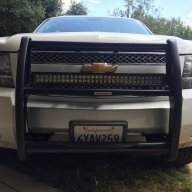
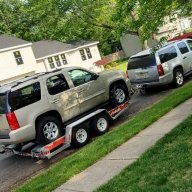
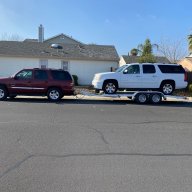
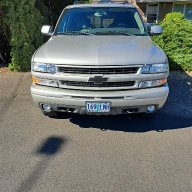
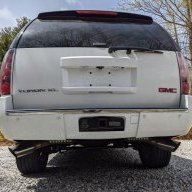
Also, @Joseph Garcia asked for some photos of my “Hoe” as I lovingly call her. This is my baby….
 

Attachments

  • IMG_0392.jpeg
    IMG_0392.jpeg
    466.3 KB · Views: 12
  • IMG_0393.jpeg
    IMG_0393.jpeg
    484.8 KB · Views: 13
  • IMG_0394.jpeg
    IMG_0394.jpeg
    566.4 KB · Views: 13
  • IMG_0395.jpeg
    IMG_0395.jpeg
    349.2 KB · Views: 11
  • IMG_0396.jpeg
    IMG_0396.jpeg
    291.9 KB · Views: 11
  • IMG_0397.jpeg
    IMG_0397.jpeg
    378.5 KB · Views: 14

Fless

Staff member
Super Moderator
Joined
Apr 2, 2017
Posts
14,751
Reaction score
30,154
Location
Elev 5,280
Don't use the "pull the fuses" method, since it can wake up modules during the test; there's an easier way. There are lots of good YouTube videos on diagnosing parasitic draw. Here's one:

 
OP
OP
D

Dlewis59

TYF Newbie
Joined
Oct 1, 2025
Posts
7
Reaction score
12
I have another theory on this issue that I’d love your opinion on. I noticed that yesterday when I connect my battery analyzer/charger to the battery, it showed 40% capacity. I thought that was strange as I had it was disconnected while doing the overnight monitor test with the power probe tool, had been driven during the day (thus charging), and was completely recharged to 100% capacity just a few weeks earlier.

Here’s the thought, I put a new alternator in a year ago, and replaced the negative battery cable per the GM service bulletin. I’m wondering if the positive cable also should be replaced? If there’s too much resistance in the cable, the amount of current flowing to the battery would be reduced and even though the system shows generating 14.1V most times (it does drop occasionally to 12V-ish at times) that doesn’t mean that the battery is getting the current. This could mean that I don’t have a parasitic draw at all, but rather the battery is just slowly being starved of current until it gets to a point where it can’t hold up over a night or two of normal mA draw.

What are your experiences with this scenario? Unlikely? Thoughts/suggestions?
 

Fless

Staff member
Super Moderator
Joined
Apr 2, 2017
Posts
14,751
Reaction score
30,154
Location
Elev 5,280
Do a voltage drop test. The battery cables tend to rot from the inside; although an ohm test might/would show continuity, nothing tests the capacity of the wire to pass current like a voltage drop test.


mikez71

Full Access Member
Joined
Mar 9, 2023
Posts
2,238
Reaction score
2,718
Could be your battery is already weakened from being run down too far/many times..
I get it, you don't want to put a new battery in while something is killing them!
But at this point with the battery down to 7.3V more than once, it might be hard to test with that battery..

If get a new battery, I would disconnect it everytime on shutdown until I found something that could be the culprit..
Meantime check the voltage when you shutdown.. should show if undercharging before too long.

There was a thread on here were someone had to buy 3 alternators before getting a good one. Even a dealer OEM was bad!
His issue was flickering lights..
 

homesick

The Best Me I Can Be
Joined
Sep 19, 2018
Posts
3,229
Reaction score
8,905
I have another theory on this issue that I’d love your opinion on. I noticed that yesterday when I connect my battery analyzer/charger to the battery, it showed 40% capacity. I thought that was strange as I had it was disconnected while doing the overnight monitor test with the power probe tool, had been driven during the day (thus charging), and was completely recharged to 100% capacity just a few weeks earlier.

Here’s the thought, I put a new alternator in a year ago, and replaced the negative battery cable per the GM service bulletin. I’m wondering if the positive cable also should be replaced? If there’s too much resistance in the cable, the amount of current flowing to the battery would be reduced and even though the system shows generating 14.1V most times (it does drop occasionally to 12V-ish at times) that doesn’t mean that the battery is getting the current. This could mean that I don’t have a parasitic draw at all, but rather the battery is just slowly being starved of current until it gets to a point where it can’t hold up over a night or two of normal mA draw.

What are your experiences with this scenario? Unlikely? Thoughts/suggestions?

My question about reseating fuses fits with this. All electrical connection points, maybe especially ground connections, should be checked.

joe
 

Forum statistics

Threads
136,862
Posts
1,950,305
Members
101,565
Latest member
Radiator1
Back
Top