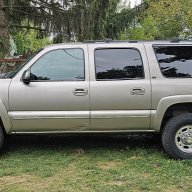
2013 Escalade ESV DOD full delete becoming rebuild

Disclaimer: Links on this page pointing to Amazon, eBay and other sites may include affiliate code. If you click them and make a purchase, we may earn a small commission.

West 1

Full Access Member
Joined
Jan 20, 2023
Posts
697
Reaction score
1,502
Reading your notes above you mention tighening the rocker arms to a certain preload? They need to be tightened to a certain torque? I would have to go look it up but I bet it is 35-45 lbs?

They don’t adjust at all, you just tighen them up and torque them to spec?
 

donjetman

Full Access Member
Joined
Oct 22, 2018
Posts
2,003
Reaction score
3,685
Reading your notes above you mention tighening the rocker arms to a certain preload? They need to be tightened to a certain torque? I would have to go look it up but I bet it is 35-45 lbs?

They don’t adjust at all, you just tighen them up and torque them to spec?
Rocker arms get torqued to 22 ft/Lbs period
preload is set with pushrod length

use the search feature here with the word "Preload" and my user name, I've explained this many times.
 

West 1

Full Access Member
Joined
Jan 20, 2023
Posts
697
Reaction score
1,502
I understand preload puts the lifters in the correct position to survive with no noise or hanging valves open.

In this case he fired it up and had a quiet engine for over a couple hours run time? That would indicate his preload/liter adjustment was in range for the lifters and not the cause of his loud rattle which sounds more lower end?
 

Joseph Garcia

Elite Member
Supporting Member
Joined
Aug 2, 2018
Posts
10,514
Reaction score
15,259
I agree. However, my measured preload of approximately 0.145" is out of the recommended spec for the Delphi LS7 lifters. I am going to fix that.

There was no miss of any kind. Engine ran quite smoothly.


Understood. For the moment, I am cranking it over by hand. The starter is off the engine. So far, all rockers have depressed all the valves the same amount. None of them feel loose in the fore and aft direction. Only side to side when the lifter on the base circle of the lobe.

I am an Industrial Maintenance technician by profession, and have been a gearhead for a few decades. I have learned the hard way that equipment does not 'heal'. :Big Laugh:


I verified the holes in the cam bearings were lined up with the holes in the cam tunnel. To the point I was able to squirt oil from the main cap saddles down to the cam bearings with the engine upside down on my engine stand.


Honestly, that makes sense. I will just have to live with slightly lower oil pressure at hot idle. I have/will run Mobil 1 Synthetic 5W-30 on 4000 mile oil change intervals. It should be OK.


Thanks!
I recommend that you completely move on from oil pressure changes and concerns. Your idle hot oil pressure is just fine. Even with a brand new Melling oil pump, their literature in the box advises you that regardless of the pressure spring used, idle hot oil pressure will be around 25 psi.
 
OP
OP
skpyle

skpyle

Senior Member
Supporting Member
Joined
May 15, 2021
Posts
546
Reaction score
1,348
Reading your notes above you mention tighening the rocker arms to a certain preload? They need to be tightened to a certain torque? I would have to go look it up but I bet it is 35-45 lbs?

They don’t adjust at all, you just tighen them up and torque them to spec?

Rocker arms get torqued to 22 ft/Lbs period
preload is set with pushrod length

use the search feature here with the word "Preload" and my user name, I've explained this many times.

I understand preload puts the lifters in the correct position to survive with no noise or hanging valves open.

In this case he fired it up and had a quiet engine for over a couple hours run time? That would indicate his preload/liter adjustment was in range for the lifters and not the cause of his loud rattle which sounds more lower end?

West 1: I do agree that the lifters were likely OK. However, I measured existing preload at 0.145". The Delphi LS7 lifters call for preload between 0.050" and 0.100". My OCD will not let me let that go. I will cheerfully purchase a new set of correct length pushrods.

Also, I agree that the sound was coming from the bottom end. I just haven't found it yet. I have been turning things over in my head on what the sound could be. More on that in a next post.


donjetman: thank you for clarifying.


Thanks!
 
OP
OP
skpyle

skpyle

Senior Member
Supporting Member
Joined
May 15, 2021
Posts
546
Reaction score
1,348
I recommend that you completely move on from oil pressure changes and concerns. Your idle hot oil pressure is just fine. Even with a brand new Melling oil pump, their literature in the box advises you that regardless of the pressure spring used, idle hot oil pressure will be around 25 psi.
Honestly, that makes sense. I just got it in my head that something was going wrong. And I expected better oil pressure. Will live and learn.

Thanks!
 
OP
OP
skpyle

skpyle

Senior Member
Supporting Member
Joined
May 15, 2021
Posts
546
Reaction score
1,348
The past two days have pretty much been a wash. Other responsibilities and rain have kept me away from my Escalade. However, I did get a brief chance to start to learn how to use my new borescope. I was able to look in cylinder #3 with the piston near BDC.


2026-07-10 001.JPG


2026-07-10 002.JPG

#3 cylinder walls and piston. I 'think' this is all OK for an engine that is still breaking in. I do see some light vertical scratches, but nothing can be done now. Piston crown has some carbon build up, but nothing excessive like oil burning.
(Ignore the date/time stamp. I had not yet properly set the date/time.)


2026-07-10 003.JPG

Intake valve and combustion chamber.


2026-07-10 004.JPG

Exhaust valve and combustion chamber.


I have been doing alot of thinking, some of it in circles...

Engine started 'knocking' after approximately 60 miles. Engine ran fine the entire time, no issues or check engine light. Sound was more pronounced after 100 mile oil change. Old oil showed no obvious contamination or excessive wear. Same with cutting open the oil filter.

Mechanic's stethoscope found no sound at top of engine, nor underneath at the bellhousing. Sound was firmly under the oil pan. More noticeably at the front of the oil pan. Though the volume of oil in the rear sump could have been dampening the sound some.

Removed oil pan, found no debris or glitter in oil pan.

Inspected bottom end, no obvious visual issues. Engine turned over by hand smoothly with no noise, notchiness, clicking, etc...

Thrust bearing clearance was exactly as when I had assembled the engine.

Removed all 8 rod caps, all bearings and journals showed no damage of any kind. No rod bolts were loose.

Unbolted torque converter from the flexplate. Bolts were tight. Torque converter spun smoothly, showed no damage or discoloration.

Flexplate was tight against the crankshaft flange, no looseness of any kind felt.

Removed both valve covers, inspected valve train, no obvious visual issues. Removed 12 of 16 rocker arms and pushrods. Found no issues other than excessive preload.


Sound is from something rotating or reciprocating.

Timing chain rotates. Sound could be timing chain slapping from a broken tensioner. Engine still has VVT. Timing chain must be tensioned for VVT to operate correctly. HOWEVER: if the chain was slack, and VVT wasn't operating correctly, that 'should' end up throwing a code of some kind. And, with the crankshaft turning the camshaft, once the VVT shifted position, the chain would be tensioned again. Meaning, this would be an intermittent sound, based upon engine load and speed. Sound I heard was steady and rhythmic.

Camshaft rotates. HOWEVER: I am not sure how the camshaft rotating could make that noise. Unless a bearing has failed. During assembly, I noted that sliding the camshaft through each bearing 'felt' the same amount of tightness. If that makes any sense...

Oil pump rotates. HOWEVER: a damaged oil pump should show some debris in the bearings and/or show fluctuations in oil pressure.

Crankshaft pulley rotates. HOWEVER: pulley ran true while running, and was replaced in December of 2023 with a new GM unit.

Water pump rotates. HOWEVER: pulley ran true while running, mechanic's stethoscope found no sound from it, and was replaced in December of 2023 with a new GM unit.

Accessories rotate. HOWEVER: I fell down that hole back in September of last year when all this started. The PS pump was 'clicking' so I went through the effort to replace it. Only to not make the tapping lifter sound go away. And realize that the 'clicking' I was hearing was the vanes in the pump rotor clicking as I spun the pump by hand.
Meaning I am not sure how any of the accessories could cause the sound I was hearing from the oil pan.

Piston pins reciprocate. HOWEVER: All 8 pins felt tight in all 8 connecting rod small end bushings. No discernible play. Same with the pistons. To the point, the pin bores were tight in two of the pistons. My machinist had to hone them until the pins fit smoothly.

I can't think of anything else that rotates or reciprocates on an LS engine.

Something else to think about: engine temperature does not have an effect on the sound. I heard the sound when the engine was warm. Next morning, I did a cold start. Sound was there.


Even though I found no issues with the rod bearings and journals, and the crankshaft thrust clearance had not changed, I almost have myself talked into pulling the crankshaft main caps one at a time. To inspect the bearings and journals, and if nothing else, verify they are not the problem.

 

SpareParts

Elite Member
Supporting Member
Joined
Sep 17, 2023
Posts
2,112
Reaction score
4,801
Location
North Idaho
Listening to vids over the internet is pretty subjective for sound. I can only think of 3 things that can make that sound. Rods/mains or a slapping piston but pistons usually quiet down when up to temp.
 

West 1

Full Access Member
Joined
Jan 20, 2023
Posts
697
Reaction score
1,502
The verticle scratches can be left behind by the dial bore gage used to check size when the engine is being machined. Any particles in the engine will also leave scratches like that.
So far no smoking gun has been found causing your noise?

Not the cause of any noises but the cylinders look rough, do you know what finish they were given?
Modern rings like a very smooth cylinder. Could just be the photos exaggerating the finish.
 
OP
OP
skpyle

skpyle

Senior Member
Supporting Member
Joined
May 15, 2021
Posts
546
Reaction score
1,348
Listening to vids over the internet is pretty subjective for sound. I can only think of 3 things that can make that sound. Rods/mains or a slapping piston but pistons usually quiet down when up to temp.
Agreed. Once I finish checking the rockers and lifters for cylinders 6 and 8, then borescope the rest of the cylinders, I am going to pull the main caps one by one.


The verticle scratches can be left behind by the dial bore gage used to check size when the engine is being machined. Any particles in the engine will also leave scratches like that.
So far no smoking gun has been found causing your noise?

Not the cause of any noises but the cylinders look rough, do you know what finish they were given?
Modern rings like a very smooth cylinder. Could just be the photos exaggerating the finish.
Understood.
Nope. No smoking gun. Just a list of things it is not.

I don't know what the cylinder finish is. My machinist bored and honed it for the Hastings Plasma Moly rings. I have had a relationship with him for 20 years, and trust him implicitly.
 
OP
OP
skpyle

skpyle

Senior Member
Supporting Member
Joined
May 15, 2021
Posts
546
Reaction score
1,348
I was able to get more work on my Escalade today.

I jacked up the front end again, lowered the steering rack, and removed the oil pan.

I removed main caps 1 through 4, one at a time. They all looked the same. Some wearing off of the tin plating, no scratches or grooving in the lower bearings. No scratches or grooving of the main journals.
#3 thrust bearing had no damage on the thrust surfaces. #3 main journal thrust faces were undamaged as well.

2026-07-18 171.JPG

#1 main cap lower bearing. Scratches in tin plating, but not the bearing.


2026-07-18 168.JPG

#1 main journal. No scratching or grooving.


2026-07-18 173.JPG


2026-07-18 174.JPG

Two different photos of #2 main cap lower bearing. Debris was left from rag. Was wiped off before the cap was reinstalled.


2026-07-18 172.JPG

#2 main journal.
 
OP
OP
skpyle

skpyle

Senior Member
Supporting Member
Joined
May 15, 2021
Posts
546
Reaction score
1,348
2026-07-18 182.JPG

#4 main cap lower bearing.


2026-07-18 180.JPG

#4 main journal. Sorry for the poor quality. Me and the camera's auto focus were not getting along...


2026-07-18 183.JPG

Tabs on rear seal plate overlapped #5 main bearing cap. No access.


I reinstalled the main caps with a smear of oil on the bearings, then hand tightened all the bolts. I may retorque them following the factory procedure. I know the main bolts are TTY and one time use. My intent would be to button the engine up for a simple test fire to see if the noise was gone.
Once all is said and done, all the rod bolts and all the main bolts will be replaced and properly torqued.

I could not remove the rear main cap because there are two tabs from the rear seal plate that overlap on it.

With #1 main cap removed, I was able to look up in the timing cover. I could see the timing chain tensioner still intact. I reached up with a screwdriver and pushed on the chain. No slack.

2026-07-18 169.JPG

Timing chain tensioner is visible and intact.


2026-07-18 170.JPG

Timing chain is tight.


I have lowered the front of the Escalade back down onto little jack stands so it is as low as it will go. Monday, I will continue with the valve train and borescoping the cylinders.
 

SpareParts

Elite Member
Supporting Member
Joined
Sep 17, 2023
Posts
2,112
Reaction score
4,801
Location
North Idaho
Maybe just reflection but #3 looks a little beat near the center?
A guy could always roll new main bearings in. Pretty easy at this point and not that costly.
 
OP
OP
skpyle

skpyle

Senior Member
Supporting Member
Joined
May 15, 2021
Posts
546
Reaction score
1,348
I will look closer.

Agreed. Though to be honest, if I don’t find anything soon, I am going to just pull the engine. It will go back on the engine stand to be completely disassembled.
And we will see what I did wrong.

Reassembly will include all new bearings, gaskets, and hardware.
 

j91z28d1

Full Access Member
Joined
Feb 28, 2022
Posts
4,655
Reaction score
5,900
could it have been old school carbon knock? how close was your piston to head clearance?

I hope you find it. as I'm stumped short of a wrist pin. you've basically looked at everything?
 
OP
OP
skpyle

skpyle

Senior Member
Supporting Member
Joined
May 15, 2021
Posts
546
Reaction score
1,348
could it have been old school carbon knock? how close was your piston to head clearance?

I hope you find it. as I'm stumped short of a wrist pin. you've basically looked at everything?
I don't "think" so. Noise was down low, from the oil pan. Pistons are stock replacement, cylinder decks were not machined, cylinder heads were machined 0.006", I am running Fel-Pro head gaskets. I don't think clearance was too close.

I am going to check the wrist pins, in a manner of speaking. I am going to turn the crank so each piston is being pulled down its cylinder by the rod. Then try to push down on the top of the piston through the spark plug hole. See if I feel anything 'give'.

It is frustrating, but I will figure it out. If I have to completely disassemble the engine and build it back up, I will do so.


Thanks!
 

Forum statistics

Threads
138,035
Posts
1,997,524
Members
102,972
Latest member
mudrunnerz
Back
Top