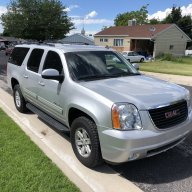
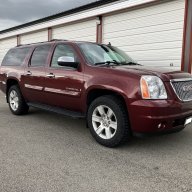
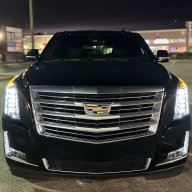
Upgrading Vehicle - 2013 Yukon XL 2500 6.0 vs. 2019 Yukon XL 6.2?

Disclaimer: Links on this page pointing to Amazon, eBay and other sites may include affiliate code. If you click them and make a purchase, we may earn a small commission.

NOPROBROBB

Full Access Member
Joined
Sep 9, 2009
Posts
120
Reaction score
39
Location
UTAH
Hey everyone,

I'm at a crossroads and could really use your insights. Currently, I'm driving a 2012 Yukon XL with nearly 200k miles on it. I'm looking to make an upgrade – aiming for a vehicle with fewer miles and a bit more towing power.

In my local market, there are a couple of newer 2019 Yukon XLs equipped with the 6.2 engine that have caught my eye. However, just recently, I stumbled upon a 2013 Yukon XL 2500 with an impressive low mileage of only 115k.

While I absolutely prefer the exterior look of the 4th generation models and all the extra bells and whistles they come with, the 2013 option comes at roughly half the price of the newer models. Moreover, I've been contemplating that the 2013 might have fewer potential issues compared to the 2019.

Does anyone have experience with both of these engines? I'm curious to know how they perform against each other in terms of power and reliability.
 

swathdiver

Full Access Member
Joined
May 18, 2017
Posts
21,299
Reaction score
30,254
Location
Treasure Coast, Florida
A 2019 6.2 engine puts out 420 horses and 460 foot pounds of torque. That's enough of a difference that you can feel.

The 6.0 Gen IV L96 puts out 352 horsepower and 382 foot pounds of torque, equivalent to the Gen V 5.3! However, a tune will wake up the 6.0, especially if tuned for 91 octane. Still no Gen V 6.2 though!

My Holiday Inn Express opinion is that the older truck's engine would be more enduring and the heavier chassis of the 2500 would tow better.

These guys know more than me on this subject:

@intheburbs @Bigkevschopshop
 
Last edited:

strutaeng

Full Access Member
Joined
Aug 10, 2023
Posts
1,944
Reaction score
4,214
Location
Dallas, Texas
I would say that it depends what you plan to use the truck for. I drive an 06 Suburban 2500 and really like it. It's got 258k and seems pretty solid and I bought it with 225k but appears was well taken care of.

The biggest difference would be the rear suspension if you do any towing. The 2500 has leaf spring suspension vs coil springs for the 1500. Obviously, the 2500 has higher payload and will have higher pin weight for the upper bounds of the towing rating. A little rougher ride on the 2500 driving unloaded. No DOD/AFM on the 2500 if that matters. A bit heavier duty transmission and most likely all the fluid coolers on the 2500.

The 1500 will be lighter and faster and ride smoother. The 2500 will be slower and get worse gas mileage in a direct comparison. Basically the 1500 would be better everyday unless you hook up a heavy trailer. Heavy is probably 6000 lbs+ to the rated capacity.
 
Last edited:

intheburbs

Full Access Member
Joined
Aug 10, 2017
Posts
935
Reaction score
1,861
Location
SE MI
Hey everyone,

I'm at a crossroads and could really use your insights. Currently, I'm driving a 2012 Yukon XL with nearly 200k miles on it. I'm looking to make an upgrade – aiming for a vehicle with fewer miles and a bit more towing power.

In my local market, there are a couple of newer 2019 Yukon XLs equipped with the 6.2 engine that have caught my eye. However, just recently, I stumbled upon a 2013 Yukon XL 2500 with an impressive low mileage of only 115k.

While I absolutely prefer the exterior look of the 4th generation models and all the extra bells and whistles they come with, the 2013 option comes at roughly half the price of the newer models. Moreover, I've been contemplating that the 2013 might have fewer potential issues compared to the 2019.

Does anyone have experience with both of these engines? I'm curious to know how they perform against each other in terms of power and reliability.

What are you towing?
How frequently?
Towing performance is a heck of a lot more than just engine power output.
A 2500 truck is not a "beefed up" half-ton. Lift the body off, and it's a completely different truck - different frame, engine, transmission, axles, brakes, suspension, etc.

2500 pros:

Value retention - 2500s are rare. They will hold their value much better than the dime-a-dozen half-tons. I have a collector/declared value policy with Haggerty on my Suburban, because of the disparity of actual value vs blue book.
Durability - Everything that moves on a 2500 is heavier-duty than the half-tons. Brakes will last longer. Wheel bearings will last longer. Major components will last longer.
Towing capability - "Tow ratings" are BS. Especially with SUVs. Most half-tons are over-rated, the 2500s are under-rated. Gotta dig deeper than just "tow rating" to see what I mean. If I need to pull a 7,000-lb trailer, I'll take the 2500 as my tow vehicle every time.
Ride - If the torsion keys haven't been cranked, they ride beautifully. Equivalent ride quality to my 2001 Suburban, and softer than my Denali. Fantastic highway cruiser - even when not towing.

2500 cons:
Mileage - 12 city, 15 highway, if you're lucky. Upside - 39-gallon gas tank equates to a very respectable 550-mile range.
Age - rust can be an issue. Mine has been garaged religiously for the last 10 years and has minimal rust, despite living in salt central (Michigan).
Cost - Because they're rare, they usually cost a lot more than a similar year/trim of half-ton.

Kinda curious what the asking price is on the 2013. I'd wager $20k or more, depending on the trim level. If it's under $20k and in good shape, it's a bargain.
 
OP
OP
NOPROBROBB

NOPROBROBB

Full Access Member
Joined
Sep 9, 2009
Posts
120
Reaction score
39
Location
UTAH
@intheburbs thank you very much for the insight! I won’t be towing anything that will challenge either but just would like a bit more than the 5.3 provides.

They’re asking 24k for the 2013 2500 which isn’t cheap but seems cheap compared other options. It’s a SLT with navigation, sunroof, and all the bells and whistles.
 
OP
OP
NOPROBROBB

NOPROBROBB

Full Access Member
Joined
Sep 9, 2009
Posts
120
Reaction score
39
Location
UTAH
IMO... The one thing you would get with the 2013 option is familiarity. You basically own the same vehicle and therefore will go into the new one knowing a lot about it. Sometimes that's worth more than money.
@Airman68 that is very true and something that makes it a bit more enticing vs a newer one for me although I prefer the newer styling.
 
OP
OP
NOPROBROBB

NOPROBROBB

Full Access Member
Joined
Sep 9, 2009
Posts
120
Reaction score
39
Location
UTAH
A 2019 6.2 engine puts out 420 horses and 460 foot pounds of torque. That's enough of a difference that you can feel.

The 6.0 Gen IV L96 puts out 352 horsepower and 382 foot pounds of torque, equivalent to the Gen V 5.3! However, a tune will wake up the 6.0, especially if tuned for 91 octane. Still no Gen V 6.2 though!

My Holiday Inn Express opinion is that the older truck's engine would be more enduring and the heavier chassis of the 2500 would tow better.

These guys know more than me on this subject:

@intheburbs @Bigkevschopshop
Thank you @swathdiver. I am liking the idea of going with the older 2013 and tuning the engine. Gonna go test drive both to see how they each drive
 

Geotrash

Dave
Supporting Member
Joined
Feb 16, 2018
Posts
7,845
Reaction score
20,404
Location
Richmond, VA
There are a handful of dimensions I think about for towing: Stability (safety), pulling power, cooling, durability, comfort, cost. And it's a matter of solving for all of these based on your personal priorities that results in either happiness or discomfort. I tow a 7500 lb camper with a modified 2012 Yukon XL Denali pushing 450-460 HP & TQ into the driveline, along with all of the attendant cooling challenges that brings with it.

Stability is probably the most subjective, emotionally-laden thing on this list. For every driver who swears by their 3/4 ton truck for towing superiority, there are probably 4 drivers with half tons getting the job done safely. I find my half-ton XL with a well set-up WDH to be plenty stable for me to feel comfortable 100% of the time. That means that I can feel a little pull when being passed by a truck, but I've gotten so used to it after 20K+ towing miles that I don't even think about it any more.

Durability is probably the second most emotionally-laden item on the list. To my knowledge, not one study exists of long-term durability when towing 7000 pounds behind one of these trucks, so all of us are speculating about it. Some folks have replaced their rear axle more than once, while others never have any problems. I believe the AWD of the Denali helps a lot here because both axles are sharing the pulling burden. For those with 6-speeds, the torque converter is the weak link and both the 1500 and 2500 use the same TC. I had mine upgraded to a billet unit with a stronger lockup clutch, so there are cost-effective ways to maximize the durability of the 1500 platform. If I end up having a problem with the rear axle, I can upgrade to a 14-bolt out of a 2WD Escalade, no problem, for about $500.

Pulling power is mostly a function of engine power and final drive ratios. I have the 3.42 axles on mine and they do the job. With the higher output of the 6.2 + cam, pulling power isn't an issue. I can keep up with traffic in just about any situation. That said, 3.73 would be pretty much ideal, and that's a change that can be made for a couple thousand.

Cooling can be an issue on the half-tons, but again, cost-effective mods are available to negate it. I have a fan-forced transmission cooler mounted below the bumper behind the lower grille, and a 2-row Cold Case radiator. I no longer have any cooling problems - even when pulling over the high mountain passes out west.

Comfort is a nod toward the half-tons when they serve double duty as a family hauler when not towing. The mag ride and rear air suspension on the Denalis provides a superior ride - especially when lightly loaded.

Cost is a significant factor. Right now, the cost differential between similarly equipped half-ton and 3/4 ton trucks is 50%-100% with similar age and mileage. But the premium fuel requirement of the 6.2 can eat up that difference over time.

Every now and then I find myself looking at 3/4 ton Suburbans and Yukons, but with the way mine is set up right now, I can't justify spending the additional money. If I were starting over knowing that I'd be pulling a 7500 lb camper, I would shop for a 2500. But I have maybe $4K in parts into the mods I've made so far to my 1500 so I'm still money ahead until the premium fuel tax catches up with me.
 

Bigkevschopshop

Full Access Member
Joined
May 5, 2019
Posts
819
Reaction score
2,059
Location
Northside H-Town
A 2019 6.2 engine puts out 420 horses and 460 foot pounds of torque. That's enough of a difference that you can feel.

The 6.0 Gen IV L96 puts out 352 horsepower and 382 foot pounds of torque, equivalent to the Gen V 5.3! However, a tune will wake up the 6.0, especially if tuned for 91 octane. Still no Gen V 6.2 though!

My Holiday Inn Express opinion is that the older truck's engine would be more enduring and the heavier chassis of the 2500 would tow better.

These guys know more than me on this subject:

@intheburbs @Bigkevschopshop
intheburbs hit alot of nails on the head... Thanks swathdiver I guess I have been around the block a few times! :biggun:

I tow frequently in my 1500. The most strained tow pig was 03 Tahoe with the 4.8 and then my 12 Burb with a 3.08 gear and no max trailering. The 2011 6.2 Denali xl with 3.08 did alot better, but tows just like my 15 Burb with a 5.3 honestly with 3.42 gears. Air suspension in the rear is a must for 1500 and towing, the MRC also helps keep the stability in check with both the body styles. The max trailering packages get you the 3.42 gear, upgraded transmission cooler, and brake controller built in.

Now for what its worth Ill go down a rabbit hole. The later model stuff is nice, I did a comparison write up from all these that I have owned for interior and gadgets etc. Handling is hands down where the late model stuff with MRC shines. The seats and simplicity of the 09-14 platform and 6 speed is a damn good platform through and through, I miss mine some days. But the extra HP and updated MRC, make up for the missing of things.

I will say that the only way I would consider a 2500 is if you are towing 3-4k miles a year with loads of over 6k lbs. If a quick 200 mile trip 1 or 2 times a year with 7k load the 1500 is up for it if equipped correctly and the extra things done to it.

Side note: The 10 speed on the 6.2 from 2018 to 2020 also helps make up for gear ratio, just make sure it has the max trailering package.

The 2500 is a great crossover from the NBS and NNBS for ride, the torsion front is smooth and the leaf sprung rear is not terrible as gm did a good job on spring rates back there. The 14 bolt rear is what shines on the 2500 though, as the 12 bolt under the 1500 2wd and the 10 bolt under the 1500 4wd is the weak links of the driveline of these. The comparable 1500 trucks of the same year on the K2 platform are rated up to 11k tow rating. Same motors and trans, just the rear end for the additional weight and suspension design is not up for it.

Swath hit the nail on the head for the 6.0 vs the 5.3 gen v for HP and torque. The 6.0 has a major advange of being built more robust with less power output that's why so many 6.0 are highly sought after as builder motors, 300k miles and the internals are still in good shape.

Alot of different schools of thought, I would say the best way to make a decision is to drive them both. The Direct injection motors in the gen v 5.3 and 6.2 are more potent and will scream, but are a little more maint. required to keep them in tip top shape.

2500 is robust and overbuilt, good all around piece and I wouldn't pass it up if its on your list, but be realistic about your needs, if the 15 mpg scares you, then it may be worth looking at the later 5.3 1500 platform. If you dont need the towing capabilities then the 1500 with a 5.3 or 6.2 may be more in line with things. The 6 speed torque converter is the weak link on both vehicles! If that is swapped out it can take your transmission to long life with alot of confidence.

I have owned 3-6.2L and 1-4.8, 3-5.3 trucks now. All have been great. The power of the 6.2 is down right a blast, the 18s and up require premium fuel, just remember that also. Only downsides I have of the 6.2 is possible piston slap on cold start up in cold weather.

If I had to buy something right now for what I do, I would almost buy the same thing I have now just a premier RST with the 6.2 Suburban or a 18 -20 Denali or Esky. 2wd only as I don't need nor want the added BS with 4wd or AWD.

Bottom line its your money, buy something that makes your pants jingle and does all the things you need it to do once, as buying one and hating it gets costly when flipping them frequently, I speak from experience there! Any questions feel free to ask man!

 

Bigkevschopshop

Full Access Member
Joined
May 5, 2019
Posts
819
Reaction score
2,059
Location
Northside H-Town
There are a handful of dimensions I think about for towing: Stability (safety), pulling power, cooling, durability, comfort, cost. And it's a matter of solving for all of these based on your personal priorities that results in either happiness or discomfort. I tow a 7500 lb camper with a modified 2012 Yukon XL Denali pushing 450-460 HP & TQ into the driveline, along with all of the attendant cooling challenges that brings with it.

Stability is probably the most subjective, emotionally-laden thing on this list. For every driver who swears by their 3/4 ton truck for towing superiority, there are probably 4 drivers with half tons getting the job done safely. I find my half-ton XL with a well set-up WDH to be plenty stable for me to feel comfortable 100% of the time. That means that I can feel a little pull when being passed by a truck, but I've gotten so used to it after 20K+ towing miles that I don't even think about it any more.

Durability is probably the second most emotionally-laden item on the list. To my knowledge, not one study exists of long-term durability when towing 7000 pounds behind one of these trucks, so all of us are speculating about it. Some folks have replaced their rear axle more than once, while others never have any problems. I believe the AWD of the Denali helps a lot here because both axles are sharing the pulling burden. For those with 6-speeds, the torque converter is the weak link and both the 1500 and 2500 use the same TC. I had mine upgraded to a billet unit with a stronger lockup clutch, so there are cost-effective ways to maximize the durability of the 1500 platform. If I end up having a problem with the rear axle, I can upgrade to a 14-bolt out of a 2WD Escalade, no problem, for about $500.

Pulling power is mostly a function of engine power and final drive ratios. I have the 3.42 axles on mine and they do the job. With the higher output of the 6.2 + cam, pulling power isn't an issue. I can keep up with traffic in just about any situation. That said, 3.73 would be pretty much ideal, and that's a change that can be made for a couple thousand.

Cooling can be an issue on the half-tons, but again, cost-effective mods are available to negate it. I have a fan-forced transmission cooler mounted below the bumper behind the lower grille, and a 2-row Cold Case radiator. I no longer have any cooling problems - even when pulling over the high mountain passes out west.

Comfort is a nod toward the half-tons when they serve double duty as a family hauler when not towing. The mag ride and rear air suspension on the Denalis provides a superior ride - especially when lightly loaded.

Cost is a significant factor. Right now, the cost differential between similarly equipped half-ton and 3/4 ton trucks is 50%-100% with similar age and mileage. But the premium fuel requirement of the 6.2 can eat up that difference over time.

Every now and then I find myself looking at 3/4 ton Suburbans and Yukons, but with the way mine is set up right now, I can't justify spending the additional money. If I were starting over knowing that I'd be pulling a 7500 lb camper, I would shop for a 2500. But I have maybe $4K in parts into the mods I've made so far to my 1500 so I'm still money ahead until the premium fuel tax catches up with me.
Spot on bro!

Forgot about the 14 bolt in some of the eskys...

I could only imagine 3.73 gears how much better it would be... but know how bad the gas mileage would tank with my 80 mph freeway flying.

My 15 with the Thermostat reprogram on the trans keeps the temps in the 160s to 170s range when towing. Your mods deff fix all the issues with 1500 towing that could ever happen.
 
OP
OP
NOPROBROBB

NOPROBROBB

Full Access Member
Joined
Sep 9, 2009
Posts
120
Reaction score
39
Location
UTAH
There are a handful of dimensions I think about for towing: Stability (safety), pulling power, cooling, durability, comfort, cost. And it's a matter of solving for all of these based on your personal priorities that results in either happiness or discomfort. I tow a 7500 lb camper with a modified 2012 Yukon XL Denali pushing 450-460 HP & TQ into the driveline, along with all of the attendant cooling challenges that brings with it.

Stability is probably the most subjective, emotionally-laden thing on this list. For every driver who swears by their 3/4 ton truck for towing superiority, there are probably 4 drivers with half tons getting the job done safely. I find my half-ton XL with a well set-up WDH to be plenty stable for me to feel comfortable 100% of the time. That means that I can feel a little pull when being passed by a truck, but I've gotten so used to it after 20K+ towing miles that I don't even think about it any more.

Durability is probably the second most emotionally-laden item on the list. To my knowledge, not one study exists of long-term durability when towing 7000 pounds behind one of these trucks, so all of us are speculating about it. Some folks have replaced their rear axle more than once, while others never have any problems. I believe the AWD of the Denali helps a lot here because both axles are sharing the pulling burden. For those with 6-speeds, the torque converter is the weak link and both the 1500 and 2500 use the same TC. I had mine upgraded to a billet unit with a stronger lockup clutch, so there are cost-effective ways to maximize the durability of the 1500 platform. If I end up having a problem with the rear axle, I can upgrade to a 14-bolt out of a 2WD Escalade, no problem, for about $500.

Pulling power is mostly a function of engine power and final drive ratios. I have the 3.42 axles on mine and they do the job. With the higher output of the 6.2 + cam, pulling power isn't an issue. I can keep up with traffic in just about any situation. That said, 3.73 would be pretty much ideal, and that's a change that can be made for a couple thousand.

Cooling can be an issue on the half-tons, but again, cost-effective mods are available to negate it. I have a fan-forced transmission cooler mounted below the bumper behind the lower grille, and a 2-row Cold Case radiator. I no longer have any cooling problems - even when pulling over the high mountain passes out west.

Comfort is a nod toward the half-tons when they serve double duty as a family hauler when not towing. The mag ride and rear air suspension on the Denalis provides a superior ride - especially when lightly loaded.

Cost is a significant factor. Right now, the cost differential between similarly equipped half-ton and 3/4 ton trucks is 50%-100% with similar age and mileage. But the premium fuel requirement of the 6.2 can eat up that difference over time.

Every now and then I find myself looking at 3/4 ton Suburbans and Yukons, but with the way mine is set up right now, I can't justify spending the additional money. If I were starting over knowing that I'd be pulling a 7500 lb camper, I would shop for a 2500. But I have maybe $4K in parts into the mods I've made so far to my 1500 so I'm still money ahead until the premium fuel tax catches up with me.
@Geotrash Thank you for sharing your insights and experiences with towing. Theres definitely more to towing than my current knowledge/needs and theres lot more to consider between various factors, each contributing to overall satisfaction and safety.

Your insightful analysis of stability, power, cooling, durability, comfort, and cost offers a valuable perspective for myself and those in a similar situation. Your own experience with the 2012 Yukon XL Denali, adjustments, and cost-effective approaches also gives me a lot to think about and consider!
 

B-train

Full Access Member
Joined
Sep 12, 2022
Posts
2,708
Reaction score
4,914
Hey everyone,

I'm at a crossroads and could really use your insights. Currently, I'm driving a 2012 Yukon XL with nearly 200k miles on it. I'm looking to make an upgrade – aiming for a vehicle with fewer miles and a bit more towing power.

In my local market, there are a couple of newer 2019 Yukon XLs equipped with the 6.2 engine that have caught my eye. However, just recently, I stumbled upon a 2013 Yukon XL 2500 with an impressive low mileage of only 115k.

While I absolutely prefer the exterior look of the 4th generation models and all the extra bells and whistles they come with, the 2013 option comes at roughly half the price of the newer models. Moreover, I've been contemplating that the 2013 might have fewer potential issues compared to the 2019.

Does anyone have experience with both of these engines? I'm curious to know how they perform against each other in terms of power and reliability.
I own a 6.2L LS AND LT in my Denalis (08 & 17). I also had a 2015 3500HD work truck with a 6.0L that I put 165k on in 5 years.

The 6.0L is just a great Clydesdale of an engine. It runs strong, smooth, and doesn't really care one bit how it's used - from low speed lugging, to mashed to the floor moving 18000 lbs. All the while returning a decent 10-11 mpg (truck weighed 12k all the time, and I didn't baby it most days on the tollway). Would ABSOLUTELY buy a truck with this engine for the right price.

The LT in my 2017 is also an animal. It definitely has more torque than a LS motor and pulls well when needed. It'll loaf down the road and get 20 mpg on a trip, or burn the tires from a stop. It is more complex than a 6.0L for sure with direct injection and AFM. I have 137k on it so far and it's been good to us.

Depending on what you are towing, I would lean towards the 2500 overall. The regular yukons just aren't up to heavy loads. They pull them, but the needed support for heavy tongue weight, etc is lacking a little in my book. Again, depending on what's being towed.
 

j91z28d1

Full Access Member
Joined
Feb 28, 2022
Posts
4,611
Reaction score
5,864
is the 6.0 still the LQ4 or is that just the older Gen 3? I remember those were the hot ticket to swap with a ls1 for going fast.

always wondered why gm used the 6.0 in the hybrids. common thinking would say 4.8, long stroke small piston is most efficient but with the mileage you got towing, I wonder if the big bore Cathedral head works best around the 1800-2500 on 87 that these engines live at.
 

strutaeng

Full Access Member
Joined
Aug 10, 2023
Posts
1,944
Reaction score
4,214
Location
Dallas, Texas
No, the Gen IV version was the LY6 (2007-2009) and then the L96 which was the FlexFuel version of the LY6. The L96 was used in the 2500/3500 K2s and even the Isuzu Box Trucks and even Volvo Marine uses them for boats.
Correct. My wife daily drives a 2020 Express passenger Van, which was the last year of the L96. It's got the 6L90e (with a dipstick still!) and 3.42s. I wish it would of had 3.73s like the 2500 trucks.

It'll sometimes downshift if a modest throttle is applied on the highway, but fells a bit more powerful in the 2,200+ rpm range than the LQ4 in my suburban. These are both heavy vehicles so neither are winning any kind of races. I really like how smooth the L96 idles and runs. Both great engines.
 

Bigkevschopshop

Full Access Member
Joined
May 5, 2019
Posts
819
Reaction score
2,059
Location
Northside H-Town
Correct. My wife daily drives a 2020 Express passenger Van, which was the last year of the L96. It's got the 6L90e (with a dipstick still!) and 3.42s. I wish it would of had 3.73s like the 2500 trucks.

It'll sometimes downshift if a modest throttle is applied on the highway, but fells a bit more powerful in the 2,200+ rpm range than the LQ4 in my suburban. These are both heavy vehicles so neither are winning any kind of races. I really like how smooth the L96 idles and runs. Both great engines.
The torque curves these motors love to pull at is 2-2500 rpm. Just the normal across the board with all the options. 5.3-6.2L the 4.8 wants some more RPM up to 2800 in my exp.
 
OP
OP
NOPROBROBB

NOPROBROBB

Full Access Member
Joined
Sep 9, 2009
Posts
120
Reaction score
39
Location
UTAH
Ended up getting the 2013. The newer 6.2 was very nice but also alot more money and we decided against spending that much. Bringing her home today and will try to get some photos! Thank you to everyone that posted and shared all their insight and experiences
1692123391497.jpeg
 

Forum statistics

Threads
137,783
Posts
1,992,166
Members
102,777
Latest member
wwiizz
Back
Top