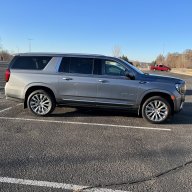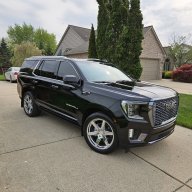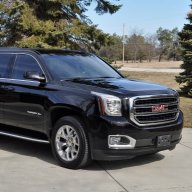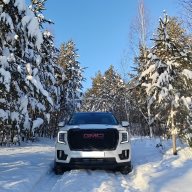

Lost the 6.2 (was: May have Lost the 6.2)

Disclaimer: Links on this page pointing to Amazon, eBay and other sites may include affiliate code. If you click them and make a purchase, we may earn a small commission.

BacDoc

Full Access Member
Joined
Apr 11, 2024
Posts
544
Reaction score
653
Location
Vero Beach Florida
The latest Lake Speed video I saw was a little disconcerting.
He had the data from thousands of miles of testing data and he emphasized the conclusion of that data

“0-20W does not break down as much as the 0-40W.”

The rub is they both break down in viscosity.
So just for argument sake if 0-40W breaks down to 0-25W and 0-20W
breaks down to 0-15W
Lake says this data proves that 0-20W doesn’t break down as fast.
But I conclude that in the same miles/hours you still have more viscosity with the 0-40W.

Does that make sense?
 

Marky Dissod

Full Access Member
Joined
Mar 3, 2023
Posts
3,666
Reaction score
5,202
Location
(718)-
Corrections required, sorry.
The latest Lake Speed video I saw was a little disconcerting.
He had the data from thousands of miles of testing data and he emphasized the conclusion of that data

“0w20 does not break down as much as 0w40.”

The rub is they both break down in viscosity.
So just for argument sake if 0w40 breaks down to 0w25,
and 0w20 breaks down to 0w15,
Lake says this data proves that 0w20 doesn’t break down as fast.
But I conclude that in the same miles/hours you still have more viscosity with the 0w40.

Does that make sense?
You mean this video by the Motor Oil Geek:

The number before the 'w' on the bottle is the result of modifications made to the 'base oil':
0w30 & 5w30 (& 10w30) are both (all) 30w oils, 0w30 is modified to also flow even better when very cold than 5w30 (or 10w30).
As motor oil ages (mostly by use, temp changes, fuel exposure, and time), the number before the 'w' goes up a bit, and the other number goes down a bit.
'0w40 breaks down to 0w25' is less accurate than '0w40 shears to 9w27' in reality, while
'0w20 breaks down to 0w15' is less accurate than '0w20 shears to 5w15'

Also, 5w30 is by definition more shear stable than 0w30.

Problem is different motor oil brands have several different motor oils, each with their own shear stability rates ...
Stopped reading the 'bob is the oil guy' forum over a decade ago. I'm sticking with 5w30.
 

blanchard7684

Supporting Member
Joined
Dec 23, 2024
Posts
406
Reaction score
333
The latest Lake Speed video I saw was a little disconcerting.
He had the data from thousands of miles of testing data and he emphasized the conclusion of that data

“0-20W does not break down as much as the 0-40W.”

The rub is they both break down in viscosity.
So just for argument sake if 0-40W breaks down to 0-25W and 0-20W
breaks down to 0-15W
Lake says this data proves that 0-20W doesn’t break down as fast.
But I conclude that in the same miles/hours you still have more viscosity with the 0-40W.

Does that make sense?
Perhaps more information you desire, but this article from STLE goes into substantial depth on this subject.


VI improvers are complex polymers that are added to base oils to get the viscosity range needed. Typically the larger the viscosity spread the higher concentration of VI improvers is used.

There are a handful of different types of polymers that do this function that are in common usage.

These polymers also have differing levels of shear stability (in balancing the other properties desired). When an oil loses viscosity it can be from the mechanical degredation of these polymers. This decreases the shear stability and also drops the viscosity.

Long timing chains and valve train components have been suspects in accelerating the degredation of the polymers in the VI improver.
 

BacDoc

Full Access Member
Joined
Apr 11, 2024
Posts
544
Reaction score
653
Location
Vero Beach Florida
Thanks for the corrections, there is a difference between break down and sheer. That is important.

I was just wondering if that video was supporting the use of 0-20W?
To the average driver like me who knows little of petrochemical hydrocarbon chemistry it seems like he was.

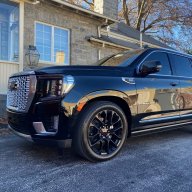
My Tahoe got inspected, passed and changed to 0-40W which I always thought was the better lubricant.
Due for the next oil change and since it’s still under warranty and the dealership will do the service so it will be 0-40W.
 
OP
OP
WalleyeMikeIII

WalleyeMikeIII

Full Access Member
Joined
Feb 22, 2022
Posts
2,716
Reaction score
2,534
Location
Sunny and Snowy Minnesota
Thanks for the corrections, there is a difference between break down and sheer. That is important.

I was just wondering if that video was supporting the use of 0-20W?
To the average driver like me who knows little of petrochemical hydrocarbon chemistry it seems like he was.

My Tahoe got inspected, passed and changed to 0-40W which I always thought was the better lubricant.
Due for the next oil change and since it’s still under warranty and the dealership will do the service so it will be 0-40W.
You should stay w/ the 0W-40 so, in the event you suffer bottom end issues between now and 10yrs/150k, you are covered by the special coverage.

I thought the video was basically saying 0W20 is less prone to shearing down, and was OK to use in engines designed for it, with reasonable oil change intervals.
Pushing the change interval, 0W20 changes less than 5W30, but probably both are acceptable at reasonable oil change intervals...at least thats how I took it.

Again, given all the special warranties, I suggest staying w/ MFGR recommended oil on the off chance you have a failure (I did, which is what started this thread in the first place).
 

zbad55

Full Access Member
Joined
Dec 1, 2017
Posts
358
Reaction score
330
Location
Detroit
Hi Folks; after my engine replacement, I did some Q&A w/ GM Customer Assistance Center regarding the replacement engine. Specifically, I asked them if they could tell me what, if any changes, have been made to the engine that serves as my replacement, so I could have some confidence that it may be more reliable than the one that failed. After a little nudging, and a wait, I did receive information from my contact saying he had been in contact with the brand quality team, and that the new engine has a different design on the connecting rod bearings. This is some good news if true, and I have no reason to doubt it; but am treating it with appropriate suspicion.

I did a little research this afternoon. The P/N of the engine I received was 12740076, which replaces two prior engine P/N's (although I do not know which one I originally had, those are 12705510, and 12716401). Date of manufacture was Nov 13, 2025.
I further looked into the rod bearings and noticed the latest P/N for them is 12735504, which replaced 12683811, which replaced 12763962.

Again, I have no way to know which bearing p/n was in my original engine built in 2022, but suspect my replacement engine has 12735504, consistent with what I have been told by the customer assistance center. No online parts data says when these became the part number of choice.

What these design differences are, I have no way to know. Would probably take some materials engineering work, or some inside information to know for sure.
Thanks for the update, yes it is hard chasing down GM part numbers for sure. When we would direct part number changes at GM it was due to "Fit, Form, or Function" and also to "Breakpoint" parts for tracking system. A quick search on the bearing part numbers you provided list #5504 as a 2021-2024

https://g.oempartsonline.com/gm

  • SKU:

    12735504​

  • Other Names:

    Bearings, Bearing Kit​

  • Description:
    Escalade ESV. Express 2500. Express 3500. Savana 2500. Savana 3500. Yukon XL. 6.2l. Corvette. Tahoe. 6.2l. Suburban. 6.2l. CTS-v.
  • Notes:Includes One Standard Upper & Lower Bearing For One Rod.
  • Applications:6.6L. 5.3L, 6.2L. 6.2L W/O ZR1.
And #3811 as for 2021-2025
  • Brand:

    https://g.oempartsonline.com/gm

  • SKU:

    12683811​

  • Other Names:

    Engine Connecting Rod Bearing​

  • Description:
    Escalade ESV. Corvette. Silverado, Sierra 3500 HD. Yukon XL. 6.2l. Tahoe. 6.2l. Suburban. 6.2l. CTS-v. This GM Genuine Part is designed, engineered, and tested to rigorous standards and is backed by General Motors
  • Condition:New
  • Notes:Includes One Standard Upper & Lower Bearing For One Connecting Rod.
  • Applications:6.6L GAS. 6.2L W/O SUPERCHARGER.
  • Replaces:

    12673962​


vcode

Full Access Member
Joined
Feb 15, 2015
Posts
719
Reaction score
704
Corrections required, sorry.You mean this video by the Motor Oil Geek:

The number before the 'w' on the bottle is the result of modifications made to the 'base oil':
0w30 & 5w30 (& 10w30) are both (all) 30w oils, 0w30 is modified to also flow even better when very cold than 5w30 (or 10w30).
As motor oil ages (mostly by use, temp changes, fuel exposure, and time), the number before the 'w' goes up a bit, and the other number goes down a bit.
'0w40 breaks down to 0w25' is less accurate than '0w40 shears to 9w27' in reality, while
'0w20 breaks down to 0w15' is less accurate than '0w20 shears to 5w15'

Also, 5w30 is by definition more shear stable than 0w30.

Problem is different motor oil brands have several different motor oils, each with their own shear stability rates ...
Stopped reading the 'bob is the oil guy' forum over a decade ago. I'm sticking with 5w30.
The "who makes the best 5W30?" question is almost as much fun as which viscosity to run! LOL!
 
OP
OP
WalleyeMikeIII

WalleyeMikeIII

Full Access Member
Joined
Feb 22, 2022
Posts
2,716
Reaction score
2,534
Location
Sunny and Snowy Minnesota
Thanks for the update, yes it is hard chasing down GM part numbers for sure. When we would direct part number changes at GM it was due to "Fit, Form, or Function" and also to "Breakpoint" parts for tracking system. A quick search on the bearing part numbers you provided list #5504 as a 2021-2024

https://g.oempartsonline.com/gm

  • SKU:

    12735504​

  • Other Names:

    Bearings, Bearing Kit​

  • Description:
    Escalade ESV. Express 2500. Express 3500. Savana 2500. Savana 3500. Yukon XL. 6.2l. Corvette. Tahoe. 6.2l. Suburban. 6.2l. CTS-v.
  • Notes:Includes One Standard Upper & Lower Bearing For One Rod.
  • Applications:6.6L. 5.3L, 6.2L. 6.2L W/O ZR1.
And #3811 as for 2021-2025
  • Brand:

    https://g.oempartsonline.com/gm

  • SKU:

    12683811​

  • Other Names:

    Engine Connecting Rod Bearing​

  • Description:
    Escalade ESV. Corvette. Silverado, Sierra 3500 HD. Yukon XL. 6.2l. Tahoe. 6.2l. Suburban. 6.2l. CTS-v. This GM Genuine Part is designed, engineered, and tested to rigorous standards and is backed by General Motors
  • Condition:New
  • Notes:Includes One Standard Upper & Lower Bearing For One Connecting Rod.
  • Applications:6.6L GAS. 6.2L W/O SUPERCHARGER.
  • Replaces:

    12673962​

Yes, what is tough is determining what P/N Bearings are used in the engine I received...and the external online systems may also not be "caught up" to the internal systems at GM.

I would guess this is a "Breakpoint" change, meaning, they know they wanted to be sure engines produced after a certain date got the new bearing, so they established a new P/N and built subsequent asemblies using that part, starting on some date. Thanks for the info...I am still encouraged, but not confident yet. 315 miles in to the new engine as of today.
 

Marky Dissod

Full Access Member
Joined
Mar 3, 2023
Posts
3,666
Reaction score
5,202
Location
(718)-
Thanks for the corrections, there is a difference between break down and shear. That is important.

I was just wondering if that video was supporting the use of 0w20?
To the average driver like me who knows little of petrochemical hydrocarbon chemistry it seems like he was.

My Tahoe got inspected, passed and changed to 0w40, which I always thought was the better lubricant.
Due for the next oil change and since it’s still under warranty and the dealership will do the service so it will be 0w40.
The typos also confuse in terms of nomenclature. Anyone know what 0-40w is? Luckily we know what you meant.
OK, enough of my pedancy.

5w30 eventually shears to (roughly) 8w25. 0w30 eventually shears to 6w22. 0w20 eventually shears to 5w15.
Regardless of how long it takes for engine oil to shear, the latter (5w15) is/will be inadequate for our engines, specifically the number AFTER the w.

GM only specs 0w20 because CAFE MpG test scores strongarm GM into 0w20 in the first place. In plenty of other countries the same engines spec 5w30.
I'll keep saying it:
The motor oil spec for the 6.6L L8T should be the spec for every other 5.3L & 6.2L - 5w30 (except maybe for 'vettes, in which case 5w40 or 0w40).
 

Vladimir2306

Full Access Member
Joined
May 18, 2023
Posts
1,016
Reaction score
1,193
The typos also confuse in terms of nomenclature. Anyone know what 0-40w is? Luckily we know what you meant.
OK, enough of my pedancy.

5w30 eventually shears to (roughly) 8w25. 0w30 eventually shears to 6w22. 0w20 eventually shears to 5w15.
Regardless of how long it takes for engine oil to shear, the latter (5w15) is/will be inadequate for our engines, specifically the number AFTER the w.

GM only specs 0w20 because CAFE MpG test scores strongarm GM into 0w20 in the first place. In plenty of other countries the same engines spec 5w30.
I'll keep saying it:
The motor oil spec for the 6.6L L8T should be the spec for every other 5.3L & 6.2L - 5w30 (except maybe for 'vettes, in which case 5w40 or 0w40).
You're mistaken; other countries don't have a 5-30 specification for these engines L87, L84. They all use 0-20.
 

viven44

Full Access Member
Joined
Sep 9, 2024
Posts
397
Reaction score
502
Location
Dallas, TX
Perhaps more information you desire, but this article from STLE goes into substantial depth on this subject.


VI improvers are complex polymers that are added to base oils to get the viscosity range needed. Typically the larger the viscosity spread the higher concentration of VI improvers is used.

There are a handful of different types of polymers that do this function that are in common usage.

These polymers also have differing levels of shear stability (in balancing the other properties desired). When an oil loses viscosity it can be from the mechanical degredation of these polymers. This decreases the shear stability and also drops the viscosity.

Long timing chains and valve train components have been suspects in accelerating the degredation of the polymers in the VI improver.
Since you are bringing up polymers, I also wanted to point out a future threat... watch out for PFAS regulations.. it is biting the semiconductor industry now even though the regulations say "doesn't apply" to electronic components. Reason why its biting us is because everyone is worried about supply chain constraints.

Currently PFAS regulations don't apply to engine oil per that article for example, but not everything is vertically integrated in supply chain, so corporations are constantly under threat of EU pressure on no-PFAS, so I wouldn't be surprised if one day corporations are forced to go with "green alternatives"..... we know from organic chemistry that addition of fluorine to the organic chains provides certain irreplaceable benefits (hydrophobicity leading to reduced moisture uptake).... man-made products, man-made problems.
 

B-train

Full Access Member
Joined
Sep 12, 2022
Posts
2,680
Reaction score
4,825
So genuine inquiry based on how my curiosity works. Not trying to argue one way or another or offend anyone just asking. Let’s say OP runs thicker non 0W20 oil, whatever weight that may be, in his new replacement engine going forward. Would a dealer tech be able to know just by seeing oil coming out the drain plug from the pan while doing an oil change, and automatically know that it’s not the recommended 0W20? In which case they’d have justification to void the warranty on his new engine? Is a dealer tech going to test the oil on the spot to verify the weight? Not that I’m saying he should or shouldn’t run different weight oil, but unless the dealer tech physically sees him putting different weight oil into the engine, how would the dealer tech know?
They will not be able to tell, nor would they care. If he's running 15w-40, then yes, you'll see some difference when dropping it, especially if it's not hot. But, for the normal oil being used, switching to a 0w-30, 0w-40, or a 5w-30 won't make a hill of beans to the lube tech.

They don't get paid enough to care what you run in your stuff. If you are mechanically inclined, just save your receipts and do it yourself.

I make a paint marker list on the air filter housing of my new Malibu with mileage and service perfomed as a fall back in case of questions (and because I can't remember everything on 5 vehicles LOL). I'm not worried about being denied warranty because I didn't get everything done at a dealership with a Carfax record. But, I've never been one to drop 80k on a truck, so my methods may not jive with all folks.

I have heard/seen the old paint pen/marker maintenance schedule written (consistently) by a mechanic under the hood used for warranty purposes as proof of service. My sister's Kia, that eats oil for all meals, is currently under evaluation for a new motor because of the documented service history written under the hood. Initially they scoffed at her because she didn't have a dealership paper trail. Once they saw actual evidence of maintenance internals, they changed their tune.
 
Last edited:

Forum statistics

Threads
137,696
Posts
1,966,735
Members
102,111
Latest member
johnnyc

Latest posts

Back
Top