I see several people on here posting that if given their choice, they would take the diesel engine in the Yukon. GM Authority also says that the Tahoes and Suburbans with the diesel engine fly off dealer lots. As someone who has only driven gas engine vehicles, what is the pull to the diesel? Is the gas mileage that much better? Please enlighten me.

You are using an out of date browser. It may not display this or other websites correctly.
You should upgrade or use an alternative browser.
You should upgrade or use an alternative browser.
Benefits of the diesel?
- Thread starter bryan8252
- Start date
Disclaimer: Links on this page pointing to Amazon, eBay and other sites may include affiliate code. If you click them and make a purchase, we may earn a small commission.
StephenPT
Full Access Member
Well played. And would that be highway? Or combined driving?
StephenPT
Full Access Member
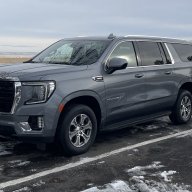
Highway trip. My family just got home from a road trip down to SLO region in California. On our way back we stopped at the Cottage Grove, OR rest stop. The "drive summary" is the rest of the drive home - with some Portland traffic and a few traffic lights before we got home. At this point the engine is up to full operating temp, no rain, cool ambient temps, etc. etc. Ideal conditions for peak fuel economy, but it shows you what the engine is capable of - if you keep your speed at 65mph or lower. At 70mph and above the drag really starts to take its toll and the mpgs drop below 30.
That said, to better answer your initial question - I bought the diesel because:
1) No dynamic fuel management like on the V8s (every OEM that has engines that turn on/off cylinders ends up having problems)
2) Low end torque is awesome - combined with a 10 speed it tows like a champ.
3) Quieter than the V8 at highway speeds (no exhaust drone and the diesel clatter is imperceptible)
4) It's a new diesel engine designed from the ground up to have a DPF/SCR system. They "fixed" a lot of the problems other diesel engines are having with the emission systems.
That said, to better answer your initial question - I bought the diesel because:
1) No dynamic fuel management like on the V8s (every OEM that has engines that turn on/off cylinders ends up having problems)
2) Low end torque is awesome - combined with a 10 speed it tows like a champ.
3) Quieter than the V8 at highway speeds (no exhaust drone and the diesel clatter is imperceptible)
4) It's a new diesel engine designed from the ground up to have a DPF/SCR system. They "fixed" a lot of the problems other diesel engines are having with the emission systems.
Marky Dissod
Full Access Member
One big reason NOT to buy a turbodiesel, is too many short trips and not enough long ones.
Gasoline engines tolerate operating UNDER their intended operating temp window better than turbodiesels.
Gasoline engines tolerate operating UNDER their intended operating temp window better than turbodiesels.
One big reason NOT to buy a turbodiesel, is too many short trips and not enough long ones.
Gasoline engines tolerate operating UNDER their intended operating temp window better than turbodiesels.
I am not knowledgable regarding the diesel engines. What is considered "short trips" as far as they go?
And the reason that I am even looking into a diesel is because I have read some of the horror stories recently about the gas engines leaving people stuck on the side of the road. Obviously I am trying to avoid that.
Stbentoak
Full Access Member
- Joined
- Jul 20, 2020
- Posts
- 2,279
- Reaction score
- 2,772
Baloney.... I've short tripped mine for 3 years now. Occasional 30- 50 mile runs may be twice a month. Other wise most days less than 10 miles. No issues... Worst City MPG... 20 MPG....One big reason NOT to buy a turbodiesel, is too many short trips and not enough long ones.
Gasoline engines tolerate operating UNDER their intended operating temp window better than turbodiesels.
Alessandrolomb
Member
From what I've seen, diesel engines tend to be better on fuel compared to gas engines, especially in big vehicles like trucks or SUVs. If you're often towing or carrying heavy stuff, you'll really notice the difference because you won't need to fill up as often. That's a big plus for a lot of people who drive a lot or use their vehicles for heavy-duty work.I see several people on here posting that if given their choice, they would take the diesel engine in the Yukon. GM Authority also says that the Tahoes and Suburbans with the diesel engine fly off dealer lots. As someone who has only driven gas engine vehicles, what is the pull to the diesel? Is the gas mileage that much better? Please enlighten me.
vadorsnake04
TYF Newbie
- Joined
- Jun 22, 2022
- Posts
- 8
- Reaction score
- 7
This is old thinking related to old diesel technology. It’s simply not true anymore.One big reason NOT to buy a turbodiesel, is too many short trips and not enough long ones.
Gasoline engines tolerate operating UNDER their intended operating temp window better than turbodiesels.
I am on my third modern diesel (2017 L5P duramax, 2018 Cummins, 2022 Cummins). My daily drive to work is 8 min and I make that drive 6 times a day almost every day. No issues.
Marky Dissod
Full Access Member
If this holds true after 275k miles, I'll be GLAD to admit that things have changed for the better,This is old thinking related to old diesel technology. It’s simply not true anymore.
I am on my third modern diesel (2017 L5P duramax, 2018 Cummins, 2022 Cummins).
My daily drive to work is 8 min and I make that drive 6 times a day almost every day. No issues.
and thank y'all for the good news.
vadorsnake04
TYF Newbie
- Joined
- Jun 22, 2022
- Posts
- 8
- Reaction score
- 7
I am confident most of them would make that many miles. Although they aren’t designed to go that many miles without a rebuild in there.If this holds true after 275k miles, I'll be GLAD to admit that things have changed for the better,
and thank y'all for the good news.
But your comment is a moot point. If a person is only doing short drives, as mentioned. Hitting 275k miles would take something like 25 years to get to and less then 1% of owners keep a vehicle that long.
DeltaKilo
TYF Newbie
- Joined
- Mar 11, 2018
- Posts
- 12
- Reaction score
- 9
Another thing to add to the "pro" column for the diesel is that GM doubles the powertrain warranty on it.
The biggest "con" is having to deal with DEF. The main issue with DEF seems to be using a lot when towing, but I am at 5K miles in our Yukon and DEF was at 50% with no towing. 2.5 gal every 5K miles doesn't seem too bad. Seems to be a good idea to fill it up at 50% since the range calculation used for it can think it's low when it really isn't yet. Another con would be the diesel has a fuel filter that needs to be changed (recommended at 20K miles, but best to do it every 10K). Dealer quoted me $260 to change it, but i will do it myself since the part is $30 and easily accessible.
When we were test driving yukons and XL's you really couldn't tell a difference in the 5.3 vs diesel unless you know what to look/listen for. I know some will shy away from them since they expect them to sound like a big work truck, but they really don't.
The biggest "con" is having to deal with DEF. The main issue with DEF seems to be using a lot when towing, but I am at 5K miles in our Yukon and DEF was at 50% with no towing. 2.5 gal every 5K miles doesn't seem too bad. Seems to be a good idea to fill it up at 50% since the range calculation used for it can think it's low when it really isn't yet. Another con would be the diesel has a fuel filter that needs to be changed (recommended at 20K miles, but best to do it every 10K). Dealer quoted me $260 to change it, but i will do it myself since the part is $30 and easily accessible.
When we were test driving yukons and XL's you really couldn't tell a difference in the 5.3 vs diesel unless you know what to look/listen for. I know some will shy away from them since they expect them to sound like a big work truck, but they really don't.
I wouldn't take a diesel vehicle if it was given to me for FREE. I'm much prefer gasoline.I see several people on here posting that if given their choice, they would take the diesel engine in the Yukon. GM Authority also says that the Tahoes and Suburbans with the diesel engine fly off dealer lots. As someone who has only driven gas engine vehicles, what is the pull to the diesel? Is the gas mileage that much better? Please enlighten me.
The_White_Car
TYF Newbie
- Joined
- Dec 14, 2023
- Posts
- 11
- Reaction score
- 20
Repair costs are higher in the diesel but honestly for the length of time the original owners keep these trucks it shouldn't be anything to worry about. I'm actually pretty staunchly against diesels in 2500/3500 sized trucks because of the added cost/complexity vs something like Ford's gas 7.3, but I will concede that they make a lot of sense in these trucks. I still don't think I'd buy one simply because by the time they drop down to a price I'm willing to pay on the used market they'll be needing some expensive work.
Also, what are the actual out the door prices on the 5.3 vs the 3.0? I think for $1,000 more the diesel makes sense but if I could get a gas one for $5000 less or something I'd swing back that direction.
Also, what are the actual out the door prices on the 5.3 vs the 3.0? I think for $1,000 more the diesel makes sense but if I could get a gas one for $5000 less or something I'd swing back that direction.

Hauled my boat to the Buffalo NY area last Friday. About 90 miles, some on country two lane with hills, some on a four lane and some in city. The boat is approximately 6,000 #. With my Duramax Suburban I got 18.1 mpg. Moat of the time I was running a good 5 to 8 mph over the limit. With my old Yukon XL gasser (5.3) I usually didn't get that without the boat! Plus it is just a sweet engine. As far as I am concerned, the diesel option is well worth the extra grand!
Padraig
Padraig
Have a 2023 Yukon Denali Duramax. 27k miles. Great city and road SUV. The new Duramax is an inline six. As a result the turbo, DPF/SCR and EGR are able to be up close, high on the rear side of the engine. Recycled exhaust gases are captured after the DPF filtering greatly reducing problems with soot buildup in the intake manifold common with other diesels on short trips where system does not get hot enough. In addition the system injects diesel fuel as needed by the SCR/DPF to maintain optimum operating temperatures during short trips or when cruising and the engine is loafing along at 26 mph but not getting hot enough.One big reason NOT to buy a turbodiesel, is too many short trips and not enough long ones.
Gasoline engines tolerate operating UNDER their intended operating temp window better than turbodiesels.
Last edited:
Stbentoak
Full Access Member
- Joined
- Jul 20, 2020
- Posts
- 2,279
- Reaction score
- 2,772
You really think that DEF is THAT big a deal? I may be have dumped three or four jugs in, in three years. Granted, I don’t tow with it, but it really is a non-issue.Another thing to add to the "pro" column for the diesel is that GM doubles the powertrain warranty on it.
The biggest "con" is having to deal with DEF. The main issue with DEF seems to be using a lot when towing, but I am at 5K miles in our Yukon and DEF was at 50% with no towing. 2.5 gal every 5K miles doesn't seem too bad. Seems to be a good idea to fill it up at 50% since the range calculation used for it can think it's low when it really isn't yet. Another con would be the diesel has a fuel filter that needs to be changed (recommended at 20K miles, but best to do it every 10K). Dealer quoted me $260 to change it, but i will do it myself since the part is $30 and easily accessible.
When we were test driving yukons and XL's you really couldn't tell a difference in the 5.3 vs diesel unless you know what to look/listen for. I know some will shy away from them since they expect them to sound like a big work truck, but they really don't.
Also, I have backed way off on changing the fuel filter more often. I changed my first one at 10 K and then another one at about 25K and I can tell you they’re pretty well spotless. I’m going to let the next one go at least 25K.
EddieC
Full Access Member
- Joined
- Aug 9, 2014
- Posts
- 967
- Reaction score
- 802
Something that needs to be taken into consideration around here is that the fuel is much more expensive than gasoline so listed mileage numbers need to be adjusted accordingly.
Also there is no point in the expectation of long life because the bodies and frames will be shot from winter deicing chemicals before those expectations come.
So perhaps the value of diesels is regional.
Also there is no point in the expectation of long life because the bodies and frames will be shot from winter deicing chemicals before those expectations come.
So perhaps the value of diesels is regional.
vadorsnake04
TYF Newbie
- Joined
- Jun 22, 2022
- Posts
- 8
- Reaction score
- 7
That is a variable point as well.Something that needs to be taken into consideration around here is that the fuel is much more expensive than gasoline so listed mileage numbers need to be adjusted accordingly.
Also there is no point in the expectation of long life because the bodies and frames will be shot from winter deicing chemicals before those expectations come.
So perhaps the value of diesels is regional.
Diesel being more expensive than gasoline, this is an ever changing value.
Similar threads

- Replies
- 5
- Views
- 1K

- Replies
- 9
- Views
- 723


