

Low & reverse are slipping

Disclaimer: Links on this page pointing to Amazon, eBay and other sites may include affiliate code. If you click them and make a purchase, we may earn a small commission.

Matthew Jeschke

Full Access Member
Joined
Dec 28, 2017
Posts
2,387
Reaction score
1,794
Location
Sahuarita, Arizona
It's official. I damaged the 4L60E I built. I've built up the truck so much between the transmission and the 6.0L but NEVER got on it. I finally decided it was time to see what she'd do so I got on it from a stand still, still didn't floor it but heck is the truck FAST.

1st gear (via D on column) and reverse surge... It feels like the clutch pack isn't fully locking up. 2nd, 3rd, 4th, TCC lockup all operated as expected. Neutral works fine too. I didn't test selecting 1st on the shift (should have). I've removed the pan now.

No material in filter (I cut it open).
No debris in pan
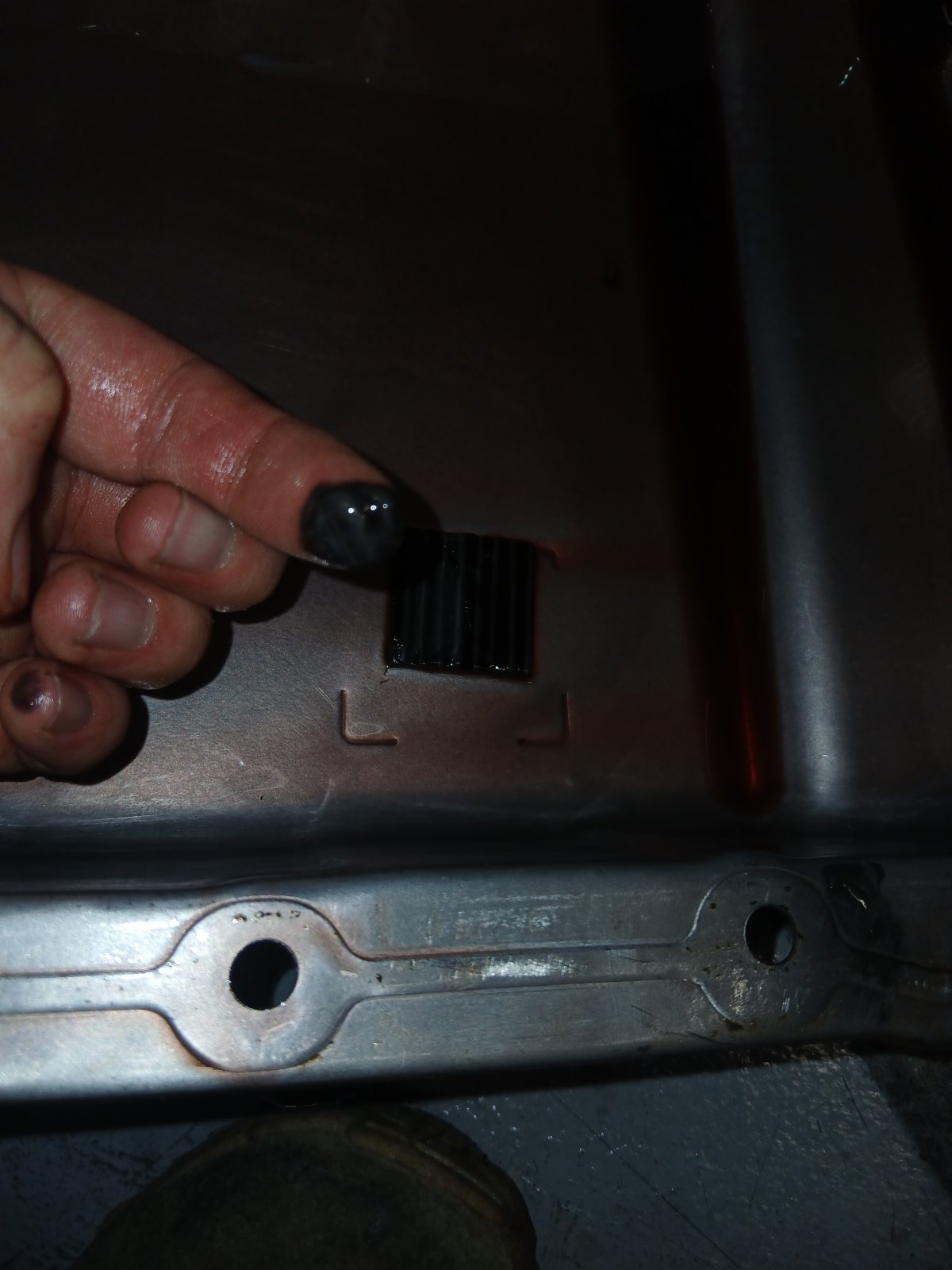
Magnet had a little gewie slime on it.
Fluid was changed a few thousand miles ago.

Backstory: Truck felt like it had no power backing out of parking space. 1st gear felt same on my drive home Saturday (a few days ago after I had mashed on the gas to see what the truck had in it). I limped home and checked the fluid which was low, almost none on the stick when I checked it from a cold idle the next morning. I also found a leak in the fittings for the thermal bypass I installed. I topped the fluid off and drove it about a mile, it drove perfectly fine in 1st gear and reverse. The symptom was gone. I went to drive it today, made it about 3 miles everything was perfect then the symptom came back. I parked it and checked the ATF level. I have a hell of a time reading that thing. It seemed to be fine. I limped it back home 2, 3, 4th seemed to have no issue and held well. I parked on flat ground in front of my house and checked the fluid again. I tried reverse (at idle) and could hear a chattering so I added more fluid. It backed up the driveway like there was no problem (I have a steep driveway). I kept checking the stick and thought I'd try reverse again, but was doing it again on flat ground in my garage. Fluid smells normal but I definitely smelt something driving it when it acted the second time.

I know enough to be dangerous here... I did build the transmission but have only built one. I worked like a dream until I railed on it with low ATF.

Baffled...
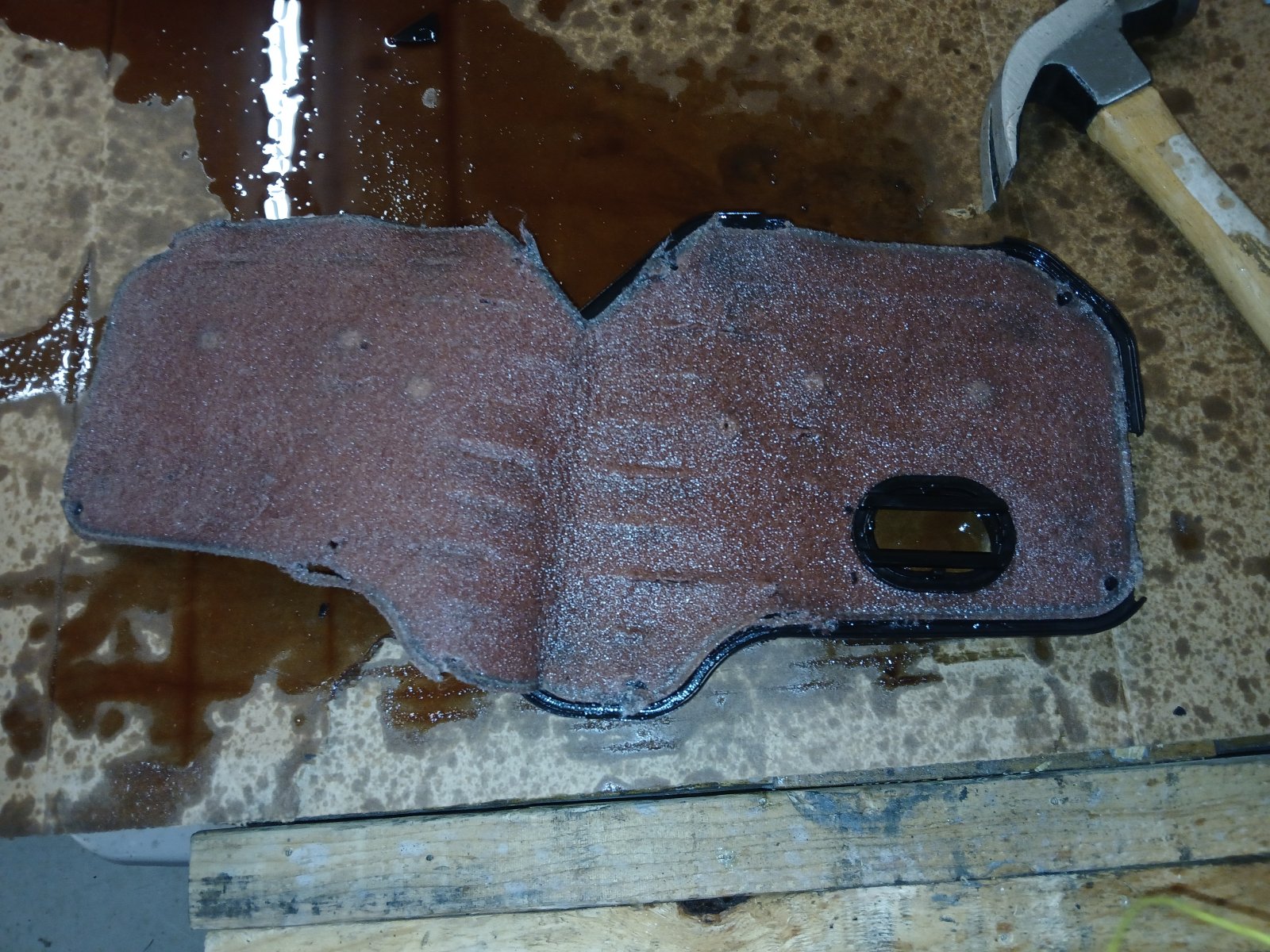
20260722_214905.jpg

Looks brown in camera ~ but in life it is pink.
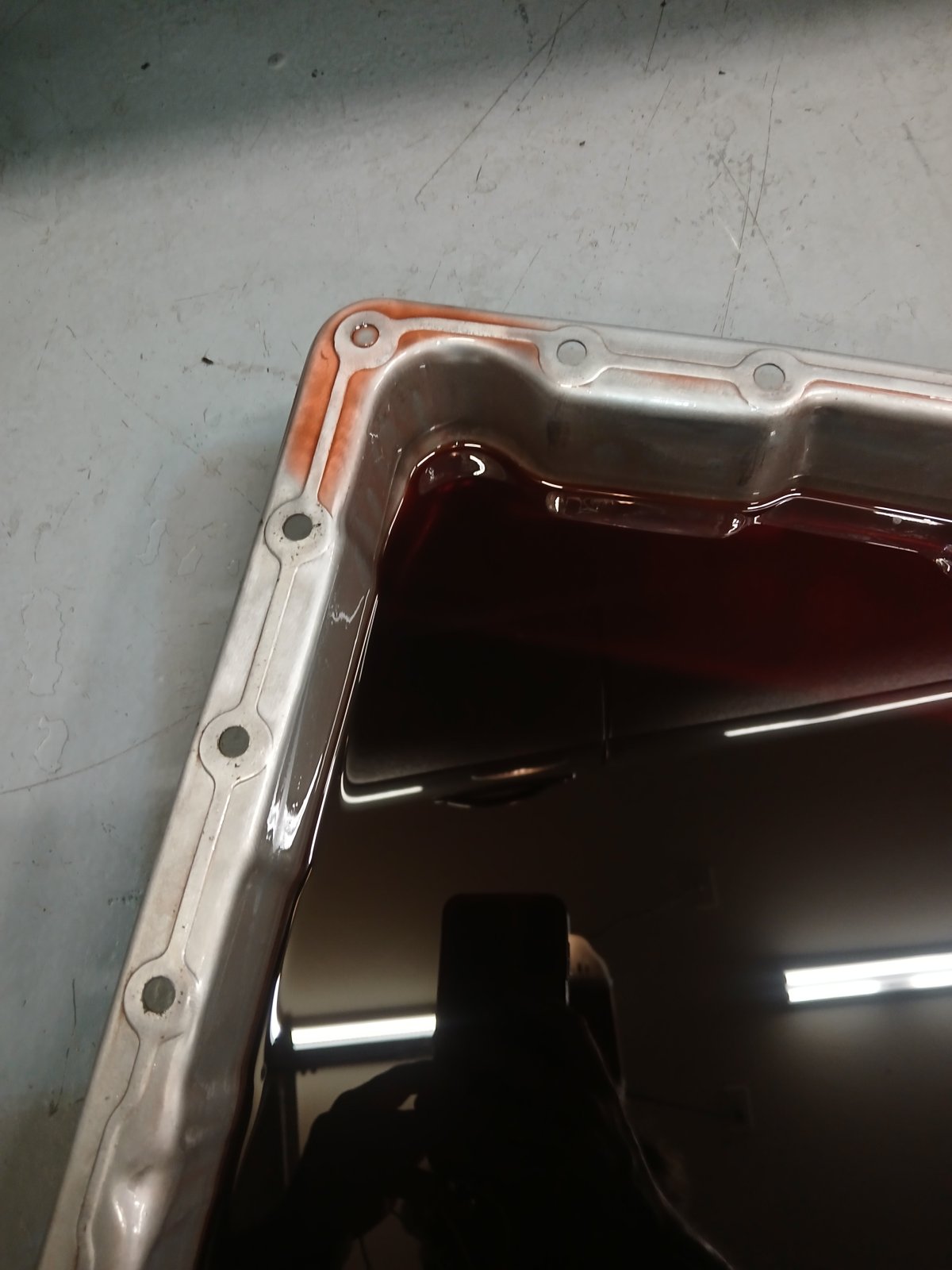
20260722_213856.jpg

Fluid looks like new

20260722_220448.jpg

There was some geew on the magnet
 
Last edited:

OP
OP
Matthew Jeschke

Matthew Jeschke

Full Access Member
Joined
Dec 28, 2017
Posts
2,387
Reaction score
1,794
Location
Sahuarita, Arizona
Boost Valve checked and moves freely in bore (not stuck). removed pressure regulator valve in pump as well and seems fine.

Trying to come up with additional things to check. Don't really want to drop the case if I don't have to.
 
Last edited:
OP
OP
Matthew Jeschke

Matthew Jeschke

Full Access Member
Joined
Dec 28, 2017
Posts
2,387
Reaction score
1,794
Location
Sahuarita, Arizona
@NickTransmissions I dropped you a comment on one of your videos. One of the guys who helped me build the trans (not Dana) is assisting me with diagnosing it. You helped me on a harsh 1-2 shift I've never been able to clear up (more below).

I'm currently investigating with service pan off. I think my next step is to remove the valve body. I am wondering if there's a port under there where I can pressurize the low reverse clutch pack piston with shop air? I'd like to see if it holds pressure.


Backstory: Dana had drilled my separator plate, however, I never used his shift kit he supplied from TransGo. I switched to Sonnax accumulators as well (he supplied pinned accumulators). Long story short, I kept the separator plate he drilled for the shift kit. Never could smooth out 1-2 shift. You mentioned drilling those smaller on a new separator plate. I never got around to that.

Engine is a built LQ9 & These are the transmission parts I used in build

1784829845895.png

Checking a few more things. The engine and trans have a tune on them. Apparently turning on the shift light function for manual transmission will burn up. The shift light is OFF in my tune.
 
Last edited:

NickTransmissions

Sin City
Supporting Member
Joined
Mar 9, 2023
Posts
1,400
Reaction score
3,618
Location
The transmission bench
@Matthew Jeschke - I'm thinking you may have somewhat stressed the forward and low reverse/reverse input clutch packs when you got on it heavy when it was low on fluid, assuming that occurred recently and the surging (slipping, delayed engagements?) was not happening until then. Your fluid looks dark but you mentioned that was due to the lighting.

Re the item you are pointing to in the picture of his instructions - that is the EPC screen. I'll be honest - while all the Transgo shift kits have a 'fix' for that issue, I hardly ever see it and not convinced it's really a problem that it's made out to be in the Transgo literature. Dana worked primarily with Transgo and a couple of former GM Powertrain engineers to develop his kits and they work great. But this particular 'fix' was carried over into his kits, probably unnecessarily. I do often see that wire spacer at the bottom of the pan in many of these transmissions that come in w/the Transgo kits installed.

Once you remove the valve body, refer to my video on doing a case air check - it will show you where to apply air for all of your clutch packs. This video shows me doing it without the air test plate so all you need is an air source and nozzle:
 
OP
OP
Matthew Jeschke

Matthew Jeschke

Full Access Member
Joined
Dec 28, 2017
Posts
2,387
Reaction score
1,794
Location
Sahuarita, Arizona
Excellent thanks nick! Yeah I'm certain I stressed the lo-reverse pack. I'm hoping I can resolve this w/o opening the case... If I open the case I'm changing that clutch pack even if it's still w/in spec. I may keep the rest of the clutches... bit undecided. I need to find a supplier to get the parts. RockAuto is no longer where I live. I'd purchased misc trans parts last time from them.

I should elaborate, Dana was a super nice guy. But the shift kit parts made me nervous (they looked cheap and like they might break under use). I threw them away and had somebody else help me who knew how to tune so I wouldn't need a shift kit. We switched to Sonnax parts where feasible.

The one thing I regret having done was I kept the separator plate Dana drilled for the shift kit setup he sold me.

NOTE: Pressure manifold looks good.
 
OP
OP
Matthew Jeschke

Matthew Jeschke

Full Access Member
Joined
Dec 28, 2017
Posts
2,387
Reaction score
1,794
Location
Sahuarita, Arizona
Teardown notes...

Didn't take photo but pressure switch visually is in good order. No torn seals.

20260723_183206.jpg

Visual inspection of valve body. All check balls where they are supposed to be.
Removed two solenoids and there was nothing in filter screens.

20260723_184301.jpg
20260723_184316.jpg
20260723_184419.jpg
20260723_184424.jpg

Separator plate came off as well. No burnt gaskets. Filter screens are clean.
Can see some evidence of clutch material around accumulator area of separator plate.

20260723_185830.jpg

Nothing abnormal seen on case side.

Video test of low reverse piston:
Holds at 25PSI. I think it goes well over 100 PSI (hydraulic). However, seems to work fine at 25 PSI.

1785119720913.jpeg

Poor mans valve body test (note didn't block forward abuse / manual valve). I put ATF where the vacuum test is run. Note this test doesn't tell you much other than if the fluid doesn't run straight out. When I built trans I also vacuum tested with a handheld MityVac fixture I made. I think a person could easily using acrylic / plexiglass make a similar fixture to the one Sonnax sells but for much less $$$. I may do that for this rebuild.

20260728_162754.jpg
20260728_183833.jpg
20260728_183927.jpg

When I separated the transfer case from the transmission adapter / housing, about a cup of transmission fluid came out and on the floor. It appears to be leaking from the output shaft on the transmission. There's a strong likelihood I overfilled the transmission trying to eliminate the slip... but not sure how much it takes to start leaking there?

Additionally, I disconnected the cooler lines, I expected something to come out, only a few drips. Not sure if that's typical? I did drain the transmission for a few days (pan and valve body off). I'd have expected something to remain in the pump and cooler lines though???
 
Last edited:
OP
OP
Matthew Jeschke

Matthew Jeschke

Full Access Member
Joined
Dec 28, 2017
Posts
2,387
Reaction score
1,794
Location
Sahuarita, Arizona
I finally got in my valve body tester from Sonnax. Makes life WAY easier using it. However, I'm on the edge of what my 2.5 CFM vacuum pump can do. It just BARELY gets me to 25 inHg. I digress... I did a preliminary set of readings. If Sonnax test figures are correct (I pulled from their website), then only a few of my valves passed their test. After a couple days of fiddling with it on two separate valve bodies I'm confident in my readings. These are WET, not for credit but I want to make sure I understand the symptoms fully as I tear this thing down.

1786070081298.png


1786070829543.png
 
Last edited:

NickTransmissions

Sin City
Supporting Member
Joined
Mar 9, 2023
Posts
1,400
Reaction score
3,618
Location
The transmission bench
I went and bought some parts at the transmission shop to tuneup the valve body a bit.

Tore it down and saw nothing out of ordinary.
The outboard reading of 8.8Hg on your 2-3 shuttle valve is concerning. Whenever I see anything below 14Hg, I source a different valve body core that tests at least 14Hg. Grab the Sonnax end plug kit if you haven't already - that should restore sealing integrity in places like the 3-4 relay (205D) and 3-4 shift valve (204B). I also test the forward abuse valve itself using this method:
 
OP
OP
Matthew Jeschke

Matthew Jeschke

Full Access Member
Joined
Dec 28, 2017
Posts
2,387
Reaction score
1,794
Location
Sahuarita, Arizona
Thanks @NickTransmissions I've decided to ditch that valve body. Oddly I've only built one of these before but I have three valve bodies to choose from the cores I took to build mine last time. Funny how that works out :gr_grin:
 
Last edited:
OP
OP
Matthew Jeschke

Matthew Jeschke

Full Access Member
Joined
Dec 28, 2017
Posts
2,387
Reaction score
1,794
Location
Sahuarita, Arizona
I apologize. I shouldn't speak so soon. There maybe more to vacuum test then I original lead on. I opened up the low reverse clutch pack and it's perfectly fine. I'd assumed I had a back clutch pack because reverse was slipping then 1st gear (drive selected) started to slip.

UPDATED:

I've gone through three valve bodies so far. The best one has an obviously bad forward abuse valve. It came from a blown trans I bought off of craigslist. After looking much closer at the figures for mine as was in the truck I see the reverse AND the forward abuse valves are well worn.

I fiddled with the valve body I'm cleaning up to put back on the truck...

I played with a spare valve, cut the tip of it, 5, 10, then 30" tho. 5 and 10 got me to 11 on a vacuum test and passed fluid test.

Was a fun little experiment. I ordered a drop in abuse valve from Sonnax should hopefully fix issue.

1786678390970.png

1786678257425.png


Interesting to note...

Vacuum test scores from the original transmission from my truck

UPDATED: My issue maybe worn out abuse valves... delaying or hindering low reverse clutch pack engagement.


1786678654532.png


Vacuum test scores from VB I ran for 4 years with no issue...

Until I ran the transmission low on ATF. It maybe just a correlation having been low on ATF AND the issue raising it's head. The failure may have actually been something else and which I check I just happened to be low on ATF.

1786679022040.png
 
Last edited:
OP
OP
Matthew Jeschke

Matthew Jeschke

Full Access Member
Joined
Dec 28, 2017
Posts
2,387
Reaction score
1,794
Location
Sahuarita, Arizona
After a LOT more testing and fiddling, some low hanging fruit for the valve body.

Endcaps
Location 205D seem like to leak. The rubber o-ring (or oversized) ones could be prudent.

1786813543588.png

Sonnax-> https://www.sonnax.com/parts/2509-3-4-relay-o-ringed-end-plug-kit
TransGo-> https://transgo.com/product-details/4l60e-vb-plugs/

Abuse Valves & Bore Plugs
There is a forward and a reverse abuse valve. Fiddling around I saw the tapered end of the valve (most inboard) must wiggle slightly in the bore. It wears out where the tapered end interfaces with the valve body. Additionally, the bore plugs for those are warn out. I think because the spring has a tendency to make the bore plug wiggle.

Sonnax sells a drop abuse valve that looks like it's better supported. It may help protect the life of the valve body? It also comes with the bore plug.

Transgo also sells a bore plug (you won't need if you buy the sonnax kit). I bought a packet of these only to realize they only work in the reverse position, not the forward. However, they say they reduce the plug wiggling in the bore so I'm going to try it out.

TCC Regulator Valve
I'm going to fiddling around with this yet. I had a hash 1 to 2 shift under light throttle. There's a couple things this may have been which I've been unable to isolate the main contributor for. One may have been a leaky inboard TCC regulator valve. It was only scoring at 5" Hg. The outboard scored well. Despite the low vacuum test score TCC Apply worked as expected in the transmission.

I bought a Fitzall to defeat TCC Apply this time:

It's a fancy end plug that holds the inboard valve in place. You could also do this by reconfiguring the stock parts so the inboard piece cannot move.

I also bought to fiddle around with and test, and will likely ultimately use a revised transgo TCC valve:

It appears to better stabilize (is longer) the inboard part of the regulator valve. It also seals up where the previous valve hadn't worn the bore. There's something about retaining stock functionality that seems important to me. It maybe completely pointless to be honest, either solution is likely fine.

1786813250006.png

I wrote up a leak test for the case side of the valve body. Interestingly I noticed fluid immediately leaks out of the 3-4 clutch. There's a check ball in there I'd forgot about.

Additionally, it leaks out of the reverse input drum. I think perhaps there's some relief in there to avoid locking that clutch pack up while forward gears are in use. I cannot quite confirm that though?

Otherwise everything actuates when air is blown into it. I'd like a test plate though cause they you could determine how long it holds air pressure for.
 
OP
OP
Matthew Jeschke

Matthew Jeschke

Full Access Member
Joined
Dec 28, 2017
Posts
2,387
Reaction score
1,794
Location
Sahuarita, Arizona
The plot thickens. Low reverse clutch is fine... maybe a touch burnt... But fine, the steals look absolutely perfect. The piston also seems to checkout though I haven't removed it yet (I lost the tool and had to order a new one).

I may have been a bit short sided in my thinking about importance of the valve body testing.

Looking back at the data I originally got from the valve body as was installed on the truck, I see the abuse valves are well worn. I have to study how those work.

The original symptom was a surging in reverse (like it didn't want to go into reverse). This symptom was followed during the next driving session in first gear (with 4th gear selected / drive) as well. I really wish I'd tried manual first in hindsight but I never did.

1786943636708.png


Image of low reverse clutch pack. My dumb camera makes them look MUCH darker than they are. They don't look burnt like that... Maybe a touch dark. The steels are perfect.
IMG_20260816_212243.jpg
 
OP
OP
Matthew Jeschke

Matthew Jeschke

Full Access Member
Joined
Dec 28, 2017
Posts
2,387
Reaction score
1,794
Location
Sahuarita, Arizona
This maybe unrelated... I found a build defect I created. Nothing in the books I read or the tutorials I watched spoke of checking pump stator runout after installing a new stator. Not even the sonnax instructions for the stator itself (HERE). I found this here after wondering how my reverse input drum bushings got so badly worn. I'm assuming there's too much runout (the stator didn't seat correctly) per this tutorial below:


About 150 degrees of the stator shaft where the outboard bushing rides for the reverse input drum. That bushing that mates there for the reverse input drum is heavily worn. The other bushing (closest pump) is heavily worn but not as badly.

There's a small score mark on the torque converter side. I assume something dragged on the torque converter.

This appears to be the only damage. The other bushings in the stator look fine. I'll need a new stator. There's about 20 thousands of wiggle, due to the worn bushings. I've yet to teardown the pump and check runout.


1000038206.jpg

20260817_030240.jpg

There is also a small score mark. I assume something in the torque converter dragged on the outside.

20260817_030401.jpg
 
OP
OP
Matthew Jeschke

Matthew Jeschke

Full Access Member
Joined
Dec 28, 2017
Posts
2,387
Reaction score
1,794
Location
Sahuarita, Arizona
Finally got everything torn down. For a while there it was looking like maybe all I had was a bad boost valve. Low reverse didn't activate at all. The frictions and steels looked perfectly fine. The reverse input drum was same story, maybe the frictions show a bit of wear. Likely from reverse slipping. I didn't see the real damage till I tore into the input drum. The overrun clutch frictions and steals were SMOKED. They were slipping which caused the sprag itself to shock load and crack one of the end caps. This must have sent a tiny peice of metal endcap forward and or shock loading the sun gear bushing may have caused it to spit the bronze coating through the case. Whatever it was the reverse input bushing was almost completely stripped out as well. The stator got chewed up where the reverse drum rides. Ultimately the bushing material was found in the pump where it wore a groove in the pump cover and rotor pocket. Out of caution I had a converter shop in town dismantle and rebuild my torque converter. They found no junk in it. I found no junk in the fluid, filter, or pan either. None of the screens had anything in them either. Dang it doesn't take much junk to wreck these things!

I also found the source of my harsh 1-2 shift. It was a warped accumulator separator plate. The guy who originally sold me my kit gave me an additional separator plate for the 1-2 / 3-4 accumulator. It was badly warped and the accumulator had never sealed up as a result.

I'm having a hard time reconciling the purchase of the vacuum tester though. I've spoken with several career builders who never touched a vacuum tester before. They visually inspect the valves and potentially do a fluid leak down test. Nothing more. One of them helped me with my original build. He's build a bunch of 4L60E's that handle big power, some even in neighborhood of 1000 HP.

Even in light of all the low vacuum test scores on the two transmissions I tore own, none of the transmissions had the associated symptoms. The core I broke (my 4L60E build) had only the harsh 1-2 shift (aside from the failure due to low ATF). I am quite certain my accumulator was leaking which caused that. A little upset I spent all that money and time vacuum testing and it didn't seem to reveal much of anything of consequence.

What's really cool is to rate the different aftermarket valve solutions with it. Would be nice if somebody made a database of that stuff so we know numerically which valves are better in terms of sealing up things.

It's clear the AFL, PR & boost valves are critical. All those tested well on the cores I had, I'm thinking those valves are a more robust design. I'm tending to lean towards the other valves functioning similar to triggers on a relay in that I think they maybe isolated from the piston feed such that any valve bore wear is negligible in comparison with the flow to the clutch pack pistons themselves. I've been studying the hydraulic diagrams and valve body casting. I've not completely reconciled out how it all works in my head yet though.

Having played with the tester it might be prudent to bolster the following on all your builds. It would cost less than $100 more per build (minus sonnax PR valve tool). Although none of the builders I spoke with do any of the first four, they only do the boost valve:

TransGo TCC reg inboard valve this is a longer valve which better shoulders itself in the bore. This will in turn reduce wear as it has less tendency to wiggle. I have researched defeating the TCC partial apply / reg valve and favor restoring intended functionality. I think but somebody can correct me if I'm wrong, the TCC reg doesn't apply full pressure to the TCC, even when at 100% duty cycle in the tune. Thus defeating the TCC reg valve may result in TCC lockup being higher than TCC design limits.

Sonnax Forward and reverse abuse valves the sonnax valves are better shouldered than the factory design. This looks like this would lead to better sealing as well as less bore wear. Additionally, they have a slightly larger bore plug to help that seal better. I tested this and the TransGo bore plugs. The transgo plugs ARE better, however, TransGo bore plugs didn't include the abuse valves and they only work in the reverse location.

Sonnax or Transgo End caps there are some valves which seal in conjunction with the valve body end caps. If the valve body has been disassembled those caps likely don't seal as good the second time around. You can get oversized, and or end caps with o-rings.

Sonnax Pressure Regulator Valve I purchased the transgo pressure regulator valve but ultimately returned it. I really don't like the idea of a plastic spring perch on it. They say the plastic seals better... I'm not sure how critical that land is to PR performance. I've got to study the design more. That said, if you build anymore than a few of these, it might be a nice touch to get the Sonnax pressure regulator tool and install the sonnax pressure regulator valves. In that regard though, the three pumps I played with had good vacuum readings there.

Boost Valve I'd ALWAYS install at least the oversized TransGo Pressure Regulator valve. Possibly even the sonnax o-ring one. That valve quite obviously leaked in my build. It also seems this is the one valve most builders agree on installing.
 
Last edited:
OP
OP
Matthew Jeschke

Matthew Jeschke

Full Access Member
Joined
Dec 28, 2017
Posts
2,387
Reaction score
1,794
Location
Sahuarita, Arizona
I dug deeper into my failure and I was WAY off base. I thought Drive would enable the low reverse clutch. It's only selected in manual mode which I don't really use. Only once in an odd while off road but certainly wasn't using it when things broke.

My low reverse was perfectly fine.... MAYBE a little slippage with it and the reverse clutches due to low ATF but nothing more. I don't think the low ATF really caused much if any damage in hindsight and was easy enough to feel so there's not much risk of these blowing up with low ATF and you not noticing before hand.

I finally got a chance to check the seal on my input shaft. Despite sealing it when I built it, it had developed a leak between the forward clutch and overrun clutch. I believe that was causing the overrun clutch to partially apply which ultimately broke it. The junk from the crack sprag cap must have been what chewed up my bearings (input sun & reverse input), stator, and pump.
 
Last edited:

Forum statistics

Threads
138,405
Posts
2,007,267
Members
103,219
Latest member
MeanSlickCaddi

Latest posts

Back
Top