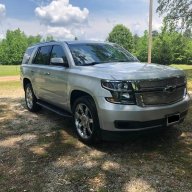
How to Make it to 500k Miles?

Disclaimer: Links on this page pointing to Amazon, eBay and other sites may include affiliate code. If you click them and make a purchase, we may earn a small commission.

kbuskill

***CAUTION*** I do my own stunts!
Joined
Mar 11, 2017
Posts
5,814
Reaction score
9,815
Location
NE. FL.
I have an older truck and you can fix the mechanicals all day and it will keep going.

The main issue with a truck lasting that long is RUST. Once your frame rusts and starts disintegrating it’s junkyard time no matter how well
It runs.

I have a 2006 f150 with 220k miles that runs great mechanically and I fix what breaks. But the frame is starting to rust out, in a few more years she will be scrapped.

That is one of the nice things about living in the south... NO RUST. I feel sorry for you guys up north, even having to wrench on them can be a pain up there.
 

Pandabird

Member
Joined
Jul 21, 2024
Posts
91
Reaction score
297
Location
Finland
Here is another question. At what point do you think it really shouldn't be considered the same vehicle? In other words, like the 700k mile taxi mentioned, several different engines and transmissions replaced... can you really say " my vehicle lasted X00,000 miles?
There is a famous old philosophical riddle about a captain and his ship, swapping planks one by one as they rot, until one day decades later, every single part of the ship has been replaced. Was it still the same ship or a different one? Answer is up for interpretation but I like to believe any structure has a certain molding/tension type of wear and fit memory that may classify it as unique granting it an identity. As in when you replace one bushing you will notice it's quickly worn down a little for fit with the rest. Do a big overhaul and you might notice something else is sagging because of too many new parts at once. Buy a used part just to notice it's somehow warped completely differently and essentially impossible to install. Maybe I'm just rambling and it's hard to explain, but yes I'd say it's still the same vehicle as semi new parts harmonize with the old ones progressively. Different thing changing out like 90% at once (thinking of thorough classic car restorations that usually takes like 5 wrecks to put together into one functioning car), then it essentially is a different vehicle in my opinion.
 
Last edited:

Pressureangle

Member
Joined
Aug 6, 2024
Posts
78
Reaction score
78
Hi all:

I was having a conversation the other day with a buddy where I was telling him how I think the GMT-900 platform is the pinnacle of the GM SUVs. Older ones have fewer features, less stock performance, and newer ones are less reliable, more expensive, etc. I know not everyone would agree. But the question came up, what will I do if/when my 2012, 183k mile Yukon has to be replaced? My response was that I'd find another one. But my second response was that barring a crash, I'd do all I could to keep mine for as long as possible. So I thought it might be useful to have a discussion about what it would take to get extreme miles on a GMT900 SUV.

So there's obvious maintenance things, like changing fluids and wear parts, so that everything lasts as long as possible. But what are the less obvious things? For example, when should you proactively replace CV shafts and front hubs (if AWD) to avoid a catastrophic failure, which could result in a lot of damage, and possibly a crash, if they fail?

Then there are strategic things, like keeping an eye out for a rebuildable replacement engine. Sure, you could wait for a failure. But then you might be in a hurry, or busy, and can't look for a deal, or schedule the time to DIY it. I was in the middle of moving when my transmission failed in 2022. Recall the supply chain was still in shambles from the pandemic. I had no choice but to buy one from a dealer and pay someone to put it in while I borrowed a friend's truck to keep moving.

So here's the central question: If it were up to you, what would be your strategy for getting 500,000 miles or more out of your GMT900?

FWIW back in about 1995 I rode in a private taxicab in Miami. It was a 198x Chevrolet Malibu Wagon with 350, heavy duty (police/taxi) package, probably a 700r4. The guy was Jamaican, and the car was spotless and dent-free. I asked how many miles, he said 'about 550 thousand'. I was kinda stunned and asked how many engines. He said, 'six transmissions and this is the original engine'. I asked his maintenance, he said 'The old Jewish guy told me to change the oil every 2500 miles, and he was right'.
What could I say to that, except that it was still rolling the dough? Admittedly, it probably never got over 50mph except on 6 mile crosstown runs to the airport, but still.
 

Pressureangle

Member
Joined
Aug 6, 2024
Posts
78
Reaction score
78
There is a famous old philosophical riddle about a captain and his ship, swapping planks one by one as they rot, until one day decades later, every single part of the ship has been replaced. Was it still the same ship or a different one? Answer is up for interpretation but I like to believe any structure has a certain molding/tension type of wear and fit memory that may classify it as unique granting it an identity. As in when you replace one bushing you will notice it's quickly worn down a little for fit with the rest. Do a big overhaul and you might notice something else is sagging because of too many new parts at once. Buy a used part just to notice it's somehow warped completely differently and essentially impossible to install. Maybe I'm just rambling and it's hard to explain, but yes I'd say it's still the same vehicle as semi new parts harmonize with the old ones progressively. Different thing changing out like 90% at once (thinking of thorough classic car restorations that usually takes like 5 wrecks to put together into one functioning car), then it essentially is a different vehicle in my opinion.
The 'Ship of Theseus'.
 

Marky Dissod

Full Access Member
Joined
Mar 3, 2023
Posts
4,078
Reaction score
5,886
Location
(718)-
FWIW back in about 1995 I rode in a private taxicab in Miami. It was a 198x Chevrolet Malibu Wagon with 350, heavy duty (police/taxi) package, probably a 700r4.
The guy was Jamaican, and the car was spotless and dent-free. I asked how many miles, he said 'about 550 thousand'. I was kinda stunned and asked how many engines.
He said, 'six transmissions and this is the original engine'. I asked his maintenance, he said 'old Jewish guy told me to change the oil every 2500 miles, and he was right'.
What could I say to that, except that it was still rolling the dough? Admittedly, it probably never got over 50MpH except on 6 mile crosstown runs to the airport, but still.
There are stories about a legendary Checker Marathon serving in NYC as a taxicab in excess of ONE MILLION MILES on the original engine,
although the valvetrain needed addressing. Oil & filter change every 2500-3000 miles.

Ford Crown Vics & Lincoln Town Cars are famous for lasting at least 300,000 miles if you change the oil every 3000 miles.
The chauffeuse I told y'all about changes it every 2500-3000 miles depending on her average gas mileage trend -
the worse the MpG, the sooner she changes her oil, the better the later.

Just thought of a simpler 'oil life monitor': when I notice 0.25Qt-0.50Qt of oil consumption, time for an oil change.
 

Charlie207

Full Access Member
Joined
Apr 13, 2021
Posts
3,009
Reaction score
5,903
Location
LFOD, New Hampshire
That is one of the nice things about living in the south... NO RUST. I feel sorry for you guys up north, even having to wrench on them can be a pain up there.

Yeah, road salt and spray will destroy a vehicle.

I'm fighting the battle as best I can at 191,*** miles on my chassis.

If I have a choice, I'll find a rug from the southwest with a blown engine or AT, and swap my engine into it.
 

PPV_2018

Molon Labe
Joined
Oct 22, 2024
Posts
413
Reaction score
709
Location
U.S.A.
Ford Crown Vics & Lincoln Town Cars are famous for lasting at least 300,000 miles if you change the oil every 3000 miles.


I know we all love our hoes, but they’re no crown vics.

They were built to last because they were based off an archaic platform, simple and effective vehicles meant to be used and abused by fleets and the elderly.

I’ve seen some GMT400 & 800 trucks with some impressive mileage comparable to the Vics. Usually been thru a few transmissions, but the engines are solid.
 

Pressureangle

Member
Joined
Aug 6, 2024
Posts
78
Reaction score
78
There are stories about a legendary Checker Marathon serving in NYC as a taxicab in excess of ONE MILLION MILES on the original engine,
although the valvetrain needed addressing. Oil & filter change every 2500-3000 miles.

Ford Crown Vics & Lincoln Town Cars are famous for lasting at least 300,000 miles if you change the oil every 3000 miles.
The chauffeuse I told y'all about changes it every 2500-3000 miles depending on her average gas mileage trend -
the worse the MpG, the sooner she changes her oil, the better the later.

Just thought of a simpler 'oil life monitor': when I notice 0.25Qt-0.50Qt of oil consumption, time for an oil change.

My '04 8.1 liter Yukon oil life monitor usually goes to zero about 7500-8k miles. I notice the oil consumption starting to creep up at about 4k, and increases substantially about 6k. So I change it somewhere between 4k and 6k. MPG and oil consumption are legit oil data.
 

ReaperHWK

Full Access Member
Joined
Oct 14, 2020
Posts
921
Reaction score
1,125
Lincoln Town Car I mentioned still has original engine with 700,000 miles, frame, body and body parts.
It goes back & forth between two transmission cases, swapped in a 3.55 axle assembly.

The question of the 'Ship of Theseus' ... for automobiles, large parts are marked with identifiers -
frame, body shell, original engine, original transmission, original axle.
Vast majority of parts are clearly intended as 'wearable replacement' items.

If you find a significantly less-rusty frame, woulds you consider a frame swap to keep it going?

Me personally, no. I don’t have the time nor the mechanical experience to do that. Definately not worth paying a shop for.


When my truck rusts out beyond repair I already have my next one, my wife’s 2015 Tahoe LTZ. I’ll take that and she’ll probably buy a 3 year old car she wants.
 

Pandabird

Member
Joined
Jul 21, 2024
Posts
91
Reaction score
297
Location
Finland
Me personally, no. I don’t have the time nor the mechanical experience to do that. Definately not worth paying a shop for.


When my truck rusts out beyond repair I already have my next one, my wife’s 2015 Tahoe LTZ. I’ll take that and she’ll probably buy a 3 year old car she wants.
Props for taking care of your wife's car. I have a weird mental block for it since it's a Compass and I don't want anything to do with it. I change the engine oil and replace the wipers, waiting for that CVT to just give in. Funny thing is she hates it too, traded a scrappable Avenger for it (she loved that one, even named it Susie). Wonder what she really wants next.
 

houstontaylor

Full Access Member
Joined
Dec 4, 2017
Posts
133
Reaction score
156
I figure if I spend $10,000 to $15,000 a year it's still no more than payments would be on a new one. My 2003 Tahoe has 370,000 miles on it now but I'm not sure how much of the car is really original at this point. The engine was replaced with a remanufactured one at 290,000 miles when it started suddenly guzzling oil. The transmission has been repaired once and then it was replaced with a remanufactured one. Bad replacement parts these days is making it more difficult to repair successfully.
 

ZKWBQD

Full Access Member
Joined
Sep 29, 2022
Posts
292
Reaction score
241
Hi all:

I was having a conversation the other day with a buddy where I was telling him how I think the GMT-900 platform is the pinnacle of the GM SUVs. Older ones have fewer features, less stock performance, and newer ones are less reliable, more expensive, etc. I know not everyone would agree. But the question came up, what will I do if/when my 2012, 183k mile Yukon has to be replaced? My response was that I'd find another one. But my second response was that barring a crash, I'd do all I could to keep mine for as long as possible. So I thought it might be useful to have a discussion about what it would take to get extreme miles on a GMT900 SUV.

So there's obvious maintenance things, like changing fluids and wear parts, so that everything lasts as long as possible. But what are the less obvious things? For example, when should you proactively replace CV shafts and front hubs (if AWD) to avoid a catastrophic failure, which could result in a lot of damage, and possibly a crash, if they fail?

Then there are strategic things, like keeping an eye out for a rebuildable replacement engine. Sure, you could wait for a failure. But then you might be in a hurry, or busy, and can't look for a deal, or schedule the time to DIY it. I was in the middle of moving when my transmission failed in 2022. Recall the supply chain was still in shambles from the pandemic. I had no choice but to buy one from a dealer and pay someone to put it in while I borrowed a friend's truck to keep moving.

So here's the central question: If it were up to you, what would be your strategy for getting 500,000 miles or more out of your GMT900?
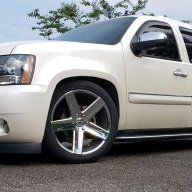
"If it were up to you, what would be your strategy for getting 500,000 miles" Buy a Toyota with a normally aspirated engine and change the oil with synthetic every 3,000 miles. I've done The successfully.
 

DGsHoe

TYF Newbie
Joined
Mar 15, 2021
Posts
8
Reaction score
4
Hi all:

I was having a conversation the other day with a buddy where I was telling him how I think the GMT-900 platform is the pinnacle of the GM SUVs. Older ones have fewer features, less stock performance, and newer ones are less reliable, more expensive, etc. I know not everyone would agree. But the question came up, what will I do if/when my 2012, 183k mile Yukon has to be replaced? My response was that I'd find another one. But my second response was that barring a crash, I'd do all I could to keep mine for as long as possible. So I thought it might be useful to have a discussion about what it would take to get extreme miles on a GMT900 SUV.

So there's obvious maintenance things, like changing fluids and wear parts, so that everything lasts as long as possible. But what are the less obvious things? For example, when should you proactively replace CV shafts and front hubs (if AWD) to avoid a catastrophic failure, which could result in a lot of damage, and possibly a crash, if they fail?

Then there are strategic things, like keeping an eye out for a rebuildable replacement engine. Sure, you could wait for a failure. But then you might be in a hurry, or busy, and can't look for a deal, or schedule the time to DIY it. I was in the middle of moving when my transmission failed in 2022. Recall the supply chain was still in shambles from the pandemic. I had no choice but to buy one from a dealer and pay someone to put it in while I borrowed a friend's truck to keep moving.

So here's the central question: If it were up to you, what would be your strategy for getting 500,000 miles or more out of your GMT900?
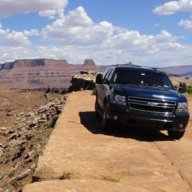
Like some of the others, I'd definitely look at disabling AFM. Here's the one I installed around 90k miles: https://amzn.to/3HIKFCY
 

Eighthtry

Full Access Member
Joined
Nov 9, 2022
Posts
102
Reaction score
95
My answer is working from my 208,000 mile 2011 GMC Yukon Denali XL 6.2 I just traded for a 2023. I did nothing mechanically to that truck except shocks and air compresser. From here I will tell you what I did and would do going forward with it.

Changed oil every 10,000 miles/filter every 5,000 miles with Amsoil (zero oil consumption. This practice continues).

Service transmission (synthetic fluid) at 100,000 miles (this practice continues).

Change coolant every 150,000 miles (this practice continues).

All belts and hoses at 100,000 miles (this practice continues).

Regular check on suspension components every 25,000 miles/annually (This would be new. Upgraded sway bars to Helwig. Made a huge handling difference).

Change axle fluids every 100,000 miles (I never did it on this one).

Check front end components every 25,000 miles (all were tight when solid and had never been replaced).

I would expect to repair the front bearings and rear bearings at some point (wait until they fail).

Put new heads, etc. to ditch AFM immediately. I never did it.

I would expect no rust (live in Heath, Texas. Dallas is a suburb of Heath), paint, or interior issues.

I would continue a mix of driving of 75% long and 25% short distances.

The motor makes it to 500,000 miles. Maybe a 6 speed at some point. Everything else maintained as above.

I would add a bottle of Techron every 50,000 miles or so.

So a big investment in the heads, then play it by ear moving forward. I would expect no 6.2 issues, although I might start running premium full time. I only run premium on road trips.

Pick on me.
 

Eighthtry

Full Access Member
Joined
Nov 9, 2022
Posts
102
Reaction score
95
I will edit belts and hoses to include coolant every 100,000 miles. I ate lunch between those two.
 

Forum statistics

Threads
137,667
Posts
1,989,019
Members
102,674
Latest member
15TahoeSSV
Back
Top