
How to Make it to 500k Miles?

Disclaimer: Links on this page pointing to Amazon, eBay and other sites may include affiliate code. If you click them and make a purchase, we may earn a small commission.

the_tool_man

Full Access Member
Joined
Oct 15, 2018
Posts
837
Reaction score
1,994
Location
Upstate South Carolina
Hi all:

I was having a conversation the other day with a buddy where I was telling him how I think the GMT-900 platform is the pinnacle of the GM SUVs. Older ones have fewer features, less stock performance, and newer ones are less reliable, more expensive, etc. I know not everyone would agree. But the question came up, what will I do if/when my 2012, 183k mile Yukon has to be replaced? My response was that I'd find another one. But my second response was that barring a crash, I'd do all I could to keep mine for as long as possible. So I thought it might be useful to have a discussion about what it would take to get extreme miles on a GMT900 SUV.

So there's obvious maintenance things, like changing fluids and wear parts, so that everything lasts as long as possible. But what are the less obvious things? For example, when should you proactively replace CV shafts and front hubs (if AWD) to avoid a catastrophic failure, which could result in a lot of damage, and possibly a crash, if they fail?

Then there are strategic things, like keeping an eye out for a rebuildable replacement engine. Sure, you could wait for a failure. But then you might be in a hurry, or busy, and can't look for a deal, or schedule the time to DIY it. I was in the middle of moving when my transmission failed in 2022. Recall the supply chain was still in shambles from the pandemic. I had no choice but to buy one from a dealer and pay someone to put it in while I borrowed a friend's truck to keep moving.

So here's the central question: If it were up to you, what would be your strategy for getting 500,000 miles or more out of your GMT900?
 

Trilla_one

Full Access Member
Joined
Oct 16, 2021
Posts
133
Reaction score
222
Location
FL
In my experience most problems give you plenty of warnings before they become catastrophic. As far as when to replace parts...if it ain't broke don't fix it! Also from my experience lol.

With the amount of invasive technology being implemented in new vehicles, both privacy and functionality related, I'd fix whatever goes wrong with the classics.
 

swathdiver

Full Access Member
Joined
May 18, 2017
Posts
21,274
Reaction score
30,204
Location
Treasure Coast, Florida
First hub was replaced at 116K and proactively replaced the other at 135K when doing other work in there. Then those Timken replacements failed and replaced them with GM OE after 70K and 85K miles.

Replaced a CV Axle due to rotten boot. Bought all the tools to rebuild the CV Axles and replace boots. Poor health wouldn't allow me to rebuild the originals so I bought two brand new ones that are of a much improved design and they went on at 206K.

AFM has been shut off since 117K, all the parts are in there. Haven't changed the oil pump o-ring yet. Still on original radiator and water pump and main hoses. Did replace heater lines proactively.

Front suspension was rebuilt at 162K miles.

New universal joints are on the shelf, they're all still good!


My research shows that these 900s with their Gen IV engines are more enduring than the 800s and easier/cheaper to maintain compared to the newer ones.
 

Marky Dissod

Full Access Member
Joined
Mar 3, 2023
Posts
4,078
Reaction score
5,886
Location
(718)-
If it were up to you, what would be your strategy for getting 500,000 miles or more out of your GMT900?
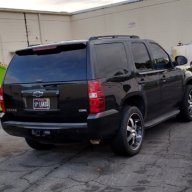
1stly, I know a NYC livery driver / chauffeuse who bought a 2011 Lincoln Town Car brand new. It recently crossed 700,000 miles.
As far as when to replace parts ... if it ain't broke don't fix it!
She'd disagree regarding the engine / trans / steering / brakes / suspension, and a few other safety items like headlights & wipers.
She proactively replaced anything once her info (including experience) showed that whatever part exceeded its expected service interval.
For example, she has already changed seven H2Opumps because she won't chance one failing on her while she's driving a client.
In other words, she has never done any repairs, strictly speaking. She even replaced the rear live axle @ 400something thousand miles,
and she'd have the transmission replaced with a rebuilt one every 150,000 miles (she drives 'daisier' than ANYONE ELSE I know).
Also mind that the Taxi & Limo mechanical safety inspection that shakes each wheel like each is on a different bumpy road happens every 3 months in NYC.

2ndly, I own a GMT821 / Tahoe, I'm aiming / hoping for 300,000 miles, since I cannot write off preventive maintenance as a business expense like she can.
Used fluids analysis is a more clever way to proactively maintain certain parts.
But I have a different mech look over my Tahoe every 4 months, in the hopes of meeting a new one that seems trustworthy.
If they don't let me watch them work from a safe spot, I try a different one.
 

Charlie207

Full Access Member
Joined
Apr 13, 2021
Posts
3,009
Reaction score
5,903
Location
LFOD, New Hampshire
In my experience most problems give you plenty of warnings before they become catastrophic. As far as when to replace parts...if it ain't broke don't fix it! Also from my experience lol.

With the amount of invasive technology being implemented in new vehicles, both privacy and functionality related, I'd fix whatever goes wrong with the classics.
Yeah, for example, C/V joints don't fail and cause crashes.
 

Pandabird

Member
Joined
Jul 21, 2024
Posts
91
Reaction score
297
Location
Finland
A spare engine and transmission ready to pop in whenever it's time rather than to wait and hope for a potential problem to subside. In other words a donor vehicle. It's usually quite a popular choice for anyone keeping a vehicle alive past 300k miles/20 years regardless of brand. Imagine the cost savings of having a solution ready to go, then you can work on the engine separately and pop it back in again whenever it's that time again. Perhaps the frame is looking a bit at the end of its lifecycle. Boom, spare frame. The main benefit is you can plan and repair/restore parts that are not on the running vehicle without much pressure or a time limit.
 

Trey Hardy

Full Access Member
Joined
Jun 12, 2020
Posts
3,552
Reaction score
9,637
Hi all:

I was having a conversation the other day with a buddy where I was telling him how I think the GMT-900 platform is the pinnacle of the GM SUVs. Older ones have fewer features, less stock performance, and newer ones are less reliable, more expensive, etc. I know not everyone would agree. But the question came up, what will I do if/when my 2012, 183k mile Yukon has to be replaced? My response was that I'd find another one. But my second response was that barring a crash, I'd do all I could to keep mine for as long as possible. So I thought it might be useful to have a discussion about what it would take to get extreme miles on a GMT900 SUV.

So there's obvious maintenance things, like changing fluids and wear parts, so that everything lasts as long as possible. But what are the less obvious things? For example, when should you proactively replace CV shafts and front hubs (if AWD) to avoid a catastrophic failure, which could result in a lot of damage, and possibly a crash, if they fail?

Then there are strategic things, like keeping an eye out for a rebuildable replacement engine. Sure, you could wait for a failure. But then you might be in a hurry, or busy, and can't look for a deal, or schedule the time to DIY it. I was in the middle of moving when my transmission failed in 2022. Recall the supply chain was still in shambles from the pandemic. I had no choice but to buy one from a dealer and pay someone to put it in while I borrowed a friend's truck to keep moving.

So here's the central question: If it were up to you, what would be your strategy for getting 500,000 miles or more out of your GMT900?
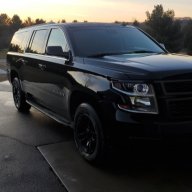
I’ve got over 400,000 miles on my 07 she’s still a chugging along
 

Doubeleive

Wes
Supporting Member
Joined
Nov 7, 2017
Posts
30,473
Reaction score
47,811
Location
Stockton, Ca.
Hi all:

I was having a conversation the other day with a buddy where I was telling him how I think the GMT-900 platform is the pinnacle of the GM SUVs. Older ones have fewer features, less stock performance, and newer ones are less reliable, more expensive, etc. I know not everyone would agree. But the question came up, what will I do if/when my 2012, 183k mile Yukon has to be replaced? My response was that I'd find another one. But my second response was that barring a crash, I'd do all I could to keep mine for as long as possible. So I thought it might be useful to have a discussion about what it would take to get extreme miles on a GMT900 SUV.

So there's obvious maintenance things, like changing fluids and wear parts, so that everything lasts as long as possible. But what are the less obvious things? For example, when should you proactively replace CV shafts and front hubs (if AWD) to avoid a catastrophic failure, which could result in a lot of damage, and possibly a crash, if they fail?

Then there are strategic things, like keeping an eye out for a rebuildable replacement engine. Sure, you could wait for a failure. But then you might be in a hurry, or busy, and can't look for a deal, or schedule the time to DIY it. I was in the middle of moving when my transmission failed in 2022. Recall the supply chain was still in shambles from the pandemic. I had no choice but to buy one from a dealer and pay someone to put it in while I borrowed a friend's truck to keep moving.

So here's the central question: If it were up to you, what would be your strategy for getting 500,000 miles or more out of your GMT900?

donk.JPG
 

intheburbs

Full Access Member
Joined
Aug 10, 2017
Posts
935
Reaction score
1,861
Location
SE MI
500k? Not without replacing just about every major component - engine, trans, axles, hubs/bearings, entire front suspension, etc. Shit, the Denali became a money pit before it hit 150k.

I'd say my Suburban 2500 has a reasonable shot without becoming too much of a money pit. Heavier-dusty components will last longer. The 10.5" rear is probably good for a million miles. 265k on it right now and she's rock-solid and dead-nuts reliable.

Buddy of mine had a 2008 Express 2500 cargo van, pretty much all of the same components, with 750k on it. Only one motor swap, and still had the original 6L90.
 

kbuskill

***CAUTION*** I do my own stunts!
Joined
Mar 11, 2017
Posts
5,814
Reaction score
9,815
Location
NE. FL.
My 2008 Suburban 5.3l/4L60E has 345,000+ on it original engine with AFM tuned out but hardware still intact. I had the transmission rebuilt at 340K only because I had the rear main start leaking and I couldn't bring myself to stick the transmission back in with that many miles on it without upgrading.

The rebuilder said there was nothing wrong with the old one when he opened it up but I had him rebuild it with Kevlar frictions and installed a Stage 2 shift kit and Corvette servos and a new converter.

I have rebuilt the front end a time or two, I have the info in my maintenance records but don't care enough to look it up at the moment.

Preventative maintenance is the key to any vehicle lasting.

Here is another question. At what point do you think it really shouldn't be considered the same vehicle? In other words, like the 700k mile taxi mentioned, several different engines and transmissions replaced... can you really say " my vehicle lasted X00,000 miles?

I know a guy that had a early 2000s F150 and he would brag about having 750k miles on it but then turn around and tell you he put 3 engines and 2 transmissions or whatever in it... lol
 

ReaperHWK

Full Access Member
Joined
Oct 14, 2020
Posts
921
Reaction score
1,125
I have an older truck and you can fix the mechanicals all day and it will keep going.

The main issue with a truck lasting that long is RUST. Once your frame rusts and starts disintegrating it’s junkyard time no matter how well
It runs.

I have a 2006 f150 with 220k miles that runs great mechanically and I fix what breaks. But the frame is starting to rust out, in a few more years she will be scrapped.
 

Marky Dissod

Full Access Member
Joined
Mar 3, 2023
Posts
4,078
Reaction score
5,886
Location
(718)-
At what point do you think it really shouldn't be considered the same vehicle?
In other words, like the 700k mile taxi mentioned, several different engines and transmissions replaced ...
can you really say "my vehicle lasted X00,000 miles"?
Lincoln Town Car I mentioned still has original engine with 700,000 miles, frame, body and body parts.
It goes back & forth between two transmission cases, swapped in a 3.55 axle assembly.

The question of the 'Ship of Theseus' ... for automobiles, large parts are marked with identifiers -
frame, body shell, original engine, original transmission, original axle.
Vast majority of parts are clearly intended as 'wearable replacement' items.
... have a 2006 f150 with 220k miles that runs great mechanically and I fix what breaks.
But the frame is starting to rust out, in a few more years she will be scrapped.
If you find a significantly less-rusty frame, woulds you consider a frame swap to keep it going?
 
OP
OP
the_tool_man

the_tool_man

Full Access Member
Joined
Oct 15, 2018
Posts
837
Reaction score
1,994
Location
Upstate South Carolina
Here is another question. At what point do you think it really shouldn't be considered the same vehicle? In other words, like the 700k mile taxi mentioned, several different engines and transmissions replaced... can you really say " my vehicle lasted X00,000 miles?
My utility trailer is like that. Over the 30 years I've owned it, I've replaced about half of the frame due to others damaging it, or me upgrading it. I've replaced the fenders, all of the decking and side wood (three times). I would guess that by mass over half of it has been replaced. But it's still the same trailer.
 
OP
OP
the_tool_man

the_tool_man

Full Access Member
Joined
Oct 15, 2018
Posts
837
Reaction score
1,994
Location
Upstate South Carolina
A spare engine and transmission ready to pop in whenever it's time rather than to wait and hope for a potential problem to subside. In other words a donor vehicle. It's usually quite a popular choice for anyone keeping a vehicle alive past 300k miles/20 years regardless of brand. Imagine the cost savings of having a solution ready to go, then you can work on the engine separately and pop it back in again whenever it's that time again. Perhaps the frame is looking a bit at the end of its lifecycle. Boom, spare frame. The main benefit is you can plan and repair/restore parts that are not on the running vehicle without much pressure or a time limit.
I am actually considering this. My closest LKQ gets 2-3 GMT900s every other Friday. About 1/3 of them are Yukon Denalis or Escalades with 6.2L. They pull the low mileage ones to sell for $3-4k, of course. But for $600 I can get an L94 or L92 buildable core with a 90 day warranty. Transmissions are harder for me to justify. I don't know how to evaluate one in a non-running truck. And I'm not up for a DIY rebuild. As you say, a donor vehicle might be smart. I have a Copart close by...
 

swathdiver

Full Access Member
Joined
May 18, 2017
Posts
21,274
Reaction score
30,204
Location
Treasure Coast, Florida
My 2008 Suburban 5.3l/4L60E has 345,000+ on it original engine with AFM tuned out but hardware still intact. I had the transmission rebuilt at 340K only because I had the rear main start leaking and I couldn't bring myself to stick the transmission back in with that many miles on it without upgrading.

The rebuilder said there was nothing wrong with the old one when he opened it up but I had him rebuild it with Kevlar frictions and installed a Stage 2 shift kit and Corvette servos and a new converter.

I have rebuilt the front end a time or two, I have the info in my maintenance records but don't care enough to look it up at the moment.

Preventative maintenance is the key to any vehicle lasting.

Here is another question. At what point do you think it really shouldn't be considered the same vehicle? In other words, like the 700k mile taxi mentioned, several different engines and transmissions replaced... can you really say " my vehicle lasted X00,000 miles?

I know a guy that had a early 2000s F150 and he would brag about having 750k miles on it but then turn around and tell you he put 3 engines and 2 transmissions or whatever in it... lol
I have a crock pot that my grandmother gifted to my mother and she gave it to me. The crock and the glass have been replaced a time or two but it's still grandma's crockpot with all the memories.

My truck now sports a 9-1/2 inch axle and may someday get a 6.2, but to my children, it will still be the truck we took across country, learned to drive and race in and almost sank in the swamp.
 

kbuskill

***CAUTION*** I do my own stunts!
Joined
Mar 11, 2017
Posts
5,814
Reaction score
9,815
Location
NE. FL.
I have a crock pot that my grandmother gifted to my mother and she gave it to me. The crock and the glass have been replaced a time or two but it's still grandma's crockpot with all the memories.

My truck now sports a 9-1/2 inch axle and may someday get a 6.2, but to my children, it will still be the truck we took across country, learned to drive and race in and almost sank in the swamp.
I totally get it from a sentimental point of view.

I was more referring to the braggarts who like to talk trash about how long their Ferd lasted, but when you get down to the nuts and bolts of it the radiator cap is the only original part on the truck... lol
 

Forum statistics

Threads
137,667
Posts
1,989,033
Members
102,674
Latest member
15TahoeSSV
Back
Top