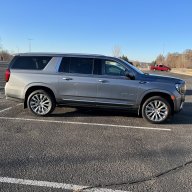
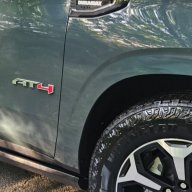
BREAKING: GM is officially recalling the L87

Disclaimer: Links on this page pointing to Amazon, eBay and other sites may include affiliate code. If you click them and make a purchase, we may earn a small commission.

Stbentoak

Full Access Member
Joined
Jul 20, 2020
Posts
2,160
Reaction score
2,565
It looks like 2013/2014 was the switch over to 0W-20. While that is a very thin oil it seems like the switch to thicker oil is a band aid to get the engines with defective parts past the warranty period. There's a lot of years of vehicles with a lot of problem free miles on them running 0W-20 to put the blame on oil.

Roller lifters have been around for several decades with no problems in various applications. They were even reliable in the early iterations of the variable cylinder applications. It seems like for both GM and Chrysler it's when they took it to the next level that they started having problems.

It's pretty sad when this push for ultimate fuel mileage and emissions can f!*k up what were once reliable drivetrains so badly.
Not to mention Ford, Toyota, Honda and Subaru all specify 0W-20 and I don't hear of any massive engine recalls from them that could be construed as "oil related".....
 

viven44

Full Access Member
Joined
Sep 9, 2024
Posts
397
Reaction score
502
Location
Dallas, TX
Honda’s 1.5 DI Turbo had some dilution issues early, but they seem to have resolved it.
I changed the oil on my friends 1.5 turbo 2018 Honda and I swear we pulled out 2 extra quarts out of it. It was diluted so badly. The oil was warm when he showed up and I drained it right after. As soon as we pulled out the drain plug there was a big 'whoosh' and 'whistle' as all the hot diluted oil poured out almost like it was pressurized. Pretty crazy.

Per google. This is a widely known problem with many owners reporting oil level well above the FULL line between oil changes. As a fix, Honda did a warranty extension program. "The repairs involve transmission and engine software changes that allow the engine to warm up quicker, reducing the possibility of unevaporated fuel collecting in the engine oil early in the drive cycle. Ignition timing, CVT control and air-conditioning operations are modified to help the engine warm up and retain heat."

I would assume by having retarded ignition timing for a while, maybe holding shifts longer (or some variant of that on a CVT?), the warm-up time is reduced.
 

Antonm

Full Access Member
Joined
Apr 2, 2024
Posts
539
Reaction score
625
Not to mention Ford, Toyota, Honda and Subaru all specify 0W-20 and I don't hear of any massive engine recalls from them that could be construed as "oil related".....
Look harder, literally every single automaker you mentioned has had major issues with engine failures recently.

The ford eco-bombs are well known , Toyota had recalls for the tundra and Lexus LX gas engines and Subaru, lol yeah, Subaru is literally a meme joke of engine failures lately.
..
 

DenaliCountry

Full Access Member
Joined
Jan 21, 2022
Posts
276
Reaction score
207
Oh, my gosh! So much miss information and speculation so fast.

The problem: GM notes that the connecting rod and/or crankshaft engine components in affected vehicles may have unspecified manufacturing defects.

The hazards: affected engines with manufacturing defects in the connecting rods or the crankshaft can lose propulsion and ultimately lead to engine failure, increasing the risks of an accident.

The fix: Chevy Tahoe, Chevy Suburban, GMC Yukon/Yukon XL, and Cadillac Escalade/Escalade ESV units affected by the recall will be inspected for manufacturing defects. Vehicles that pass inspection will receive an engine oil and filter change, this time using high-viscosity 0W-40 Mobil 1 Supercar oil. The owner’s manual for L87-equipped models calls for 0W-20 oil. The oil fill cap will also be replaced. It’s unclear what happens if an affected SUV does not pass inspection, but it’s likely an engine replacement.

Owners should: GM will notify owners of affected SUVs. Additionally, General has placed a stop sale on affected SUVs currently in dealership inventory, meaning they cannot be sold, delivered, used in demonstrations, or traded to other dealerships until they’ve passed inspection and gotten the appropriate oil change. The SUVs that do not pass inspection cannot be sold or delivered to customers.

Only affects vehicles equipped with the 6.2L L87 V8 2021-2024

  • GM recall number: N252494001
  • Chevrolet Customer Service: 1-800-222-1020
  • GMC Customer Service: 1-800-462-8782
  • Cadillac Customer Service: 1-800-458-8006
I personally believe they changed parts design as part of 2025 reengineering. 0-40 Mobil 1 super car oil except in cold climates
If they did, they did it recently, because I have seen a few posts on social media about engine failures on 2025 6.2's... will be interesting to see how this goes.
 

viven44

Full Access Member
Joined
Sep 9, 2024
Posts
397
Reaction score
502
Location
Dallas, TX
Look harder, literally every single automaker you mentioned has had major issues with engine failures recently.

I don't know how many of y'all follow Uncle Tony on YouTube.. this video is one of his recent ones and a good one as usual... I think he is right that we have forgotten how to build engines ? (or maybe this is a conspiracy, haha ?)

In this video around the 6:28 mark he talks about the GM 6.2... he is an old school car guy and is baffled at the possibility that we are talking in this manner about a "Chevrolet V8" which unarguably is a historical icon of the American automobile industry :whymewhyme:

 
Last edited:

Vladimir2306

Full Access Member
Joined
May 18, 2023
Posts
1,020
Reaction score
1,202
An in line 6 diesel is about the most simple, common, dependable and recreated diesel engine ever made. I believe the fundamentals of the engine are rock solid, it's all the junk that they have hung on it that make it let's say..... less than bulletproof. The only really known issues with this engine are the coolant control valve which is another under engineered/mis engineered part made from plastic, and the crank no start issue which was back in 2020 that was fixed by a software update. And of course, the 10-speed transmission recall which affects us all.
To be sure I'm sure there's some of them out there that have failed for some catastrophic reason, but you don't hear of any widespread or "Recall" level issues or people being stranded besides the road by the hundreds or thousands. For as many people that have reported on here about petrol problems,AFM DFM,Lifters..etc. and replacement engines, there's probably thousands more out there...maybe 10's of thousands... who are just riding it through and may not even know this forum, or others exist....

Also, a pretty fair share of these 3.0 owners are not really worried about the post warranty and don't keep these vehicles much longer than the six/100...Me included...


Also here is a copy of 2 consecutive oil analyses on a 3.0 @13K miles and 18K miles with DexosD 0W-20. Appx 5600 miles on each test specimen. Both of them less than 1/2 of 1 Percent fuel dilution.... and still plenty of life left in oil....

View attachment 456024
I agree that the 6-cylinder diesel engine is the most common, I'm not talking about that. I'm talking about the fact that GM made it very complicated with attachments. It was written above that in order to change the belt, you need to remove the transmission. You can think as much as you like that this is not about you, and you only drive during the warranty period. BUT Such things lead to an increase in the cost of repair and maintenance of the car in the post-warranty period, and therefore leads to a greater drop in price during further resale. Figuratively speaking, the difference between the cost of buying a new car and selling an old one will be greater for a diesel than for a 6.2 engine.
 

blanchard7684

Supporting Member
Joined
Dec 23, 2024
Posts
408
Reaction score
344
Not to mention Ford, Toyota, Honda and Subaru all specify 0W-20 and I don't hear of any massive engine recalls from them that could be construed as "oil related".....
Those are good discussion points.

When an engine, or specifically a rotor system with hydrodynamic bearings, is designed with 0w20 as the primary oil then it can work. If you set your viscosity to a 0w-20, then design the bearing width, diameter, and clearance to support a good eccentricity ratio, then it will work. further, you can even see how low the viscosity can drop before the eccentricity ratio gets into a danger zone.

Victor Sheppard took 2 toyota engines to 1 million miles using 0w20 and 10,000 mile oil change intervals.


And yeah lots of highway miles but hot shot drivers also get a lot of idling time waiting to be loaded up...

Toyota's V35A-FTS recall on the new 3rd gen was, according to them, debris related. It wasn't every single v6 either-- the Lexus GX 550 wasn't in the recall despite having same basic engine (different turbo and induction system).

Looking at the failed bearings it didn't look like debris was the issue. And how debris "shows up" as a failure in trucks with 46,000 (or more) miles is a painful stretch of credibility. I'm sure debris was an issue but not the whole story.

The failed bearings appeared to show an overload condition from too little clearance: a shifting main cap ("cap walk" on forced induction engines is a thing) or the main cap jaw fits being too tight or too loose. The main bearing cap design and the main cap girdle/web stiffener was changed from original 2018 Lexus design.

Could 0w20, especially a fuel diluted oil, be a major contributor? sure. But the original V35A never had the bearing problem even using 0w20 which it was designed for. And I'm sure there were plenty of lazy LS 500 owners who justified 10,000 mile oci's while taking short trips and idling extensively outside of Whole Foods...meaning plenty of cases of fuel diluted engine oils...

The problem popped up when the main cap and girdle design changed.

And it is known that the GX 550 has a different main bearing part number than what is in Tundra or Lexus LX600. The GX 550 never had this issue.

Regardless...Toyota stomped that problem out fast and it didn't involve changing oil spec.

The bottom end of the 6.2 and 5.3 haven't materially changed since their inception as an LS1 engine. But what has changed is getting cute with 0w20.

If an engine was designed originally for 0w20 you can be reasonably sure it is good to go. If an engine was designed for a higher viscosity oil and suddenly, and with no clear design change to support it, drops the viscosity down a few grades, while increasing specific power output from engine, then red flags should be going up.

 
Last edited:

Stbentoak

Full Access Member
Joined
Jul 20, 2020
Posts
2,160
Reaction score
2,565
I agree that the 6-cylinder diesel engine is the most common, I'm not talking about that. I'm talking about the fact that GM made it very complicated with attachments. It was written above that in order to change the belt, you need to remove the transmission. You can think as much as you like that this is not about you, and you only drive during the warranty period. BUT Such things lead to an increase in the cost of repair and maintenance of the car in the post-warranty period, and therefore leads to a greater drop in price during further resale. Figuratively speaking, the difference between the cost of buying a new car and selling an old one will be greater for a diesel than for a 6.2 engine.
With that belt being on a 200,000-mile replacement schedule it's pretty much a non issue. Very very few people will keep them that long. Diesel Yukon's and Tahoe's are highly desirable here especially with this 6.2 issue going on. They sell pretty quickly and for a good $ if they haven't been beat to death and they have a good history of care and maintenance.
Very few people in the United States keep vehicles for 10 plus years and for hundreds and hundreds of thousands of miles. Usually by the six-year mark and 100K miles people are starting to look for newer / upgraded models. The people that buy these usually are fairly flush with money. Certainly aren't entry level buyers....
 

jfoj

Full Access Member
Joined
Aug 9, 2012
Posts
1,149
Reaction score
1,008
It will be interesting to watch if this "Recall" is based fully on model years or if it is narrowed down to engine build date based on "A series of crankshaft and connecting rod manufacturing improvements implemented on or before June 1st, 2024, addressed contamination and quality issues". To me this a bit too vague and it really does not fully address what was wrong and what changed, but we many never know.

I have a 2024 GMC Yukon with a production month of 8/2024, my engine build date is July 15, 2024 based on the Julian date of the engine production tag so in theory my engine was built after the manufacturing improvement date with my 2024 model. So far I have not found that my VIN has been recalled, however, I also believe that the databases have not been fully populated and the official NHTSA Recall Notice 25V274 has not been release yet. There seems to typically be a slight lag for the official NHTSA notices as I see about 4 that have been assigned a 25V27** number since 4/23/2025 that do not have supporting documentation released on the NHTSA page yet.

I guess we shall see what the final recall window looks like and we will need to see if there are any/many 6.2l failures beyond the June 1, 2024 engine build date. I assume there is typically at least a 2-3 week delay time between the build date of the engine and the build date/month of the vehicle. So this should mean that any 7/2024 and newer builds with the 6.2l would somehow have benefitted from the "manufacturing improvements".

When I went looking for my Yukon, I want as late a build date on the vehicle as possible in case there were any running changes. Maybe I was wise?? Who knows.

We shall see.
 

Vladimir2306

Full Access Member
Joined
May 18, 2023
Posts
1,020
Reaction score
1,202
Of course, this is not oil, and not the operating conditions, and not connecting rod bearings, because their part numbers have not changed, as they have not changed on the models of the 25th year, as well as on the 24th year. And it's not gasoline in the oil, or warming up the engine.I am more than sure that there was a banal defect in the production of engines, which has now been corrected, without changing the operating conditions, and without changing the oil and spare parts.I told them how the engines arrived, new, in a box, they were opened, and their temperature gaps were violated. The piston on the new engine did not move freely, it was wedged.
and switching to 0-40 oil is just to get the engines to the end of the warranty period.
 

GMCChevy

Full Access Member
Joined
Oct 13, 2024
Posts
363
Reaction score
397
Those are good discussion points.

When an engine, or specifically a rotor system with hydrodynamic bearings, is designed with 0w20 as the primary oil then it can work. If you set your viscosity to a 0w-20, then design the bearing width, diameter, and clearance to support a good eccentricity ratio, then it will work. further, you can even see how low the viscosity can drop before the eccentricity ratio gets into a danger zone.

Victor Sheppard took 2 toyota engines to 1 million miles using 0w20 and 10,000 mile oil change intervals.


And yeah lots of highway miles but hot shot drivers also get a lot of idling time waiting to be loaded up...

Toyota's V35A-FTS recall on the new 3rd gen was, according to them, debris related. It wasn't every single v6 either-- the Lexus GX 550 wasn't in the recall despite having same basic engine (different turbo and induction system).

Looking at the failed bearings it didn't look like debris was the issue. And how debris "shows up" as a failure in trucks with 46,000 (or more) miles is a painful stretch of credibility. I'm sure debris was an issue but not the whole story.

The failed bearings appeared to show an overload condition from too little clearance: a shifting main cap ("cap walk" on forced induction engines is a thing) or the main cap jaw fits being too tight or too loose. The main bearing cap design and the main cap girdle/web stiffener was changed from original 2018 Lexus design.

Could 0w20, especially a fuel diluted oil, be a major contributor? sure. But the original V35A never had the bearing problem even using 0w20 which it was designed for. And I'm sure there were plenty of lazy LS 500 owners who justified 10,000 mile oci's while taking short trips and idling extensively outside of Whole Foods...meaning plenty of cases of fuel diluted engine oils...

The problem popped up when the main cap and girdle design changed.

And it is known that the GX 550 has a different main bearing part number than what is in Tundra or Lexus LX600. The GX 550 never had this issue.

Regardless...Toyota stomped that problem out fast and it didn't involve changing oil spec.

The bottom end of the 6.2 and 5.3 haven't materially changed since their inception as an LS1 engine. But what has changed is getting cute with 0w20.

If an engine was designed originally for 0w20 you can be reasonably sure it is good to go. If an engine was designed for a higher viscosity oil and suddenly, and with no clear design change to support it, drops the viscosity down a few grades, while increasing specific power output from engine, then red flags should be going up.

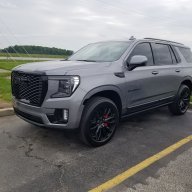
At the same time these engines have been using 0W-20 since around 2013 without major issues until the last few years with the 6.2 and now there are people who even have failures within a short amount of time of getting a warranty engine. That's a huge sign there's something else going on.
 

jfoj

Full Access Member
Joined
Aug 9, 2012
Posts
1,149
Reaction score
1,008
Based on this article below from a bearing manufacturer, loose bearing clearance require/benefit from a higher viscosity oil. But I am still convinced that fuel contamination is a major factor in many of these engine failures, thinning out the engine oil over the lifetime it is in the engine.

So if GM has wholesale stated that close to 1 Million engines that were spec'ed and supposedly designed for 0W20 engine oil should now run 0W40 engine oil, this tells me that GM must have decided that the engine bearing clearances were too loose or they feel that premature wear (loosening of the bearing clearances) has occurred and that higher viscosity oil will allow the engine to last longer.


Vladimir2306

Full Access Member
Joined
May 18, 2023
Posts
1,020
Reaction score
1,202
Based on this article below from a bearing manufacturer, loose bearing clearance require/benefit from a higher viscosity oil. But I am still convinced that fuel contamination is a major factor in many of these engine failures, thinning out the engine oil over the lifetime it is in the engine.

So if GM has wholesale stated that close to 1 Million engines that were spec'ed and supposedly designed for 0W20 engine oil should now run 0W40 engine oil, this tells me that GM must have decided that the engine bearing clearances were too loose or they feel that premature wear (loosening of the bearing clearances) has occurred and that higher viscosity oil will allow the engine to last longer.

and 0-40 oil means it doesn't dilute the fuel? Lol. GM chose 0-40 oil to simply choose the lesser of two evils, that's all. 0-40 oil makes the engine suffer after 70-80-100 thousand miles, but the problem with connecting rod bearings won't appear after 1000 miles, that's all
 

jfoj

Full Access Member
Joined
Aug 9, 2012
Posts
1,149
Reaction score
1,008
0W40 will also become fuel diluted just like 0W20, it just has a far bigger safety margin, before the viscosity gets equal or below the viscosity of fresh 0W20 oil.

Again, it has a lot to do with how the vehicle is used. Too many Soccer Moms running too many short trips in the colder months and even the warmer months, but the Soccer Mom mobile maybe gets enough miles for a single oil change a year. If I would have run my kids to school they are all within 1-2.5 miles from my house. So just think about how this would impact any vehicle much less something like these trucks that take 30 minutes of driving for the oil to fully warm up.

Far different than most trucks that actually get worked and have miles put them. Some trucks are play toys, many are working trucks.

I would love to see the distribution of engine failures of SUV's vs Pickups. My gut tells me based on reports I have read is probably around 4-5 SUV to pickup, but this is my gut based on reports I have read. Maybe the distribution is equal to the number of SUV to Truck sales? Who knows.
 

blanchard7684

Supporting Member
Joined
Dec 23, 2024
Posts
408
Reaction score
344
At the same time these engines have been using 0W-20 since around 2013 without major issues until the last few years with the 6.2 and now there are people who even have failures within a short amount of time of getting a warranty engine. That's a huge sign there's something else going on.
Agreed. There is probably a whole lot more to the manufacturing defect story than is currently known outside of GM technical staff.

My guess is some sort of tolerance stacking. The right combination of parts that are at their spec limits can cause a failure in the right conditions: diluted oil, low on oil, high loads and low rpms. Thus changing the oil to 0W40 mitigates this substantially.

The problem with the oil spec change is that if you already have some minor damage incurred, and it takes a few more cycles to develop into a failure, 0w40 isn't going to help much--you need new parts that are actually in spec.

If you start out fresh or low miles with 0w40 you'll likely miss the failure mode. Still a band-aid though--what you need is in spec batch of parts. That is actually what you paid for.
 

Vladimir2306

Full Access Member
Joined
May 18, 2023
Posts
1,020
Reaction score
1,202
0W40 will also become fuel diluted just like 0W20, it just has a far bigger safety margin, before the viscosity gets equal or below the viscosity of fresh 0W20 oil.

Again, it has a lot to do with how the vehicle is used. Too many Soccer Moms running too many short trips in the colder months and even the warmer months, but the Soccer Mom mobile maybe gets enough miles for a single oil change a year. If I would have run my kids to school they are all within 1-2.5 miles from my house. So just think about how this would impact any vehicle much less something like these trucks that take 30 minutes of driving for the oil to fully warm up.

Far different than most trucks that actually get worked and have miles put them. Some trucks are play toys, many are working trucks.

I would love to see the distribution of engine failures of SUV's vs Pickups. My gut tells me based on reports I have read is probably around 4-5 SUV to pickup, but this is my gut based on reports I have read. Maybe the distribution is equal to the number of SUV to Truck sales? Who knows.
And there were no mothers of football players on K2 with a 6.2 engine and 0-20 oil, or did they drive differently before? Or maybe the fuel was different, which was less irritating to the oil
 

Forum statistics

Threads
137,795
Posts
1,968,811
Members
102,159
Latest member
tm7554

Latest posts

Back
Top