4L60-E hard shift from first to second gear

Disclaimer: Links on this page pointing to Amazon, eBay and other sites may include affiliate code. If you click them and make a purchase, we may earn a small commission.

letsbangout

Member
Joined
Dec 3, 2010
Posts
74
Reaction score
0
Hi all. I know this topic has been covered here and many other places on the Internet in depth.. but I'd like to explore a new angle to this if I may..

I have a 99 Yukon with the 4L60-E automatic transmission, and it shifts very hard from first to second. It's not even consistent, sometimes I can go extremely gentle on the throttle and make it shift acceptably, other times it's so firm it jolts the entire vehicle and makes a noticable sound as the whole interior vibrates. I took it to the dealership yesterday, and paid them $100 to simply drive it 2 miles and look at TSBs for the 2000 Yukon. Based on the TSB and their experience with a dozen other transmissions with the same problem, they're 90% sure it's the valve body. I guess the valve body gets worn or the solenoid gets worn and pumps too much fluid?

The obvious solution is to replace the valve body, which is like $440 in parts from Delco, or $100 to $200 if you buy from someone who remans and sells these on eBay. But rather than engaging in any of this, I'm curious if it's possible to simply tell the ECU to use a shorter PWM duration when pumping the fluid only in 1st to 2nd gear?

Specifically, this product:

http://www.autoanything.com/performance-chips/61A3637A0A0A2606874.aspx

purports to be able to control "shift firmness". What I'm curious about is whether it will let you go less firm than the factory setting. Or, perhaps there are other programmers out there that can do this?

Looking forward to comments from anyone who's used this solution to fix this problem, rather than opening the tranny, or from anyone who owns one of these or similar. Thanks!

 

bowtiefreak

No Quarter
Joined
Apr 30, 2009
Posts
5,404
Reaction score
102
Location
Near Philly
You may want to ask black bear about that....

I had this happen 8 years ago, same problem, same solution of a new valvebody
 

SunlitComet

OBS Jedi-Do Good
Joined
Sep 30, 2010
Posts
16,206
Reaction score
188
Location
unknown at this time.
The wear will just continue and the programmer eventually won't change things enough.
Part# should be 24221161 for valvebody.
This is really the only permanent solution.

If you have not seen it your self hear is the tsb:


File In Section: 07 - Transmission/Transaxle

Bulletin No.: 01-07-30-023B

Date: March, 2002

TECHNICAL
Subject:
Harsh 1-2 Upshift, SES, MIL, or CEL Illuminated, DTC P1870 Set
(Replace Valve Body)

Models:
1996 Buick Roadmaster
1996 Cadillac Fleetwood
1999-2000 Cadillac Escalade
1996-2000 Chevrolet Camaro, Corvette
1996-2000 Pontiac Firebird
1996-2000 Chevrolet and GMC Light Duty Truck Models
1996-2000 Oldsmobile Bravada
with 4L60-E Automatic Transmission (RPO M30)
Built Prior to January 15, 2000 (Julian Date 0015)

This bulletin is being revised to update VIN Breakpoint Date information and revise the Parts Information table. Please discard Corporate Bulletin Number 01-07-30-023A (Section 07 - Transmission/Transaxle).

Condition

Some customers may comment on a harsh 1-2 upshift and the Check Engine Light or Service Engine Soon indicator is illuminated.

Diagnosis

Typically, these vehicles will have been driven more than 32,000 km (20,000 mi) before this condition occurs.

The scan tool may show a DTC P1870 set as a history code.

A harsh 1-2 shift or DTC P1870, caused by wear in the control valve body, may be difficult to duplicate when the transmission temperature is below 93°C (200°F).

Cause

The condition may be due to wear in the control valve body. This wear occurs in the bore that contains the TCC isolator and regulator valves, and results in poor, or no, TCC apply.

Important :
^ DTC P1870 is a type B code. The conditions for setting the P1870 DTC must occur on TWO CONSECUTIVE TRIPS (ignition cycles, with a drive cycle) before setting a P1870 history code.

^ When the conditions for setting DTC P1870 are met (first trip), the PCM commands maximum line pressure and harsh 1-2 shifts are the result.

^ This may result in a harsh 1-2 shift with no history code if the conditions for setting the DTC required for the second trip are not met, on two consecutive trips (Ignition cycles, with a drive cycle).

^ When the conditions for setting the DTC are met, on the second consecutive trip, a DTC P1870 is stored as a history code.

^ When the P1870 code is stored, the PCM will turn on the Service Engine Soon (SES), Check Engine Light (CEL), or Malfunction Indicator Lamp (MIL).

Correction

Install a control valve body with the revised TCC regulator and isolator valves. Refer to the Parts Information table below. These valves are used in all transmissions produced after January 15, 2000 (Julian Date 0015), and all of the service parts currently available through GMSPO contain revised TCC regulator and isolator valves.
Important : If all of the following conditions are true, it is not necessary to rebuild the transmission or to replace additional transmission components beyond the control valve body.

^ Transmission operation is normal before the transmission reaches operating temperature, or before DTC P1870 is set (no slips, flares, or missing gears).

^ The torque converter is not blue or overheated.

^ The transmission fluid is not burned or has no burned odor

^ The transmission fluid pan contains no abnormal debris (clutch material, bronze, brass, or metal fragments).
 
OP
OP
L

letsbangout

Member
Joined
Dec 3, 2010
Posts
74
Reaction score
0
You may want to ask black bear about that....

I had this happen 8 years ago, same problem, same solution of a new valvebody

Out of curiosity, how many miles did your tranny have on it when it developed this problem? And was it the high-temperature thing where it throws P1980 and occurs mostly after the tranny is very warm?

Mine, by contrast, happens at all times, both cold and hot, FYI.
 

bowtiefreak

No Quarter
Joined
Apr 30, 2009
Posts
5,404
Reaction score
102
Location
Near Philly
Mine was when it was hot. It happened with 40,000 miles on the truck. The next tranny lasted 100K till I replaced it with the new motor and it never had a problem....just did the whole new drivetrain.
 
OP
OP
L

letsbangout

Member
Joined
Dec 3, 2010
Posts
74
Reaction score
0
Mine was when it was hot. It happened with 40,000 miles on the truck. The next tranny lasted 100K till I replaced it with the new motor and it never had a problem....just did the whole new drivetrain.

Thanks for the reply, that's insightful. Everyone who seems to have this problem, from what I recall reading, has it happen at high temps after running for a long time or being on the highway, and it's characterized by overheated torque converters and perhaps gears with broken or bent teeth by way of the heat.

What's interesting is that I can't recall ever reading about anyone having this problem when their tranny is cold, like mine. I'm wondering what the long-term effects are of just letting it lock up hard, while going extremely gentle on the throttle. Another angle I'm exploring is the possibility that the problem could be exacerbated by bad emissions. By that, I mean, I averaged 13.3 MPG between a little city and a lot of highway driving. If the emissions systems were correct, I would think the mean between the EPA estimated city and highway for this truck (14/18 respectively) which would be 16 MPG (or higher!) should be expected. 13.3 is a far cry from 16.. and the reason I'm hot on this is because I read on another forum (maybe I have the URL saved on my laptop?) that someone else had this problem because of a clogged exhaust, and a new exhaust with new O2 sensors did the trick.
 

SunlitComet

OBS Jedi-Do Good
Joined
Sep 30, 2010
Posts
16,206
Reaction score
188
Location
unknown at this time.
Your unit may be to far worn if you are sure it happens when cold. Letting it keep doing that will accelerate wear on other components. Not to mention maybe break a mount. That fact that your vehicle jolts or shakes that hard justifies shutting it down to it is repaired.
 
OP
OP
L

letsbangout

Member
Joined
Dec 3, 2010
Posts
74
Reaction score
0
Your unit may be to far worn if you are sure it happens when cold. Letting it keep doing that will accelerate wear on other components. Not to mention maybe break a mount. That fact that your vehicle jolts or shakes that hard justifies shutting it down to it is repaired.

Yeah I think you're right.. besides, that particular programmer only lets you go more firm, not less firm. So with that out of the way.. I suppose it's time to buy a valve body and find someone to install it. The guy I bought the truck from is a mechanic, owns his own shop, and I'm sure he's friendly with someone who will install my part.

I read on other forums that people who have done the valve body swap themselves (which I won't do because tranny work is voodoo to me), had good success in buying remanned units from eBay, like this one:

http://cgi.ebay.com/ebaymotors/G-M-...r_Truck_Parts_Accessories&hash=item1e5f3ba8d6

Do you suppose that's acceptable, or do I need the Delco part at the full $440-ish price? Also the dealership quoted me the repair with a new plate, do I need that as well?
 

cadillacmatt

TYF Newbie
Joined
Mar 23, 2012
Posts
1
Reaction score
0
my escalade just started doing this if i turn it off for a min it works and i guess the transmission gets hot it starts again
 

Johnny Racer

Full Access Member
Joined
Jun 1, 2010
Posts
176
Reaction score
3
Location
Chicago, IL
My 99 Yuk had symptoms of this late in the summer last year (like twice). All winter long it was fine. Now that the weather is warm again, happened the other day as well. Drive at a sustained "highway" speed (50-70mph) for a period of time, come to a stop, accelerate, BAM... instant shift kit. But whats weird, pull into a parking lot, shut it off, grab a soda, fire it back up nor more than 3 minutes later... no problems for the rest of the journey. Ugh... Valve Body, I figured as much. Welp the rear AC lines will have to wait. LOL
 

juggjiggler69

Member
Joined
Dec 30, 2011
Posts
75
Reaction score
0
Hell i just had my tranny rebuilt back in august and it does that and everything in mine is new

Sent from my Galaxy Nexus using Xparent Red Tapatalk
 

preshus

Full Access Member
Joined
Dec 1, 2011
Posts
151
Reaction score
2
Location
washington,IN
i might have missunderstood but if you allready have a chip on it that could be

the cause of the problem . . . my buddy has a burban with a chip in it and didn't

program it right so it dose the exact same thing as you stated
 
OP
OP
L

letsbangout

Member
Joined
Dec 3, 2010
Posts
74
Reaction score
0
My 99 Yuk had symptoms of this late in the summer last year (like twice). All winter long it was fine. Now that the weather is warm again, happened the other day as well. Drive at a sustained "highway" speed (50-70mph) for a period of time, come to a stop, accelerate, BAM... instant shift kit. But whats weird, pull into a parking lot, shut it off, grab a soda, fire it back up nor more than 3 minutes later... no problems for the rest of the journey. Ugh... Valve Body, I figured as much. Welp the rear AC lines will have to wait. LOL

Yea the problem you're describing, and probably the poster before you, is the classic valve body issue. Also could be the #8 check ball or a worn separator plate.

I found that the issue with my truck is mostly related to the 1-2 accumulator. When I did a fluid/filter change on the tranny, I dropped the accumulator, turned it over and the piston fell right out - it's not supposed to do that. The piston should be tight in there. I had a spare '93 accumulator assembly I could have replaced it with, but it was worse than mine, more "wobbled out" (the accumulator pistons like to wobble on the piston pin, causing irregularities in the piston bore, causing them to stick). Also sometimes in this series of trucks (98, 99ish from what I gather), sometimes those pistons are plastic rather than metal, so they crack easily. I resolved this by getting ahold of a stronger "big spring" (There's a big one and a little one in the piston assembly) - I was unable to get the piston and seal with only an hour's notice and I didn't wanna leave her unbuttoned for a long time. Now I simply can't make my transmission shift hard under high throttle/high torque, whereas before, gunning it from take-off would produce nail-biting shifts. It's also much calmer at lower RPM/lower torque, drives much more like a cadillac than it did before. Now the only time I have any semblance of a problem is when first starting out, before the system enters closed-loop, sometimes it likes to shift harder than necessary. I attribute this to the computer commanding more shift pressure than necessary because 1) it's open-loop and has less info about fuel mixture (as relates to engine load) at it's disposal, and 2) because the engine load is probably higher when everything is cold, if for no other reason, than because my fan stays engaged for the first minute or so after you fire it up.

I've become significantly more knowledgeable about this, and about these trucks in general, in the last 4 or 5 months.. although I'm no expert, i'll try to point you in the right direction if anyone should have other questions related to the 1-2 shift.
 
Last edited:

WckedMnd

TYF Newbie
Joined
Jan 17, 2011
Posts
1
Reaction score
0
Thanx for the info, my 95 two door just started doing this after being rear ended last week after 332,000 miles
 
OP
OP
L

letsbangout

Member
Joined
Dec 3, 2010
Posts
74
Reaction score
0
Thanx for the info, my 95 two door just started doing this after being rear ended last week after 332,000 miles

Unfortunately I don't have much specific advice for you, except to check the accumulator of course. One other thing I can tell you is that issues with the valve bodies and the separator plates don't seem to be as prevalent (according to my research) with those older non-electronic trannies (I believe you have the 4L60, the non-E version). What most likely happened is that your accumulator piston has "wobbled out" on the pin. While preparing to fix mine, I bought a complete 93 accumulator, it was considerably more "wobbled" (that is, the piston was "stickier" while sliding on the pin) than my 99. You'll know you have an accumulator problem because if you drop it down (being careful when separating it from what appeared to be a paper gasket on the surface it mounts up to) and turn it over, the piston will fall out. The piston is supposed to be tight in there, to the extent that you'd need to use a light coat of vaseline to put it together. If you go after the accumulator, I recommend having an entirely new accumulator either in your hand or at your disposal in a parts depot, should you need it. In my case, the local tranny supplier only stocks the pistons and the big spring, but your accumulator also consists of a small spring, the housing with the pin, and the piston seal. The seals, btw, are usually sold as part of a complete rebuild kit so getting those might be a bear. To add some perspective to this thread, feel free to browse the pics I took of the repair: http://www.servidoresdedicados.us/yukon/

I should also add, there are other things external to the transmission that can still cause this problem (i.e. low[er] fuel pressure - replace the filter, etc). In my case, I've observed lately that my power steering pump seems to be working overtime because of the loose to extremely loose steering I have. I've read sporadic reports of the gearbox being to blame, but that makes no sense to me. More likely is the steering position sensor, present on 98 and newer trucks. It signals a pressure modulator that's built into the steering pump to control power steering pressure. Mine seems to be maximum pressure most of the time. Now it's affecting my gas milage, I've dropped from 14 - 15.5 down to 13 or less. It also affects the 1-2 shift.. when the steering is loose (what I perceive to be maximum power steering pressure), the first few shifts are always hard while it's in open-loop, and when it warms up and switches to closed-loop fuel trim, it gets better but still somewhat noticeable. I theorize that the PS pump is robbing power from the engine, making the PCM think the engine is under more load, and signaling the harder shift. The same thing has happened when I run the compressor, likely a combination of the two factors.

One other thing about the premise of this thread - decreasing shift pressure via programming. This can absolutely be done with software like EFIlive or HPtuners. Given that HPtuners is only $650 for the complete package, that it has a complete scantool including the ability to do bi-directional communications like a crankshaft relearn, and the ability to make the PCM forget about the Passlock system completely, I'm inclined to buy it one of these days.
 
Last edited:

bigkahuna2

TYF Newbie
Joined
Jun 1, 2015
Posts
3
Reaction score
1
Heres the fix

I have found the fix for my 2002 Chevy Tahoe 5.3L, 4l60 transmission hard shift from 1st to 2nd!! For those of you who just want the fix, scroll down to “Here’s The Fix”. All others read on!
I bought a 2002 Tahoe with 75,000 miles on it. It ran pretty good for about 20,000 miles then the hard shift from 1st to 2nd. Usually after the transmission had warmed up. Before I decided to rebuild it, I replaced the valve body assembly with a new one. No help. At 120,000 mile, I had a good friend rebuild it for me. He said the transmission was exceptionally clean. He did find a valve at the end of the wiring harness that had a small hairline crack in it that was along the line of where the two plastic pieces were molded together. The name of the valve/coil is the TCC (torque converter clutch) lockup solenoid and is soldered to the end of the wiring harness. He said this could have cause the torque converter to slip and lose pressure. After the rebuild, it ran better, but not perfect. I thought a rebuild would have fixed it. Well, 65,000 miles later, the 1-2 shift solenoid went bad. There was no clunk because it was not shifting from first to second. It was starting out in second gear. So I called my friend and he gave me a new 1-2 shift coil. (both 1-2 and 2-3 shift coils are about $40) I told him that it still clunked between 1st and 2nd. He told me that after replacing the 1-2 shift coil, to remove the accumulator and remove the piston and inspected the o-ring and wall of the accumulator. If you have a plastic piston, replace it with a new aluminum one. Mine was already replaced. Both looked good.
Here’s the Fix!!
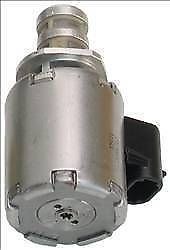
He told me to adjust the Force motor (pressure solenoid). The accumulator must be removed to adjust or remove the force motor. As you look at the end of the force motor, there is a torx socket there that adjust the pressure. There is also a ring around the torx socket that might need to be held as you adjust the screw. He told me to turn the screw ¼ turn clockwise. (or from 12:00 to 3 o’clock) My outer ring did not turn as I adjusted the screw. If yours does, use a pair of right angle snap ring pliers to hold it. This force motor engages the 1-2 band. If there is not enough pressure, the band slips and hence the clunk. OMG!!! You would think I have a brand new Tahoe!!! It is SOOOO SMOOTHHHH! I have searched everywhere on the internet and not found this fix. I hope that this easy low cost fix works for you. If you can view the pictures, the accumulator is in the lower right hand corner and the force motor is directly to the left of the accumulator.
 

bigkahuna2

TYF Newbie
Joined
Jun 1, 2015
Posts
3
Reaction score
1
Picture of force motor
 

Attachments

  • Force motor 2.jpg
    Force motor 2.jpg
    6.5 KB · Views: 44

bigkahuna2

TYF Newbie
Joined
Jun 1, 2015
Posts
3
Reaction score
1
picture of transmission and valve body. Accumulator is lower right hand corner. Force motor is to the left of accumulator.

4L60EValveBodyBoltCodeLg.jpg
 
OP
OP
L

letsbangout

Member
Joined
Dec 3, 2010
Posts
74
Reaction score
0
Thanks for chiming in. I've heard that about the force motor before, although I've always been under the impression that my problem was caused by excessive pressure, not a lack of it. Still good info. I think most people simply replace the force motor, not knowing they can be adjusted. I wonder if this adjustment is only present on certain years...

In my own case, my problem improved significantly when I replaced the big spring in the 1-2 accumulator. It improved further when I removed the AC controls, because I had a vacuum leak in the heater control valve and the vacuum actuator was kicking in while the AC controls were connected. I made additional improvements by replacing the Steering Control Module, responsible for speed-sensitive steering. The last two things, I surmise, were throwing off the load calculations for the engine, causing it to exert more pressure during the shifts, hence my commentary above. Additional items on my to-do list are to replace the entire accumulator piston with the Sonnax pinless accumulator, and to get rid of the PCV system. PCV on the 5.7 uses an inlet tube between the air intake plumbing and the passenger valve cover, then on the opposite valve cover is the PCV valve. I intend to replace the whole system with something called En-Valve which keeps the crankcase in a state of perpetual vacuum. It supposedly eliminates a lot of blow-by and dirty oil issues. In my particular case, I surmise that the whole system is leaking, causing inmetered air to enter the intake.

Thanks again for chiming in.
 

Forum statistics

Threads
138,155
Posts
2,000,695
Members
103,082
Latest member
Cammed 2002_Yukon
Back
Top