214K 6L80 rebuild before TCC failure

Disclaimer: Links on this page pointing to Amazon, eBay and other sites may include affiliate code. If you click them and make a purchase, we may earn a small commission.

MWD_CTSV

Full Access Member
Joined
Jan 21, 2023
Posts
109
Reaction score
202
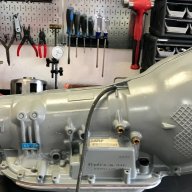
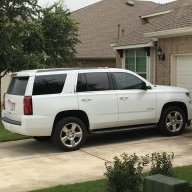
My new to me 214K mile 2011 Yukon Denali XL had brown transmission fluid, and it seemed like I was on borrowed time after reading lots of info on this forum. It shifted fine, but I figure now is the time to investigate and be proactive, so I pulled the trans.

I recommend pre-emptively replacing the torque converter at 150K miles if everything is stock including DOD/AFM, tune, etc. Changing the TCC engagement and DOD/AFM may help prolong the life, and if you are the owner from low miles with extensive fluid/filter service, maybe this doesn't apply. If you have a 2010+ 6L80 with no shifting issues or cracked/leaking drums, and good maintenance you may be one of the lucky ones that could go 300K+ with just a new converter and valve body updates without a true rebuild.

If you watch the rebuild or disassembly videos on youtube, you definitely see the carnage from the common TCC failure destroying the pump and sending metal everywhere causing all sorts of issues. I don't know how close I was to TCC failure, but I wanted to give a little insight as to what a high mileage trans looks like without a TCC failure. My filter was dated 2011, so it is original. I have no idea of the service history of the trans, but the fluid was pretty brown, but not burnt smelling or tar like. 4-5-6 clutches were slightly worn, but none of the piston seals were damaged.

bellhousing_pump.jpg


I did replace the bellhousing because it was only $120 for the new GM part with a new bushing and seal, but the original is reusable. I only did some brief scotchbrite cleaning to verify the scratches were minor.

pump_stator.jpg


I did reuse the pump stator, and you can see here the pump surface is super clean. 2011 already has the updated seals, so no reason to upgrade. I did do the Sonnax zip kit which supplies an upgraded pressure regular valve, but mine was undamaged unlike many others (which I think is related to metal from clutch failure).

The only real issue for my less-than-proper-serviced trans was a seal between the case and valve body, which could have been replaced with the trans in the vehicle. So I feel pretty confident that replacing the torque converter and servicing the valve body will greatly extend the life of a 6L80. And you can do both of these without moving the trans outside the frame rails.

 

swathdiver

Full Access Member
Joined
May 18, 2017
Posts
21,315
Reaction score
30,312
Location
Treasure Coast, Florida
Just dropped the pan in mine for the first time and changed the filter at 184K. It was not as dirty as I expected. Still running strong. Fluid has been changed 3 times.

I bet that fluid in yours was original. Do you have a bi-directional scan tool to run the Fast Learn Adapts when you get it back together? Also, there is an internal transmission oil life monitor that you can view and reset.
 

NickTransmissions

Sin City
Supporting Member
Joined
Mar 9, 2023
Posts
1,378
Reaction score
3,531
Location
The transmission bench
My new to me 214K mile 2011 Yukon Denali XL had brown transmission fluid, and it seemed like I was on borrowed time after reading lots of info on this forum. It shifted fine, but I figure now is the time to investigate and be proactive, so I pulled the trans.

I recommend pre-emptively replacing the torque converter at 150K miles if everything is stock including DOD/AFM, tune, etc. Changing the TCC engagement and DOD/AFM may help prolong the life, and if you are the owner from low miles with extensive fluid/filter service, maybe this doesn't apply. If you have a 2010+ 6L80 with no shifting issues or cracked/leaking drums, and good maintenance you may be one of the lucky ones that could go 300K+ with just a new converter and valve body updates without a true rebuild.

If you watch the rebuild or disassembly videos on youtube, you definitely see the carnage from the common TCC failure destroying the pump and sending metal everywhere causing all sorts of issues. I don't know how close I was to TCC failure, but I wanted to give a little insight as to what a high mileage trans looks like without a TCC failure. My filter was dated 2011, so it is original. I have no idea of the service history of the trans, but the fluid was pretty brown, but not burnt smelling or tar like. 4-5-6 clutches were slightly worn, but none of the piston seals were damaged.


I did replace the bellhousing because it was only $120 for the new GM part with a new bushing and seal, but the original is reusable.
Definitely agree with replacing the converter at 125k or so regardless of whether its working well or not as they are ticking time bombs…Did you upgrade the converter clutch to the thicker version’s available (.045 or .066) and have a billet cover installed?

Here’s some info on those JMBX converters:

 
OP
OP
M

MWD_CTSV

Full Access Member
Joined
Jan 21, 2023
Posts
109
Reaction score
202
Just dropped the pan in mine for the first time and changed the filter at 184K. It was not as dirty as I expected. Still running strong. Fluid has been changed 3 times.

I bet that fluid in yours was original. Do you have a bi-directional scan tool to run the Fast Learn Adapts when you get it back together? Also, there is an internal transmission oil life monitor that you can view and reset.
Thanks for the heads up on the trans oil life monitor! I didn't know that existed.
Honestly, I didn't do any diagnostics on the trans yet. I have an Autel and a Tech2, and I'm pretty sure the Tech2 can do the relearn.
 

swathdiver

Full Access Member
Joined
May 18, 2017
Posts
21,315
Reaction score
30,312
Location
Treasure Coast, Florida
Funny, I just read that article this morning!
Thanks for the heads up on the trans oil life monitor! I didn't know that existed.
Honestly, I didn't do any diagnostics on the trans yet. I have an Autel and a Tech2, and I'm pretty sure the Tech2 can do the relearn.
Yep, Tech-2 can do it.
 
OP
OP
M

MWD_CTSV

Full Access Member
Joined
Jan 21, 2023
Posts
109
Reaction score
202
Definitely agree with replacing the converter at 125k or so regardless of whether its working well or not as they are ticking time bombs…Did you upgrade the converter clutch to the thicker version’s available (.045 or .066) and have a billet cover installed?

I went with the billet cover CVC BU60FHD that was recommended here. A friend offered a CTS-V converter, but I still chose the CVC. I also did a new pump, slide and spring along with the Sonnax zip kit, which includes several items to help with pump pressure regulation and the TCC specific one, that is recommended by the rebuilder (CVC) to help the life of the TCC.
 

RobH

Full Access Member
Joined
Jun 4, 2020
Posts
113
Reaction score
123
Location
San Antonio
It's possible that the OP's transmission had had some fluid flushes without getting into the pan to replace the filter. Never the less, replacing the converter is a good idea.

After mine went south after 123K miles, taking the tranny with it, I think that I would suggest replacing the converter at 100K miles. And put in a quality upgraded converter. My 2016 Tahoe had 80K miles when I bought it. I drove the Tahoe taking it easy to make the engine and transmission last. Normally, on the highway, I cruise at 65. When pulling my 3200 pound Casita, I cruise at 60 MPH in fifth gear. I have the 3.42 rear axle which should make life easier on the engine and tranny.

I changed the fluid and filter at 90K miles. I did not know about the service bulletin to replace the 90 Centigrade transmission Thermal Bypass Valve with a 70 Centigrade valve. If I had known, my trannsmission might have held up. I'll be doing every other year fluid replacement on my remanufactured transmission. If I still have it at 100,000 miles, I'll replace the converter.

t's possible that the OP's tranny had some work on it before he bought it. Or, it may be at the good end of the bell curve on lifespan to have lasted to 214K miles.
 

Attachments

  • SB_MYC_MYD_Themal_Bypass Valve.pdf
    68.4 KB · Views: 30

skpyle

Senior Member
Supporting Member
Joined
May 15, 2021
Posts
546
Reaction score
1,348
I went with the billet cover CVC BU60FHD that was recommended here. A friend offered a CTS-V converter, but I still chose the CVC. I also did a new pump, slide and spring along with the Sonnax zip kit, which includes several items to help with pump pressure regulation and the TCC specific one, that is recommended by the rebuilder (CVC) to help the life of the TCC.
Hello MWD-CTSV!
How/where did you source the CVC converter? I have been having trouble finding one.

Thanks!
 

NickTransmissions

Sin City
Supporting Member
Joined
Mar 9, 2023
Posts
1,378
Reaction score
3,531
Location
The transmission bench
I went with the billet cover CVC BU60FHD that was recommended here. A friend offered a CTS-V converter, but I still chose the CVC. I also did a new pump, slide and spring along with the Sonnax zip kit, which includes several items to help with pump pressure regulation and the TCC specific one, that is recommended by the rebuilder (CVC) to help the life of the TCC.
Good decision to install the zip kit…

For more context around 6L80 TC and related failures: The factory pump pressure regulator valve (pump cover) and TCC regulator valve (lower valve body) wears on the “balance spool” end of the valve allowing oil to bypass the valve sealing surface. This results in insufficient converter clutch pressure (in a nutshell) which, combined with the .020” converter clutch (way too thin), leads to premature converter failure. This is known to frequently happen inside of 100k.

All 6L80es should receive at minimum those two drop-in valves installed, along with the Sonnax boost valve, on overhaul to prevent recurrence of those issues. The Sonnax zip kit has all three and more…New converter should have a converter clutch that’s at least .045” thick (thicker=better).
 

Geotrash

Dave
Supporting Member
Joined
Feb 16, 2018
Posts
7,849
Reaction score
20,428
Location
Richmond, VA
Good decision to install the zip kit…

For more context around 6L80 TC and related failures: The factory pump pressure regulator valve (pump cover) and TCC regulator valve (lower valve body) wears on the “balance spool” end of the valve allowing oil to bypass the valve sealing surface. This results in insufficient converter clutch pressure (in a nutshell) which, combined with the .020” converter clutch (way too thin), leads to premature converter failure. This is known to frequently happen inside of 100k.

All 6L80es should receive at minimum those two drop-in valves installed, along with the Sonnax boost valve, on overhaul to prevent recurrence of those issues. The Sonnax zip kit has all three and more…New converter should have a converter clutch that’s at least .045” thick (thicker=better).
So, if I read this right, just replacing the converter with a beefier unit may not mean that we're in the clear unless we make those other mods. Do I have that right?

Also, I just chatted with my local transmission shop (Hyltons Transmission Service here in Mechanicsville, VA) and he said that he no longer installs the CVC converters because they were just bought out by another nationwide company that doesn't stand behind them the way CVC did. Still the same remanufacturing process though so he thinks they still build a great converter, but he just doesn't want to do business with them any more.
 
Last edited:

NickTransmissions

Sin City
Supporting Member
Joined
Mar 9, 2023
Posts
1,378
Reaction score
3,531
Location
The transmission bench
So, if I read this right, just replacing the converter with a beefier unit may not mean that we're in the clear unless we make those other mods. Do I have that right?
Correct, @Geotrash. You have to address the hydraulic design weakness that contributes to TCC pattern failure as well as the converter clutch design flaw which also contributes to failure.

Majority of transmissions require numerous updates/upgrades to sufficiently address design or manufacturing flaws, 6L80e has quite a few…
 
OP
OP
M

MWD_CTSV

Full Access Member
Joined
Jan 21, 2023
Posts
109
Reaction score
202
Good decision to install the zip kit…

For more context around 6L80 TC and related failures: The factory pump pressure regulator valve (pump cover) and TCC regulator valve (lower valve body) wears on the “balance spool” end of the valve allowing oil to bypass the valve sealing surface. This results in insufficient converter clutch pressure (in a nutshell) which, combined with the .020” converter clutch (way too thin), leads to premature converter failure. This is known to frequently happen inside of 100k.

All 6L80es should receive at minimum those two drop-in valves installed, along with the Sonnax boost valve, on overhaul to prevent recurrence of those issues. The Sonnax zip kit has all three and more…New converter should have a converter clutch that’s at least .045” thick (thicker=better).

Just to reiterate what Nick is saying in layman's terms is that the aftermarket (mainly Sonnax and Transgo) are providing alternates to the common problems both from wear and performance, based largely on common failures seen in the field. I was fortunate to not see any valve wear, but all the professional re-builders do, so they are keenly aware of the reality. Granted most pros are only rebuilding 'failed' transmissions, but the downhill curve of failure almost 99.9% traces back to some kind of clamping control failure.

Also with many examples of extended TCC life support via increased pressures and reduced slip targets (with TCM tuning), I think that also proves that pressure control is a key element. Of course it also possible for the regulator valves to fail in over-pressure which can also damage the TCC, especially in stock form.
 
OP
OP
M

MWD_CTSV

Full Access Member
Joined
Jan 21, 2023
Posts
109
Reaction score
202
So, if I read this right, just replacing the converter with a beefier unit may not mean that we're in the clear unless we make those other mods. Do I have that right?

Also, I just chatted with my local transmission shop (Hyltons Transmission Service here in Mechanicsville, VA) and he said that he no longer installs the CVC converters because they were just bought out by another nationwide company that doesn't stand behind them the way CVC did. Still the same remanufacturing process though so he thinks they still build a great converter, but he just doesn't want to do business with them any more.

Yes, I would say that replacing the converter may not be enough. It does seem that some are honest enough to admit some shudder comeback problems even with new converters (and valve upgrades). Is it poor quality converter clutch material, poor resurfacing, or just reusing bad converter cores that should go in the junk pile? It is difficult to know because you would have to cut the weld to inspect the converter internals.

Just an update on my new CVC converter, I have had some issues with shudder after some long distance towing with the stock settings. Logging showed some pretty severe slip fluctuations, which I have been able to resolve with increasing the TCC pressure and reducing the desired slip. It may have been foolish to keep the stock settings, but the first 1000 miles were flawless other than some minor but noticeably harsh downshifts from 2-1 an maybe 3-2.
 

NickTransmissions

Sin City
Supporting Member
Joined
Mar 9, 2023
Posts
1,378
Reaction score
3,531
Location
The transmission bench
Yes, I would say that replacing the converter may not be enough.
It’s definitely not enough just to replace the converter; the hydraulics have to be addressed or you’re simply restarting the count down to converter premature failure. Tuning also helps a great deal, as you pointed out.

Is it poor quality converter clutch material, poor resurfacing, or just reusing bad converter cores that should go in the junk pile?

Easy-Short answer? Yes to both; upon disassembly we see warped covers more often than not. You combine that with inadequate clutch design/spec and TCC regulator and control deficiencies along with less-than-optimal factory apply strategies, it’s a wonder that they last as long as they do.
 
OP
OP
M

MWD_CTSV

Full Access Member
Joined
Jan 21, 2023
Posts
109
Reaction score
202
You combine that with inadequate clutch design/spec and TCC regulator and control deficiencies along with less-than-optimal factory apply strategies, it’s a wonder that they last as long as they do.
In hindsight, that is probably the understatement of the year. I was thinking all the mechanical improvement, regulation, better pressure, tight tolerances, stronger/straighter friction surfaces would help the computer to compensate less.

Because the computer guesses (I mean characterizes, haha) the actual pressures it could be doing things to create more hysteresis (fluctuation) instead of smoothing.

With the stock settings, the original red flag was a strong noisy shudder going up a steady incline in 5th at about 50mph and maybe a slight acceleration. It was the kind of drivetrain noise that makes you think u-joint failure because of the slight but rapid velocity changes in the driveshaft, resonating quite noticeably. I didn't actually log this condition, but it did present in a lesser form after some initial tuning, and it was quite evident that the measured TCC slip was yoyo-ing up and down rapidly. If I give the benefit of the doubt to the converter builder, such that the friction is good (lets say it mated nicely and has a good grip above a stock JBMX, and the TCC engagement quickly reduces slip such that the computer counters by reversing the pressure quickly causing a nasty slip/catch cycle which is shudder.

My current tune is to increase the TCC pressure (well below what others are using), bump the apply ramp on the plus side to 1.5x stock plus 10kPa, and to roll the 5/6 slip from 20 at low rpm to 10 at 2000 with a gradient in between, and reduce the adaptive to +/-5 psi. With that the slip logs close to zero under most conditions, so I think I am in an overshoot condition, where I have plenty of pressure to lockup at what the computer characterizes (guesses) at about 42-46 psi.
 

Foggy

Full Access Member
Joined
Jul 25, 2019
Posts
1,421
Reaction score
1,949
Location
KS
In hindsight, that is probably the understatement of the year. I was thinking all the mechanical improvement, regulation, better pressure, tight tolerances, stronger/straighter friction surfaces would help the computer to compensate less.

Because the computer guesses (I mean characterizes, haha) the actual pressures it could be doing things to create more hysteresis (fluctuation) instead of smoothing.

With the stock settings, the original red flag was a strong noisy shudder going up a steady incline in 5th at about 50mph and maybe a slight acceleration. It was the kind of drivetrain noise that makes you think u-joint failure because of the slight but rapid velocity changes in the driveshaft, resonating quite noticeably. I didn't actually log this condition, but it did present in a lesser form after some initial tuning, and it was quite evident that the measured TCC slip was yoyo-ing up and down rapidly. If I give the benefit of the doubt to the converter builder, such that the friction is good (lets say it mated nicely and has a good grip above a stock JBMX, and the TCC engagement quickly reduces slip such that the computer counters by reversing the pressure quickly causing a nasty slip/catch cycle which is shudder.

My current tune is to increase the TCC pressure (well below what others are using), bump the apply ramp on the plus side to 1.5x stock plus 10kPa, and to roll the 5/6 slip from 20 at low rpm to 10 at 2000 with a gradient in between, and reduce the adaptive to +/-5 psi. With that the slip logs close to zero under most conditions, so I think I am in an overshoot condition, where I have plenty of pressure to lockup at what the computer characterizes (guesses) at about 42-46 psi.
Put the slip to ZERO in 5th and 6th... I didn't see if you were still using the DOD/AFM
but that's a big reason why there is so much slip built in
Get rid of lock up in 1-3 gears altogether. Some say even 4th gear, but I like having
the lock up in 4th above 42 mph.
I also set my upshift part throttle shifts to something not so dumb..
No more hunting for gears and then bogging only to downshift
It just takes some patience and trials to get it where YOU want it. I have seen
no decline in MPG either. I really really enjoy my 6L80E now .. stock it sucked !!
 

iboughtatahoe23

Full Access Member
Joined
Feb 17, 2023
Posts
1,133
Reaction score
570
Pretty sure my TC is going… starting to get a light shudder when letting off the gas. And I’ve had issues with the trans ever since I got it 3 months ago. Wish I knew how to do that stuff man! I’d get at it no issue.
 

swathdiver

Full Access Member
Joined
May 18, 2017
Posts
21,315
Reaction score
30,312
Location
Treasure Coast, Florida
Pretty sure my TC is going… starting to get a light shudder when letting off the gas. And I’ve had issues with the trans ever since I got it 3 months ago. Wish I knew how to do that stuff man! I’d get at it no issue.
One member here did a tutorial with lots of photos. The instruction sheets make things easier too.
 

Forum statistics

Threads
138,039
Posts
1,997,645
Members
102,975
Latest member
jkhuntzinger

Latest posts

Back
Top