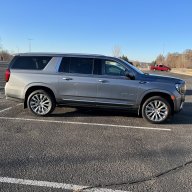
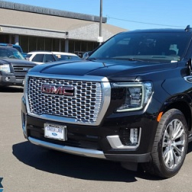
2021 Yukon Denali - How best and when to use 4wd low / how does it work

Disclaimer: Links on this page pointing to Amazon, eBay and other sites may include affiliate code. If you click them and make a purchase, we may earn a small commission.

OP
OP
tagexpcom

tagexpcom

Full Access Member
Joined
Aug 12, 2023
Posts
283
Reaction score
265
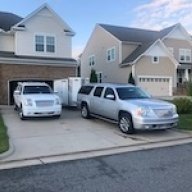
15yrs ago, I moved from very-large city to this rural area with a city car and a white poodle (and no trailer). Around here, it's all about the size of the rig, the trailer, and the guard dog (and quantities of each). The Yukon is not a truck but at least its 'big' and can tow 7500lbs, I have a 5500lb trailer, we no longer have a poodle, and now I understand 4lo better. Slowly fitting in..... :)

Thank you all, the comments/info helped me over the hump into a much better understanding of 4lo.
 
Last edited:
Geotrash

Dave
Supporting Member
Joined
Feb 16, 2018
Posts
7,764
Reaction score
20,160
Location
Richmond, VA
To recap one aspect that's becoming clearer to me....

4lo gives significantly more torque to the wheels compared to 4hi with the trade-off of lower speeds. And one reason for this extra torque that under steep enough conditions (for example) 4hi (the rig) doesn't have enough torque to move the wheels/vehicle forward? where the extra 4lo torque can overcome this.

*I guess I was thinking (not very well) that 4lo gave a different kind of traction control and didn't even think about the torque aspect as I assumed the rig was 'all powerful' in any mode.

So in my front yard, minimal slope, 4hi is fine / no need for extreme torque to move forward. In fact, the extra torque + clunk/engage might have been why the wheels broke free/spun on the grass and actually caused me to fail.
Yes. I think you have it exactly right.

Others have explained how tbe drivetrain works, so the only thing I can add is perspective.

I lived in Colorado for 25 years and worked in the oilfield for 5 of those, often pulling heavy gooseneck trailers onto location in rain and snow around Wyoming and Montana. I ran a ‘95 Chevy 3500 4wd dually with a 454 for that work.

Slick and relatively level OR deep sand = you need wheel spin and/or momentum = 4 hi.

Steep slope or rocky terrain = you need as much torque as you can get, delivered as slowly as you can get it for minimal momentum and maximum control = 4 lo.

Can’t get traction no matter what you try = traction boards to get unstuck and tire chains to go the distance.
 
Last edited:

NELLY1947

Full Access Member
Joined
Dec 4, 2023
Posts
134
Reaction score
87
I've always been told 4 low or the old saying 4 bull is if you are really working the truck. Straight line no 90 deg sharp turning on asphalt. I've pulled a flipped pick up
Out of the ditch but you need to be nice to the transfer case and transmission. 4 bull and in 2nd gear. You must be on snow or sand. You can break a front shaft or transfer case. You will feel it working against its self. Also 10 mph in my opinion. This is all old school info. Also just a question all tires are the same? When i Bull everything is locked up with no room for pkaying. I know they are built much better than back then. 4h is not regular driving on snow . You can do 50 easy.
 

Bigburb3500

Full Access Member
Joined
Jun 7, 2024
Posts
782
Reaction score
1,211
To recap one aspect that's becoming clearer to me....

4lo gives significantly more torque to the wheels compared to 4hi with the trade-off of lower speeds. And one reason for this extra torque that under steep enough conditions (for example) 4hi (the rig) doesn't have enough torque to move the wheels/vehicle forward? where the extra 4lo torque can overcome this.

*I guess I was thinking (not very well) that 4lo gave a different kind of traction control and didn't even think about the torque aspect as I assumed the rig was 'all powerful' in any mode.

So in my front yard, minimal slope, 4hi is fine / no need for extreme torque to move forward. In fact, the extra torque + clunk/engage might have been why the wheels broke free/spun on the grass and actually caused me to fail.
One more aspect that many have eluded to but not said explicitly is that the power band for the engine changes. Peak power is still at the certain RPM but everything becomes more linear. You can modulate the throttle a lot more easily which eliminates surges in power that that unintentionally spin the tires + reducing traction. There are times you can “feel” the tires JUST about to break traction and you can back off the throttle and 4Lo gives you even more precision in modulations that power for the most grip.
4Lo can bring you to a lot of cool destinations but in our high hp/tq engines these days, don’t abuse your truck lol!
 

WalleyeMikeIII

Full Access Member
Joined
Feb 22, 2022
Posts
2,716
Reaction score
2,535
Location
Sunny and Snowy Minnesota
Late to the party here, but the Owners Manual gives the proper shift procedure to 4 Low, and the recommendation is in Neutral, moving 1-2 MPH.
 

Attachments

  • IMG_3519.png
    IMG_3519.png
    536.7 KB · Views: 3

Forum statistics

Threads
137,753
Posts
1,967,979
Members
102,138
Latest member
J dorris

Latest posts

Back
Top