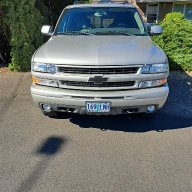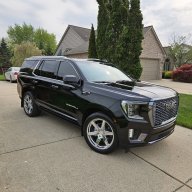
P0442 (Small Evap Leak) Mystery

Disclaimer: Links on this page pointing to Amazon, eBay and other sites may include affiliate code. If you click them and make a purchase, we may earn a small commission.

Gildan

Member
Joined
Jun 26, 2021
Posts
65
Reaction score
45
P0442 Small Leak Detected code that cannot be cured. Think of all the possible causes and it is not any of them. Anyone have any ideas what is being missed?
I have a perennial P0442 code that has been nagging me and the dealership (and a whole parade of mechanics for years now). Nothing that has been done gets rid of it and no diagnosis or procedure known to anyone can find what is causing this issue. Everything has been replaced (and I mean everything), and at each fix, you get about two weeks before the CEL pops on with a P0442. The EVAP I/M system has been smoked tested more times that a Cheech and Chong movie.

Every part, component, etc., has been replaced, tested, replaced again and tested again to no avail. Every single thing checks out correct, and the freeze frame data shows absolutely nothing that is out of specs at all. We even closed all the assorted valves and applied a vacuum to the system at the proper amount and let is sit all night without so much as thousandth of a millimeter loss of vacuum. Nothing.

Here are two ways the problem can be reproduced every single time to get the code to set:

1.) Reset the code; wait for the EVAP I/M to go through its drive cycle. Drive around to your hearts content and no code gets set, that is, until you get down to exactly 1/4 tank of gas at which point, the next time you start the engine, and the P0442 code sets.

2.) After the EVAP monitor drive cycle completes, part the Yukon on an unlevel surface where the passenger side of the vehicle is even the slightest bit lower than the driver's side.


And, to make it all the more bizarre:

1.) If you keep the fuel level about 1/4 tank *and* you don't park on an unlevel surface sloping down to the passenger side, you can go forever without the P0442 code lighting up the CEL.

The only thing that I haven't tried is to call an Exorcist, and I may even try that. Ya' never know.
 

Fless

Staff member
Moderator
Joined
Apr 2, 2017
Posts
16,639
Reaction score
34,437
Location
People's Republic of Colorado
I missed the year, what are you driving?

Fuel tank pressure sensor been verified as good, or replaced? Fuel pump gasket?

EDIT: if the FTPS is not reporting the tank pressure correctly, the evap code can be triggered. Leak or no leak.
 
Last edited:
OP
OP
G

Gildan

Member
Joined
Jun 26, 2021
Posts
65
Reaction score
45
I missed the year, what are you driving?

Fuel tank pressure sensor been verified as good, or replaced? Fuel pump gasket?

EDIT: if the FTPS is not reporting the tank pressure correctly, the evap code can be triggered. Leak or no leak.
All of that is verified as good and replaced while we were in there checking things out.
 

OR VietVet

GMT800 2005 Tahoe Z71
Navy Supporting Member
Joined
Oct 8, 2014
Posts
23,935
Reaction score
44,664
Location
Willamette Valley
Thanks for sharing the year and model. Put that info in your signature so it is always there when you start a thread or respond. Or not.

When you say everything has been replaced, are you saying the tank was dropped and all was replaced, including the fuel pump or all was tested and the pump is still the same?

Your first #1 makes it sound like you get to 1/4 tank and the light will come on even if level or am I missing that at 1/4 tank you always have to park at the lean to get the light on?

After reading all the threads here about evap problems, especially when replacing one part at a time, I had no problems but decided to replace the fuel pump and the entire evap system before the inevitable happened.
 

Fless

Staff member
Moderator
Joined
Apr 2, 2017
Posts
16,639
Reaction score
34,437
Location
People's Republic of Colorado
One of the reasons the code is set in the morning, and not during the day drives, is that a cold start is needed to initiate the drive cycle. There are several temperature requirements for the IAT (intake air) and the ECT (engine coolant), as well as the fuel tank level being between 1/4 and 3/4 full (technically I think it's 1/8 to 7/8th full).

Partial clip (more on the site) from https://www.smogtips.com/smog-question/3715/How-To-Perform-a-Chevy-Suburban-Drive-Cycle:

A. Cold Start: Begin from Cold Start, and ignition in OFF position for at least 1 hour. Ensure your Chevy Suburban's fuel tank is between 1/4 and 3/4 full. Engine coolant temperature must be below 122°F and within 11°F of the ambient air temperature. Do not leave the key on prior to the cold start or the heated oxygen sensor (O2) diagnostic may not run.

So since it's been indicated that everything's been replaced, does this include:
Purge valve on engine replaced
Blowing air through the purge valve line to the charcoal canister
Canister replaced (were loose charcoal bits found coming from the canister?)
Vent valve replaced (including the filter and relocating the filter)
Evap lines from canister to tank blown clear
Fuel tank pressure sensor replaced
Fuel pump replaced (if not, what is the condition of the top of the fuel pump?)
Fuel pump gasket replaced
Gas cap replaced
Gas filler tube replaced

Anything else found and/or replaced during the diagnostics?
 
OP
OP
G

Gildan

Member
Joined
Jun 26, 2021
Posts
65
Reaction score
45
Everything has been replaced. New tank, filler neck, pump, pressure sensor, vent valve, charcoal canister, various solenoids, gas cap, vacuum lines, wiring harnesses, etc., and a whole list of things I haven't listed. All the same exact results. A perpetual P0442 code. You can fix it for about two weeks and it always comes back like clockwork.

There is one component that no one can check because no one, including the service technicians (and its location is not given in the service manuals but appears in the schematics), knows where it is: A vacuum pump that applies vacuum to the whole evap system for a period of 10 seconds at every start up before or as the engine starts to detect a vacuum leak of any size. And no one knows exactly where it is and how to get to it, and the literature is decisively lacking that information.
 

mrhp

Member
Joined
Aug 24, 2022
Posts
77
Reaction score
141
Have you replaced your purge valve, not the vent valve? Can both valves be bi-directionally function tested with the use of a scan tool? An intermittent sticking valve will set this code. The purge valve is often overlooked.
 
OP
OP
G

Gildan

Member
Joined
Jun 26, 2021
Posts
65
Reaction score
45
One of the reasons the code is set in the morning, and not during the day drives, is that a cold start is needed to initiate the drive cycle. There are several temperature requirements for the IAT (intake air) and the ECT (engine coolant), as well as the fuel tank level being between 1/4 and 3/4 full (technically I think it's 1/8 to 7/8th full).

Partial clip (more on the site) from https://www.smogtips.com/smog-question/3715/How-To-Perform-a-Chevy-Suburban-Drive-Cycle:

A. Cold Start: Begin from Cold Start, and ignition in OFF position for at least 1 hour. Ensure your Chevy Suburban's fuel tank is between 1/4 and 3/4 full. Engine coolant temperature must be below 122°F and within 11°F of the ambient air temperature. Do not leave the key on prior to the cold start or the heated oxygen sensor (O2) diagnostic may not run.

So since it's been indicated that everything's been replaced, does this include:
Purge valve on engine replaced
Blowing air through the purge valve line to the charcoal canister
Canister replaced (were loose charcoal bits found coming from the canister?)
Vent valve replaced (including the filter and relocating the filter)
Evap lines from canister to tank blown clear
Fuel tank pressure sensor replaced
Fuel pump replaced (if not, what is the condition of the top of the fuel pump?)
Fuel pump gasket replaced
Gas cap replaced
Gas filler tube replaced

Anything else found and/or replaced during the diagnostics?
All that was done. Everything was checked or replaced and it still throws the code. Like clockwork. I did talk to a couple of GM techs about this and they said that there is some kind of vacuum pump on the EVAP system that generates a slight 1 inch water's worth of vacuum and holds the system sealed for about 10 seconds to see if there is any drop in the vacuum. The problem is that the techs have no idea where that pump is located nor does their service literature tell you where the vacuum pump is located.

I've even done a service bay reset of the EVAP I/M (GM locks and hides this service feature, so you can't do it unless you have the means to hack your own scanner, but that ability is there) so that you don't have to go through hoops of fire to get the drive cycle to do its magic. The only thing that cannot be diagnosed, because you can't find it, is the vacuum pump that engages to apply a vacuum for the test. If you do a service bay reset on the EVAP system, you get exactly 21 warmup cycles and the error code gets thrown (and that's if you don't deliberately trigger it by parking on a slope or have your tank less than 1/4 full).
Either way, during the test, there appears to be a leak down of vacuum somewhere. I suspect it's at the elusive EVAP vacuum pump that no one can locate or they just won't tell you where it is. The P0442 code problem is a known issue on a lot of GMCs and no one, not even the dealership, knows how to fix it once it starts. That is, unless you can find that vacuum pump which location is apparently more secret than the contents of Fort Knox.
 
OP
OP
G

Gildan

Member
Joined
Jun 26, 2021
Posts
65
Reaction score
45
Have you replaced your purge valve, not the vent valve? Can both valves be bi-directionally function tested with the use of a scan tool? An intermittent sticking valve will set this code. The purge valve is often overlooked.
Did that. Purge valve has been replaced, no joke, 30 times this year alone because none of these OEM purge valve solenoids seem to hold vacuum for very long in service. Everything has been tested including pulling the parts and bench testing them. I'm beginning to think its crappy firmware programming issue involving the ECM. I've got a neighbor with the same exact 2008 Yuke Denali who says he's had the same issue ever since the factory warranty ran out.

As a side note, all the failed purge valve solenoids were either bad right out of the box to begin with, and those that were not ended up literally melted because the plastic bodies cracked and failed from the normal heat of the engine. The plastic in some of these parts melts or becomes rubbery at about 200 degrees F. The QC stinks with AC Delco recently.
 

Doubeleive

Wes
Supporting Member
Joined
Nov 7, 2017
Posts
30,744
Reaction score
48,425
Location
Stockton, Ca.
All that was done. Everything was checked or replaced and it still throws the code. Like clockwork. I did talk to a couple of GM techs about this and they said that there is some kind of vacuum pump on the EVAP system that generates a slight 1 inch water's worth of vacuum and holds the system sealed for about 10 seconds to see if there is any drop in the vacuum. The problem is that the techs have no idea where that pump is located nor does their service literature tell you where the vacuum pump is located.

I've even done a service bay reset of the EVAP I/M (GM locks and hides this service feature, so you can't do it unless you have the means to hack your own scanner, but that ability is there) so that you don't have to go through hoops of fire to get the drive cycle to do its magic. The only thing that cannot be diagnosed, because you can't find it, is the vacuum pump that engages to apply a vacuum for the test. If you do a service bay reset on the EVAP system, you get exactly 21 warmup cycles and the error code gets thrown (and that's if you don't deliberately trigger it by parking on a slope or have your tank less than 1/4 full).
Either way, during the test, there appears to be a leak down of vacuum somewhere. I suspect it's at the elusive EVAP vacuum pump that no one can locate or they just won't tell you where it is. The P0442 code problem is a known issue on a lot of GMCs and no one, not even the dealership, knows how to fix it once it starts. That is, unless you can find that vacuum pump which location is apparently more secret than the contents of Fort Knox.
something sounds fishy here, i am 99.99999999% sure there is no such vacuum pump. A solenoid opening up and allowing engine vacuum to happen during a self test "perhaps"
and if this was the case it would be the small solenoid that sits on the left side of the intake and has been a culprit for a small vacuum leak for me before.
if there was such a pump we would have heard about it already because people have replaced fuel lines and all parts and pieces they would have found it and said "whats this thing"
in particular someone like @randeez would have found it
 

mrhp

Member
Joined
Aug 24, 2022
Posts
77
Reaction score
141
something sounds fishy here, i am 99.99999999% sure there is no such vacuum pump. A solenoid opening up and allowing engine vacuum to happen during a self test "perhaps"
and if this was the case it would be the small solenoid that sits on the left side of the intake and has been a culprit for a small vacuum leak for me before.
if there was such a pump we would have heard about it already because people have replaced fuel lines and all parts and pieces they would have found it and said "whats this thing"
in particular someone like @randeez would have found it
Yup, that’s the purge valve. No pump.
 

zbad55

Full Access Member
Army
Joined
Dec 1, 2017
Posts
366
Reaction score
343
Location
Detroit
Sounds like something is going on with the software in the ECM, there is no hidden or secret purge pump. There are many factors for these tests and drive cycles, also there has to be so many failures in a row to set the code. There is also EONV (Engine off Natural Vacuum) which will check for a small leak. The canister vent solenoid will seal the system and check for any decay in the vacuum curve. If you have replaced everything in the entire fuel system and still get the code set, sounds more like a software glitch than hardware. Has your dealer tried to re-flash the ECM?,
 

mrhp

Member
Joined
Aug 24, 2022
Posts
77
Reaction score
141
Sounds like something is going on with the software in the ECM, there is no hidden or secret purge pump. There are many factors for these tests and drive cycles, also there has to be so many failures in a row to set the code. There is also EONV (Engine off Natural Vacuum) which will check for a small leak. The canister vent solenoid will seal the system and check for any decay in the vacuum curve. If you have replaced everything in the entire fuel system and still get the code set, sounds more like a software glitch than hardware. Has your dealer tried to re-flash the ECM?,
The purge has to seal as well. I have seen many intermittent failures of this part at my shop causing this exact problem.
 

Fless

Staff member
Moderator
Joined
Apr 2, 2017
Posts
16,639
Reaction score
34,437
Location
People's Republic of Colorado
Sounds like something is going on with the software in the ECM, there is no hidden or secret purge pump. There are many factors for these tests and drive cycles, also there has to be so many failures in a row to set the code. There is also EONV (Engine off Natural Vacuum) which will check for a small leak. The canister vent solenoid will seal the system and check for any decay in the vacuum curve. If you have replaced everything in the entire fuel system and still get the code set, sounds more like a software glitch than hardware. Has your dealer tried to re-flash the ECM?,

Ditto on reprogramming the ECM with the latest calibration.
 
OP
OP
G

Gildan

Member
Joined
Jun 26, 2021
Posts
65
Reaction score
45
Have you replaced your purge valve, not the vent valve? Can both valves be bi-directionally function tested with the use of a scan tool? An intermittent sticking valve will set this code. The purge valve is often overlooked.
Yup, did that literally 30 times (no kidding) in the past year. Every one of them failed electrically or mechanically. 25 of them wouldn't hold vacuum for more than 3 minutes right out of the box. The other 5 failed because the plastic cracked from normal engine heat. In theory, you should be able to put 15 inches H20 of vacuum on the tank side of the Purge Valve Solenoid and it should hold it indefinitely. Every single one of them (all OEM from the dealership) loses all pressure in about 3 minutes brand new out of the box. You can watch the vacuum drop on a gauge almost instantly on every one of them except the last one I installed a couple of weeks back. That would be a sufficient rate to lose enough vacuum in the 10 second test the EVAP monitor applies. I'll have to check this one again with a vacuum gauge to see if it also failed again (which wouldn't surprise me given they come from outside the US). That said, I could conceivably test this theory by taking an old solenoid and blocking in it a closed position and see if the code gets set (it shouldn't get set if the valve 'fails' in the closed position (in which instance it would throw a totally different code).

There is a distinct possibility that the purge valve solenoids are 'normally' defective from the factory right out of the box. One of the mechanics said that crappy parts has become a real problem and that they dealership has at least a dozen vehicles in the shop for this exact problem every week.
 
OP
OP
G

Gildan

Member
Joined
Jun 26, 2021
Posts
65
Reaction score
45
Ditto on reprogramming the ECM with the latest calibration.
I thought about that. It's not that expensive to do, doesn't take very long to do it, and it is about the only think I haven't tried to do yet. I'll have to give that a try. Can't do any harm at worst.
 
OP
OP
G

Gildan

Member
Joined
Jun 26, 2021
Posts
65
Reaction score
45
Mystery partially solved. After picking the brains of a couple of technicians and a few people who deal with automotive computers, we figured out the cause of the P0442 code was due to the method that is used to detect small leaks and it's almost ridiculous how the error is triggered when there is no leak, and how to prevent it from happening.

In simplified terms, after the EVAP drive cycle is completed by either all the preconditions being met or by doing a service bay reset, this is what happens:

When you turn the ignition switch to the run position, the evap I/M test begins about five to ten seconds later. The vacuum to run the test is indeed supplied by the line to the intake manifold through the purge valve solenoid. *IF* the EVAP I/M drive cycle is completed and ready for the ECM to run the test, which, of course, it will at that point, and *IF* you leave the key in the run position for more than about 10 seconds without starting the engine, it will throw a "provisional error code" that will not trip the CEL until or unless it occurs during the next start up consecutive.

Thereafter, if you by chance don't start your engine almost immediately after putting the ignition switch in the run position (within five or ten seconds), there will be no vacuum at all on the EVAP system and when the test runs, it shows a P0442 code if a provisional code has already set. The next time you start after leaving the key in the run position for about 5 seconds or more before starting the car, the error code sets but will not trigger the CEL light until you start the car again (the third time). This is proved out by looking at the freeze frame data which show you all the normal readings for an engine that isn't running ( 0 RPM, etc.). I can reproduce the code by simply leaving the key in the run position for 5 or 10 seconds before starting the car, shut the engine down, do that again, shut the down again, and the third time you start the car, the CEL comes on and shows a PO442 on the scanner.

So, the easy solution is to immediately start the engine in one fell swoop when you put the key in the ignition within a second of moving to the run position. If you let it hang in the run position without starting, and EVAP I/M drive cycle is ready, you will inadvertently cause a bogus PO442.
It does have to do with the ECM programming, per se, but because the method used to run the test is itself defective in terms of way the program works. Reflashing the ECM (which I can do without a dealer) won't do anything unless the ECM firmware is corrupted in that particular routine, unless you alter the code in the firmware to run the EVAP I/M test only after the motor is running.
 

Forum statistics

Threads
138,090
Posts
1,998,694
Members
103,015
Latest member
The Whip
Back
Top