What did you do to your NNBS GMT900 Tahoe/Yukon Today?

Disclaimer: Links on this page pointing to Amazon, eBay and other sites may include affiliate code. If you click them and make a purchase, we may earn a small commission.

Geotrash

Dave
Supporting Member
Joined
Feb 16, 2018
Posts
7,845
Reaction score
20,403
Location
Richmond, VA
Most O2 sensors are narrow band, they just basically tell the ecu if you're rich or lean (under or over 14.7).

A wideband O2 is more accurate and will tell you exactly what the air/fuel ratio is. When a car or engine is on a dyno they use one, and it allows the tuner to adjust the fuel and spark for best performance.

My mustang is supercharged and has a digital gauge on the steering column that uses a wideband O2 mounted in the exhaust system and tells me exactly what my a/F ratio is all the time. So when I'm at full throttle I can visually see if it's going lean and get out of it before anything bad happens. I like it around 12.1 to 12.3 and a wideband will be able that accurate. Sometimes it will be 11.8 or 11.9

An engine makes best power between 10.5 and 13 depending on the engine setup and whether it is naturally aspirated or boosted.
I did not know this, but it makes sense. Thanks for sharing.

Interesting side note: In piston-engined aircraft, we now track EGT and CHT on individual cylinders, and adjust the mixture to either very rich (100ºF+) or lean (50-100ºF) of peak EGT (average) to get our mixture set just right for climb, cruise or descent. People operated aircraft for decades about 50ºF rich-of-peak EGT to supposedly keep the exhaust valves cooler. Cylinders would last maybe 800 hours. It became just SOP to plan on replacing cylinders at least once during an engine's TBO run. Then along came some engineers in Tulsa who figured out how to put pressure transducers inside of each cylinder to record internal cylinder pressures. They discovered that peak internal cylinder pressures happened at about 50ºF rich of peak EGT - right where everyone had been taught to run them. And, that meant it was also where there was the highest chance of pre-ignition, and where combustion events generated the most heat as a result, which of course went right into the material of the cylinders making them harder to cool effectively.

Long story short, switching to running the engines on the lean side of peak EGT, which everyone was afraid to do due to decades of 'conventional wisdom', makes the cylinders last more than twice as long, with lower fuel burn. Go figure. Funny thing about it though, they looked back at the old Pratt & Whitney operating manuals from the WWII era and found that lean-of-peak is the way they recommended their piston engines be run way back then. Somehow, an entire industry had gotten it wrong for decades between WWII and around 2005.

 

alpha_omega

Full Access Member
Joined
Mar 15, 2017
Posts
986
Reaction score
1,737
Location
Michigan
So…repost from a few days ago.

Anyone changed out their rear output shaft seal? Did you do a Yoke and DS swap as well?
 

gunninks

TYF Newbie
Joined
Mar 30, 2021
Posts
16
Reaction score
32
What do you think of it so far?

I have been looking at getting something like this, mostly because i carry and having it bolted down feels a little more secure should i need to leave it in the car for a bit.


I'm also a lock nerd, usually things like this have a retarded/simple lock installed.
Retarded like a child with a paperclip, youtube, and a.d.d. meds could make short work of. :jester:

My current little cable lockboxes are stupid like this.
Good enough to prevent a smash and grab tho.
Over all I like it. I also am a lock nerd but also understand that locks only keep the honest, honest. That being said, I still want to keep my side arm secure when needed which is why I got this box. Its a double bitted 10 tumbler lock that would probably be a difficult for an armature lock picker. The box it self is not fully encased by its self but uses the sides and the bottom of the inside of console and then screws into the 4 factory holes at the bottom. The top of the box is stopped from being pulled up by the inside top of the console and fits very snug so it wiil not be that easy for someone to simply rip out in a short amount of time. There is also enough room between the top of the safe and the console lid to store small items. https://tuffyproducts.com/products/...yukon-xl-note-w-flow-thru-console/?sku=360-01
 

Trey Hardy

Full Access Member
Joined
Jun 12, 2020
Posts
3,552
Reaction score
9,637
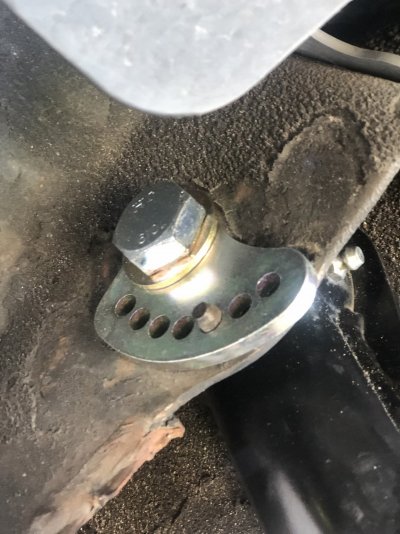
552B3B26-4691-4B74-8F83-C63EC825C6D1.jpeg

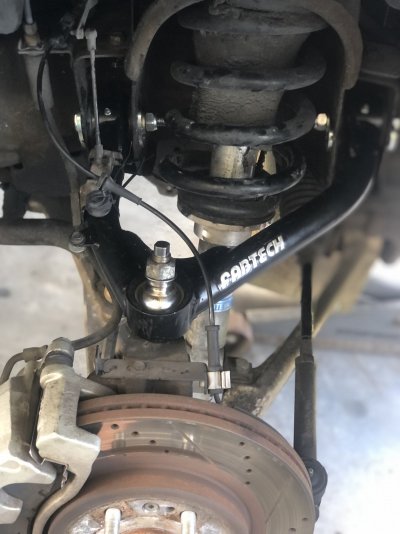
Swapped out the rough country UCA for some fabtech uniballs and dirt king cam locks
 

Attachments

  • 0FED9A04-FF75-4406-B435-DB9B2B1076DF.jpeg
    0FED9A04-FF75-4406-B435-DB9B2B1076DF.jpeg
    208.5 KB · Views: 33
  • 8AC73823-DA4A-4660-A6FF-5CECE4C767BF.jpeg
    8AC73823-DA4A-4660-A6FF-5CECE4C767BF.jpeg
    311.5 KB · Views: 23

Kee Fuller

Full Access Member
Joined
Aug 8, 2018
Posts
944
Reaction score
1,059
Location
las vegas
I have regular leather seats that aren’t old, but I’m Debating on redoing my front seats to perforated leather to add cooled seats. Or should i get some used ppv seats and redo those seats and sell my current seats? Decisions decisions.
 

Bill 1960

Testing the Limits
Joined
Dec 17, 2020
Posts
1,480
Reaction score
2,866
I did not know this, but it makes sense. Thanks for sharing.

Interesting side note: In piston-engined aircraft, we now track EGT and CHT on individual cylinders, and adjust the mixture to either very rich (100ºF+) or lean (50-100ºF) of peak EGT (average) to get our mixture set just right for climb, cruise or descent. People operated aircraft for decades about 50ºF rich-of-peak EGT to supposedly keep the exhaust valves cooler. Cylinders would last maybe 800 hours. It became just SOP to plan on replacing cylinders at least once during an engine's TBO run. Then along came some engineers in Tulsa who figured out how to put pressure transducers inside of each cylinder to record internal cylinder pressures. They discovered that peak internal cylinder pressures happened at about 50ºF rich of peak EGT - right where everyone had been taught to run them. And, that meant it was also where there was the highest chance of pre-ignition, and where combustion events generated the most heat as a result, which of course went right into the material of the cylinders making them harder to cool effectively.

Long story short, switching to running the engines on the lean side of peak EGT, which everyone was afraid to do due to decades of 'conventional wisdom', makes the cylinders last more than twice as long, with lower fuel burn. Go figure. Funny thing about it though, they looked back at the old Pratt & Whitney operating manuals from the WWII era and found that lean-of-peak is the way they recommended their piston engines be run way back then. Somehow, an entire industry had gotten it wrong for decades between WWII and around 2005.
That’s really interesting, and makes me go hmmmm…

Is it a coincidence that right about the time the EPA forced automakers to get lean typical engine life more or less doubled? Carbureted days 100k was a tired old engine. That’s nothing today.
 

Bill 1960

Testing the Limits
Joined
Dec 17, 2020
Posts
1,480
Reaction score
2,866
I have regular leather seats that aren’t old, but I’m Debating on redoing my front seats to perforated leather to add cooled seats. Or should i get some used ppv seats and redo those seats and sell my current seats? Decisions decisions.
In Vegas? Cooled all the way. My vinyl seats are one thing I’ll end up changing. My shirt back gets soaked in hot weather because the seat doesn’t breath.

If you buy seats watch out for compatibility of the passenger presence sensor. That was a big headache on mine because someone swapped in the wrong seat. Not all the GMT900’s use the same sensor.
 

Kee Fuller

Full Access Member
Joined
Aug 8, 2018
Posts
944
Reaction score
1,059
Location
las vegas
In Vegas? Cooled all the way. My vinyl seats are one thing I’ll end up changing. My shirt back gets soaked in hot weather because the seat doesn’t breath.

If you buy seats watch out for compatibility of the passenger presence sensor. That was a big headache on mine because someone swapped in the wrong seat. Not all the GMT900’s use the same sensor.
I would pull the seats from a PPV or the seats that look like mine from the side.
 

wsteele

Full Access Member
Joined
Dec 26, 2020
Posts
1,731
Reaction score
2,355
I did not know this, but it makes sense. Thanks for sharing.

Interesting side note: In piston-engined aircraft, we now track EGT and CHT on individual cylinders, and adjust the mixture to either very rich (100ºF+) or lean (50-100ºF) of peak EGT (average) to get our mixture set just right for climb, cruise or descent. People operated aircraft for decades about 50ºF rich-of-peak EGT to supposedly keep the exhaust valves cooler. Cylinders would last maybe 800 hours. It became just SOP to plan on replacing cylinders at least once during an engine's TBO run. Then along came some engineers in Tulsa who figured out how to put pressure transducers inside of each cylinder to record internal cylinder pressures. They discovered that peak internal cylinder pressures happened at about 50ºF rich of peak EGT - right where everyone had been taught to run them. And, that meant it was also where there was the highest chance of pre-ignition, and where combustion events generated the most heat as a result, which of course went right into the material of the cylinders making them harder to cool effectively.

Long story short, switching to running the engines on the lean side of peak EGT, which everyone was afraid to do due to decades of 'conventional wisdom', makes the cylinders last more than twice as long, with lower fuel burn. Go figure. Funny thing about it though, they looked back at the old Pratt & Whitney operating manuals from the WWII era and found that lean-of-peak is the way they recommended their piston engines be run way back then. Somehow, an entire industry had gotten it wrong for decades between WWII and around 2005.
It wasn't that long ago (maybe about the time the Graphic Engine Monitors started showing up in GA, not 100% on that), that articles in the GA press started talking about running LOP. I didn't know many who thought that was a good idea, all in that camp felt you most certainly were going to "burn valves" by running LOP. They probably still debate that kind of thing on sites like Pelican, although I haven't been there in a very long time.
 

Bill 1960

Testing the Limits
Joined
Dec 17, 2020
Posts
1,480
Reaction score
2,866
This morning I dropped her off at the dealership where I had previously scheduled a brake booster replacement. When making the appointment I told them exactly what I needed and they agreed to order the parts and have them ready.

Which they did not. :banghead:

So a quick in and out job is now 2 days of downtime.
 

Rocket Man

Mark
Supporting Member
Joined
Dec 25, 2014
Posts
26,679
Reaction score
52,949
Location
Oregon
This morning I dropped her off at the dealership where I had previously scheduled a brake booster replacement. When making the appointment I told them exactly what I needed and they agreed to order the parts and have them ready.

Which they did not. :banghead:

So a quick in and out job is now 2 days of downtime.
Yep, I learned to call them the day before and verify the parts are actually on hand. That’s so irritating. This was for my daughters Cruze, warranty work. Then they want to give her a loaner and want her insurance card. No way, last time she got a loaner it got a tiny scratch in the rear bumper and they filed a claim with her insurance. She had no choice. They painted it in-house and charged $1000. That turned out to be her third claim and they dropped her.
 

Tonyrodz

Resident Resident
Joined
Feb 16, 2012
Posts
33,185
Reaction score
51,399
Location
Central Jersey
Yep, I learned to call them the day before and verify the parts are actually on hand. That’s so irritating. This was for my daughters Cruze, warranty work. Then they want to give her a loaner and want her insurance card. No way, last time she got a loaner it got a tiny scratch in the rear bumper and they filed a claim with her insurance. She had no choice. They painted it in-house and charged $1000. That turned out to be her third claim and they dropped her.
That was some BS!! $1000??!! Yeah, ok!
 

Geotrash

Dave
Supporting Member
Joined
Feb 16, 2018
Posts
7,845
Reaction score
20,403
Location
Richmond, VA
It wasn't that long ago (maybe about the time the Graphic Engine Monitors started showing up in GA, not 100% on that), that articles in the GA press started talking about running LOP. I didn't know many who thought that was a good idea, all in that camp felt you most certainly were going to "burn valves" by running LOP. They probably still debate that kind of thing on sites like Pelican, although I haven't been there in a very long time.
I should’ve known you might be a fellow 100LL addict. When/what did you last fly? Yes, Pelican’s Perch.

The debate still happens, but we now have operating data over a many years that shows that the fears were unfounded, and both engine and aircraft manufacturers now publish LOP guidance for their operating manuals, so that’s something. And yes, graphical engine monitors (and balanced fuel injectors) did help usher in the era. Prior to that, all we had was a single imprecise needle for all 4, 6, 8, 9, or even 27 cylinders, which is partly why ROP operation became the norm. It felt ’safe’, despite the evidence to the contrary.

I‘m now at 2700 hours on an 1800 TBO on a Continental O-470. Cylinders overhauled 15 years ago due to leaking exhaust valves after 700 hours of ROP operation. After that, LOP and keep CHTs below 300 always. No more problems. Annual borescope and compression tests show the cylinders still look and hold pressure like new. Oil analysis still showing low wear. I’ll overhaul it when my mechanic says it’s time, or she starts talking to us.
 

wsteele

Full Access Member
Joined
Dec 26, 2020
Posts
1,731
Reaction score
2,355
I should’ve known you might be a fellow 100LL addict. When/what did you last fly? Yes, Pelican’s Perch.

The debate still happens, but we now have operating data over a many years that shows that the fears were unfounded, and both engine and aircraft manufacturers now publish LOP guidance for their operating manuals, so that’s something. And yes, graphical engine monitors (and balanced fuel injectors) did help usher in the era. Prior to that, all we had was a single imprecise needle for all 4, 6, 8, 9, or even 27 cylinders, which is partly why ROP operation became the norm. It felt ’safe’, despite the evidence to the contrary.

I‘m now at 2700 hours on an 1800 TBO on a Continental O-470. Cylinders overhauled 15 years ago due to leaking exhaust valves after 700 hours of ROP operation. After that, LOP and keep CHTs below 300 always. No more problems. Annual borescope and compression tests show the cylinders still look and hold pressure like new. Oil analysis still showing low wear. I’ll overhaul it when my mechanic says it’s time, or she starts talking to us.
I do remember all that now. GAMI injectors were the guys first really pushing the LOP methods. I actually bought a set with a GEM for a 35 Model Bonanza I owned at the time. They worked great, and it was great fun when leveling out in cruise and watching all those bars come up together when leaning things out.

I solo’ed when I was 16 in my Dad’s PT17. I have flown a lot of different type of aircraft. Personally I have owned a Cessna 172, 2 different normally aspirated Bonanzas (V35B and an A36), 3 Different turbo charged 36 models, a Turbo Normalzed A36 and 2 B36TC. I also have owned a P-Baron, a Duke and a Pitts S2B. Buying fixing up and selling planes was kind of a hobby of mine for a long time.

When I turned 62 I quit flying. I likely could still pass the physical, but all the men who went before me in our family line have died of heart attacks, so…. ;)

I have a little over 8000 hrs and an ATP rating. Yeah, 100LL junkie, guilty as charged. :)

If I can figure out how to PM you pictures, I will send you some of the planes I loved the most.
 
Last edited:

Geotrash

Dave
Supporting Member
Joined
Feb 16, 2018
Posts
7,845
Reaction score
20,403
Location
Richmond, VA
I do remember all that now. GAMI injectors were the guys first really pushing the LOP methods. I actually bought a set with a GEM for a 35 Model Bonanza I owned at the time. They worked great, and it was great fun when leveling out in cruise and watching all those bars come up together when leaning things out.

I solo’ed when I was 16 in my Dad’s PT17. I have flown a lot of different type of aircraft. Personally I have owned a Cessna 172, 2 different normally aspirated Bonanzas (V35B and an A36), 3 Different turbo charged 36 models, a Turbo Normalzed A36 and 2 B36TC. I also have owned a P-Baron, a Duke and a Pitts S2B. Buying fixing up and selling planes was kind of a hobby of mine for a long time.

When I turned 62 I quit flying. I likely could still pass the physical, but all the men who went before me in our family line have died of heart attacks, so…. ;)

I have a little over 8000 hrs and an ATP rating. Yeah, 100LL junkie, guilty as charged. :)

If I can figure out how to PM you pictures, I will send you some of the planes I loved the most.
Amazing!!! What a fabulous selection of aircraft. Duke. Bet you had some engine headaches. I had a friend who had one and lost an engine on takeoff. Lived to tell about it. And the Turbo A36 is about the best family hauler around. The Pitts S2B is about the most fun you can have with your clothes on. Lol.

I've owned a 1964 Cessna 182G since 2003. It's all the airplane I've ever needed for camping, traveling, sightseeing. When I lived in Colorado, it was a time machine for getting to West Yellowstone in 3 hours vs. a 10 hour drive, making weekend fishing trips feasible. PPSEL, VFR. In Colorado there is 2 kinds of IFR: ice and thunderstorms. I never cared to fly in either one. :)

Yes, GAMI. George Braly and crew. Met him several times. He was intrigued that my 182 (NA, carbureted) had such even mixture distribution that it would run smoothly LOP. The secret was keeping the intake tube clamps tight and backing off the throttle just enough to create turbulence over the throttle plate.

Wow...very cool you had all of that experience with different aircraft and flying.
 

alpha_omega

Full Access Member
Joined
Mar 15, 2017
Posts
986
Reaction score
1,737
Location
Michigan
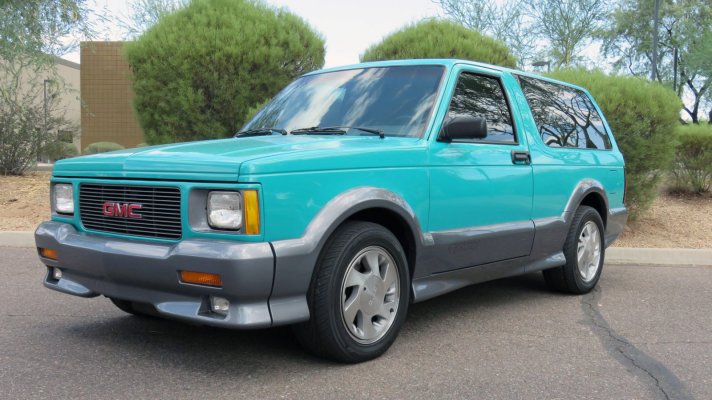
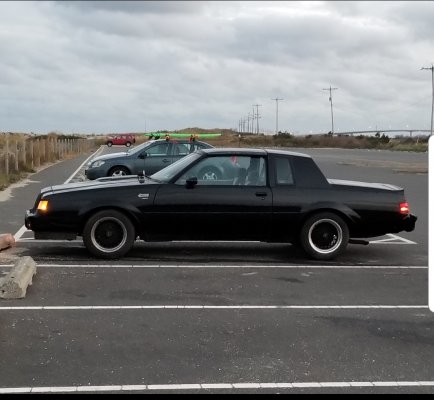
I traded the Ty for an 87 alsoView attachment 345561View attachment 345560
Bought it with 44k on it back in 95, gave it to my son with 48k on it last summer.
Ha…my man! That teal sure looked purdy. Hell of a bold choice for GM but I’m glad they had the balls to do it.
I’ll have to dig up some photos of my GN. She was black as well, but it came with the gold spoke wheels. One of the fastest production cars GM made until recent changes to the camaro and the vette.
My uncle bought a 2020 or 2019 Buick Regal GS Sport? Something like that. Retired GM foreman didn’t quite realize just what he bought. He knew it was fast, but didn’t know it was basically the updated version of the GN. Not quite as sexy as his 69’ GS 400, but is still supposed to be pretty nice. Then covid hit and it’s been in storage ever since, so one of these days I’ll have to make it over there for a ride.

Did you tell your son that he’s only allowed to pass down the torch, and that he’s not allowed to sell her?
 

Forum statistics

Threads
137,759
Posts
1,991,365
Members
102,745
Latest member
Buford bubba
Back
Top