I think I get what you're saying and theoretically it could make sense but I don't think (I'm no engineer either) there's real world applicability here. V8's probably aren't in hybrids because the cost/benefit analysis doesn't hold up.
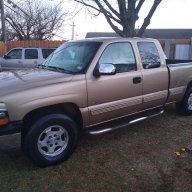
While it's rapidly changing now, hybrid powertrains were expensive in varients that were powerful enough to move a car. Making it that much more powerful to move a truck, while possible, just adds more cost and more weight, further diminishing any mpg savings. The GMT900 hybrids for example could go a whole 2 miles on its battery before it was depleted.. TWO. Mpg for those models only increased by 3 or 4mpg. Making a vehicle more complex, adding weight, cost to build, cost to maintain, and heaven forbid your battery pack dies.. all for 3-4 mpg and 2 gas-free miles per "charge"? That's a hard sell to make to consumers..
V8's have a larger idle/baseline consumption vs V6's, I4's, etc. In the most basic sense they are the largest, generally most powerful (notwithstanding turbos, SCs, etc.) engines. Anything used to supplement that power would need to be 'on its level' output wise, which is going to cost a lot, be heavy, and probably negate any savings over the life of the vehicle.
To your point, I think hybrids and V8's don't play well together not because of their underlying technologies, but because of the mismatch in power output.
Put another way, it's a blizzard outside and you have to shovel your entire driveway. Your kid comes outside with his mini shovel and wants to help. While it may make you proud and warm your heart, you still know that after a few mini shovels full of snow he's gonna get too cold and go back inside and ultimately, while those few mini shovels reduced the work you would have had to do, you still basically had to shovel it all yourself.