NHTSA opens preliminary probe into more than 870,000 GM vehicles

Disclaimer: Links on this page pointing to Amazon, eBay and other sites may include affiliate code. If you click them and make a purchase, we may earn a small commission.

blanchard7684

Senior Member
Supporting Member
Joined
Dec 23, 2024
Posts
442
Reaction score
379
That seems to point to bad bearings, right? (That’s what my local dealer
Yes. The actual point is that a bad batch of bearings would be put in different positions in the mains or rods. It would be a massive coincidence that it would be 1&2 main and associated con rod the majority of the time.
 

jfoj

Full Access Member
Joined
Aug 9, 2012
Posts
1,208
Reaction score
1,067
There are a lot of factors playing into all of this. The problem is GM and some other manufacturers kind of screwed the pooch many years ago by not learning that the main bearings should likely be fed oil first or in parallel rather than sending oil to the top of the engine/camshaft/lifters first then to the crank bearings next to last and the rod bearings dead last.

Over the last 20+ years many things have changed in this basic engine. All the stupid AFM/DFM controls, lifters and variable cam timing takes oil volume and pressure, then add to this tying to reduce the oil pressure for fuel ecomomy using a ECM controlled solenoid to change pressure based on RPM or other factors. Then the AFM/DFM has a pressure dump valve to keep the pressure from getting too high for controlling the AFM/DFM and camshaft timing.

Then thin the oil out for fuel economy (0W20) and then add Direct Injection and lower tension piston rings, more fuel dilution of the engine oil that is already too thin to begin with.

Massive torque avaialble with the 6.2l and running the engine under 1800 RPM the majority of the time on the highway. Hook up trailers and/or carry heavy loads. Increased oil consumption due to thin oil, fuel diluted oil due to DI and Remote Start Warm Ups, low tension piston rings, AFM/DFM pumping, oil changes pushed out ot 7500+ miles, and people running these engines consistently low on oil, up to 2+ quarts before the Low Oil indicator comes on.

Part engine design, part too many add ons and design changes to what was a pretty good base design from the 6.0l days, part EPA/CAFE requirements, part how the engines are used/maintained. Add a few quetionable parts or workmanship to the above equation.

What do you expect to happen?
 

KMeloney

Full Access Member
Joined
May 2, 2009
Posts
3,460
Reaction score
709
Think that upping the oil thickness is a viable precaution to take? Think we should all be running higher-numbers oil in the 6.2?
 

Vladimir2306

Full Access Member
Joined
May 18, 2023
Posts
1,048
Reaction score
1,235
Yes. The actual point is that a bad batch of bearings would be put in different positions in the mains or rods. It would be a massive coincidence that it would be 1&2 main and associated con rod the majority of the time.
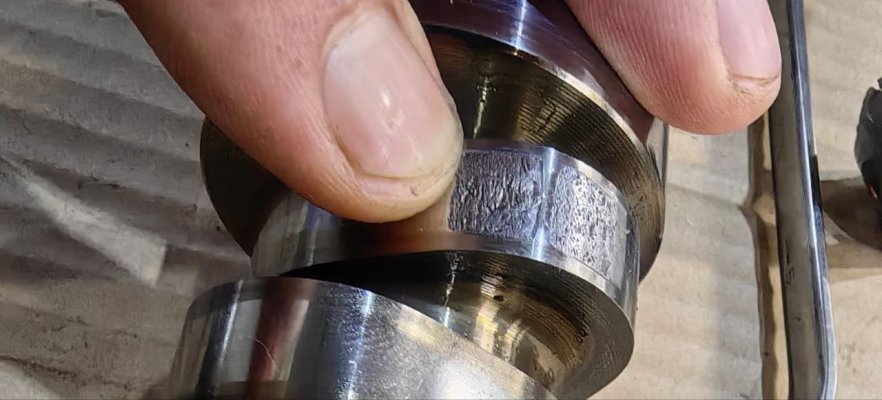
We've got something new here. In general, services began to offer customers to change the connecting rod liners in advance. And so, in Siberia, the engine died, after 60 thousand km from replacing the connecting rod liners with new ones
 

Attachments

  • IMG_20250214_075134_714.jpg
    IMG_20250214_075134_714.jpg
    130.9 KB · Views: 25
  • IMG_20250214_075147_708.jpg
    IMG_20250214_075147_708.jpg
    168 KB · Views: 24
  • IMG_20250214_075156_077.jpg
    IMG_20250214_075156_077.jpg
    108.8 KB · Views: 24

jfoj

Full Access Member
Joined
Aug 9, 2012
Posts
1,208
Reaction score
1,067
Think that upping the oil thickness is a viable precaution to take? Think we should all be running higher-numbers oil in the 6.2?
The move to thinner oil viscosity was not for the engines protection or longivity. See info below from Pennzoil FAQ section of their web page.

Start with a thin oil, add gasoline, then you have even thinner oil. Add enough gasoline and you are lubricating with a solvent. All bearing surfaces are supposed to run on a film of oil, when the oil has too low of a viscosity the oil film and oil wedge collapse and then you start to have no film to support the parts and metal to metal contact can begin. Dilute the engine oil with fuel and it will not stay on the bearing surfaces and journals as well once the engine is shut down.

Once the oil thins out, the oil pressure will likely decrease as well, adding to the overall oiling problem. Then the oil consumption really starts to skyrocket, this is another problem with engines cronically run low on oil. Then the oil contamination starts to run away as you have less oil to support the amount of fuel being added in the oil.

I think it is pretty clear from Vladimirs post than different bearings still fail. It appears the pictures show main signifigant main bearing wear, which will lead to rod bearing wear because the rod bearings are lubribrated from the main bearing oil supply. If the engines are opened up, inspected and reassembled with different parts and they are still failing from what appears to be oil related failures, what do you thing the problem may be? Is it possibly related to oil, lack or oil and/or fuel diluted oil?

There is also cam lobe that failed as well in one of Validimir pictures, not sure it was from the same engine. From the looks of the pattern on the cam lobe, the lifter did not spin in the plastic holder, the needle bearings in the lifter likely failed. A failed cam lobe while putting metal in the crankcase, should not cause the level of bearing failure because the oil filter will catch most particles large enough to damage the bearings. While fine metal particles circulating in the oil is not a good thing, bearings have the abilitiy to allow smaller partcles to embed in the material and should protect the harder journal surfaces.

Keep in mind the roller lifter bearings are also under a lot of stress due to their size and lobe ramp shape. There are tiny needle bearings inside these lifters that need a decent oil film to operate on. While some of the lifter failures are due to lifters spinning in the plastic stabilizers, some are failed roller bearings likely due to oil viscosity break down due to fuel contamination.

The short answer is I would not run 0W20 or thinner engine oil in any modern engine, bottom line it is just way too risky and for most people they will not see 200,000+ miles on engines running 0W8, 0W16, 0W20 oils, espeically in DI engines that suffer from a higher amount of fuel contamination.

All this talk about faster oil flow on start up is a double edged sword. The thinner the oil, the more likely it is to leave a thinner film of oil on journal and bearing surface when the engine is turned off, especially since the engines are usually hot when shut down. Seems that all of these engines failures occur while driving and many are actally siezing. Most sieze without prior warning or noise or without my notice. Seems to me that this screams more oil starvation/oil film break down then dry start up accelerated wear. Especially when the many of these engines are failing are relatively low mileage.

If you are lucky, your 5W30 or 0W40 engine oil will still have a similar viscosity index at 5000-7500 miles as the fresh 0W20 engine oil that had 0 miles.

Thin oil is being used for fuel economy and emissions due to "legislated regulations"!

Directly from the Pennzoil web site FAQ area - https://www.pennzoil.com/en_us/education/know-your-oil/0w-viscosity-faqs.html

Why are OEMs recommending the use of SAE 0W-20 and 0W-16 motor oils?​


Within the past decade, original equipment manufacturers (OEMs) have been tasked to meet the legislated regulations for better fuel economy. OEMs have made huge strides by reducing engine size and maintaining horsepower performance through the introduction of smaller Turbocharged Gasoline Direct Injection engines (TGDI) and operating on thinner viscosity grades.
The push for SAE 0W-20 and SAE 0W-16 motor oils grades has helped OEMs achieve some of those fuel economy and emission targets.
Pennzoil Platinum SAE 0W-16 and SAE 0W-20 meet and exceed the need of these engine oil specifications. It is designed to meet these fuel economy benefits while offering outstanding performance and protection throughout the oil drain interval.

What are the benefits of using 0W motor oils?​


The benefits of using the correct 0W grade oil for your vehicle are faster flow at start-up to reach critical engine parts, faster engine warm up and delivers better fuel economy as compared to higher viscosity grade oils.

 

WalleyeMikeIII

Full Access Member
Joined
Feb 22, 2022
Posts
2,753
Reaction score
2,616
Location
Sunny and Snowy Minnesota
The short answer is I would not run 0W20 or thinner engine oil in any modern engine, bottom line it is just way too risky and for most people they will not see 200,000+ miles on engines running 0W8, 0W16, 0W20 oils, espeically in DI engines that suffer from a higher amount of fuel contamination.
While you may be on to something in these GM V8's, I personally own 2 Honda's (well, my grown daughters own them now), both with >150,000 miles on the clock, that are DFI, and have run 0W20 as specified by Honda since new. Daughter's fiance has a Prius (Toyota) with 195k, and it has run 0W16 it's whole life. So, to say "I would not run 0W20 or thinner engine oil in a modern engine" is too big a generalization, lots of modern vehicles with lots of miles running this stuff with high reliability. Yes, Honda had some early oil dilution issues in their DI+Turbo Earth Dreams, they corrected it. Mostly was symptoms of "making oil" but very few of them blew up.

Might it be wrong for these GM V8's...possibly, but I feel like there is a materials or design issue at play here bigger than the choice of oil.

I am looking forward to the results of the NHTSA's investigation. Perhaps then we will learn the true failure rate. I agree it is larger than GM has historically had...but they do build a large number of vehicles with this engine.
 
Last edited:

DuraYuk

Full Access Member
Joined
Sep 17, 2022
Posts
1,111
Reaction score
884
The move to thinner oil viscosity was not for the engines protection or longivity. See info below from Pennzoil FAQ section of their web page.

Start with a thin oil, add gasoline, then you have even thinner oil. Add enough gasoline and you are lubricating with a solvent. All bearing surfaces are supposed to run on a film of oil, when the oil has too low of a viscosity the oil film and oil wedge collapse and then you start to have no film to support the parts and metal to metal contact can begin. Dilute the engine oil with fuel and it will not stay on the bearing surfaces and journals as well once the engine is shut down.

Once the oil thins out, the oil pressure will likely decrease as well, adding to the overall oiling problem. Then the oil consumption really starts to skyrocket, this is another problem with engines cronically run low on oil. Then the oil contamination starts to run away as you have less oil to support the amount of fuel being added in the oil.

I think it is pretty clear from Vladimirs post than different bearings still fail. It appears the pictures show main signifigant main bearing wear, which will lead to rod bearing wear because the rod bearings are lubribrated from the main bearing oil supply. If the engines are opened up, inspected and reassembled with different parts and they are still failing from what appears to be oil related failures, what do you thing the problem may be? Is it possibly related to oil, lack or oil and/or fuel diluted oil?

There is also cam lobe that failed as well in one of Validimir pictures, not sure it was from the same engine. From the looks of the pattern on the cam lobe, the lifter did not spin in the plastic holder, the needle bearings in the lifter likely failed. A failed cam lobe while putting metal in the crankcase, should not cause the level of bearing failure because the oil filter will catch most particles large enough to damage the bearings. While fine metal particles circulating in the oil is not a good thing, bearings have the abilitiy to allow smaller partcles to embed in the material and should protect the harder journal surfaces.

Keep in mind the roller lifter bearings are also under a lot of stress due to their size and lobe ramp shape. There are tiny needle bearings inside these lifters that need a decent oil film to operate on. While some of the lifter failures are due to lifters spinning in the plastic stabilizers, some are failed roller bearings likely due to oil viscosity break down due to fuel contamination.

The short answer is I would not run 0W20 or thinner engine oil in any modern engine, bottom line it is just way too risky and for most people they will not see 200,000+ miles on engines running 0W8, 0W16, 0W20 oils, espeically in DI engines that suffer from a higher amount of fuel contamination.

All this talk about faster oil flow on start up is a double edged sword. The thinner the oil, the more likely it is to leave a thinner film of oil on journal and bearing surface when the engine is turned off, especially since the engines are usually hot when shut down. Seems that all of these engines failures occur while driving and many are actally siezing. Most sieze without prior warning or noise or without my notice. Seems to me that this screams more oil starvation/oil film break down then dry start up accelerated wear. Especially when the many of these engines are failing are relatively low mileage.

If you are lucky, your 5W30 or 0W40 engine oil will still have a similar viscosity index at 5000-7500 miles as the fresh 0W20 engine oil that had 0 miles.

Thin oil is being used for fuel economy and emissions due to "legislated regulations"!

Directly from the Pennzoil web site FAQ area - https://www.pennzoil.com/en_us/education/know-your-oil/0w-viscosity-faqs.html

Why are OEMs recommending the use of SAE 0W-20 and 0W-16 motor oils?

Within the past decade, original equipment manufacturers (OEMs) have been tasked to meet the legislated regulations for better fuel economy. OEMs have made huge strides by reducing engine size and maintaining horsepower performance through the introduction of smaller Turbocharged Gasoline Direct Injection engines (TGDI) and operating on thinner viscosity grades.
The push for SAE 0W-20 and SAE 0W-16 motor oils grades has helped OEMs achieve some of those fuel economy and emission targets.
Pennzoil Platinum SAE 0W-16 and SAE 0W-20 meet and exceed the need of these engine oil specifications. It is designed to meet these fuel economy benefits while offering outstanding performance and protection throughout the oil drain interval.

What are the benefits of using 0W motor oils?

The benefits of using the correct 0W grade oil for your vehicle are faster flow at start-up to reach critical engine parts, faster engine warm up and delivers better fuel economy as compared to higher viscosity grade oils.
It's so tiring when a bunch of Randoms think they know better than the manufacturers who design this stuff. Promise when your using things outside of recommendations it's more detrimental. Thin viscosity oils work just fine in the applications that call for them.

Thick oils can do way way way more harm when put in the wrong applications.

But yall do you.
 

jfoj

Full Access Member
Joined
Aug 9, 2012
Posts
1,208
Reaction score
1,067
Understand that the 3 and 4 cylinder engines that are running in these smaller, lighter weight cars are operating under a very different conditions.

With the V8 engines, you have double the cylinders firing for each revolution of the engine, then also consider the larger bore diameters of the larger V8 engines, you have more area for fuel to access the crankcase. The V8 engines probably operate consistently at lower RPM's then the 3 and 4 cylinder engines.

Most of the smaller, lighter weight economy and midsize cars require much less power and torque to operate and I expect that some of these vehicle also run at higher RPM's then many of the V8 engines. Many of these smaller cars weight 1/2 as much as these full size trucks and SUVs. These smaller 3-4 cylinder engnies also tend to have smaller oil sumps and usually no oil coolers so the engine oil is probably operating at a higher temperature to cook off fuel and water vapor easier in the crankcase.

What you do not see, and I will hopefully be able to provide a good illustration is how the 6.2l engine behaves like a Diesel engine. Low RPM/High Torque operation on a fairly regular basis. This can cause conditions where Low Speed Pre Ignition (LSPI) can occur, especially if people are not running Preminum fuel in these engine. Even when Premium fuel, the conditions for LSPI are rather high the way the 6.2l operates. LSPI can hammer rod bearings over time as well as possibly cause other problems. But then the rod bearings are already uder extreme Torque loads at Low RPM, then add even a small amount of LSPI, with a lower viscosty engine oil that may also be diluted with fuel, watch out! What happens when the vehicles are loaded and/or towing?? Even a bigger chance for problems.

With the higher power density in this same basic small block V8 design that has been around for years, there are very high loads on the engine bearings the way these engines operate tody. I have been comparing the 6.2l behavior to the 5.3l and the 5.3l tends to downshift and run the engine RPM's up where as the 6.2l tends to hold its gear for far longer due the hugh amount of low RPM torque the engine can produce. Pulling 6000 lbs up a grade on the highway takes a lot of work/Torque.

Do not hold your breath for any results from the NHTSA "Investigation" they will rely on GM to provide data and unless the number excede some threshold or percentage, nothing may come of all of this. Then even if the numbers indicate there is a large enough problem, what is GM going to do? If part of the solution involves engine recalibration, it likely will not happen due to EPA/CAFE and fuel ecomony requirements. GM could possibly get away will is changing the OLM caibration to remind owners to change the oil at a lower OCI. At best case GM will claim they had some sort of anomoly that has been identified and corrected.

I think the problem here is like many things today. A history of Non Techincal People Making Technical decisions, ie goverment and politicians specifically about fuel economy requirements. Then add on to the fact that the current 6.2l engine is producing the Horsepower and Torque that was only found in larger "big block" V8's of yesteryear that has larger crank and rod bearings and journals, did not run regularly below 1700 RPM and did not have the high percentage of fuel dilution of the engine oil and were also running 10W30/10W40 engine oil back in the day.

I would hope that "faulty parts" have been long flushed out of the supply chain by now.

We shall see where all of this goes. I do not think the 6.2l are just in the last few years, they have been going on for a while, but there seems to be a lot more evidence of failures in the past few years. But what is the real percentage of production.
 

15burban

Full Access Member
Joined
Dec 8, 2023
Posts
265
Reaction score
473
Location
Wisconsin
Comparing a 4 cyl not sure on horsepower but I'd guess half of the 6.2 also moving something that weighs half of a tahoe/suburban is apples to oranges.

On another forum I'm on they also changed oem recommended oil from 5w30 10 or so years ago to now 0w20 with nothing changing in the v8 to eek out every fraction of a mpg they can get. There's also a few guys that have posted uoa's of their same truck back to back same oil brand but just switching between the 0w20 and 5w30. Every uoa clearly shows the 0w20 causes more wear at the end of the 5k mile run. Will running a 5w30 make your engine last 5k miles longer or 500k who knows. If you plan on keeping your rig for as long as possible I wouldn't run a 0w20 in a v8 brick that weighs 6000+lbs.
 

jfoj

Full Access Member
Joined
Aug 9, 2012
Posts
1,208
Reaction score
1,067
15burban,

You seem to understand!

0W20 was due to the goverment bureaucrats, not someone designing engines for long term durability.

While racing applications may use lower weight oils, those engines are only required to last 500 miles or so. If the race teams can eek out a nano amount of horsepower with a lighter weight oil, who cares as long as the engine lasts the duration of the race. The engine will be disassembled and rebuilt or used at parts for other builds after each race. Race engines are also operated under pretty controlled situations as well. Pretty ideal operarting conditions.

My last oil anaylsis for oil what was run 2900 miles in my truck had a 1% fuel dilution. On the surface some may say that is more than acceptable. BUT, understand this was for only 2900 miles, assuming the same conditions at 6000 miles, the oil may have been at 2% fuel contamination. OK, maybe borderline concerning. But then understand my use of the vehicle is 80% highway, and by highway I mean when I start the engine, the trips will be 2-6 hours in length, non stop. Auto Stop/Start and DFM has been disabled.

What would the fuel dilution percentages be if I Remote Start and allow the engine to warm up for 15 minutes each time I drive the vehicle, what would the percentages be if I had the Auto Stop/Start enabled, drive 80% in stop and go traffic, and so forth? Even a 1% fuel dilution impacts the oil viscosity and can even cause the oil to be outside the expected viscosity range. At least starting with something a bit higher in viscosity, you may end up with a 20 weight oil by the time it is changed!

Folks should research API oil spec SN Plus, this is a newer standard that came about specifically because of fuel dilution and to again combat Low Speed Pre Ignition due to increased fuel dilution.
 

DuraYuk

Full Access Member
Joined
Sep 17, 2022
Posts
1,111
Reaction score
884
15burban,

You seem to understand!

0W20 was due to the goverment bureaucrats, not someone designing engines for long term durability.

While racing applications may use lower weight oils, those engines are only required to last 500 miles or so. If the race teams can eek out a nano amount of horsepower with a lighter weight oil, who cares as long as the engine lasts the duration of the race. The engine will be disassembled and rebuilt or used at parts for other builds after each race. Race engines are also operated under pretty controlled situations as well. Pretty ideal operarting conditions.

My last oil anaylsis for oil what was run 2900 miles in my truck had a 1% fuel dilution. On the surface some may say that is more than acceptable. BUT, understand this was for only 2900 miles, assuming the same conditions at 6000 miles, the oil may have been at 2% fuel contamination. OK, maybe borderline concerning. But then understand my use of the vehicle is 80% highway, and by highway I mean when I start the engine, the trips will be 2-6 hours in length, non stop. Auto Stop/Start and DFM has been disabled.

What would the fuel dilution percentages be if I Remote Start and allow the engine to warm up for 15 minutes each time I drive the vehicle, what would the percentages be if I had the Auto Stop/Start enabled, drive 80% in stop and go traffic, and so forth? Even a 1% fuel dilution impacts the oil viscosity and can even cause the oil to be outside the expected viscosity range. At least starting with something a bit higher in viscosity, you may end up with a 20 weight oil by the time it is changed!

Folks should research API oil spec SN Plus, this is a newer standard that came about specifically because of fuel dilution and to again combat Low Speed Pre Ignition due to increased fuel dilution.
Omg. Lol. Not the gubment!
 

KMeloney

Full Access Member
Joined
May 2, 2009
Posts
3,460
Reaction score
709
In my mind, if the failures are due to a bad run of parts, then a range of engines [with those parts] will likely fail. But if it's a design issue, then ALL of the 6.2s will fail, right?
 

jfoj

Full Access Member
Joined
Aug 9, 2012
Posts
1,208
Reaction score
1,067
I think the 6.2l is a perfect storm of a number of issues. There were clearly some part problems, but these should have been flushed out a while ago. The lifter bore issue, assume this was resolved.

Some problems may be user induced by the way the vehicle is maintained and used. This includes everything from the fuel and oil used, how long between oil changes, if remote start is used often and allowing the engine to warm up at idle, Auto Stop/Start activity, DFM activity, heavy loading, towing, how much highway useage vs how in town useage.

Overall almost everything really leads to oil related problems no matter how you look at it. But the 6.2l also operates under very High Torque loading at low RPM's.
 

Antonm

Full Access Member
Joined
Apr 2, 2024
Posts
539
Reaction score
625
Think that upping the oil thickness is a viable precaution to take? Think we should all be running higher-numbers oil in the 6.2?

100% YES, absolutely.

The short block and rotating assembly is identical, part number for part number, between the base Corvette 6.2 and the truck 6.2 ( camshaft has a different grind though). Guess what weight oil GM specs for that ,,, spoiler alert ,, it isn't 0W20.

Mobil 1 even came out with a GM dexos approved oil just for this, and its available at most regular autoparts stores.

...
 

Vladimir2306

Full Access Member
Joined
May 18, 2023
Posts
1,048
Reaction score
1,235
15burban,

You seem to understand!

0W20 was due to the goverment bureaucrats, not someone designing engines for long term durability.

While racing applications may use lower weight oils, those engines are only required to last 500 miles or so. If the race teams can eek out a nano amount of horsepower with a lighter weight oil, who cares as long as the engine lasts the duration of the race. The engine will be disassembled and rebuilt or used at parts for other builds after each race. Race engines are also operated under pretty controlled situations as well. Pretty ideal operarting conditions.

My last oil anaylsis for oil what was run 2900 miles in my truck had a 1% fuel dilution. On the surface some may say that is more than acceptable. BUT, understand this was for only 2900 miles, assuming the same conditions at 6000 miles, the oil may have been at 2% fuel contamination. OK, maybe borderline concerning. But then understand my use of the vehicle is 80% highway, and by highway I mean when I start the engine, the trips will be 2-6 hours in length, non stop. Auto Stop/Start and DFM has been disabled.

What would the fuel dilution percentages be if I Remote Start and allow the engine to warm up for 15 minutes each time I drive the vehicle, what would the percentages be if I had the Auto Stop/Start enabled, drive 80% in stop and go traffic, and so forth? Even a 1% fuel dilution impacts the oil viscosity and can even cause the oil to be outside the expected viscosity range. At least starting with something a bit higher in viscosity, you may end up with a 20 weight oil by the time it is changed!

Folks should research API oil spec SN Plus, this is a newer standard that came about specifically because of fuel dilution and to again combat Low Speed Pre Ignition due to increased fuel dilution.
I strongly disagree. 0w20 oil is excellent for urban operation and engine operation at low speeds. Here are engines that do not work in the 1000 rpm mode, but at 3000-4000 rpm, yes, they should be thicker. And our engines running at revs slightly above idle need liquid oil like a groove
 

Vladimir2306

Full Access Member
Joined
May 18, 2023
Posts
1,048
Reaction score
1,235
100% YES, absolutely.

The short block and rotating assembly is identical, part number for part number, between the base Corvette 6.2 and the truck 6.2 ( camshaft has a different grind though). Guess what weight oil GM specs for that ,,, spoiler alert ,, it isn't 0W20.

Mobil 1 even came out with a GM dexos approved oil just for this, and its available at most regular autoparts stores.

...
The corvette does not drive at low speeds, they cannot be compared
 

Antonm

Full Access Member
Joined
Apr 2, 2024
Posts
539
Reaction score
625
While you may be on to something in these GM V8's, I personally own 2 Honda's (well, my grown daughters own them now), both with >150,000 miles on the clock, that are DFI, and have run 0W20 as specified by Honda since new. Daughter's fiance has a Prius (Toyota) with 195k, and it has run 0W16 it's whole life. So, to say "I would not run 0W20 or thinner engine oil in a modern engine" is too big a generalization, lots of modern vehicles with lots of miles running this stuff with high reliability. Yes, Honda had some early oil dilution issues in their DI+Turbo Earth Dreams, they corrected it. Mostly was symptoms of "making oil" but very few of them blew up.

Might it be wrong for these GM V8's...possibly, but I feel like there is a materials or design issue at play here bigger than the choice of oil.

I am looking forward to the results of the NHTSA's investigation. Perhaps then we will learn the true failure rate. I agree it is larger than GM has historically had...but they do build a large number of vehicles with this engine.

LOL, first your daughter is probably wearing the pants in the relationship if her fiancé is driving a Prius.

Second, yeah,, you do realize that Prius engine doesn't make anywhere near the torque of a 6.2 right. So its not trying to push the thin out out from between the bearings near as hard as the big V8.

Could the thin oil work in the big V8, yeap it sure could, if (and only if) you fed enough volume at sufficient pressure to the bearings, but the oil pump is something else they cut a bit on the 6.2. So the options are either replace the oil pump or run a thicker oil.
...
 
Last edited:

Antonm

Full Access Member
Joined
Apr 2, 2024
Posts
539
Reaction score
625
The corvette does not drive at low speeds, they cannot be compared

Really, that's funny right there.

Corvettes spend more time idling at cars and coffee than they doing driving. As awesome as they are the vast majority of Corvette owners are grandpas ,,,, that drive them like grandpas.
...
 
Last edited:

Antonm

Full Access Member
Joined
Apr 2, 2024
Posts
539
Reaction score
625
I strongly disagree. 0w20 oil is excellent for urban operation and engine operation at low speeds. Here are engines that do not work in the 1000 rpm mode, but at 3000-4000 rpm, yes, they should be thicker. And our engines running at revs slightly above idle need liquid oil like a groove

And you're seriously wrong too.

The 0W20 oil is inferior in every way other than a slight advantage in fuel economy to the 5W30 or 0W40 offerings from the same manufacturer.

The bearing clearances are not bigger in high torque turbo diesel applications, they all fall within the same thumb rule of about 0.001 inch of bearing clearance for every 1.0 inch of shaft diameter. Those slow, low revving (like the redline is 3K rpm) engines run a 15W40 oil, or sometimes in cold climates, a 5W40 oil. If what you said was true (which its not), then those engines would be running a thin oil too.
...
 
Last edited:

Forum statistics

Threads
137,748
Posts
1,991,148
Members
102,737
Latest member
048tahoe
Back
Top