[SOLVED] 2004 Tahoe Random Misfire

Disclaimer: Links on this page pointing to Amazon, eBay and other sites may include affiliate code. If you click them and make a purchase, we may earn a small commission.

MatthewEcu

TYF Newbie
Joined
Nov 22, 2025
Posts
5
Reaction score
8
Background - this is the L59 FLEX engine, V8

I had an awful oil leak coming from the oil pressure sensor/camshaft sensor (I wasn't sure which one), so I decided to go ahead and pull the intake manifold to make it easier, and I knew the gaskets had never been replaced. Everything went well, and after I put everything back on with the new intake gaskets, new Delphi camshaft sensor, and OEM oil sensor, I got the dreaded extended crank and multiple misfires code P0300. I assumed it was cheap intake gaskets (bought the Fel-Pro for delivery time) and ordered some GM gaskets.
While I was waiting for parts, I read the threads on how the older model trucks had a lot of issues with the newer camshaft sensors, so I put a new o-ring on my old sensor and reinstalled it since it was still functioning fine (oil sensor was the leak). The extended crank issue was resolved - Whew.....Still had misfires on cylinders 2 and 7.
New gaskets came, and I installed them with no issues, making extra sure the mating surface was spotless - I did not want any leaks. Fired it up and it ran OK for about 1 minute and then started with the misfires again - cylinders 2 and 7.

What I have done so far to diagnose:
1) Confirmed fuel pressure at rail, gauge stayed above 45 PSI, and there is no leakdown after 30 minutes. I did replace the fuel pressure regulator because the first time I checked it before installing the new gaskets, it had a pretty slow leakdown.
2) Swapped coils/wire over from the neighboring cylinders - did not follow, stayed at #2 and #7.
3) Performed a smoke test on the intake manifold twice, no leaks - only a slight leak from the oil cap.

So the next step is to confirm my vacuum with a gauge, the scanner is showing 5-6 PSIa at idle, the gauge is coming tomorrow, and swap over the spark plugs...hard for me to think the plug is bad, but I will eliminate that as a culprit. Will update the thread on those results.

What am I missing? Should I do a crank/cam re-learn since I took the old sensor out, but eventually put it back in?

As a side note, the short-term fuel trims for bank 1/2 sensor 2 are maxed at 100%.

Thanks for any insight you can provide :)

Matthew
 

Joseph Garcia

Supporting Member
Joined
Aug 2, 2018
Posts
9,648
Reaction score
13,617
Welcome to the Forum from NH.

Lots of knowledgeable folks here who freely share their knowledge, experiences, and perspectives. Knowledge is power.

I hope that you will become a participating member in the Forum's discussions.

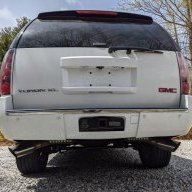
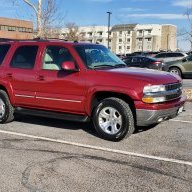
Pics of the truck, please.

I cannot personally assist you with your issue, but other members of this Forum much more knowledgeable than me on the GMT800 series in this area will chime in.
 

West 1

Full Access Member
Joined
Jan 20, 2023
Posts
369
Reaction score
702
GM does not make gaskets. Fel Pro does, most shops nationwide trust Fel Pro gaskets so that was not your issue.

2&7 having misfires is an odd combo, front and rear cylinders opposite banks of the engine. Any chance dirt dropped down on the valves when you had the manifold off or when cleaning the gasket surfaces? I think I would check compression on 2 and 7 and compare it to one of your good cylinders just to rule that out.

Double check the injector and coil connections to be sure they are fully plugged in.

Hope it is something simple.
 

Fless

Staff member
Super Moderator
Joined
Apr 2, 2017
Posts
15,169
Reaction score
31,036
Location
Elev 5,280
The extended crank is/was a classic sign of needing a CASE relearn after the cam sensor was changed. Even though you've reinstalled the old sensor, why not do a CASE relearn to rule it out?
 
OP
OP
M

MatthewEcu

TYF Newbie
Joined
Nov 22, 2025
Posts
5
Reaction score
8
Quick update - Thanks for all the replies.

I will do the crank re-learn procedure tomorrow with new scanner, my current ghetto scanner did not have that option. I cant keep it idling right now so whatever the issue seems to be has progressed from a #2 and #7 misfire to running like absolute crap and stalling at idle. I can keep it running great with foot on the accelerator and running about 1200 RPMs. Also, noted the misfires are only occurring at idle - runs smooth when i get into it. I'm stumped - maybe the new scanner can provide some insight on what I can see.
 

Fless

Staff member
Super Moderator
Joined
Apr 2, 2017
Posts
15,169
Reaction score
31,036
Location
Elev 5,280
It's hard to tell if the Mass Air Flow sensor is working properly if you can't get it to idle, but has it been cleaned lately? If it's aftermarket, know that the GM Genuine (or Delphi, if GM Genuine isn't available) MAFs work better in these systems.

What are your short- and long-term fuel trims (upstream sensors, both banks) at whatever low rpm you can keep it running, and at around 1800 rpm?

How long since the throttle body has been cleaned?

Can you provide a more specific running fuel pressure, other than "above 45 PSI?" That year FF engine should have a fuel filter on the driver's side frame rail, near the fuel composition (FF) sensor. Ever been replaced?

What fuel do you run as far as ethanol content goes? E10? E30-85? What does the scanner show the ethanol percentage is, and does that agree with the fuel you use?

With no more information this smacks of a large vacuum leak or a malfunctioning throttle body, or a mis-reporting MAF sensor; what results did you get from your vacuum test? If you have vacuum-boosted brakes, plug the vacuum line that goes to the booster to see if that changes anything. I believe that line has a check valve in it at the booster. Ignore if you have hydroboost brakes.

I could guess about partially clogged cats, but I won't right now.
 
Last edited:
OP
OP
M

MatthewEcu

TYF Newbie
Joined
Nov 22, 2025
Posts
5
Reaction score
8
It's hard to tell if the Mass Air Flow sensor is working properly if you can't get it to idle, but has it been cleaned lately? If it's aftermarket, know that the GM Genuine (or Delphi, if GM Genuine isn't available) MAFs work better in these systems.

What are your short- and long-term fuel trims (upstream sensors, both banks) at whatever low rpm you can keep it running, and at around 1800 rpm?

How long since the throttle body has been cleaned?

Can you provide a more specific running fuel pressure, other than "above 45 PSI?" That year FF engine should have a fuel filter on the driver's side frame rail, near the fuel composition (FF) sensor. Ever been replaced?

What fuel do you run as far as ethanol content goes? E10? E30-85? What does the scanner show the ethanol percentage is, and does that agree with the fuel you use?

With no more information this smacks of a large vacuum leak or a malfunctioning throttle body, or a mis-reporting MAF sensor; what results did you get from your vacuum test? If you have vacuum-boosted brakes, plug the vacuum line that goes to the booster to see if that changes anything. I believe that line has a check valve in it at the booster. Ignore if you have hydroboost brakes.

I could guess about partially clogged cats, but I won't right now.
Here is what I have so far to answer your questions and greatly appreciate the help:
Key on, Engine off, fuel pressure is 48 PSI - Running Fuel pressure is 42 PSI. Brand new Delphi fuel pump, and the research I have done on the FLEX fuel shows this is normal. I replaced the fuel filter about 6 months ago as a service item.
I will clean the MAF and Throttle Body today, the TB did not seem dirty, but I will rule both out. My scanner reads MAF in lb/s and its reading .02 at rough idle. The MAP is showing 4-5 PSI at roug idle.
I run regular gas, not E85 - the sensor was reading 8%.
I have the hydoboost brakes, so no vacuum line there. My vacuum gauge does hit the green 25 in/hg zone when i get the rpms up but bounces at idle to much to get a reading.
Short term FT bounces from 0-3% on both banks - I will have to get the long term - i do recall seeing 100% on the long term at one point but will confirm that.
My new scanner comes today and I should be able to get some better data.
 

Fless

Staff member
Super Moderator
Joined
Apr 2, 2017
Posts
15,169
Reaction score
31,036
Location
Elev 5,280
OK, so 48 psi is at the low end of the spec for FF; that shouldn't be an issue.
For fuel pressure, according to Haynes:
KOEO (key on, engine off)
Flex Fuel: 48-54 psi
Non-Flex: 55-62 psi

MAF should be read at warm idle in g/sec. To eliminate a conversion and for ease of evaluationg you should be able to change your scanner to read in metric -- so the g/sec reading should equate roughly to the engine displacement in liters (e.g., 5.3). If the reading bounces around, use the graphing function if your scanner supports it.

LTFT percentages may not exceed 25%, since that's usually the highest reading they'll give, even though it may be higher. Consider resetting the LTFTs with a scanner.

When I ask for ST and LT trims at idle and at 1800 rpm or so, it's to determine if there is much of a difference between the RPMs. High (positive -- adding fuel) trims at idle that come down at higher RPMs can indicate a vacuum leak or MAF or MAP sensor issue.
 
OP
OP
M

MatthewEcu

TYF Newbie
Joined
Nov 22, 2025
Posts
5
Reaction score
8
OK, so 48 psi is at the low end of the spec for FF; that shouldn't be an issue.
For fuel pressure, according to Haynes:
KOEO (key on, engine off)
Flex Fuel: 48-54 psi
Non-Flex: 55-62 psi

MAF should be read at warm idle in g/sec. To eliminate a conversion and for ease of evaluationg you should be able to change your scanner to read in metric -- so the g/sec reading should equate roughly to the engine displacement in liters (e.g., 5.3). If the reading bounces around, use the graphing function if your scanner supports it.

LTFT percentages may not exceed 25%, since that's usually the highest reading they'll give, even though it may be higher. Consider resetting the LTFTs with a scanner.

When I ask for ST and LT trims at idle and at 1800 rpm or so, it's to determine if there is much of a difference between the RPMs. High (positive -- adding fuel) trims at idle that come down at higher RPMs can indicate a vacuum leak or MAF or MAP sensor issue.
Welp - I found the issue today. I decided to pull the intake off and verify the intake manifold was not cracked, as I had a feeling this was vacuum-related. Inspected each intake port on the head, and lo and behold, cylinder #7 had a socket wedged in between the valve and sidewall. I tried multiple times to dislodge, but the engine ran with it in for a while, and it wouldn't budge. I decided to pull the head today. :( -

Note the socket was not mine, so it must have been back there, and I dislodged it when I took the manifold off - bummer. My own fault, I double checked every intake before I installed the intake manifold, but couldn't see #7 and #8 easily...
Will drop off at the machine shop on Friday and see what the damage is, hopefully just a bent valve and nothing more.
 

Fless

Staff member
Super Moderator
Joined
Apr 2, 2017
Posts
15,169
Reaction score
31,036
Location
Elev 5,280
Welp - I found the issue today. I decided to pull the intake off and verify the intake manifold was not cracked, as I had a feeling this was vacuum-related. Inspected each intake port on the head, and lo and behold, cylinder #7 had a socket wedged in between the valve and sidewall. I tried multiple times to dislodge, but the engine ran with it in for a while, and it wouldn't budge. I decided to pull the head today. :( -

Note the socket was not mine, so it must have been back there, and I dislodged it when I took the manifold off - bummer. My own fault, I double checked every intake before I installed the intake manifold, but couldn't see #7 and #8 easily...
Will drop off at the machine shop on Friday and see what the damage is, hopefully just a bent valve and nothing more.

I "liked" that only because it seems to be the cause. Good luck with the fix!
 

Tonyrodz

Resident Resident
Joined
Feb 16, 2012
Posts
32,847
Reaction score
50,537
Location
Central Jersey
Welp - I found the issue today. I decided to pull the intake off and verify the intake manifold was not cracked, as I had a feeling this was vacuum-related. Inspected each intake port on the head, and lo and behold, cylinder #7 had a socket wedged in between the valve and sidewall. I tried multiple times to dislodge, but the engine ran with it in for a while, and it wouldn't budge. I decided to pull the head today. :( -

Note the socket was not mine, so it must have been back there, and I dislodged it when I took the manifold off - bummer. My own fault, I double checked every intake before I installed the intake manifold, but couldn't see #7 and #8 easily...
Will drop off at the machine shop on Friday and see what the damage is, hopefully just a bent valve and nothing more.
Was it a 10mm socket?
 

Forum statistics

Threads
137,489
Posts
1,962,485
Members
101,990
Latest member
BigJake79

Latest posts

Back
Top