AWSMBLU
Full Access Member
- Joined
- May 7, 2014
- Posts
- 187
- Reaction score
- 56

Disclaimer: Links on this page pointing to Amazon, eBay and other sites may include affiliate code. If you click them and make a purchase, we may earn a small commission.
It also disabled the start stopInteresting. Who knew? Could be a good way to temporarily eliminate DFM functionality, while waiting or preparing physical work for its complete elimination.
Joe, it’s been well documented across multiple threads in this sub-forum.Interesting. Who knew? Could be a good way to temporarily eliminate DFM functionality, while waiting or preparing physical work for its complete elimination.
 www.tahoeyukonforum.com
It was news to me, so it may be news to others. I don't know all of the answers, and I look forward to learning something new every day.Joe, it’s been well documented across multiple threads in this sub-forum.
Take this one for example:
Driving in L9 and DFM
Greetings all Has anyone confirmed if driving in L9 will disable DFM? I haven't been able to find anything on the forums and haven't noticed whether it works or not . I have tried it but can not confirm for sure seeing that there is no indicator stating such. Plenty of older trucks that do...

Yeah i wouldn’t count on that. I can’t see gm deleting afm from future production considering the possibility of the next U.S. administration reinstating tighter emissions rules. That would cost gm lotsa “zeros” whereas it would be cheaper for them just to keep this already established “technology” under the guise of saving you, the consumer, money on fuel.Yep same as running in M5 with the 6-speeds.
Well, the EPA will no longer enforce the Clean Air Act and GM and the others will likely get rid of AFM from new production engines soon enough.
Yeah i wouldn’t count on that. I can’t see gm deleting afm from future production considering the possibility of the next U.S. administration reinstating tighter emissions rules. That would cost gm lotsa “zeros” whereas it would be cheaper for them just to keep this already established “technology” under the guise of saving you, the consumer, money on fuel.
At any rate, this thread should be a sticky, for those who are unaware.
Not how that works. CAA is Congressional legislation and isn't going anywhere. GM gets the 5.3 to ULEV50 with DFM and they sell that engine in other markets so there's no point in having multiple versions. Whichever way GM wants to meet the law is up to them. Big gov doesn't require cylinder deactivation but it helps meet the target. Ford went the opposite route for their volume engines (2.7 and 3.5) with smaller displacement and sell relatively few V8s now even though those have cylinder deactivation too.Yep same as running in M5 with the 6-speeds.
Well, the EPA will no longer enforce the Clean Air Act and GM and the others will likely get rid of AFM from new production engines soon enough.
It's kinda early to tell. However the EPA is saying that they cannot enforce it and are kicking enforcement over to the DOJ it seems. I think Ford was foolish for making those engines but after seeing how they engineer stuff over the last 25-30 years, well, it just reinforces my opinion and will probably never own one again.N
Not how that works. CAA is Congressional legislation and isn't going anywhere. GM gets the 5.3 to ULEV50 with DFM and they sell that engine in other markets so there's no point in having multiple versions. Whichever way GM wants to meet the law is up to them. Big gov doesn't require cylinder deactivation but it helps meet the target. Ford went the opposite route for their volume engines (2.7 and 3.5) with smaller displacement and sell relatively few V8s now even though those have cylinder deactivation too.
What little has trickled down to us concerning the new engines for 27/28 indicates they'll still employ the deactivation technology along with cooled EGR which has been on the Ford stuff for a few years now. That's secondhand information from the bosses that attend dealer shows so take it for what it's worth.
Again, that’s not how that works. NAAQS are legislatively mandated by the Clean Air Act and subsequent revisions. Statute of limitations for CAA knowing violations is 5 years so no business operating above board is going run the risk of violating the law.It's kinda early to tell. However the EPA is saying that they cannot enforce it and are kicking enforcement over to the DOJ it seems. I think Ford was foolish for making those engines but after seeing how they engineer stuff over the last 25-30 years, well, it just reinforces my opinion and will probably never own one again.
Ok, starting to get some of what you're putting down. On a slightly different topic, what about the CAFE standards being eliminated? Wouldn't that allow GM and the others to dump AFM since that system is not directly tied to emissions standards?Again, that’s not how that works. NAAQS are legislatively mandated by the Clean Air Act and subsequent revisions. Statute of limitations for CAA knowing violations is 5 years so no business operating above board is going run the risk of violating the law.
Your 2nd paragraph requires an answer too long to type at the moment.Ok, starting to get some of what you're putting down. On a slightly different topic, what about the CAFE standards being eliminated? Wouldn't that allow GM and the others to dump AFM since that system is not directly tied to emissions standards?
Which makes me ask, are there specific emissions standards for vehicles specified in the CAA? Or does the CAA tell the government to figure it out?
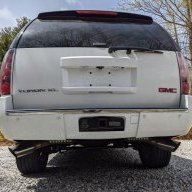
CAFE forced the automakers to produce little cars nobody wanted. Then they focused on what we did want, big cars and later trucks. Then they imposed those standards on the trucks. At one point the government considered my Yukon XL as getting 59 mpg because it was FlexFuel. The other regulations basically forced the cars to disappear or become massively heavy. My 1980s G-Body cars had a curb weight of around 3200 pounds, while these new Dodge Challengers weigh 4,400 pounds.CAFE is not a bad idea just implemented poorly...
CAFE forced the automakers to produce little cars nobody wanted. Then they focused on what we did want, big cars and later trucks. Then they imposed those standards on the trucks. At one point the government considered my Yukon XL as getting 59 mpg because it was FlexFuel. The other regulations basically forced the cars to disappear or become massively heavy. My 1980s G-Body cars had a curb weight of around 3200 pounds, while these new Dodge Challengers weigh 4,400 pounds.
Well, these government agencies will not make law with their rules and regulations anymore, that's supposed to go back to Congress. Hopefully, they follow through with it.
I disagree, the automakers said it themselves over the years.CAFE did not "force" auto makers to do any such thing. It's a mischaracterization of the Standards to say that. American OEMs simply did not invest in those products like the foreign brands. There is no disagreement that these Standards have made modern vehicles a "modern marvel" in their power and relatively clean emissions. An L87 emits something like 90% fewer greenhouse gas emissions than a small block from the mid 80s.
If a lack of regulations is more to your liking, there are numerous "third world" countries to choose from to be free from such regulations as airbags, crumple zones and intrusion protection. That'll get you those light cars you like so much. Thankfully Congress has already "made the law" decades ago and continued to amend it as necessary. I can assure you the phrase "the Secretary shall prescribe...." is going nowhere from the Federal Register and will continue to carry the full weight of civil penalties for noncompliance. Loper Bright Enterprises v. Raimondo only dealt with "ambiguous" language. All it does is shift the balance of refereeing disputes slightly away from defaulting to the agency interpretation. I say slightly because in the interim between the 1980s and now, Congress amended the CAA to plug the holes Reagan's EPA used to favor polluting industries.
At one point the government considered my Yukon XL as getting 59 mpg because it was FlexFuel.


