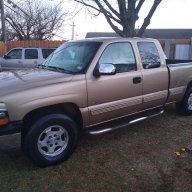
Cylinder head question

Disclaimer: Links on this page pointing to Amazon, eBay and other sites may include affiliate code. If you click them and make a purchase, we may earn a small commission.

tekfire07

Member
Joined
Sep 27, 2022
Posts
66
Reaction score
57
After installing a new cylinder head? What is the recommended miles driven, before driving highway speeds?

 

West 1

Full Access Member
Joined
Jan 20, 2023
Posts
699
Reaction score
1,503
You can do that right away. No reason not to. At highway speeds you only turn 2,000 rpm.

There is very little to worry about because you installed one new cylinder head.

On fire up you will know if you did the work well because all will be quiet and smooth normal operation if done correctly. It is good to avoid high RPM for the first 100 miles to let the valve train settle in. Even 100 miles might be 75 more than needed.

After your test drives do a double and triple check to make sure everything is connected properly and all bolts were tightened. Hooking up a scan tool will tell you if all the sensores are plugged in and operating normally.

Let us know how it runs and how many parts you ended up changing.
 
OP
OP
tekfire07

tekfire07

Member
Joined
Sep 27, 2022
Posts
66
Reaction score
57
You can do that right away. No reason not to. At highway speeds you only turn 2,000 rpm.

There is very little to worry about because you installed one new cylinder head.

On fire up you will know if you did the work well because all will be quiet and smooth normal operation if done correctly. It is good to avoid high RPM for the first 100 miles to let the valve train settle in. Even 100 miles might be 75 more than needed.

After your test drives do a double and triple check to make sure everything is connected properly and all bolts were tightened. Hooking up a scan tool will tell you if all the sensores are plugged in and operating normally.

Let us know how it runs and how many parts you ended up changing.
I installed the new head, while I was in there. I installed new oil pressure sensor and screen, head, exhaust, intake,cross over gaskets and O rings. I had to purchase and install cooling cross over block off. I also installed new lifter trays. I considered replacing the lifters, but after inspection they looked good. I am planning on doing a full rebuild for the motor soon. So I just went the trays for now. I needed to get back on the road ASAP. Everything seems to be in good running order now. Oil pressure is reading as it should. Same with temperature. I appreciate everyone's help.
Thank you
Erik
 

strutaeng

Full Access Member
Joined
Aug 10, 2023
Posts
1,988
Reaction score
4,284
Location
Dallas, Texas
There's no "break-in" procedure for the heads AFAIK...

That's only for piston rings/cylinder bores after a rebuild (or a brand new engine build), but I don't even know if they even specify that on new vehicles anymore?
 

West 1

Full Access Member
Joined
Jan 20, 2023
Posts
699
Reaction score
1,503
The only break in with heads is to make sure all the valve train conponents seat in at start up. Shops told me they sometimes had comebacks on heads due to the customer revving the engine high soon after start up. Popping keepers loose on the valves. The shops advised to take it easy for the first few miles use to avoid this.

With this said, I know racers that bolt heads on and with not much more run time than what is needed to tune the engine they go straight out and race. They do have 20 to 30 minutes run time before racing for tune and cam break in so even racers put some time on the engine before turning up the RPM.

Dyno operators always spend 30 minutes running the engine to allow some break in and getting the engine up to full temp before hard pulls

So maybe say a 20 to 30 minute run in before revving the engine is good advice rather than how many miles you drive.

I broke the cam in on a 460 Ford for my brothers Jet Boat. On cam break in I kept the RPM between 2 and 3,000 RPM. When I shared this with my buddy that owns the machine shop he chewed me out and said I got lucky not having any keepers jump off the valve tips. Said I should have kept it under 2500 RPM for the break in? After the first 20-30 minutes you don’t have to worry as they are settled according to him.

For those that don’t know cam break in is madatory on all older flat tappet lifter engines. First 20 minutes you get the engine to 2,000 RPM and keep it there so the lifters and cam break in properly. Newer cars with roller lifers do not have this concern at all.
 

Forum statistics

Threads
138,040
Posts
1,997,672
Members
102,976
Latest member
Capybarbro

Latest posts

Back
Top