Vector
Full Access Member
Years ago before synthetic oil, I was running 20W50 in most of my motors (some HP applications) and never thought about fuel efficiency, I just wanted the most protection possible. Never did I have an engine failure.
In recent years GM has told us we MUST use the every thinning oil to maintain our warranty, and most of us presumed it was best for the engines health, as why else would they say the warranty would be invalidated.
Yet today we have come to find out those mandates were not based on our engines best interest, protection, nor longevity. Rather it was to meet stringent CAFE standards, and thinner motor oil with less resistance meant their vehicles got a slight improvement in fuel efficiency, thereby saving them millions of dollars. Thus they had us using practically water with 0w20, and their recall protocol now is to use 0w40.
Keep in mind that in Europe and other countries the exact same engine mandates 5w30 because they do not have the CAFE standards over there.
They likely also calculated that when the engines fail it will typically be after the warranty, and then depending on how much the repairs and future problems would cost, they could sell you a new vehicle.
So, if they did that with motor oil, who is to say they didn't also do it with transmission ATF viscosity for the same reason. The measurement of Kinematic Viscosity is higher with thicker viscosity and the lower it goes, the thinner and less resistance it provides which also increases fuel mileage.
Don't get me wrong, I like better fuel economy as well, but engine/transmission protection and longevity is far more important to me, and failure of either will result in a much greater cost than the couple of extra miles per thankful.
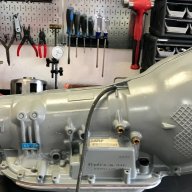
Additionally, it has always made me wonder why the temperatures of our GM transmissions be it the 6 - 8 - and now 10 speeds run consistently hot, despite many of us having towing packages, which means individual coolers for our trannys.
Recently speaking to a transmission guy, he said heat and friction are killers of transmissions, just like it is with engines.
He explained that GM wants the ATF to heat up as quickly as possible to help thin out the viscosity for the same aforementioned CAFE reason. Thus they use the bypass valve which restricts the ATF from going thru the cooler until it reaches around 196 degrees. That means your temp once at the designated point is not going to drop back down below it.
As a bonus, if the bypass gets stuck closed and the ATF cannot get to the trans cooler, you could wind up with too hot a transmission and damage it.
My question to you'll is now that you don't trust GM to do what is best for the consumer regarding motor oil because of CAFE, should we trust them with the ATF mandates using their AC Delco Dexron ATF vs. another brand and/or viscosity?
If you are using something else what brand/viscosity are you using?
Also, how many of you have done the bypass valve block kit, or even an aftermarket free flow valve which keeps the temperatures much lower under all conditions?
In recent years GM has told us we MUST use the every thinning oil to maintain our warranty, and most of us presumed it was best for the engines health, as why else would they say the warranty would be invalidated.
Yet today we have come to find out those mandates were not based on our engines best interest, protection, nor longevity. Rather it was to meet stringent CAFE standards, and thinner motor oil with less resistance meant their vehicles got a slight improvement in fuel efficiency, thereby saving them millions of dollars. Thus they had us using practically water with 0w20, and their recall protocol now is to use 0w40.
Keep in mind that in Europe and other countries the exact same engine mandates 5w30 because they do not have the CAFE standards over there.
They likely also calculated that when the engines fail it will typically be after the warranty, and then depending on how much the repairs and future problems would cost, they could sell you a new vehicle.
So, if they did that with motor oil, who is to say they didn't also do it with transmission ATF viscosity for the same reason. The measurement of Kinematic Viscosity is higher with thicker viscosity and the lower it goes, the thinner and less resistance it provides which also increases fuel mileage.
Don't get me wrong, I like better fuel economy as well, but engine/transmission protection and longevity is far more important to me, and failure of either will result in a much greater cost than the couple of extra miles per thankful.
Additionally, it has always made me wonder why the temperatures of our GM transmissions be it the 6 - 8 - and now 10 speeds run consistently hot, despite many of us having towing packages, which means individual coolers for our trannys.
Recently speaking to a transmission guy, he said heat and friction are killers of transmissions, just like it is with engines.
He explained that GM wants the ATF to heat up as quickly as possible to help thin out the viscosity for the same aforementioned CAFE reason. Thus they use the bypass valve which restricts the ATF from going thru the cooler until it reaches around 196 degrees. That means your temp once at the designated point is not going to drop back down below it.
As a bonus, if the bypass gets stuck closed and the ATF cannot get to the trans cooler, you could wind up with too hot a transmission and damage it.
My question to you'll is now that you don't trust GM to do what is best for the consumer regarding motor oil because of CAFE, should we trust them with the ATF mandates using their AC Delco Dexron ATF vs. another brand and/or viscosity?
If you are using something else what brand/viscosity are you using?
Also, how many of you have done the bypass valve block kit, or even an aftermarket free flow valve which keeps the temperatures much lower under all conditions?