Michael42063
TYF Newbie
- Joined
- Apr 18, 2021
- Posts
- 4
- Reaction score
- 1
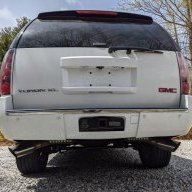
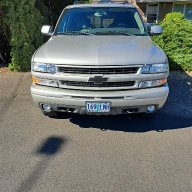
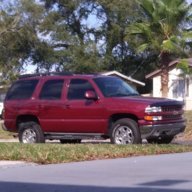
I have a 2000 Yukon SLT 5.3. it has a vibration from about 68 mph till about 80 then stops. Any help would be appreciated. Already lined,new wheels and tires,ujounts ok.
Disclaimer: Links on this page pointing to Amazon, eBay and other sites may include affiliate code. If you click them and make a purchase, we may earn a small commission.
No,I did not,How did you balance the tires? Did you use a Road Force balancing machine?
My recommendation is that you get your tires Road Force balanced. I had the exact situation as you do, including 3 tries with a conventional spin balance machine, and the Road Force balance made a huge improvement. Other folks on this Forum have seen similar improvements.No, I had them spin balanced, actually twice
Geeezzz... Balancing the tires on the vehicle, the original 'spin' balance. I have not seen that method used in over a half a century. And, I do agree, after watching this method several times, that experience and skill is definitely required to be successful with that method.There’s a lot missing.
Was the vibe present before, or after, the new wheels and tires? Or always there?
What ARE the wheels and tires specifically? Are the wheels hub centric if not OEM?
Do you feel the vibration in your seat, or the steering wheel?
Road Force is a good technology. Finding a shop that will use it properly is not easy, most will take shortcuts and just spin them 1x after mounting and call it good.
The proper way is to spin only the wheel first and the machine measures runout and balance. THEN mount the tire and repeat for the whole assembly. After that, break the bead AGAIN and rotate the tire on the wheel so the wheel and tire heavy or high spots are opposed. Re-inflate and FINALLY do the weights and RF match. It’s time consuming which is why few shops want to do the complete process.
There’s also the method of spinning and balancing mounted on the vehicle. Which in my experience is the gold standard in vibration elimination. But very difficult to find a shop with the equipment or skills to do this old school technique.
+1 I had something similar, it ended up being a U joint, the needle bearings had made a safe space for teach other in the bearing surface of the Joint, but only in one side of it.I had a vibration at 45-55mph on my ’07 Yukon that appeared shortly after having the 6L80 replaced at 191k. I first thought it was most likely the tires so I had them rebalanced and rotated which seemed at first to do the trick but was not the case. I suspected the new reman’ed trans next since the original ujoints were replaced at 135k with Moog units and they seemed nice and tight upon inspection.
I downloaded an app on my phone called Accelerometer Meter to help narrow down where to look. The app has a Spectrum analyzer that will save a snapshot of the amplitude of x,y and z axis of your phone’s accelerometer across several frequencies. My phone fit tightly in the center console lid cavity\depression(you'll want your phone firmly attached to your vehicle to sense the vibrations). I just ran the analyzer and got to where I could feel the vibration the worst with my phone lodged in that console cavity and hit the save button. The saved data will give you several frequencies and the their amplitudes in x,y and z. Look for higher values/spikes in any of those axis for the given freqs listed out. When saving the data, make note of your speed and trans gear and maybe engine speed. With that info you should be able to ballpark the speeds your wheels and from that use your rear end ratio to get your driveshaft speed. If you can find spikes in the saved data, you’ll just need to figure out what is spinning at that rate in rotations/sec to narrow down where to look.
On mine, it was a ujoint that the needle bearings were ground away. I found it this way but would have never suspected it from my inspection.