The financial benefits of maintaining our own cars

Disclaimer: Links on this page pointing to Amazon, eBay and other sites may include affiliate code. If you click them and make a purchase, we may earn a small commission.

Geotrash

Dave
Supporting Member
Joined
Feb 16, 2018
Posts
7,843
Reaction score
20,396
Location
Richmond, VA
I posted this originally at the tail end of another unrelated thread, and realized that it probably should be a topic of its own under General Discussion. I'm also curious about how y'all think about this as fellow DIY-ers.

What I think:
The willingness to drive an older car, along with the desire to maintain it in tip-top condition, plus the motivation to continue learning and doing the work, has 2 primary benefits that I see: 1/ That our vehicles remain safe and reliable for our loved ones and us to depend on for any transportation needs while we own them, and 2/ That it's an enormous money savings that will lead to earlier retirement for my wife and me.

Why I think the financial case is strong:
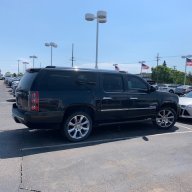
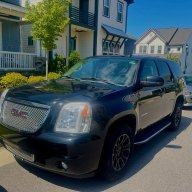
The sticker on my 2012 was $64,770 when new. Forgetting about interest on a loan for a moment, let's say that the original owner paid $65K cash with incentives and discounts, sales tax, title and registration. I paid around $25K cash for it including sales tax, title and registration in 2018 when it was 6 years old and had 90K miles on it. That's a $40K discount from new right off the top. I've since spent around $6K in upgrades and maintenance (cam, TC, rear air shocks, all fluids, regular oil changes) and I have a vehicle that is every bit as reliable as a new one, if not more so, and more capable in the ways that matter to me (e.g. towing). In the same time span, the annual registration fee on a new one would have averaged $1400/year in Colorado and about $2200 here in Virginia for the first 6 years of ownership. But since it was 6 years old and the fee is calculated based on value, I've paid an average of $450/year since I bought it. In other words, I've saved enough in annual registration fees to more than pay for my maintenance and upgrades.

In the 4 years since, I've been fortunate and my investments averaged 18% annual returns, which means that the $40K I saved is now worth $77K to me. Vehicles are a depreciating asset. It makes absolutely no financial sense for a working person to take a huge depreciation hit on a new car if they have the desire and motivation to maintain it well themselves.

It's an absolute no-brainer. Do you agree?

 

MLRTYME

Member
Joined
Apr 1, 2019
Posts
47
Reaction score
132
i think there comes into play the calculation of the level of 'handiness' that a person has, to weigh into the cost/benefit analysis you describe.

Example, I grew up with a wrench in my hand because that's what my father did. Never took a car to a mechanic. If it needed to be fixed, we grabbed a trusty Chilton or manufacturer manual and went to work. It was just what was done. I never owned a car younger than me until I was 32. However, for the individual who is not handy with tools and maybe doesn't have the knowledge or confidence to do basic items, the 'value' isn't there. If it takes someone 3 days to replace the oil pan because they stripped the bolt putting it back in trying to change the oil...maybe that isn't value to them.

Also, there are those who use the purchase as a tax write-off for a business. I have a friend who can fix things, but has a new truck every 2 years because his business is successful and he needs the write-off. In that case, it makes financial sense to buy new.

Lots of variables in the discussion. For the average Joe...(or Dave), you are absolutely correct. Huge financial benefit. But if someone isn't as comfortable changing fluids or rebuilding something as we are...then maybe they calculate the word 'value' differently.
 
OP
OP
Geotrash

Geotrash

Dave
Supporting Member
Joined
Feb 16, 2018
Posts
7,843
Reaction score
20,396
Location
Richmond, VA
i think there comes into play the calculation of the level of 'handiness' that a person has, to weigh into the cost/benefit analysis you describe.

Example, I grew up with a wrench in my hand because that's what my father did. Never took a car to a mechanic. If it needed to be fixed, we grabbed a trusty Chilton or manufacturer manual and went to work. It was just what was done. I never owned a car younger than me until I was 32. However, for the individual who is not handy with tools and maybe doesn't have the knowledge or confidence to do basic items, the 'value' isn't there. If it takes someone 3 days to replace the oil pan because they stripped the bolt putting it back in trying to change the oil...maybe that isn't value to them.

Also, there are those who use the purchase as a tax write-off for a business. I have a friend who can fix things, but has a new truck every 2 years because his business is successful and he needs the write-off. In that case, it makes financial sense to buy new.

Lots of variables in the discussion. For the average Joe...(or Dave), you are absolutely correct. Huge financial benefit. But if someone isn't as comfortable changing fluids or rebuilding something as we are...then maybe they calculate the word 'value' differently.
Thanks for weighing in. I agree with you on all points. I tried to qualify most of these things up front by saying: "The willingness to drive an older car, along with the desire to maintain it in tip-top condition, plus the motivation to continue learning and doing the work". That was my attempt to rule out the people who don't have either the know-how or the desire to learn. For them, the calculus would be different.
 

Meccanoble

Full Access Member
Joined
Oct 3, 2016
Posts
1,166
Reaction score
355
Location
Georgia
There are so many variables in this. I dont think there is a right answer for all. Some are not handy nor have the tools. Even with all the stuff needed, every car has different levels of reliability/maintenance and can require different levels of skills/tools to resolve issues. Imagine you blowing a motor or tranny early in the game. Big blow compared to new/leased. Another thing to consider is hourly wage. Someone making close to or more than a mechanic would charge per hour could potentially lose substituting time at work to resolve car issues.

I have friends that lease cars and though overall more expensive than a used car where you do your own maintenance, the comfort and enjoyment of always being in something somewhat new and different and potentially maintenance handled could be worth the extra $ especially to older, less skilled people.

For the average middle/poor class, the process of finding a used and maintaining yourself is ideal. But we can create scenarios where its not.
 
OP
OP
Geotrash

Geotrash

Dave
Supporting Member
Joined
Feb 16, 2018
Posts
7,843
Reaction score
20,396
Location
Richmond, VA
There are so many variables in this. I dont think there is a right answer for all. Some are not handy nor have the tools. Even with all the stuff needed, every car has different levels of reliability/maintenance and can require different levels of skills/tools to resolve issues. Imagine you blowing a motor or tranny early in the game. Big blow compared to new/leased. Another thing to consider is hourly wage. Someone making close to or more than a mechanic would charge per hour could potentially lose substituting time at work to resolve car issues.

I have friends that lease cars and though overall more expensive than a used car where you do your own maintenance, the comfort and enjoyment of always being in something somewhat new and different and potentially maintenance handled could be worth the extra $ especially to older, less skilled people.

For the average middle/poor class, the process of finding a used and maintaining yourself is ideal. But we can create scenarios where its not.
All good points. And if spending a lot of money on a new car and paying the cost of depreciation (leases are also paying for depreciation, of course) is their thing, no judgment here. I was just shocked when I actually sat down and figured out what the true costs of new vs maintaining a used (5-6 years old) vehicle really are.

I was raised without much money (the last of 8 kids to working-class parents), so my perspective definitely skews toward seeing the world through the lens of scarcity. Yet at the same time, one of my best friends grew up the child of a wealthy lawyer turned CEO of a large power company. He's wealthy today too, and also a lawyer, yet buys plain-jane used cars with cash (at least 5 years old), and keeps them going until the wheels fall off. He has a great mechanic that he pays to do any needed work and it still works out very well in his favor. My wife and I also make plenty of money to afford a new car every few years, but when I run the numbers, it doesn't make sense for us. Thankfully, she has a hippie heart and could care less what we drive as long as it's reliable and clean.

So, I agree that there are many variables and that there is no one answer that will work for everyone. But my point is that doing what we do with our cars (buying them used, maintaining them well), is a financially sound choice.
 

Joseph Garcia

Elite Member
Supporting Member
Joined
Aug 2, 2018
Posts
10,267
Reaction score
14,870
Mark made a good point, in that if you don't put away that money saved, it won't be available for retirement. For me, I budget a specific monthly amount for vehicle costs in a separate bank account every single month, and then I draw from that account as needed for repairs, mods, upgrades, etc. That money is never used for anything else, and I've watched it grow over the years. Now that I'm retired, that savings actually turned into available retirement funds if/when needed.
 
OP
OP
Geotrash

Geotrash

Dave
Supporting Member
Joined
Feb 16, 2018
Posts
7,843
Reaction score
20,396
Location
Richmond, VA
Mark made a good point, in that if you don't put away that money saved, it won't be available for retirement. For me, I budget a specific monthly amount for vehicle costs in a separate bank account every single month, and then I draw from that account as needed for repairs, mods, upgrades, etc. That money is never used for anything else, and I've watched it grow over the years. Now that I'm retired, that savings actually turned into available retirement funds if/when needed.
Yes, that's true. Now that I no longer have car payments, I contribute an extra $500 every month to my 401K. We also maintain a separate 'car fund' account at Capital One that we pump money into every month that funds repairs, but we haven't needed to draw on it because I've been able to fund all of it out of our regular monthly budget so far. But it's there in case we have a major expense like an engine or transmission.
 

justchecking

Military
Supporting Member
Joined
Jul 18, 2021
Posts
515
Reaction score
1,472
Location
SW Ohio
The willingness to drive an older car, along with the desire to maintain it in tip-top condition, plus the motivation to continue learning and doing the work, has 2 primary benefits that I see: 1/ That our vehicles remain safe and reliable for our loved ones and us to depend on for any transportation needs while we own them, and 2/ That it's an enormous money savings that will lead to earlier retirement for my wife and me.
I agree 100%. I've saved thousands in repairs, depreciation, insurance, and taxes. I get a lot of satisfaction diagnosing a problem and fixing it for only the cost of the part if need be.
Where I worked before I retired we had a lot of engineers. The guys who drove older cars (even if bought new) and fixed them themselves were typically ALWAYS the best engineers.
 

Meccanoble

Full Access Member
Joined
Oct 3, 2016
Posts
1,166
Reaction score
355
Location
Georgia
All good points. And if spending a lot of money on a new car and paying the cost of depreciation (leases are also paying for depreciation, of course) is their thing, no judgment here. I was just shocked when I actually sat down and figured out what the true costs of new vs maintaining a used (5-6 years old) vehicle really are.

I was raised without much money (the last of 8 kids to working-class parents), so my perspective definitely skews toward seeing the world through the lens of scarcity. Yet at the same time, one of my best friends grew up the child of a wealthy lawyer turned CEO of a large power company. He's wealthy today too, and also a lawyer, yet buys plain-jane used cars with cash (at least 5 years old), and keeps them going until the wheels fall off. He has a great mechanic that he pays to do any needed work and it still works out very well in his favor. My wife and I also make plenty of money to afford a new car every few years, but when I run the numbers, it doesn't make sense for us. Thankfully, she has a hippie heart and could care less what we drive as long as it's reliable and clean.

So, I agree that there are many variables and that there is no one answer that will work for everyone. But my point is that doing what we do with our cars (buying them used, maintaining them well), is a financially sound choice.

Agreed and glad to be part of this community, though my truck is more than 5-6 years old :).
 

Fubar0715

Scott
Supporting Member
Joined
Jun 13, 2020
Posts
695
Reaction score
1,422
Location
Southern New Hampshire
I will chime in on this topic. I am somewhat handy and can do some things myself to maintain my truck. I had a close friend that was a mechanic by trade and had his shop at my disposal when living in Florida but today, things that are out of my comfort level or just would take me WAY more time than I have to spare, I use a shop that @Joseph Garcia connected me with. At the end of the day, having no car payment (having paid cash for latest truck) gives me more freedom to put money away for repairs and retirement.
 

doc5339

Member
Joined
May 31, 2022
Posts
61
Reaction score
54
Location
Chapel Hill, North Carolina U.S.A.
The preventive maintenance and in some cases predictive maintenance achieved from regularly working on our vehicles is hard to put a dollar amount on. The closest thing to working on your own vehicle regularly is having a trusted mechanic who regularly services the vehicle on a schedule, though that mechanic lacks the benefit of driving the vehicle regularly.

It's not just the idea of no mechanic or technician caring as much as the owner, it's really knowing the vehicle inside and out along with how it drives, rides, handles, sounds etc. making it easier to plan for expenses on wear parts.
 
Last edited:

OR VietVet

GMT800 2005 Tahoe Z71
Navy Supporting Member
Joined
Oct 8, 2014
Posts
23,658
Reaction score
44,043
Location
Willamette Valley
IMO, maintenance is key. Maintenance pays and breakdowns cost. With maintenance there is no surprise. You know when to do it and the cost ahead of time but with a breakdown repair it is all a surprise. I know I am going to keep my 17 year old Z71 and as seen in my "build thread", I spent known amounts of money on maintenance items and on items that IMO were needed to make it reliable and were known to need replacing by certain mileage intervals. I replaced working components with new Genuine GM parts and AC Delco parts and sold all of the still good old parts to a friend that has a 2005 Tahoe. My recent 2400 mile trip, with 1800 more miles still to come, was taken without a worry.
 

Forum statistics

Threads
137,671
Posts
1,989,105
Members
102,675
Latest member
j_jerry79

Latest posts

Back
Top