BREAKING: GM is officially recalling the L87

Disclaimer: Links on this page pointing to Amazon, eBay and other sites may include affiliate code. If you click them and make a purchase, we may earn a small commission.

viven44

Full Access Member
Joined
Sep 9, 2024
Posts
397
Reaction score
503
Location
Dallas, TX
Millions of current gen 5.3's are out there without these issues running on 0W20. This is not an oil issue, but a manufacturing defect. 0W40 looks to be nothing more than a holy grail fix to marginal engines. Corvettes use 0W40 because of the high rpm's and possible track use.

This post by @blanchard7684 is a very good read and says higher rpms would favor lower viscosity and higher loads would favor higher viscosity...

A 6-sigma manufacturing defect over the course of 3-4 years ? Possible but on the sloppy side of things certainly for a manufacturer that has been building internal combustion engines for over 100 years. Be easier to reconcile as a poor design specification that put the "target" too darn close to the spec limits and the smallest of manufacturing variation would create a "defect" ?

For what its worth I did some Rockauto look-up on 2021s and found that most of the oil viscosity dimension specifying bottom-end components below are shared between the Corvette and the Truck 6.2s

Rod bearings
Rod bolts
Main bearings
Main bolts
Pistons
Piston rings

Crankshafts are different so its possible they messed that up on the trucks :emotions33:

Corvette - GM GENUINE 12705121
Truck - GM GENUINE 12710954

Be real nice if GM can do it like the old days where the oil type wasn't specified as just 1 option and a chart was provided based on ambient and use conditions and "when Trucks were used as Trucks"
 
Last edited:
Silverado4x4

Full Access Member
Joined
Jan 15, 2023
Posts
236
Reaction score
278
Millions of current gen 5.3's are out there without these issues running on 0W20. This is not an oil issue, but a manufacturing defect. 0W40 looks to be nothing more than a holy grail fix to marginal engines. Corvettes use 0W40 because of the high rpm's and possible track use.
Exactly, 0W40 is just pushing out the inevitable. Oil is not going to fix that issue.
 

2024 White Tahoe

Full Access Member
Joined
Dec 30, 2024
Posts
346
Reaction score
365
This post by @blanchard7684 is a very good read and says higher rpms would favor lower viscosity and higher loads would favor higher viscosity...

A 6-sigma manufacturing defect over the course of 3-4 years ? Possible but on the sloppy side of things certainly for a manufacturer that has been building internal combustion engines for over 100 years. Be easier to reconcile as a poor design specification that put the "target" too darn close to the spec limits and the smallest of manufacturing variation would create a "defect" ?

For what its worth I did some Rockauto look-up on 2021s and found that most of the oil viscosity dimension specifying bottom-end components below are shared between the Corvette and the Truck 6.2s

Rod bearings
Rod bolts
Main bearings
Main bolts
Pistons
Piston rings

Crankshafts are different so its possible they messed that up on the trucks :emotions33:

Corvette - GM GENUINE 12705121
Truck - GM GENUINE 12710954

Be real nice if GM can do it like the old days where the oil type wasn't specified as just 1 option and a chart was provided based on ambient and use conditions and "when Trucks were used as Trucks"


When I started my first job while in school in 1968 at the local “filling station” (full-service gas station), there were two oils sold for gasoline vehicles and light trucks: 30-weight and 40-weight.

It was common for gasoline engines to use oil and we checked the level with each gas purchase. We sold many quarts of oil due to low engine oil level.
 

vcode

Full Access Member
Joined
Feb 15, 2015
Posts
783
Reaction score
776
This post by @blanchard7684 is a very good read and says higher rpms would favor lower viscosity and higher loads would favor higher viscosity...

A 6-sigma manufacturing defect over the course of 3-4 years ? Possible but on the sloppy side of things certainly for a manufacturer that has been building internal combustion engines for over 100 years. Be easier to reconcile as a poor design specification that put the "target" too darn close to the spec limits and the smallest of manufacturing variation would create a "defect" ?

For what its worth I did some Rockauto look-up on 2021s and found that most of the oil viscosity dimension specifying bottom-end components below are shared between the Corvette and the Truck 6.2s

Rod bearings
Rod bolts
Main bearings
Main bolts
Pistons
Piston rings

Crankshafts are different so its possible they messed that up on the trucks :emotions33:

Corvette - GM GENUINE 12705121
Truck - GM GENUINE 12710954

Be real nice if GM can do it like the old days where the oil type wasn't specified as just 1 option and a chart was provided based on ambient and use conditions and "when Trucks were used as Trucks"
The Corvette track prep guide allows for 15W-50 to be used during the track, but must be changed back to 0W-40 afterwards. Soooo... Again this is a mfg problem, not an oil problem.
 

viven44

Full Access Member
Joined
Sep 9, 2024
Posts
397
Reaction score
503
Location
Dallas, TX
The Corvette track prep guide allows for 15W-50 to be used during the track, but must be changed back to 0W-40 afterwards. Soooo... Again this is a mfg problem, not an oil problem.

MFG Problem because it was manufactured for 0W-40 usage ? If that Reddit post is true, then virtually every 6.2L manufactured for trucks between 2021-2024 is going to be replaced !! Manufacturing problems are seldom that gross but design problems can be.

Sorry I'm not trying to argue with you or anything, just don't have the facts from GM yet. I wish I could grab a crank from the 6.2L from the Trucks and Corvettes from that time period and plastigage both with the same bearings and see if there are clearance differences....

Where I am wanting to go with this is... if they did apply a fix that altered clearances after June 2024, and truly re-specified the 6.2L crank journals for 0W-20, then folks like @jfoj should be mindful of that before applying 0W-40.
 

DuraYuk

Full Access Member
Joined
Sep 17, 2022
Posts
1,110
Reaction score
883
You would think so, its a double edged sword and I must admit the very best of us could wait until the last moment to see if we can get lucky... recall too early and you can risk brand reputation over something really small, and recall too late and you can risk brand reputation as well.... here this time, I'd say it was a bit too late for GM's own good.

"On January 16, 2025, GM opened a product investigation following notification from NHTSA of its investigation into alleged engine failures in GM vehicles equipped with the L87 V8 engine. GM closed three prior investigations into this condition in February 2022, June 2023, and July 2024 based on the available safety field information."

"A series of crankshaft and connecting rod manufacturing improvements implemented on or before June 1, 2024, addressed contamination and quality issues."


GM knew something was wrong since about 2022, but they likely waited it out to see if the "early field failures" already happened and if the "intrinsic failure rate" would be low enough to just warranty as needed... but it does look like they found a 'fix' and still chose to be quiet.... but when the NHTSA investigation opened up the cat was out of the bag.

This isn't like most other recalls as it took them 4 different investigations to close on the root cause, and to be honest do we really think they have actually fixed the problem now?

The FAQs on this recall said the 0W-40 oil will offer an "increased further level of protection"... and given that no one has explained to me yet why the 6.2s on the truck can live with 0W-20 when the C7 corvettes need the 0W-40, I am still very perplexed. Are the bearing clearances different ? A truck weighs twice as much as a corvette so the engine is more likely to be lugged. The only differences I know of between the truck and the corvette 6.2s is in the top end (intake manifold, maybe cam, lifters, valve springs).
Just stop man.
A corvette motor and the truck engine is different. It's that simple.

You have been parading about the oil for forever. Were you the guy saying you need to overfill the oil by a whole quart? Sheesh

You are thinking too much.
 

viven44

Full Access Member
Joined
Sep 9, 2024
Posts
397
Reaction score
503
Location
Dallas, TX
You have been parading about the oil for forever. Were you the guy saying you need to overfill the oil by a whole quart? Sheesh
Thats not me... in fact I have been advocating against that. You seem to have trouble following who said what.

Thinking too much ? Yes that has been a curse for some of us in the 'spectrum' but I try to keep things as simple as possible personally else life would be difficult... I am still quite happy driving my 78 and 84 pickup. No computers, well proven technology. If everyone in my family would still drive the old trucks we wouldn't be involved in all this BS.

A corvette motor and the truck engine is different. It's that simple.

Yes in the top end, at least for this engine model, but the bottom end is the same. And trucks are not the trucks they used to be... have you seen at what RPM said truck engine makes peak torque ? Sorry man but some of us are wired in a manner where "in god we trust, all others must bring data".
 
Last edited:

vcode

Full Access Member
Joined
Feb 15, 2015
Posts
783
Reaction score
776
MFG Problem because it was manufactured for 0W-40 usage ? If that Reddit post is true, then virtually every 6.2L manufactured for trucks between 2021-2024 is going to be replaced !! Manufacturing problems are seldom that gross but design problems can be.

Sorry I'm not trying to argue with you or anything, just don't have the facts from GM yet. I wish I could grab a crank from the 6.2L from the Trucks and Corvettes from that time period and plastigage both with the same bearings and see if there are clearance differences....

Where I am wanting to go with this is... if they did apply a fix that altered clearances after June 2024, and truly re-specified the 6.2L crank journals for 0W-20, then folks like @jfoj should be mindful of that before applying 0W-40.
From GM Authority..... The investigation uncovered two main culprits behind the failures – first, there was evidence of rod-bearing damage resulting from sediment contamination in the crankshaft oil galleries and connecting rods. Second, some crankshafts produced during this period exhibited out-of-spec dimensions and inadequate surface finishes. These combined flaws can lead to accelerated bearing wear, which in turn may cause severe engine damage or outright failure....... Again, these are mfg problems. Debris in the oil galleries and out of spec cranks can ruin any engine no matter what oil is used. I think 0W20 is just fine for an engine with good parts, evidenced by the lack of issues with the 5.3's. I doubt they altered any clearances. I just think they are ensuring that crappy parts are not being used. My 2 cents.
 

Marky Dissod

Full Access Member
Joined
Mar 3, 2023
Posts
4,080
Reaction score
5,889
Location
(718)-
Corvette "motor" and truck "engine"? Yes they are clearly different ... and if you remember from the 60s, the 2 have shared engines many times.
Just go back in time and see how many times the oil specifications have diverged.
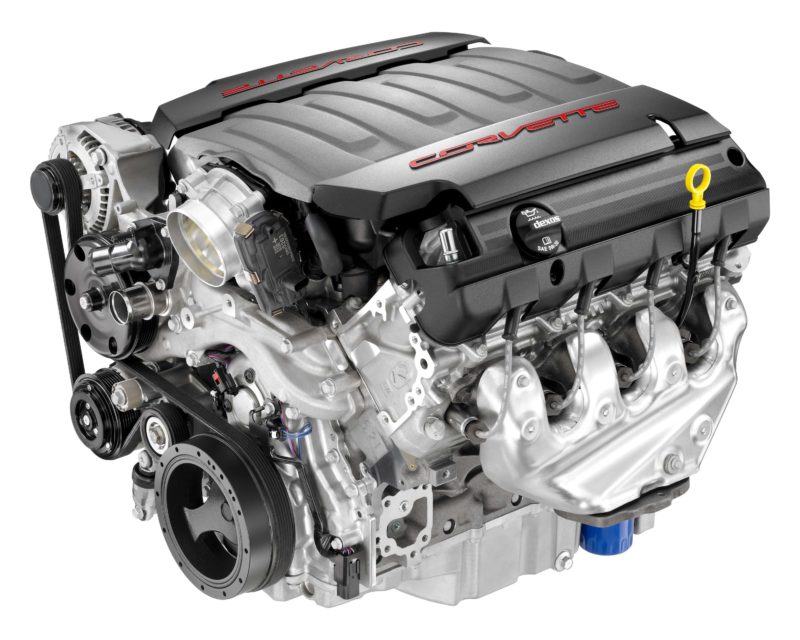
Actually tried comparing the specifications of the LT1 vs the L87 on several different websites,
like
So far, only differences I can find are:
6600 vs 6000 redline (which can be as simple as a difference in the GM OE tune)
different intake manifolds for 'vette vs trucks / SUVs

To be clear: I can't find any other differences in the hardware specs.
Nearly everything is the same, including the pistons, cam, heads, valvetrain,
static (and thus dynamic) compression (again, possible differences in the GM OE tunes)

The good news IS the bad news here, I guess?:
An L87 IS an LT1, except with a different intake manifold and a slightly lower redline.
 

DuraYuk

Full Access Member
Joined
Sep 17, 2022
Posts
1,110
Reaction score
883
Thats not me... in fact I have been advocating against that. You seem to have trouble following who said what.

Thinking too much ? Yes that has been a curse for some of us in the 'spectrum' but I try to keep things as simple as possible personally else life would be difficult... I am still quite happy driving my 78 and 84 pickup. No computers, well proven technology. If everyone in my family would still drive the old trucks we wouldn't be involved in all this BS.


Yes in the top end, at least for this engine model, but the bottom end is the same. And trucks are not the trucks they used to be... have you seen at what RPM where said truck engine makes peak torque ? Sorry man but some of us are wired in a manner where "in god we trust, all others must bring data".
Yeah its 43 pages of nonsense. In the beginning we said it wasn't oil and here we are 40 pages later lmao.
 

viven44

Full Access Member
Joined
Sep 9, 2024
Posts
397
Reaction score
503
Location
Dallas, TX
Yeah its 43 pages of nonsense. In the beginning we said it wasn't oil and here we are 40 pages later lmao.
You are welcome to keep reading, lol... obviously you are reasonably entertained like the rest of us...
 
Joined
May 2, 2022
Posts
70
Reaction score
74
Dude you need to relax. Toyota just had a huge engine recall on tundras and most people don't know and don't care.

Most people won't break down from this. Most people will never have an issue. And Most people will get theirs fixed before any issues.

The fix is in. Step 1 is admitting the problem and now step 2 is correction.

You guys are going on and on about things you have no idea about.
lol, seriously. Only 44 pages so far. Keeping up with this feed is becoming a part time job. Wish there was a mod who could limit responses to a few sentences. Despite all 44 pages of this and 850k deep recall, I still love my Yukon Denali.
 
Joined
May 2, 2022
Posts
70
Reaction score
74
I have yet to see an instance of a failure in this pseudo venn diagram:

greater than 5,000 miles, less than 90,000
2021-2024 range
Oil changed before 5000 miles, even with 0w20
Higher viscosity oil used, with any oil change interval, since first oil change
DFM disabled all or most of the time
Auto start stop disabled all or most of the time
Frequently driven more than 30 minutes in single instance

The closest (and it is very close) is Firetrout's 6.2 failure at 27,000 miles:


(I'm leaving out the engines that failed before first oil change. Those are something else entirely. Likely both debris and out of spec crankshaft or another failure mode (wrist pin?) that is statistically guaranteed to show up due to the volume of engines GM puts out.)
^This is one of the most noteworthy comments on the entire chain. Thank you.^
My concern is my resale / trade in value (I’m at 33k on my 2nd 2023 Denali - first motor blown 3.6k miles, then did full vehicle replacement) when I get up to 60-80k area. Basically be driving around a paper weight at that point unless GM wants to entertain a trade/ buy out. I’ll be tuned in to any folks going the class action / lemon law route. I’m in CA, so think the law does lean my way if I’m keen.
 
Last edited:

Antonm

Full Access Member
Joined
Apr 2, 2024
Posts
539
Reaction score
625
Actually tried comparing the specifications of the LT1 vs the L87 on several different websites,
like
So far, only differences I can find are:
6600 vs 6000 redline (which can be as simple as a difference in the GM OE tune)
different intake manifolds for 'vette vs trucks / SUVs

To be clear: I can't find any other differences in the hardware specs.
Nearly everything is the same, including the pistons, cam, heads, valvetrain,
static (and thus dynamic) compression (again, possible differences in the GM OE tunes)

The good news IS the bad news here, I guess?:
An L87 IS an LT1, except with a different intake manifold and a slightly lower redline.

Yeap, the lower end/ rotating assembly is the same between the corvette and the truck 6.2,,, yet GM has spec’d 0W40 in the corvette from the beginning,,,, because well, that’s how CAFE standards work

CAFE stands for “ corporate average fuel economy “ so you can make a small number of cars and not really care because it won’t hurt the overall corporate average that much,,,but the vehicle you sell a bunch of,,, oh that one you care about every 0.01 you can get because a little adds up quick when you sell hundreds of thousands of them.

The thin oil was a compromise from the beginning to get a little extra CAFE credit. GM knew this, but really they are forced into a bad spot where they have to make the CAFE number to stay in business.

All the internet keyboard warriors saying how it’s not the thin oil,,, okay, so tell me again what the downside of running a thicker oil is??

What 0.1 mpg loss maybe and that’s it. Literally no other negative or downside yet y’all still want to run 0w20. Have fun with that.
 

Marky Dissod

Full Access Member
Joined
Mar 3, 2023
Posts
4,080
Reaction score
5,889
Location
(718)-
Yep, the lower end / rotating assembly is the same between the corvette and the truck 6.2L ...
Same upper end too. Check the specs again -
same cam, pushrods, rockers, valves & springs, same heads, same compression ratio.
ONLY hardware difference between the LT1 & the L87 is the intake manifold. THAT'S IT.
 
Last edited:

viven44

Full Access Member
Joined
Sep 9, 2024
Posts
397
Reaction score
503
Location
Dallas, TX
So is the upper end. Check the specs again - same cam, pushrods, rockers, valves & springs.
ONLY hardware difference between the LT1 & the L87 is the intake manifold. THAT'S IT.

Thanks for checking that. I have been comparing part #s on RockAuto mainly and the only actual difference I can find is the intake manifold and the cam. The Corvette cam has a bit more exhaust duration to enhance higher RPM characteristics... all others (springs, lifters, pushrods are the same as you said).

The crank part # is different as well per RockAuto but not able to tell what is different.... but they are pretty darn close an engine as you'd ever expect vastly different applications to have. The differences in the crank could honestly just be flexplate/balance related.

I'm expecting a 2024 mid-year change in the crankshaft part # for the truck 6.2L. Rockauto won't even show part numbers for the trucks in 2024, 2025, whereas it does show it for 2021-2023 truck 6.2L and 2021-2025 Corvette 6.2L.
 
Last edited:
Joined
May 2, 2022
Posts
70
Reaction score
74
Yeap, the lower end/ rotating assembly is the same between the corvette and the truck 6.2,,, yet GM has spec’d 0W40 in the corvette from the beginning,,,, because well, that’s how CAFE standards work

CAFE stands for “ corporate average fuel economy “ so you can make a small number of cars and not really care because it won’t hurt the overall corporate average that much,,,but the vehicle you sell a bunch of,,, oh that one you care about every 0.01 you can get because a little adds up quick when you sell hundreds of thousands of them.

The thin oil was a compromise from the beginning to get a little extra CAFE credit. GM knew this, but really they are forced into a bad spot where they have to make the CAFE number to stay in business.

All the internet keyboard warriors saying how it’s not the thin oil,,, okay, so tell me again what the downside of running a thicker oil is??

What 0.1 mpg loss maybe and that’s it. Literally no other negative or downside yet y’all still want to run 0w20. Have fun with that.
There was a decent YouTube video posted like 60 pages ago, on this thread - but my takeaway - and pls mind my half mechanical jargon was that the thicker oil *could* impact the operation of the dynamic fuel mgmt (DFM) system, I’m guessing potentially causing lifters to fail quicker? I thought Vlad had some decent commentary on this and how you’re driving / speed / engine warm ups / climate / remote starts - there’s a lot to the story - not to mention how often your oil changes are and how low you let the OLM go(oil limit thing - I really don’t go under 40%). I’m sticking with 0w-20 for now, but I do check my oil frequently now (thanks GM!), and top off whenever necessary. Case of oil is now a staple in my trunk. I’m also in the camp of ‘if my engines going to fail, I’d like it to happen sooner than later’ , while this recall is fresh and parts might be available, vs 2-3-4 years down the road.
 

2024 White Tahoe

Full Access Member
Joined
Dec 30, 2024
Posts
346
Reaction score
365
There was a decent YouTube video posted like 60 pages ago, on this thread - but my takeaway - and pls mind my half mechanical jargon was that the thicker oil *could* impact the operation of the dynamic fuel mgmt (DFM) system, I’m guessing potentially causing lifters to fail quicker? I thought Vlad had some decent commentary on this and how you’re driving / speed / engine warm ups / climate / remote starts - there’s a lot to the story - not to mention how often your oil changes are and how low you let the OLM go(oil limit thing - I really don’t go under 40%). I’m sticking with 0w-20 for now, but I do check my oil frequently now (thanks GM!), and top off whenever necessary. Case of oil is now a staple in my trunk. I’m also in the camp of ‘if my engines going to fail, I’d like it to happen sooner than later’ , while this recall is fresh and parts might be available, vs 2-3-4 years down the road.

Why would you carry a case of oil in your trunk?
 

Stbentoak

Full Access Member
Joined
Jul 20, 2020
Posts
2,241
Reaction score
2,692
Yeah its 43 pages of nonsense. In the beginning we said it wasn't oil and here we are 40 pages later lmao.
The 1st few pages of this thread only about a week ago was SURE is was the thin oil.....
 

Forum statistics

Threads
137,685
Posts
1,989,595
Members
102,686
Latest member
koomie98
Back
Top