Welcome to the Forum from NH.
Lots of knowledgeable folks here who freely share their knowledge, experiences, and perspectives. Knowledge is power.
I hope that you will become a participating member in the Forum's discussions.
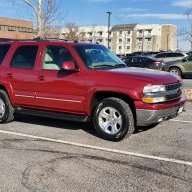
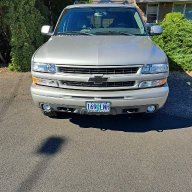
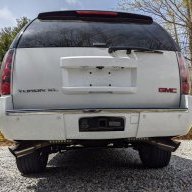
Pics of the truck, please. If we can't see it, it does not exist.
You are already receiving sage advice from the knowledgeable folks on this Forum.
A quick query of Grok using your verbiage and symptoms, seems to suggest a failing electric fuel pump. See below.
A short or excessive current draw in the PCM B (fuel pump) circuit—most often a failing fuel pump—is the primary typical cause linking the blown 20A PCM B fuse, P1626, and P0300 on a 2003 Yukon XL (GMT800 platform, shared with similar-year Tahoe/Suburban/Sierra/Silverado).
What the codes and fuse mean
- P0300: Random/multiple cylinder misfire. The PCM detects irregular crankshaft speed variations indicating misfires not isolated to one cylinder.
- P1626: Theft Deterrent Fuel Enable Signal Lost. The PCM does not receive a valid password/enable signal from the BCM (via Class 2 serial data) related to the Passlock/VTD system. This can prevent or disrupt fuel enablement.
- PCM B fuse (20A, underhood fuse block): Powers the Powertrain Control Module and the fuel pump circuit (feeds the fuel pump relay).
When this fuse blows, the PCM loses (or partially loses) power. This commonly disrupts Class 2 communication with the BCM, setting P1626. Loss of proper PCM control over fuel delivery and ignition timing readily produces random misfires (P0300). The vehicle may start/run roughly briefly, then stall, refuse to crank, or show intermittent issues depending on when the fuse opens.
Most common root cause
On these 1999–2007 GM full-size trucks/SUVs, the PCM B fuse repeatedly blowing is very frequently caused by a
failing electric fuel pump (or its connector/harness) that shorts or draws excessive current. Mechanics report this as the issue in the large majority of cases (e.g., melted/burned connectors at the pump assembly are a classic finding). The short can be intermittent (fuse lasts minutes, days, or weeks) or immediate.
Secondary possibilities for the short/overcurrent:
- Damaged wiring in the fuel pump circuit (chafed/shorted to ground, often near the tank, frame, or underhood).
- Less commonly, a shorted PCM itself or issues at the underhood fuse/relay center.
How this produces both codes together
- Fuel pump (or related circuit) develops a short → PCM B fuse opens.
- PCM power is interrupted → communication with BCM fails or is incomplete → P1626 sets (fuel enable signal lost).
- Without stable PCM power/control of injectors, coils, and timing (plus potential low/no fuel pressure), the engine misfires randomly → P0300.
P0300 on these engines can also stem from independent issues (worn plugs/wires/coils, failed intake manifold gaskets causing vacuum leaks—very common on Vortec engines—or high-mileage timing chain stretch affecting cam/crank correlation), but the simultaneous fuse blow + P1626 strongly points to the shared electrical/power issue rather than pure mechanical ignition/fuel problems.
Diagnostic/repair approach (high level)
- Confirm the PCM B fuse is the one blowing and note when (key-on, cranking, running).
- Disconnect the fuel pump connector (at the tank) and see if the fuse still blows. If it holds with the pump disconnected, the pump or its local wiring is the culprit → replace the pump assembly (common DIY/repair on these; check for melted connectors).
- Inspect the fuel pump wiring harness for damage/shorts to ground.
- Check power/grounds at the PCM, Class 2 data integrity, and related BCM fuses/power if communication issues persist after restoring the fuse/pump circuit.
- Clear codes only after the electrical fault is fixed; address any residual misfire causes (plugs, coils, intake gaskets) if needed.
- Note: On Passlock systems, clearing codes or disconnecting the battery can sometimes complicate relearn/enable status—diagnose carefully.
This combination is a well-documented pattern on the platform. A failing fuel pump is the statistically most common single cause that ties the blown fuse directly to both codes. If the fuse holds after pump isolation but problems continue, move to wiring and PCM power/ground checks