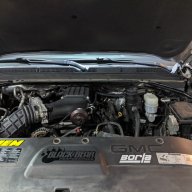
AC DELCO OIL FILTER

Disclaimer: Links on this page pointing to Amazon, eBay and other sites may include affiliate code. If you click them and make a purchase, we may earn a small commission.

Meccanoble

Full Access Member
Joined
Oct 3, 2016
Posts
1,166
Reaction score
355
Location
Georgia

Stbentoak

Full Access Member
Joined
Jul 20, 2020
Posts
2,347
Reaction score
2,878
They are 50% off on Amazon right now…4.08 each what could be better than that?
 

Bsharp1223

TYF Newbie
Joined
Aug 5, 2021
Posts
12
Reaction score
10
I wasn’t specifically looking for this, but decided to get this brand today and found at auto zone. Spent twice what the previous post says they’re going for on Amazon though. I’m new here, are these generally considered to be the go to filter to use? Mine is an ‘03 z71 Tahoe
 

swathdiver

Full Access Member
Joined
May 18, 2017
Posts
21,382
Reaction score
30,471
Location
Treasure Coast, Florida
Is it me or are these impossible to get? I have been looking for PF48e and sold out everywhere. I ordered one and its taking forever to get to me. The only time I tried a filter besides ac delco, my oil sensor went bad. Unrelated but yea i'm that scary.

MIA
I bought a bunch of PF48s, not PF48Es from RockAuto a few months back.
 
OP
OP
M

Meccanoble

Full Access Member
Joined
Oct 3, 2016
Posts
1,166
Reaction score
355
Location
Georgia
there are different versions. My knowledge isnt the best but PF48s were the originals. They upgraded to PF48Es which I guess have better internal material and recently they went to PF48R which are supposed to be the best but cost more. They are heavier, people say they help resolve some low oil pressure issues, not sure how but I needed one I could get locally or fast online and didnt want to dummy mission multiple stores. I ended up getting a PF48r which can be shipped by tomorrow. Only reason I went this route is speed of shipping. The PF48e never failed me. If I come back with oil sensor issues or worst, you know why LOL.
 

swathdiver

Full Access Member
Joined
May 18, 2017
Posts
21,382
Reaction score
30,471
Location
Treasure Coast, Florida
there are different versions. My knowledge isnt the best but PF48s were the originals. They upgraded to PF48Es which I guess have better internal material and recently they went to PF48R which are supposed to be the best but cost more. They are heavier, people say they help resolve some low oil pressure issues, not sure how but I needed one I could get locally or fast online and didnt want to dummy mission multiple stores. I ended up getting a PF48r which can be shipped by tomorrow. Only reason I went this route is speed of shipping. The PF48e never failed me. If I come back with oil sensor issues or worst, you know why LOL.
I thought that the Es were eco-friendly and of lesser quality. Still, they met GMs standards but so many folks complained, or maybe because of problems, they brought back the originals. I also bought one of those UPF48Rs in the event we ever needed one. Corvette guys use them for racing.
 
OP
OP
M

Meccanoble

Full Access Member
Joined
Oct 3, 2016
Posts
1,166
Reaction score
355
Location
Georgia
I thought that the Es were eco-friendly and of lesser quality. Still, they met GMs standards but so many folks complained, or maybe because of problems, they brought back the originals. I also bought one of those UPF48Rs in the event we ever needed one. Corvette guys use them for racing.

You might be right. I have used them for 6 years with no issues (PF48e) but I am not pushing high power, towing nor doing anything crazy but putting highway miles.
 
OP
OP
M

Meccanoble

Full Access Member
Joined
Oct 3, 2016
Posts
1,166
Reaction score
355
Location
Georgia
Just an update. Finally received and installed filter. I wish I took a video before install but I think it corrected my oil pressure if this was ever considered a problem. On first cold start, it jumped to 40 and when warm, idled to around 30-35. On the hardest WOT, it went as high as 50-55 and sits around 30-35 on idle. I could have sworn all of these numbers were slightly lower before the change so maybe it does improve that.
 
OP
OP
M

Meccanoble

Full Access Member
Joined
Oct 3, 2016
Posts
1,166
Reaction score
355
Location
Georgia
Looks like the gauge is back to where it was. Idling at closer to 25-30 now when warm.
 

Geotrash

Dave
Supporting Member
Joined
Feb 16, 2018
Posts
7,891
Reaction score
20,557
Location
Richmond, VA
Looks like the gauge is back to where it was. Idling at closer to 25-30 now when warm.
This is one of the reasons I run 5w-40 Euro oil in both of mine. All the benefits of cold weather pumpability of a 5w weight, but adds the protective benefits of a 40 weight oil in the summer heat. I see about a 3-5 psi oil pressure difference between the 5w-30 I used to run and the 5w-40 I now run, on both trucks.
 
OP
OP
M

Meccanoble

Full Access Member
Joined
Oct 3, 2016
Posts
1,166
Reaction score
355
Location
Georgia
This is one of the reasons I run 5w-40 Euro oil in both of mine. All the benefits of cold weather pumpability of a 5w weight, but adds the protective benefits of a 40 weight oil in the summer heat. I see about a 3-5 psi oil pressure difference between the 5w-30 I used to run and the 5w-40 I now run, on both trucks.

Heavier oil has benefited the Toyota crowd with oil burning. Would that be an additional benefit with 5w-40?
 

Geotrash

Dave
Supporting Member
Joined
Feb 16, 2018
Posts
7,891
Reaction score
20,557
Location
Richmond, VA
Heavier oil has benefited the Toyota crowd with oil burning. Would that be an additional benefit with 5w-40?
Didn't know that. Fair question though. I'd love to learn more if you have any more info, otherwise I'll see what I can find.

Update: From what I can tell in a few minutes of research, the primary issue is with oil burning in the older model Corollas. They start burning oil and people start using heavier oils like 20w-50 or adding Lucas oil stabilizer (super thick stuff) and that seems to have created other problems. Owners theorize that the root cause of the oil burning is in the PCV system and the rings. Sounds familiar :) I'm also seeing a smattering of oil burning concerns in other Toyota engines as well, with similar comments about oil weights and root causes. If you know of any other big trends with Toyotas and oil burning due to heavier weight oils, I'll add it to my understanding.

The consensus seems to be that 10w-40 is optimal in those engines. And what I'm starting to think is that 5w-40 is probably optimal in our engines, and I'm also wondering if the 0w-20 that's spec'd in the newer engines for minute gains in fuel economy could be the root cause of some of the engine component failures we're seeing in the newer models. It would be an interesting study to find out.
 
Last edited:
OP
OP
M

Meccanoble

Full Access Member
Joined
Oct 3, 2016
Posts
1,166
Reaction score
355
Location
Georgia
Didn't know that. Fair question though. I'd love to learn more if you have any more info, otherwise I'll see what I can find.

Update: From what I can tell in a few minutes of research, the primary issue is with oil burning in the older model Corollas. They start burning oil and people start using heavier oils like 20w-50 or adding Lucas oil stabilizer (super thick stuff) and that seems to have created other problems. Owners theorize that the root cause of the oil burning is in the PCV system and the rings. Sounds familiar :) I'm also seeing a smattering of oil burning concerns in other Toyota engines as well, with similar comments about oil weights and root causes. If you know of any other big trends with Toyotas and oil burning due to heavier weight oils, I'll add it to my understanding.

The consensus seems to be that 10w-40 is optimal in those engines. And what I'm starting to think is that 5w-40 is probably optimal in our engines, and I'm also wondering if the 0w-20 that's spec'd in the newer engines for minute gains in fuel economy could be the root cause of some of the engine component failures we're seeing in the newer models. It would be an interesting study to find out.

Yes the Toyota 4 cylinder engines in late 2000's had piston ring issues and the heavier oil just bought them more time between oil change intervals so they didnt have to refill as much inbetween intervals.
 

tom3

Full Access Member
Joined
Jul 15, 2019
Posts
1,442
Reaction score
2,561
I'm also wondering if the 0w-20 that's spec'd in the newer engines for minute gains in fuel economy could be the root cause of some of the engine component failures we're seeing in the newer models. It would be an interesting study to find out.
Uh oh. I'd like to get some info on that too before it's too late. High compression on these later engines, some real hot weather here, and the high tech gizmos inside these motors now has me worried anyway.
 

donjetman

Full Access Member
Joined
Oct 22, 2018
Posts
2,066
Reaction score
3,783
This is one of the reasons I run 5w-40 Euro oil in both of mine. All the benefits of cold weather pumpability of a 5w weight, but adds the protective benefits of a 40 weight oil in the summer heat. I see about a 3-5 psi oil pressure difference between the 5w-30 I used to run and the 5w-40 I now run, on both trucks.
Dave/Geotrash, your 5w-40 is thicker than the 5w-30 at ALL temperatures, even startup. The people that give oil these #s just for reference, they're otherwise almost meaningless. The low# has almost no meaning. See the charts below and you'll see what I mean. The high # has some meaning.

If thicker oil was better for our engine then why do "experts" agree that most of an engine's wear occurs at startup when the oil thickest? Our engine and oils are not designed to work very well at less than about 212*F. Engine designers and oil designers use that 212F #.

So, is it safe to assume thinner oil on startup is better for the engine? I know from my research that a thinner oil will flow more volume (honey vs water), with less resistance and stress on the engine, than thicker oil.

A straight 30wt oil is thicker at any and all temps less than 212F than its multi-wt cousin (see chart below). Imagine these #s at zero degrees or colder.

cSt viscosity at... 75 F...,,,,,,,,,,,,,,,, at 212 F
Straight 30........ 250......................10
10W-30..............100......................10
0W-30................40 ......................10

In the chart below you can see that a 0w-20 oil is thinner at "ALL" temperatures than a 0w-30. And the same can be said between 0w-30 and 0w-40. Dave/Geotrash, the same is true for 5w-30 and 5w-40.

cSt viscosity at. 104F................212F.............at 302F

Straight 30............??.....................10.....................3
0W-20................47 .................8.8................2.5
10W-30..................62 ...................10.....................3
0W-30..................57 ....................10.....................3
5W-30..................59.....................10.....................3
10W-30.................62......................10....................3
0W-40..................85.....................15...................3.75
5W-50...............120...................20..................4

NOTICE where they differ greatly is at a less than normal temp? If it's colder than shown in this chart the viscosity #s get extreme.

cSt viscosity range at 212 F
20w - 5.6 to 9.2
30w - 9.3 - 12.4
40w - 12.5 - 16.2
50w -16.3 - 21.8
60w -21.9 - 26.1

min. viscosity at 302 F...
20, 2.6
30, 2.9
40, 2.9 to 3.7
50, 3.7
60, 3.7

Synthetic oils do cling to parts better because they have higher film strength than mineral oils. Synthetics are thinner overall. They have greater slipperiness. Yet they stick better to engine parts.

My Yuk 6.2L L92 see's both the TX 100+F heat and the cold -20F Colorado mtn winter. I'm currently running 0w-20 and will see what analysis indicates. It's too early to tell yet, but I'm getting 20-25 more miles out of a tank of gas than I use too. But, I changed all the O2 sensors not long after I switched from 5w-30 to 0w20. Maybe thats the improvement?

 
Last edited:

Thrust

Full Access Member
Joined
Oct 23, 2020
Posts
544
Reaction score
713
Location
ICT
Just FYI Motorcraft FL-500s will work too.
 
Joined
Apr 11, 2018
Posts
7,124
Reaction score
14,376
Location
St. Louis
If thicker oil was better for our engine then why do "experts" agree that most of an engine's wear occurs at startup when the oil thickest?
It's not just because the oil is thickest, but also because most of the oil has drained down away from the parts because the engine is off and pump not running, no pressure in the system. It takes a second or two to get the oil pressure to build and pumped around the important pieces.
 

Forum statistics

Threads
138,750
Posts
2,016,123
Members
102,318
Latest member
Mariam26A
Back
Top