Does a 2024 Z51 with 6.2 require premium fuel?

Disclaimer: Links on this page pointing to Amazon, eBay and other sites may include affiliate code. If you click them and make a purchase, we may earn a small commission.

BacDoc

Full Access Member
Joined
Apr 11, 2024
Posts
718
Reaction score
895
Location
Vero Beach Florida
For many years cars have had Knock sensors, which prevent any issue using a lower octane gas where premium was recomended. I use Regular in my Lexus sedan and my V12 BMW with no issues that I'm aware of.
Wow!
You have a V12 BMW and put regular gasoline in that?

Im sure there’s some German motor heads thinking “that’s fighting words!”
 

Marky Dissod

Full Access Member
Joined
Mar 3, 2023
Posts
4,081
Reaction score
5,889
Location
(718)-
For many years cars have had Knock sensors, which prevent any issue using a lower octane gas where premium was recommended.
So, even though the engines (not the cars) have had knock sensors, they still recommend premium.
Sure, one of the reasons is likely that the carmakers are being paid to recommend premium.
One of the other reasons cannot possibly be, that it actually is better for the engine to use premium?

I got away with NOT wearing my seat belt, for DECADES.
(I was a NYC cabdriver / livery driver / chauffeur, back when it was perfectly legal for us to not wear our seatbelts inside NYC - prior to 2016.)
I would never recommend to ANYONE to not wear their seatbelt, ever. Just cause you can get away with doing it, doesn't mean you should do it.

Knock sensors don't prevent knock.
They DETECT knock - far sooner than a human ear - and RESPOND TO KNOCK by retarding timing, and sometimes by wasting a lil gas, to stop the knock.
However, most pcms / ecms do NOT learn this in order to prevent any knock. In other words, this can keep happening, over and over again.
I use Regular in my Lexus sedan and my V12 BMW with no issues that I'm aware of.
So, you could be having issues that you are NOT aware of, like knock that the knock sensors detected, before you became aware of the knock.
In fact you may never become aware ...

Cast pistons do not recover from any knock event; the damage, however small, is cumulative in all cases.
Eventually, a cast piston exposed to too much knock will shatter, especially if the knock occurs on the same spot on the piston.
Forged pistons do recover from knock - except if the singular knock event is itself catastrophically enormous -
because their molecular structure is far more resilient, like a well-forged sword that can be repeatedly bent out of and back into fighting shape.

Of course, if you never accumulate enough knock, you will say you never experienced any problems ...

 

SavageDad

Full Access Member
Joined
Feb 18, 2023
Posts
192
Reaction score
107
So, even though the engines (not the cars) have had knock sensors, they still recommend premium.
Sure, one of the reasons is likely that the carmakers are being paid to recommend premium.
One of the other reasons cannot possibly be, that it actually is better for the engine to use premium?

I got away with NOT wearing my seat belt, for DECADES.
(I was a NYC cabdriver / livery driver / chauffeur, back when it was perfectly legal for us to not wear our seatbelts inside NYC - prior to 2016.)
I would never recommend to ANYONE to not wear their seatbelt, ever. Just cause you can get away with doing it, doesn't mean you should do it.

Knock sensors don't prevent knock.
They DETECT knock - far sooner than a human ear - and RESPOND TO KNOCK by retarding timing, and sometimes by wasting a lil gas, to stop the knock.
However, most pcms / ecms do NOT learn this in order to prevent any knock. In other words, this can keep happening, over and over again.So, you could be having issues that you are NOT aware of, like knock that the knock sensors detected, before you became aware of the knock.
In fact you may never become aware ...

Cast pistons do not recover from any knock event; the damage, however small, is cumulative in all cases.
Eventually, a cast piston exposed to too much knock will shatter, especially if the knock occurs on the same spot on the piston.
Forged pistons do recover from knock - except if the singular knock event is itself catastrophically enormous -
because their molecular structure is far more resilient, like a well-forged sword that can be repeatedly bent out of and back into fighting shape.

Of course, if you never accumulate enough knock, you will say you never experienced any problems ...
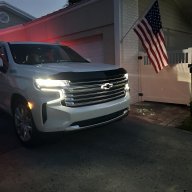
...so what you're saying is I need to talk the Mrs into a forged top end rebuild for the Suburban
 

Marky Dissod

Full Access Member
Joined
Mar 3, 2023
Posts
4,081
Reaction score
5,889
Location
(718)-
... so what you're saying is, I need to talk the Mrs into a forged top end rebuild for the Suburban.
Thought pistons were technically part of the bottom end, but yes, forged pistons would be an upgrade that would withstand knock better than cast pistons.
 

SavageDad

Full Access Member
Joined
Feb 18, 2023
Posts
192
Reaction score
107
Thought pistons were technically part of the bottom end, but yes, forged pistons would be an upgrade that would withstand knock better than cast pistons.
You know in bikes pistons were part of a top end rebuild, every time I did a race or a really long ride (80-90mi mostly WOT) I'd have to swap out the piston and ring on my old KX125, but the pistons sit in the block is an automotive engine so you're probably right. Either way some forged pistons, better flowing heads, a fat cam, and a little more rpm...wait what were we talking about again?
 

Marky Dissod

Full Access Member
Joined
Mar 3, 2023
Posts
4,081
Reaction score
5,889
Location
(718)-
... what were we talking about again?
The difference between
91 octane recommended
vs
91 octane required
and the gaping chasm in-between,
where idiotards expect immunity from any consequences from working/playing hard,
while failing to understand or consider the PROVEN FACT that the MpG improvement from using 91 octane always offsets its extra cost to some quantifiable degree.
 

Geotrash

Dave
Supporting Member
Joined
Feb 16, 2018
Posts
7,843
Reaction score
20,396
Location
Richmond, VA
Sorry I missed all of the fun. Y'all do what you want with YOUR 6.2's. Mine both get only premium fuel, and that's the way it will stay. Plenty of videos on YouTube of blown pistons on 6.2's run on 87. I understand exactly how the knock sensors and timing tables work together to reduce the risk of damage, but the system is NOT perfect and the risk is NOT zero. Like I tell my kids: Respect the equipment.
 

ProfeZZor X

Full Access Member
Joined
Jan 19, 2022
Posts
583
Reaction score
489
Location
High Country
Ever since I moved 10 months ago, I've been using a midgrade gas for my 22' AT4. I had been using the premium grade since I got it back in March of 22', but when gas prices started to climb last year and I moved much further from work, I made the switch. So far, I haven't experienced any knocking or pinging in my 6.2, so I guess it's safe to say that you'll be just fine... I live in California where everything is a lot more expensive, so that's my reason for downgrading.
 

jerry455

Full Access Member
Joined
May 19, 2024
Posts
262
Reaction score
197
You might not notice a difference but the computer is probably pulling timing back, especially when the air temps get hot. If you don't run the recommended fuel, drive it like your grandmother. As been said by previous people, you probably won't hear it knocking, unless under a higher load, but the computer is dialing back the timing.
 

Marky Dissod

Full Access Member
Joined
Mar 3, 2023
Posts
4,081
Reaction score
5,889
Location
(718)-
You might not notice a difference but the computer is probably pulling timing back, especially when air temps get hot.
If you don't run the recommended fuel, drive it like your grandmother.
If driven hard, if the engine is working or playing hard with 87, the pcm / ecm IS responding to detected knock AFTER IT HAPPENS by pulling timing back, and possibly adding (wasting?) fuel to cool the cylinders.
The pcm / ecm NEVER learns this. It never predicts or avoids knock.
It only responds to it quickly enough for y'all to deceive yourselves into saying schidt like
'My 6.2L doesn't knock on 87, regardless of how I drive it.'
Put it on a realtime scanner, learn something new.
As been said by previous people, you probably won't hear it knocking, unless under a higher load,
but the computer IS dialing back the timing.
This is another way of saying that you're wasting money on 87 instead of using 91.
Yes, 91 costs more, but MpG would improve by enough to offset the price in most cases.

If not, try E85 - especially if it's at least 25% cheaper than 87.
It has pretty good knock resistance, and you'll get back much of the power lost to 87.

If you can't try E85, and you won't try 89 or 91 octane,
thanks in advance for breaking the engine I was gonna swap into my old Tahoe ...

note: this forum's software redacted something that really did not need redacting.
The redaction policy is more peurile than the thing it tried to redact.
 
Last edited:

Vladimir2306

Full Access Member
Joined
May 18, 2023
Posts
1,048
Reaction score
1,234
If driven hard, if the engine is working or playing hard with 87, the pcm / ecm IS responding to detected knock AFTER IT HAPPENS by pulling timing back, and possibly adding (wasting?) fuel to cool the cylinders.
The pcm / ecm NEVER learns this. It never predicts or avoids knock.
It only responds to it quickly enough for y'all to deceive yourselves into saying schidt like
'My 6.2L doesn't knock on 87, regardless of how I drive it.'
Put it on a realtime scanner, learn something new.This is another way of saying that you're wasting money on 87 instead of using 91.
Yes, 91 costs more, but MpG would improve by enough to offset the price in most cases.

If not, try E85 - especially if it's at least 25% cheaper than 87.
It has pretty good knock resistance, and you'll get back much of the power lost to 87.

If you can't try E85, and you won't try 89 or 91 octane,
thanks in advance for breaking the engine I was gonna swap into my old Tahoe ...

note: this forum's software redacted something that really did not need redacting.
The redaction policy is more peurile than the thing it tried to redact.
E85 is prohibited for use on these engines
 

Vladimir2306

Full Access Member
Joined
May 18, 2023
Posts
1,048
Reaction score
1,234
I think for your application, get the 3.0 Duramax and don’t look back.

quick math, using these assumptions:
25k/year at 65% Highway/35% city.

So, 16,250 Hwy and 8,750 city miles.

Diesel, assume 28MPG Hwy, 20 City
Gas, Assume 19 MPG Hwy, 14 City

Diesel = 580 gal Hwy, 437 gal City = 1017 Gal
Gas = 855 gal Hwy, 625 gal City = 1480 Gal

Wild Card is pricing, but let’s use what I saw at the pump 2 hours ago when I filled up.
Diesel = 3.499
93 Octane Gas = 3.799

Annual Fuel Cost:
Diesel = $3558
Gas = $5622

Assume DEF to fuel 50:1, so 20 gal of DEF at $5/gallon = $100

Let’s call a gas oil change $110 and a diesel one $210.

Assume you need three a year:
Diesel = $660
Gas = $330

Then cost for fuel, oil, DEF
Diesel = $4318
Gas = $5952
Why count Gasoline 93? For the 6.2 engine, 91 gasoline is used.
In general, it is clear that Diesel is more economical, but diesel does not have that Charisma, that Character, like a V8, it accelerates like a grandfather. So if you are buying a car for leisurely travel, then yes, Diesel is an excellent choice. And if you want emotions, then only 6.2))
Well, diesel is not the best choice in cold regions.
 

WalleyeMikeIII

Full Access Member
Joined
Feb 22, 2022
Posts
2,753
Reaction score
2,615
Location
Sunny and Snowy Minnesota
Why count Gasoline 93? For the 6.2 engine, 91 gasoline is used.
Most US gas stations sell unleaded in three grades:
1) Regular — usually 87 Octane
2) Mid Grade — Usually 89 Octane
3) Premium — usually one of 91 or 93 Octane.

Often “premium” is priced the same whether 91 or 93 octane…

These numbers are the “Anti Knock Index” numbers, but the RON that Europe uses.
 

Vladimir2306

Full Access Member
Joined
May 18, 2023
Posts
1,048
Reaction score
1,234
Most US gas stations sell unleaded in three grades:
1) Regular — usually 87 Octane
2) Mid Grade — Usually 89 Octane
3) Premium — usually one of 91 or 93 Octane.

Often “premium” is priced the same whether 91 or 93 octane…

These numbers are the “Anti Knock Index” numbers, but the RON that Europe uses.
Got it, thanks) I didn’t know, I thought in the USA there were different prices for 91 and 93 Gasoline. Although $3.79 per gallon is a lot. In our country, 100 grade gasoline costs about $3 per gallon. And Premium comes out to about $2.3 per gallon. But diesel is significantly more expensive here. $2.8 per gallon
 

KMeloney

Full Access Member
Joined
May 2, 2009
Posts
3,455
Reaction score
704
Got it, thanks) I didn’t know, I thought in the USA there were different prices for 91 and 93 Gasoline. Although $3.79 per gallon is a lot. In our country, 100 grade gasoline costs about $3 per gallon. And Premium comes out to about $2.3 per gallon. But diesel is significantly more expensive here. $2.8 per gallon
In the northeast, it's a pretty big jump in price from 89 to 91... And then a much, much smaller jump from 91 to 93.
 

WalleyeMikeIII

Full Access Member
Joined
Feb 22, 2022
Posts
2,753
Reaction score
2,615
Location
Sunny and Snowy Minnesota
Got it, thanks) I didn’t know, I thought in the USA there were different prices for 91 and 93 Gasoline. Although $3.79 per gallon is a lot. In our country, 100 grade gasoline costs about $3 per gallon. And Premium comes out to about $2.3 per gallon. But diesel is significantly more expensive here. $2.8 per gallon
Oh, the US and State Government's love to TAX fuel. Esp the ones like CA, IL, NY, etc. My daughter spent some time in TN and fuel there was routinely $2.40-$2.70 on the same day it was $3.35 in Minnesota...And some states have harsher formulation rules to combat emissions and evaporation as well, these custom formulations can definitely vary the price. But the biggest impact is state tax.
 

Joseph Garcia

Elite Member
Supporting Member
Joined
Aug 2, 2018
Posts
10,284
Reaction score
14,887
Most US gas stations sell unleaded in three grades:
1) Regular — usually 87 Octane
2) Mid Grade — Usually 89 Octane
3) Premium — usually one of 91 or 93 Octane.

Often “premium” is priced the same whether 91 or 93 octane…

These numbers are the “Anti Knock Index” numbers, but the RON that Europe uses.
I've never seen the same price for 91 and 93 octane in NH, but different regions have different pricing scales. That being said, the difference in cost these days between 91 and 93 octane is rarely more than 10 cents per gallon in NH.
 

WalleyeMikeIII

Full Access Member
Joined
Feb 22, 2022
Posts
2,753
Reaction score
2,615
Location
Sunny and Snowy Minnesota
I've never seen the same price for 91 and 93 octane in NH, but different regions have different pricing scales. That being said, the difference in cost these days between 91 and 93 octane is rarely more than 10 cents per gallon in NH.
I can buy 93 at Sinclair for $3.699 today, 92 at Costco is 3.719, and 91 at KwikTrip is $4.099 (but the last one is Ethanol Free)
 

Forum statistics

Threads
137,691
Posts
1,989,677
Members
102,691
Latest member
RobK
Back
Top